


Why Acting Fast on Foundation Leaks Protects Your Home
Water leaking through foundation walls or floors is a problem that affects homeowners across the country, causing billions of dollars in damage each year. If you’re seeing puddles, damp spots, or water stains in your basement, you’re not alone—and more importantly, you need to act quickly.
Quick Fix Guide for Foundation Leaks:
- Identify the source – Check for water at the wall-floor joint, through cracks, or around windows
- Stop exterior water – Clean gutters, extend downspouts 6-10 feet from house, fix grading
- Seal small cracks – Use epoxy injection or hydraulic cement for minor repairs
- Install drainage – Add interior drain tile and sump pump for persistent issues
- Call a professional – For large cracks, bowing walls, or recurring water problems
The consequences of ignoring foundation leaks go far beyond a wet floor. Water intrusion can lead to mold growth (which can start in as little as 24-48 hours), structural damage from hydrostatic pressure, and health risks for your family. The average cost to repair foundation leaks ranges from a few hundred dollars for simple crack sealing to $4,000-$8,000 for comprehensive basement waterproofing—but the cost of ignoring the problem is often much higher.
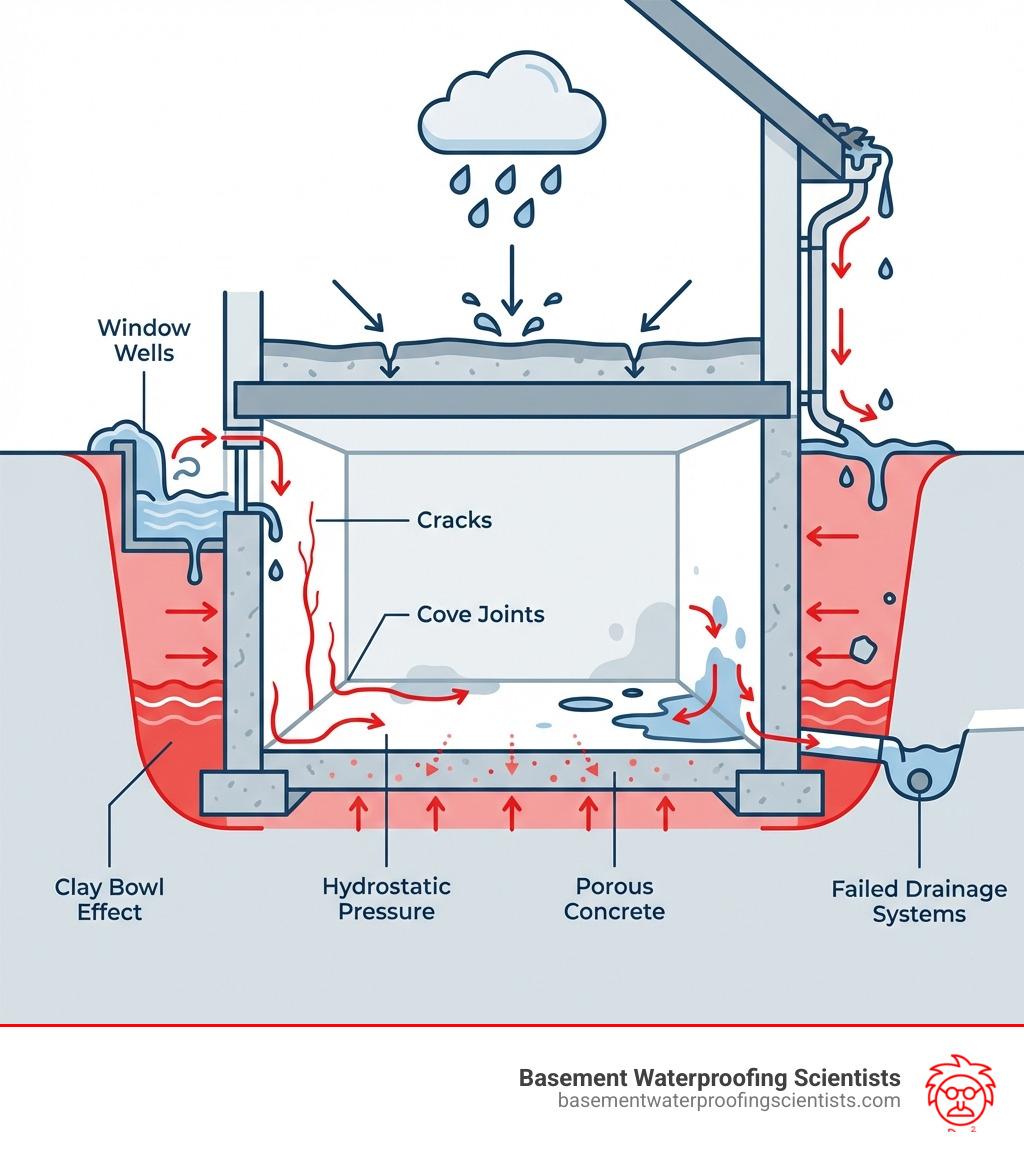
Understanding why water enters your foundation is the first step to fixing it. Whether it’s due to poor drainage, hydrostatic pressure pushing groundwater through porous concrete, or the “clay bowl effect” trapping water around your foundation, each cause requires a specific solution. Some fixes are simple enough for DIY (like cleaning gutters or adjusting grading), while others demand professional expertise.
I’m Darin Garvey, and over the past 30 years, I’ve helped thousands of Philadelphia-area homeowners solve the frustrating problem of water leaking through foundation walls and floors. At Basement Waterproofing Scientists, we use specialized leak detection equipment to pinpoint the exact source of your water issues, ensuring we solve the problem right the first time—not just patch symptoms.
This guide will walk you through everything you need to know: how to spot the warning signs, what’s causing your specific leak, and which repair methods will actually work for your situation.
Spotting the Signs: Is Your Foundation Leaking?
When water is leaking through foundation elements, your home often sends out subtle (and not-so-subtle) distress signals. Recognizing these early warning signs can save you a significant amount of headaches, and money, down the road. We’ve seen it all, from a tiny damp spot to an indoor swimming pool (well, almost!).
The common signs that indicate a foundation leak often start small. You might notice damp walls or floors, especially after heavy rain. These damp spots can progress to visible water stains that look like discolored patches on your concrete or finished basement walls. Eventually, if left unaddressed, you might find puddles or standing water in your basement.
Beyond the visible, there are olfactory clues. A persistent musty odor is a tell-tale sign of moisture and potential mold growth. If your basement smells like a damp locker room, it’s time to investigate. In fact, a dry basement musty odor can often be an early indicator of hidden moisture problems.
Other signs of water seepage into a foundation include bubbling or peeling paint on basement walls, which happens when moisture gets behind the paint layer. Efflorescence, those white, powdery mineral deposits that appear on concrete or masonry surfaces, is also a clear sign that water is passing through the material and evaporating, leaving salts behind. If you have finished areas, you might notice warped wood floors or trim, or even rust on metal appliances, shelving, or the bottoms of water heaters.
Common Signs of Mold and Mildew Growth
One of the most concerning consequences of water leaking through foundation is the rapid growth of mold and mildew. These fungi can start to grow in as little as 24-48 hours in damp conditions, turning a minor leak into a major health hazard.
Visible mold patches can appear in various colors—black, green, white, or even fuzzy—on walls, ceilings, floors, and stored items. Beyond what you can see, an earthy, pungent smell is a strong indicator of hidden mold. For many, exposure to mold can trigger allergy symptoms like sneezing, coughing, itchy eyes, or a runny nose. For those with respiratory conditions, the health risks can be more severe. If you suspect mold, it’s crucial to address both the mold itself and the underlying moisture issue. Our Mold Testing Remediation Ultimate Guide offers comprehensive advice on this topic.
Distinguishing Water Seepage from a Pouring Leak
Understanding the difference between water seepage and pouring water is crucial for diagnosing the problem and implementing the right fix.
Water seepage is when water slowly makes its way into your home’s foundation by penetrating or permeating a porous material like a concrete foundation wall. Think of it as a slow, steady trickle or just dampness. Concrete, even without visible cracks, is porous and can absorb water due to capillary suction, much like a wick. This can lead to dampness, efflorescence, and a musty smell without any obvious streams of water. For more on this, check out our insights on water seeping through basement floor cracks.
On the other hand, a pouring leak, or leakage, is the flow of water through an actual opening, such as a crack in a foundation wall, a faulty pipe, or a gap in the wall-floor joint. This is often a faster, more noticeable intrusion, resulting in puddles or even streams of water on your basement floor. It’s an active leak with a clear entry point.
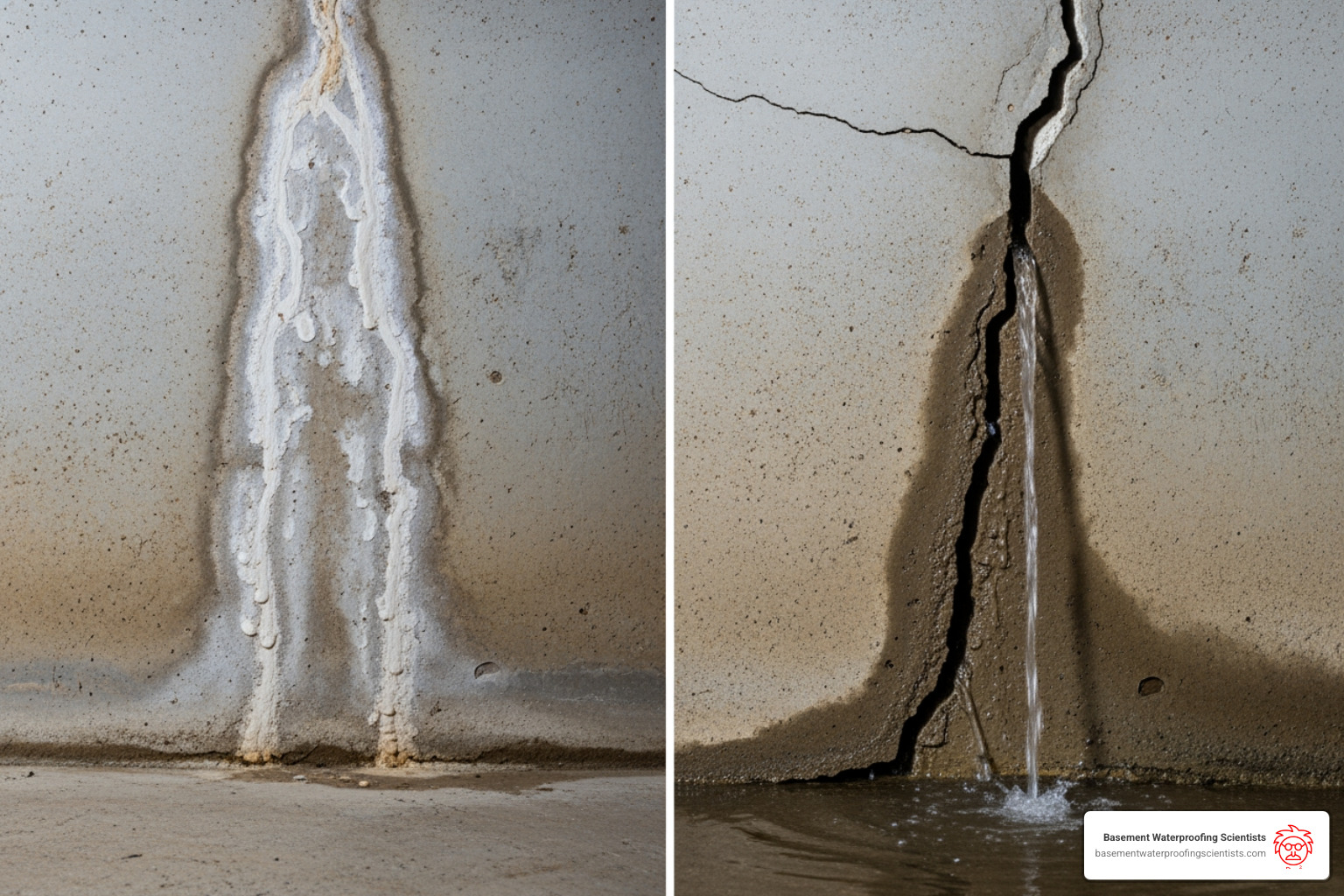
Identifying whether you have seepage or a pouring leak helps us determine the most effective repair strategy. Seepage often points to hydrostatic pressure or general moisture issues, while a pouring leak typically indicates a structural flaw or a specific breach in the foundation’s integrity.
The Root Causes of Water Leaking Through Foundation
We’ve seen that water leaking through foundation can manifest in various ways, but what truly causes these issues? Most foundation problems, especially in our Pennsylvania, New Jersey, and Delaware service areas, stem from excess water in the soil surrounding your home. This can be due to a combination of environmental factors, construction methods, and home maintenance (or lack thereof).
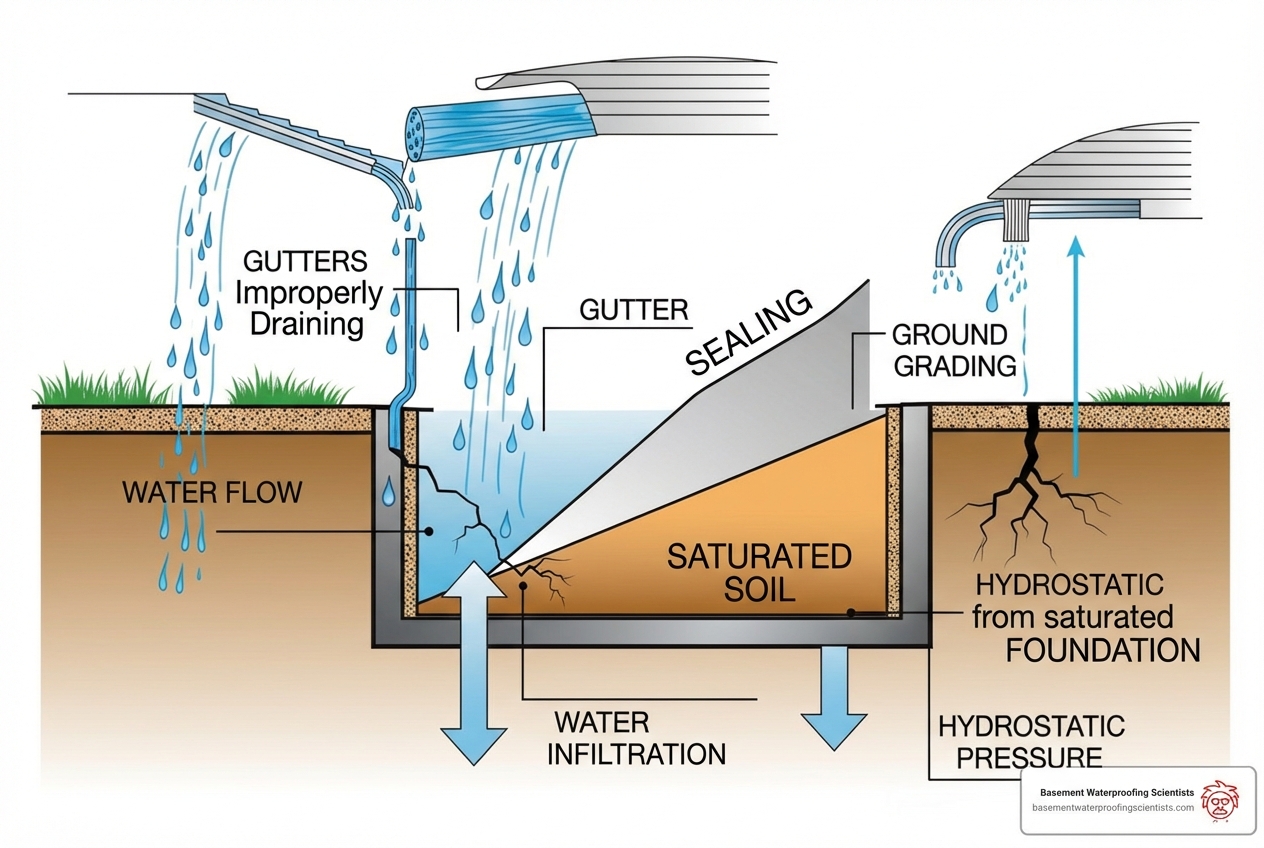
Poor drainage is cited as the cause for the majority of foundation leaks, and we can attest to that. When water isn’t properly directed away from your home, it saturates the soil. This saturated soil puts immense pressure on your foundation walls. The type of foundation material also plays a role; whether you have a cinder block foundation or poured concrete, both are susceptible. Our concrete foundation waterproofing ultimate guide dives deeper into these material vulnerabilities.
How Hydrostatic Pressure and the ‘Clay Bowl Effect’ Cause Leaks
Let’s talk about the big culprits: hydrostatic pressure and the “clay bowl effect.” These two phenomena are responsible for a significant number of water leaking through foundation problems.
Hydrostatic pressure is a natural force exerted by collected groundwater against your foundation walls and floors. Think about it: water weighs around 60 pounds per cubic foot. When the soil around your foundation becomes saturated after heavy rainfall or snowmelt, it’s like a giant, invisible hand pushing against your basement walls. This pressure can force water through even the smallest cracks or pores in your concrete. If left unchecked, hydrostatic pressure can cause foundation walls to bow, rotate, or even crack further, leading to serious structural damage. This is a primary reason why we emphasize proper bulk water control methods for foundations.
The “clay bowl effect” is another common issue, particularly in new constructions, but it can affect older homes too. When a home is built, a large hole is dug for the foundation. After the foundation is laid, the excavated soil is backfilled around it. This backfill soil is typically looser and more permeable than the undisturbed, hard-packed native soil around it. This creates a “clay bowl” or a “moisture trap” around your foundation. When it rains, this looser soil absorbs and holds more water, effectively creating a saturated “bowl” that sits against your foundation walls. This trapped water then increases the hydrostatic pressure, pushing water into your basement. It’s a classic setup for water leaking through foundation issues.
Drainage Failures: Gutters, Grading, and Window Wells
Often, the most preventable causes of water leaking through foundation lie right outside your home: your drainage system.
Clogged gutters and downspouts are surprisingly common culprits. When gutters are full of leaves and debris, rainwater can’t flow freely. Instead, it overflows and cascades down directly next to your foundation, saturating the soil right where you don’t want it. Similarly, if your downspouts are too short or improperly positioned, they’ll dump water right against your house. We recommend extending downspouts at least 15-20 feet away from your home to ensure water is channeled far away.
Improper grading, or the slope of the ground around your home, is another major factor. If your yard slopes towards your foundation instead of away from it, you’re essentially creating a funnel for rainwater. The ground surface should slope downward at least 6 inches over the first 10 feet away from the foundation. If your grading is flat or, worse, slopes negatively, water will pool against your foundation, leading to saturation and hydrostatic pressure. This is why proper installing drain tile around house often goes hand-in-hand with grading improvements.
Finally, window wells are charming architectural features until they become miniature swimming pools. If your window wells don’t have proper drainage or if their drains become clogged with debris, they’ll fill with water. This water then inevitably seeps around the basement window frame and into your basement. Poorly installed window wells or those without covers can also contribute to this problem.
Structural Vulnerabilities and Other Causes
Beyond external drainage issues, the very structure of your home can present vulnerabilities where water is leaking through foundation.
Foundation cracks are obvious entry points. Whether it’s a hairline crack or a larger, more active fissure, water will find its way through. Cracks can develop due to soil movement, settlement, or even the sheer force of hydrostatic pressure. For more on this, our guide on cracks in poured concrete foundation is very informative. The “cove joint,” where your basement wall meets the floor, is also a common weak point for water intrusion. This joint is often a cold joint in construction, making it less watertight and highly susceptible to hydrostatic pressure.
Plumbing leaks can also be a sneaky cause of foundation water issues. A failing water heater, which typically lasts 6-12 years, can leak directly onto your basement floor. Damaged washing machine hoses or even a burst pipe within a wall can release significant amounts of water, leading to localized flooding and saturation that can then seep into or through the foundation.
Finally, the freezing and thawing cycle in our region can exacerbate existing foundation damage. Ice formation can cause significant problems. Water expands by approximately 9% when it freezes. If water has seeped into a crack in your foundation, and temperatures drop below freezing, that expanding ice acts like a wedge, widening the crack and causing further damage. This freeze-thaw cycle can turn a small, manageable crack into a major issue over time, impacting the structural integrity of your home. Understanding these vulnerabilities is key to preventing long-term damage, as detailed in our guide to understanding structural basement repair.
Your Action Plan: Repairing and Stopping Foundation Leaks
When water is leaking through foundation, you need a clear action plan. We approach foundation leaks with a combination of interior and exterior methods, designing a comprehensive water management system that addresses the root cause. How do you completely waterproof a basement? It’s often a multi-faceted approach.
The cost to repair foundation leaks can vary widely, from hundreds for minor fixes to the average of $4,000-$8,000 for full basement waterproofing. The method chosen depends on the severity, location, and cause of the leak. Here’s a quick comparison of general approaches:
| Method Type | Cost (General) | Invasiveness | Effectiveness | Notes |
|---|---|---|---|---|
| Interior | Lower to Moderate | Low to Moderate | Good for managing water already inside | Less disruptive, often quicker installation. |
| Exterior | Higher | High | Excellent for preventing water entry | Most comprehensive, but requires excavation. |
For a detailed breakdown, our waterproofing cost per sq ft guide can provide more context.
Interior Repair Methods: Sealing Cracks and Managing Water
Interior solutions focus on managing water once it has breached the foundation, or sealing specific entry points from the inside.
For smaller, non-structural cracks, epoxy injection is a common and effective method. We inject epoxy resin into the crack, which penetrates deep and bonds the concrete back together, creating a watertight seal. This is ideal for fine cracks. For larger, possibly shifting cracks, polyurethane foam injection is often used. This material expands to fill the void and remains flexible, accommodating minor foundation movement. Our guide on concrete wall crack repair epoxy injection offers a closer look.
For active leaks where water is actively pouring or seeping through, hydraulic cement can be a quick fix. This specialized cement sets very rapidly and expands as it cures, effectively plugging the leak. While great for immediate stopping, it’s often a temporary solution if the underlying hydrostatic pressure isn’t addressed.
To manage general moisture and vapor issues, especially in crawl spaces or basements without active leaks but with persistent dampness, vapor barriers are installed. These are typically 10 to 20-mil thick polyethylene sheets that cover walls and floors, preventing moisture from the ground or foundation walls from entering the living space. Learn more in our basement crawl space vapor barrier guide.
For persistent water leaking through foundation and hydrostatic pressure issues, an interior drainage system is a highly effective solution. This involves installing a perimeter drain tile system along the inside of your basement walls, typically where the floor meets the wall. This system collects water as it enters and channels it to a sump pump, preventing it from pooling on your floor. Our interior drainage system guide elaborates on this.
Exterior Waterproofing and Drainage Solutions
Exterior waterproofing is generally the most comprehensive approach to preventing water leaking through foundation by stopping water before it even reaches your basement walls.
This method typically involves excavation around the entire perimeter of your home, exposing the foundation walls. Once exposed, we clean and prepare the surface, then apply a high-quality waterproof membrane or coating. This creates an impermeable barrier that prevents water penetration. Often, a dimple board is added over the membrane, creating an air gap that allows any water reaching the foundation to drain downwards. For more details, see our guide on exterior foundation waterproofing.
Below the membrane, a French drain system is installed. This consists of a trench filled with gravel and a perforated pipe, designed to collect groundwater and direct it away from the foundation. This significantly reduces hydrostatic pressure. Learn more about the benefits in our French drain in basement article.
Finally, a sump pump is often the heart of any comprehensive waterproofing system, whether interior or exterior. It collects water from the drain tile system (or directly from a sump pit) and actively pumps it out and away from your home’s foundation. For larger basements, we recommend a minimum 1/2 HP sump pump, and often a battery backup system (minimum 1/3 HP) for peace of mind during power outages. Our basement sump pump installation guide covers everything you need to know.
DIY vs. Professional Repair for Water Leaking Through Foundation
When facing water leaking through foundation, homeowners often wonder if they can tackle the problem themselves. Some tasks are certainly DIY-friendly, while others absolutely require professional expertise.
DIY-suitable tasks include:
- Gutter cleaning and maintenance: Regularly clearing leaves and debris.
- Downspout extensions: Adding extensions to direct water at least 15-20 feet away from the foundation.
- Grading adjustments: Adding soil to ensure the ground slopes away from your home (at least 6 inches over 10 feet).
- Small crack sealing: Using DIY epoxy injection kits or hydraulic cement for minor, non-structural hairline cracks.
- Window well cleaning: Keeping window wells clear of debris and ensuring their drains are functional.
However, there are clear instances when to call a professional:
- Large or expanding cracks: If cracks are wider than 1/8 inch, actively growing, or showing signs of structural movement.
- Bowing or bulging walls: This indicates significant hydrostatic pressure and potential structural compromise.
- Persistent water issues: If you’ve tried DIY solutions and water keeps returning, or if the problem is widespread.
- Structural concerns: Any signs of foundation settlement, uneven floors, or doors/windows sticking.
- Identifying the source: If you can’t pinpoint where the water is coming from, our specialized leak detection equipment can help us identify the exact point of entry.
Attempting complex repairs without the proper knowledge or equipment can lead to ineffective solutions or even worsen the problem. For serious issues, it’s best to consult experts. If you have water in basement, who to call is a question we answer every day! Our team provides comprehensive foundation repair and waterproofing services throughout Pennsylvania, New Jersey, and Delaware, with a lifetime guarantee on our work.
Long-Term Defense: Preventing Future Leaks and Damage
Addressing existing water leaking through foundation is crucial, but equally important is implementing a long-term defense strategy. Proactive maintenance and regular inspections are your best allies in keeping your basement dry and your foundation sound. Ignoring leaks can lead to costly consequences, making the “cost of inaction” far greater than preventative measures. Our water damage basement repair cost guide outlines just how expensive neglect can be.
Best Practices for Preventing Water Leaking Through Foundation
Preventing future leaks is all about managing water effectively around your home. Here are our best practices for a waterproof home foundation guide:
- Maintain Gutters and Downspouts: Regularly clean your gutters to prevent clogs. Ensure all downspouts have extensions that direct water at least 15-20 feet away from your foundation. This is a simple step that makes a huge difference.
- Check Grading Annually: Walk around your home and visually inspect the ground slope. It should slope away from the foundation at a rate of at least 6 inches over 10 feet. If you notice areas where water pools or the ground slopes towards the house, regrade with additional soil.
- Monitor for Cracks: Periodically inspect your basement walls and floors for new cracks or the expansion of existing ones. Early detection allows for smaller, less invasive repairs.
- Test Your Sump Pump: If you have a sump pump, test it seasonally by pouring a bucket of water into the pit to ensure it activates and discharges properly. Our sump pump installation guide 2025 provides detailed maintenance tips.
- Manage Landscaping: Avoid planting water-hungry shrubs or trees too close to your foundation, as their roots can disrupt soil and foundations, and their watering needs can saturate the surrounding soil.
The Long-Term Consequences of Ignoring Leaks
Ignoring water leaking through foundation is like ignoring a small cavity in your tooth—it will only get worse and become more painful (and expensive!) over time.
The most severe consequence is the loss of structural integrity. Persistent hydrostatic pressure and saturated soils can lead to foundation settlement, where parts of your home begin to sink unevenly. It can also cause foundation walls to bow or rotate inward, creating dangerous structural instability. Our bowing basement wall repair ultimate guide details how we address these serious issues.
Beyond structural damage, unchecked leaks significantly reduce your property value. A wet, musty basement is a major turn-off for potential buyers and can lead to lower appraisals. The presence of mold and mildew also creates unhealthy indoor air quality, which can exacerbate allergies and respiratory problems, making your home an unwelcome environment. This is why controlling moisture is key to reducing allergens in your home. Lastly, damp, dark basements are an open invitation for pests like insects and rodents, adding another layer of unpleasantness to your home.
Conclusion
Water leaking through foundation is a serious issue that demands your attention. We’ve explored the tell-tale signs, from damp spots and musty odors to peeling paint and efflorescence. We’ve digd into the primary culprits, including the relentless force of hydrostatic pressure, the deceptive “clay bowl effect,” and everyday drainage failures like clogged gutters and improper grading.
Prompt action is key. While some minor issues might be within the field of DIY, significant water leaking through foundation problems, structural concerns, or persistent moisture almost always require professional expertise. Trying to patch over a symptom without addressing the root cause is a recipe for recurring headaches and escalating costs.
At Basement Waterproofing Scientists, we pride ourselves on being your trusted partner in safeguarding your home. With 30 years of experience serving homeowners across Pennsylvania, New Jersey, and Delaware, we have the specialized equipment to accurately diagnose the source of your leaks, ensuring a precise and permanent solution. We don’t just fix the water; we provide peace of mind, backed by our lifetime guarantee.
Don’t let a “foundation fiasco” turn into a full-blown catastrophe. Take the first step towards a dry, healthy, and structurally sound home today.
Protect your home with a professional outdoor foundation sealant