


What Is Crawl Space Moisture Control (and Why Your Home Depends on It)
Crawl space moisture control is the process of preventing and managing excess humidity, water vapor, and standing water beneath your home. Here’s a quick overview of the most effective methods:
- Install a vapor barrier — cover the soil floor with polyethylene sheeting to block ground moisture
- Encapsulate the crawl space — seal walls, floors, and vents completely for full moisture protection
- Run a dehumidifier — actively remove excess humidity and keep levels between 30–50%
- Add a sump pump — remove standing water before it causes damage
- Fix exterior drainage — grade soil away from the foundation and maintain gutters
There’s a saying in the waterproofing world: out of sight, out of mind. But what’s happening beneath your home has a very real impact on the air you breathe, your energy bills, and your home’s structural integrity.
Here’s a striking fact: up to 40% of the air on your home’s first floor comes directly from the crawl space. If that space is damp, moldy, or full of pests, that’s what’s rising into your living areas — every single day.
Uncontrolled moisture under your home doesn’t just smell bad. It causes wood rot, attracts termites and rodents, drives up heating and cooling costs, and can lead to serious structural damage over time. And in many cases, it gets worse before homeowners even realize there’s a problem.
I’m Darin Garvey, and with over 30 years of combined experience in basement waterproofing and crawl space moisture control at Basement Waterproofing Scientists, I’ve seen how quickly a damp crawl space can spiral into a costly, health-affecting problem. In this guide, I’ll walk you through exactly what causes moisture buildup, what actually works to stop it, and how to keep your crawl space dry for the long haul.
Crawl space moisture control terms you need:
Understanding the Causes and Risks of Crawl Space Moisture
To fix a “swamp” under your house, we first have to understand how the water gets there. In our decades of experience serving Pennsylvania and New Jersey, we’ve found that most crawl space issues stem from a few predictable culprits.
The Main Causes of Moisture Buildup
- Exposed Dirt Floors: Most older homes in areas like Norristown or Upper Darby were built with dirt floors in the crawl space. Soil is naturally moist. As that soil dries, it releases water vapor upward into your floor joists.
- Groundwater Seepage: During heavy rains, water can seep through porous concrete foundation walls or bubble up under the footings. This is often due to a high water table or poor exterior drainage.
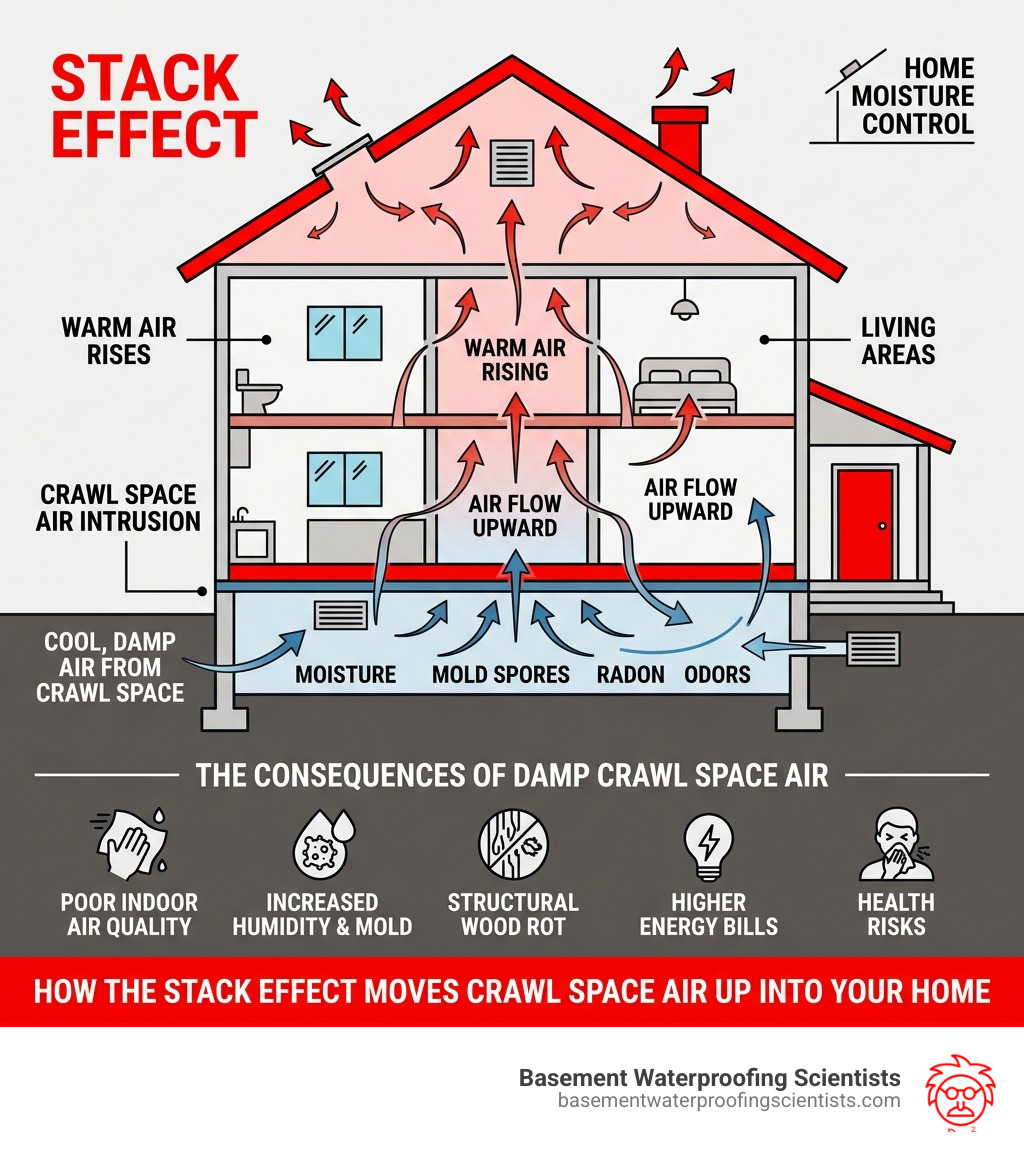
- The “Stack Effect” and Vents: This is a big one. Physics dictates that warm air rises. As warm air leaves the upper levels of your home, it creates a vacuum that pulls cold, damp air up from the crawl space. This is known as the stack effect. Ironically, traditional foundation vents often make this worse by letting in humid summer air that condenses on cool surfaces.
- Plumbing Leaks: Even a tiny pinhole leak in a pipe can dump hundreds of gallons of water into the soil over time, creating a localized swamp that fuels mold growth.
The Risks: Why You Can’t Ignore It
Ignoring moisture is like inviting a wrecking crew to live under your floorboards.
- Structural Damage: Wood-destroying fungi love damp wood. Over time, moisture leads to wood rot, causing your floor joists to sag and your subfloor to soften.
- Pest Attraction: Termites, cockroaches, and rodents are attracted to damp environments. Mice can squeeze through openings as small as 1/4 inch, and once they find a humid, dark space, they’ll never want to leave.
- Health Issues: High humidity (above 60-65%) is the perfect breeding ground for mold and dust mites. Because of the stack effect, those mold spores end up in your bedroom and kitchen.
- Indoor Air Quality: If you’ve ever noticed a “musty” smell in your home, you’re likely smelling the off-gassing of mold and bacteria from the crawl space.

What Is a Safe Moisture Level?
So, what should you aim for? Experts agree that maintaining a relative humidity between 30% and 50% is ideal. According to research on moisture control and mold prevention, levels consistently above 70% almost guarantee mold growth. If you aren’t sure where you stand, a proper crawl space drainage system is often the first step in reclaiming that space.
The Foundation of Crawl Space Moisture Control: Vapor Barriers vs. Encapsulation
When we talk about crawl space moisture control, homeowners usually have two main options: a simple vapor barrier or full encapsulation. Think of it like the difference between wearing a raincoat and wearing a full dry suit.
| Feature | Vapor Barrier (Standard) | Full Encapsulation (Premium) |
|---|---|---|
| Material | 6-mil to 10-mil Polyethylene | 12-mil to 20-mil Reinforced Liner |
| Coverage | Floor only (usually) | Floor, Walls, and Sealed Vents |
| Sealing | Overlapped seams | Taped seams & mechanical fasteners |
| Humidity Control | Passive (blocks ground vapor) | Active (creates conditioned space) |
| Energy Savings | Minimal | Up to 15% or more |
The Essential Role of Vapor Barriers in Crawl Space Moisture Control
A vapor barrier is a heavy-duty plastic sheet laid over the dirt floor. Its primary job is to stop “vapor diffusion”—the process of moisture moving from the damp earth into the air.
For a crawlspace vapor barrier installation to be effective, we follow strict standards. We overlap the sheets by at least 12 inches and seal the seams with specialized waterproof tape. This ensures that the essential role of crawl space vapor barriers is fulfilled: keeping the ground moisture where it belongs—in the ground.
Why Encapsulation is the Ultimate Crawl Space Moisture Control Strategy
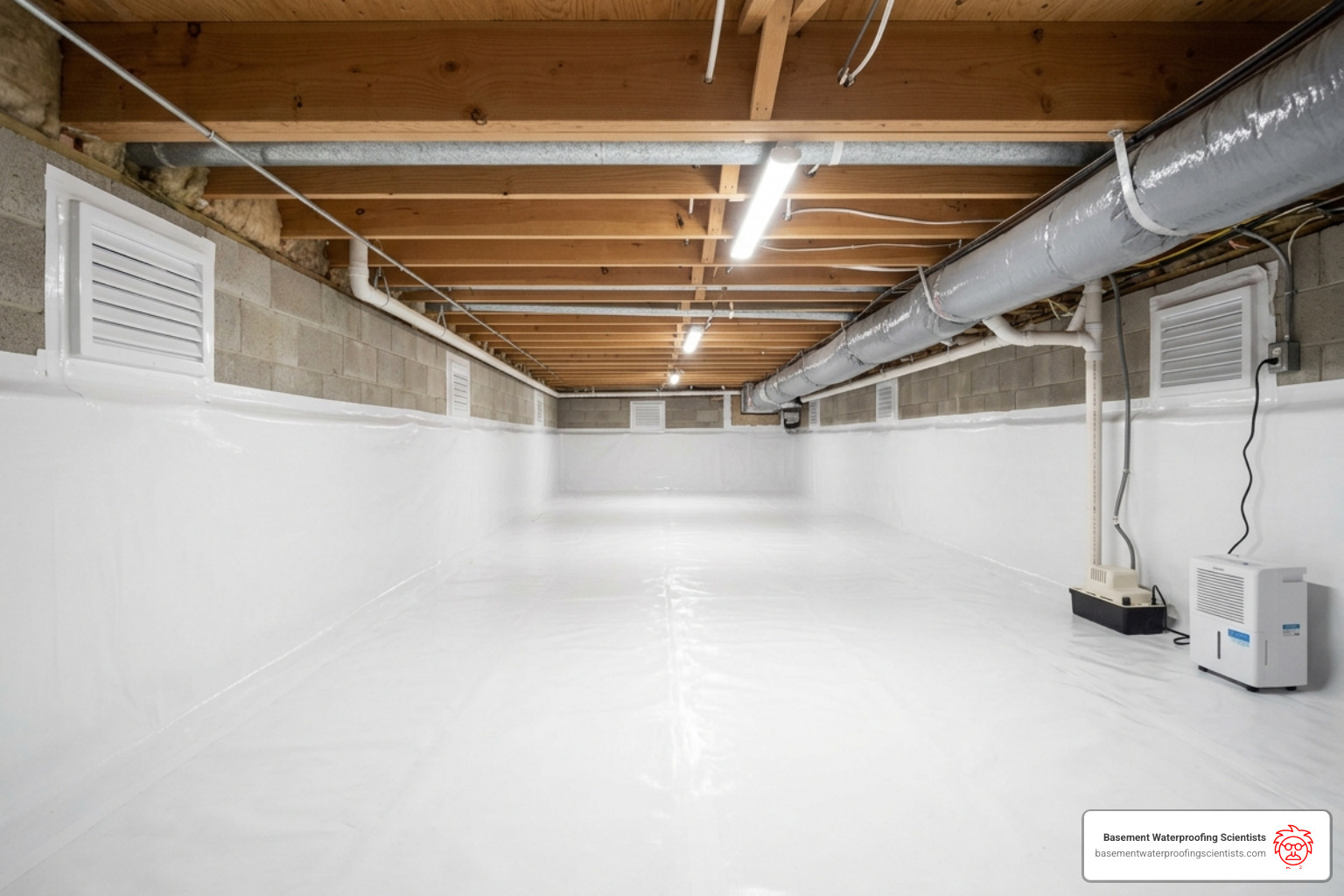
While a vapor barrier is a great start, choosing crawl space encapsulation is the “gold standard.” Encapsulation involves covering the floor and the walls, then sealing off all foundation vents.
Why seal the vents? In the humid summers of Pennsylvania and New Jersey, vents actually bring in moisture. When that hot, humid air hits your cool 55-degree crawl space, it reaches the “dew point” and turns into liquid water. By using the best way to seal crawl space vents, we turn the area into a “conditioned space.”
The results are impressive. Studies in places like Flagstaff, Arizona, have shown that homes with sealed crawl spaces save 15% or more on annual heating and cooling energy use. It also acts as a radon barrier and makes the space clean enough for storage.
Essential Components for a Dry Crawl Space
Achieving permanent crawl space moisture control requires more than just plastic on the ground. It’s a system of components working together.
1. High-Capacity Dehumidifiers
Even a sealed crawl space can have some residual moisture. A specialized crawl space dehumidifier is essential. Unlike the units you buy at big-box stores, these are designed to operate in low-clearance areas and can remove up to 70 pints of water per day. They are self-draining, so you never have to empty a bucket.
2. Sump Pumps and Interior Drainage
If your crawl space floods during heavy rains in Bensalem or Middletown, a vapor barrier isn’t enough. We install crawl space drainage systems—typically a perimeter French drain (like a SmartPipe) that leads to a sump pump. We always recommend a battery backup for the pump; after all, the power usually goes out exactly when you need the pump most!
3. Rigid Foam Insulation
Traditional fiberglass “batts” are a nightmare in crawl spaces. They soak up moisture like a sponge, get heavy, fall down, and become a “mold hotel.” Instead, we use rigid foam board or closed-cell spray foam. These materials don’t absorb water and provide a continuous thermal break on the foundation walls.
4. Exterior Maintenance
Don’t forget the outside of your house!
- Gutters and Downspouts: Ensure your gutters are clean. Gutter cleaning typically costs $120 to $225, but it can save you thousands in foundation repairs.
- Downspout Extensions: Water should be discharged at least 5 to 10 feet away from the house.
- Grading: The soil around your foundation should slope away at a 5% grade (about 3 inches of drop over 5 feet).
5. Durable Liners
When selecting a crawl space liner, thickness matters. A standard 6-mil liner is easily punctured if you have to crawl over it for plumbing repairs. We prefer 20-mil reinforced liners that are nearly impossible to tear and often come with antimicrobial additives to prevent mold growth on the plastic itself.
Professional Solutions and Maintenance for Long-Term Dryness
Is crawl space moisture control a DIY project? Some parts are. You can certainly clean your own gutters and add downspout extensions. However, when it comes to full encapsulation and structural repairs, professional help is usually the safer bet.
Costs and Expectations
We know budget is a major concern for homeowners in Reading or Lansdale.
- Inspection: A professional inspection typically costs between $100 and $250.
- Encapsulation: The national average for crawl space encapsulation is around $5,500, though it can range from $1,500 to $15,000 depending on the size and condition of the space.
- Basement/Crawl Space Waterproofing: For more extensive systems, the average cost for basement or crawl space waterproofing is between $4K and $8K.
You can find a more detailed breakdown in our crawl space encapsulation cost complete guide.
The Basement Waterproofing Scientists Advantage
At Basement Waterproofing Scientists, we’ve spent 30 years perfecting the art of keeping homes dry. We don’t just throw plastic on the ground. We use specialized equipment to identify the exact source of leaks, which often allows us to fix the problem for less than the big national franchises. Our work is backed by a lifetime guarantee, giving you peace of mind that your “swamp” won’t return.
Maintenance Checklist (Updated for April 2026)
To keep your system running perfectly, follow these steps:
- Every 3 Months: Check and clean the dehumidifier filter.
- Annually: Inspect the sump pump for debris and test the battery backup.
- After Big Storms: Do a quick visual check for any standing water or signs of liner damage.
- Exterior Check: Ensure mulch or soil hasn’t built up against your siding or blocked your sealed vent covers.
Frequently Asked Questions about Crawl Space Moisture
Should crawl space vents be kept open or sealed?
In almost all cases in our Pennsylvania and New Jersey climate, vents should be sealed. Open vents allow humid summer air to enter and condense, and they let cold winter air in, which freezes your pipes and makes your floors ice-cold. Sealing them is a core part of effective crawl space moisture control.
How long does it take to dry out a wet crawl space?
If you have standing water, you need to pump it out first. Once the standing water is gone, a high-capacity dehumidifier can typically dry out the air and the surface of the wood in 12 to 24 hours. However, drying out deep-seated moisture in heavy timber can take several days.
Can a vapor barrier be installed over damp soil?
Yes, but you have to be careful. You should never trap standing water under plastic. However, you can install a vapor barrier over damp sand or soil as long as you have addressed the source of the water (like a leak or high water table) first. The barrier will then prevent that dampness from evaporating into your home.
Conclusion
Managing crawl space moisture control is one of the most important things you can do for the longevity of your home and the health of your family. By moving away from the “vented dirt” model and toward a sealed, dry encapsulation system, you stop the structural rot, keep pests away, and breathe cleaner air.
Whether you are in Philadelphia, King of Prussia, or anywhere in our service area, don’t let a damp crawl space undermine your home’s value. From simple vapor barriers to complex drainage systems, there is a solution for every budget.
Ready to stop the swamp? Protect your home with professional outdoor foundation sealant and get a professional evaluation today.
Looking for local help? We serve: Philadelphia, Reading, Norristown, Pottstown, Bensalem, Upper Darby, Middletown, Lansdale, Warminster, King of Prussia, and surrounding areas in PA, NJ, and DE.