

Why Water Sealer for Basement Walls Matters for Your Home
Water sealer for basement walls is a protective coating applied to interior foundation walls. It blocks moisture, prevents mold, and protects your home’s structural integrity.
Key Types of Basement Wall Sealers:
- Penetrating Sealers – Work below the surface, breathable, natural finish (Silane-Siloxane, Silicate densifiers)
- Topical Coatings – Form a surface barrier, offer stain resistance (Acrylic, Epoxy, Rubberized membranes)
- Waterproofing Paints – Easy DIY application, often require multiple coats
- Membranes – Physical barrier systems, professional installation recommended
Quick Selection Guide:
- Minor dampness → Penetrating sealer
- Active seepage → Hydraulic cement + topical coating
- Finished look → Acrylic or epoxy coating
- Block walls → Silane-Siloxane or specialized block sealer
A damp basement is a threat to your home and health. The American Society of Home Inspectors reports moisture in 60 percent of U.S. houses, with 38 percent at risk for basement mold. Unaddressed moisture can lead to structural damage and poor air quality, but the right water sealer can transform your basement into a usable, healthy living space.
This guide covers how to select and apply basement wall sealers. You’ll learn to identify moisture sources, choose the right product, prepare your walls, and know when to call a professional.
While professional waterproofing can be a significant investment, many homeowners can tackle minor issues with DIY sealers for a few hundred dollars.
I’m Darin Garvey. For over 30 years, my team at Basement Waterproofing Scientists has helped Philadelphia-area homeowners solve complex water problems. We use advanced leak detection and targeted water sealer for basement walls solutions to transform wet basements into dry, healthy spaces.
Key terms for water sealer for basement walls:
- exterior foundation sealing
- how to seal exterior foundation cracks
- sealing exterior brick foundation
Understanding Basement Water Infiltration
Basements are built below grade, making them susceptible to water. The battle against moisture begins with understanding how it gets in, which is key to choosing the right water sealer for basement walls.
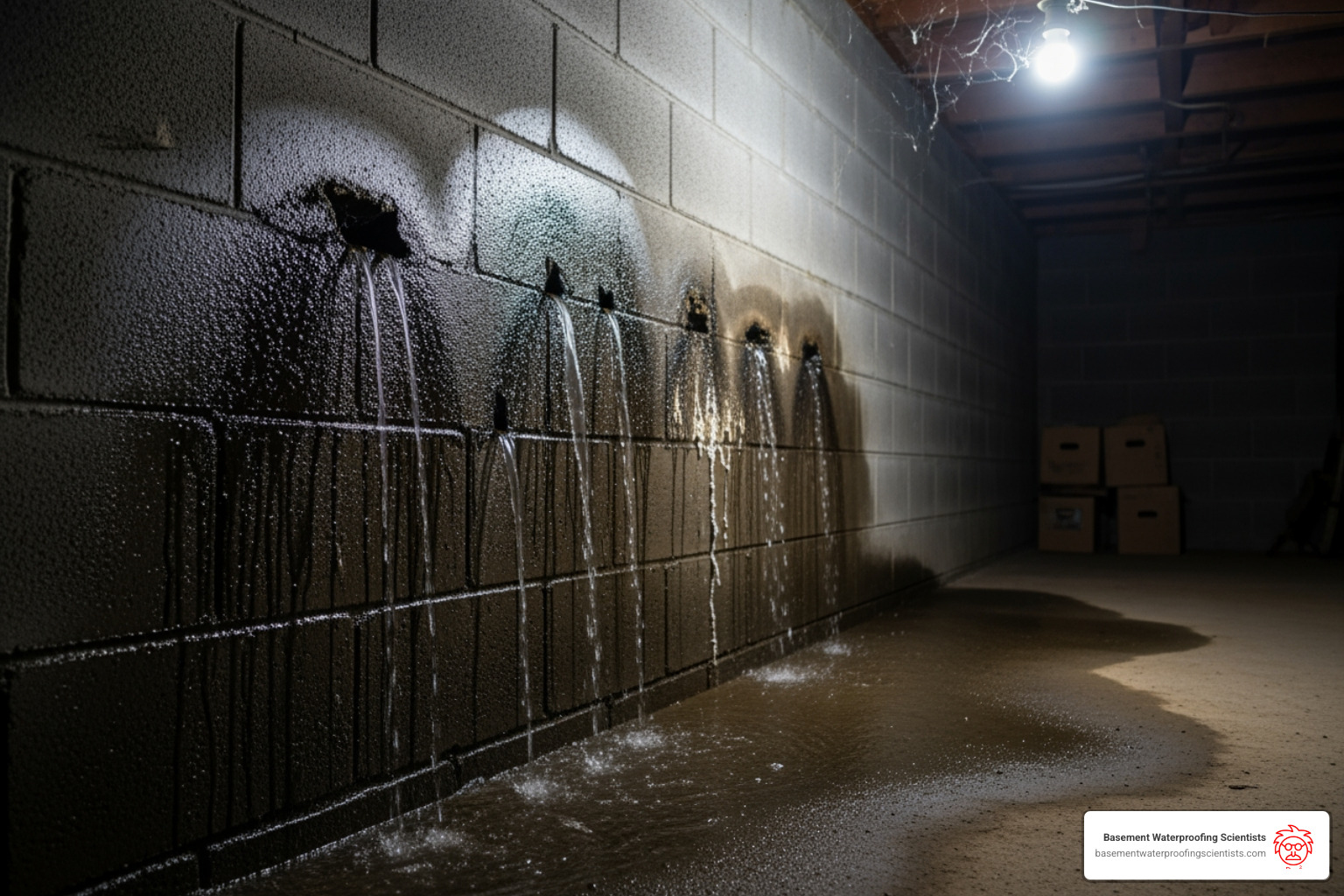
Saturated soil exerts hydrostatic pressure on foundation walls, forcing water through any weakness. Concrete and masonry are also naturally porous, absorbing water through capillary action, much like a sponge. This constant battle against moisture is why addressing Basement Water Intrusion is so crucial.
Primary Causes of Water Infiltration
- Foundation Cracks: Often caused by house settling, even hairline cracks can allow significant water entry under pressure. For more on this, see our guide on Exterior Foundation Cracks.
- Window Well Leaks: Poorly drained window wells collect water, which can seep around the window frame into the basement.
- Poor Exterior Grading: If your yard slopes toward the house, water will pool near the foundation, increasing pressure and the likelihood of seepage.
- Clogged Gutters: Overflowing gutters dump water directly against your foundation, saturating the soil.
- Downspouts Too Close to the Foundation: Downspouts should discharge water at least 10 feet away from the foundation to be effective.
The Risks of Unmanaged Basement Moisture
Ignoring basement moisture leads to serious problems:
- Structural Damage: Constant moisture weakens concrete and masonry, leading to deterioration and bowing walls.
- Foundation Corrosion: Metal components like rebar can corrode, compromising the foundation’s integrity.
- Mold and Mildew Growth: Damp basements are a perfect breeding ground for mold, which can cause health issues. Learn more about How Wet Basements Create Mold.
- Health Risks: Mold can trigger allergies, asthma, and other respiratory problems.
- Musty Odors: The characteristic “basement smell” is a sign of mold or mildew and can permeate your home.
- Damaged Property: Stored items can be ruined by moisture and mold.
- Pest Infestations: Damp environments attract insects and rodents.
Types of Water Sealer for Basement Walls
The best water sealer for basement walls depends on your specific moisture problem, wall condition, and desired finish. Sealers are generally categorized as penetrating, topical, waterproofing paints, and membranes. Our Foundation Sealer Ultimate Guide offers a broader look at these options.
Penetrating (Reactive) Sealers
These sealers work beneath the surface without forming a film.
How They Work: They absorb into concrete or masonry pores and react chemically to create a water-repellent barrier or densify the material. This makes the wall itself less permeable.
- Silicate Densifiers: These react with free lime in concrete to form a crystalline structure within the pores, increasing density and making it less porous.
- Silane-Siloxane Water Repellents: These create a hydrophobic (water-repelling) barrier within the pores, effectively preventing water absorption.
- Benefits:
- Breathable: They allow moisture vapor to escape, preventing it from getting trapped behind the sealer.
- Natural Finish: They maintain the original look and texture of the wall.
- Long-Lasting: Many can last for 5-10 years or longer.
- For block walls, a quality penetrating sealer is often the Best Concrete Block Wall Waterproofer.
Topical Sealers and Coatings
These products form a protective layer on the surface of your basement walls.
How They Work: They create a continuous film that acts as a waterproof membrane.
- Acrylic Sealers: Often used for decorative purposes, they provide a gloss or matte finish with some water resistance.
- Epoxy Coatings: Known for durability, they create a very hard, non-porous surface that is excellent for stain resistance.
- Rubberized Membranes: These are thicker, flexible coatings that create a robust waterproof barrier and can bridge small cracks.
Advantages:
- Stain Resistance: The non-porous surface resists oil, grease, and other stains.
- Decorative: Available in various colors and finishes to improve your basement’s appearance.
Disadvantages:
- Can Trap Moisture: Non-breathable coatings can trap moisture within the wall, leading to bubbling or peeling.
- May Peel or Flake: Hydrostatic pressure can cause them to lose adhesion over time.
Water-Based vs. Solvent-Based Sealers
The base of a sealer affects its application, odor, and performance.
| Feature | Water-Based Sealers | Solvent-Based Sealers |
|---|---|---|
| Odor | Little to no odor (low VOC) | Strong odor during application |
| VOC Content | Generally low | Higher |
| Cleanup | Easy cleanup with soap and water | Requires mineral spirits or other solvents |
| Application | Easier to apply, less toxic | Requires good ventilation, more hazardous |
| Penetration | Good penetration | Historically deeper penetration |
| Appearance | Natural look | Tends to darken concrete, “wet look” |
Water-based sealers are popular for interior use due to low odor and easy cleanup. Solvent-based sealers can offer deeper penetration and a “wet look” but require good ventilation due to higher VOCs.
How to Choose and Apply a Basement Wall Sealer
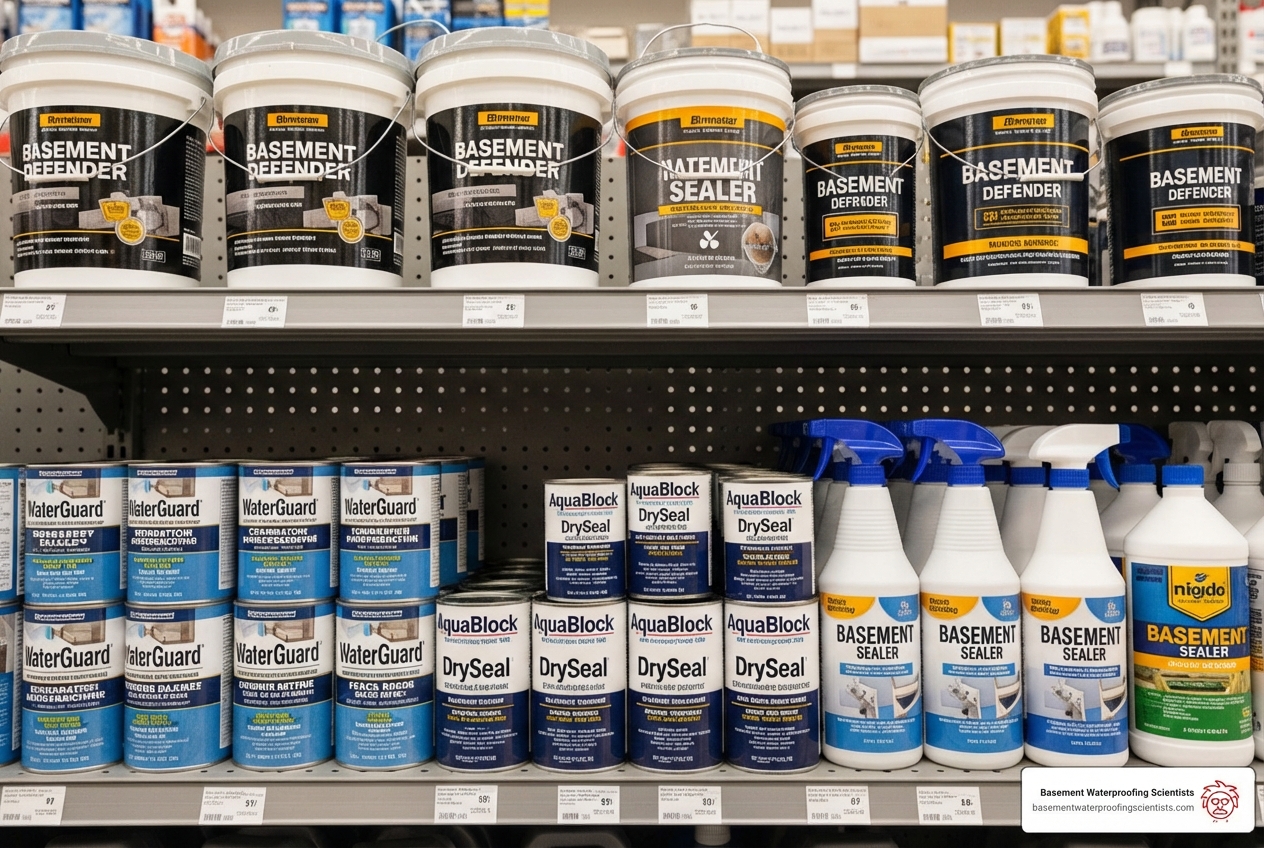
Choosing the right water sealer for basement walls requires assessing the symptoms before prescribing a treatment. Proper diagnosis and application are key. Our Waterproofing Your Basement: A Homeowner’s Guide provides an excellent starting point.
Factors for Choosing the Right Water Sealer for Basement Walls
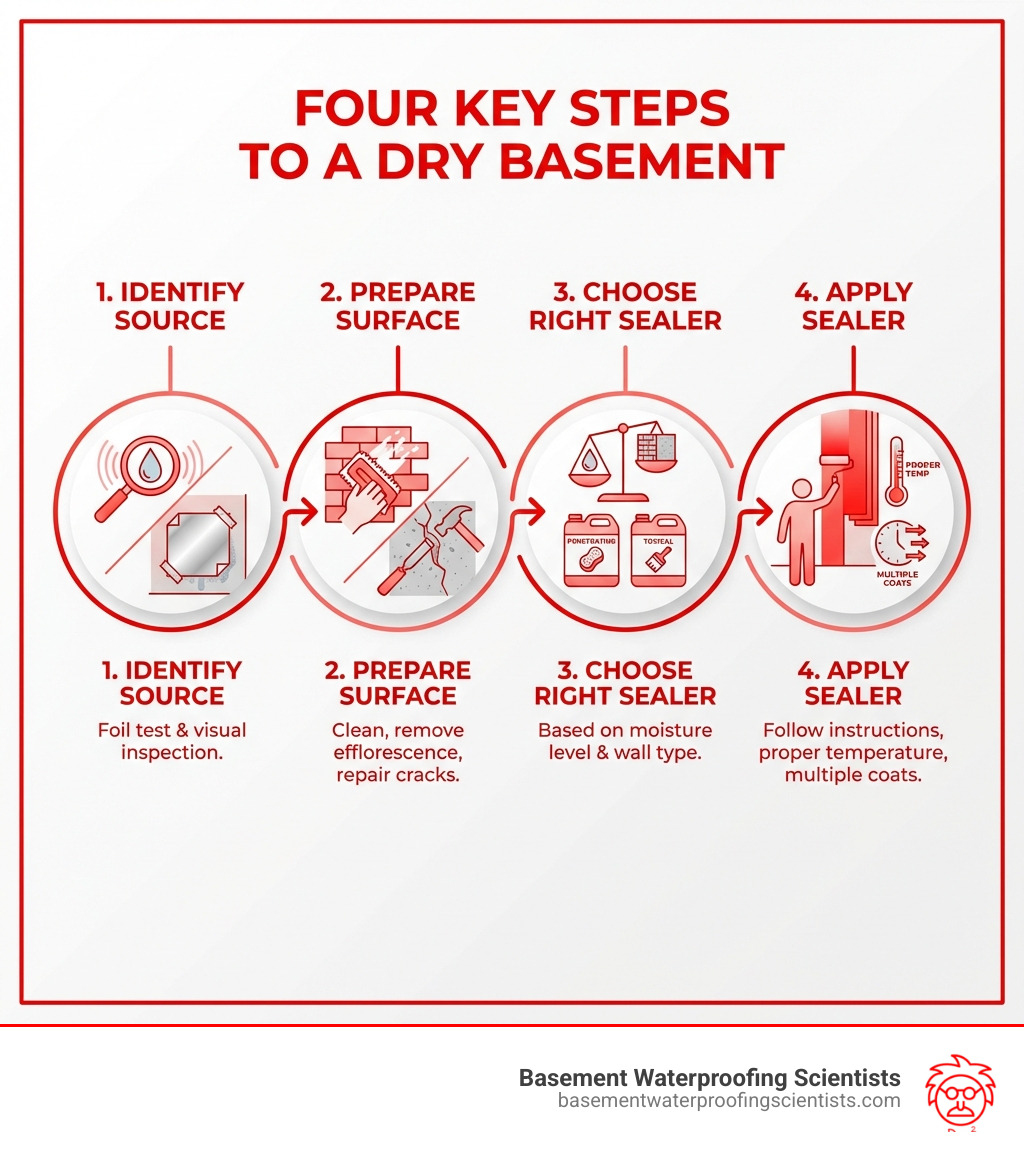
- Moisture Assessment (Foil Test): Tape a 1-foot square of aluminum foil to a dry section of the wall. After 24 hours, check for moisture. If it’s on the wall side, water is seeping through. If it’s on the room side, it’s condensation.
- Concrete Condition (Poured vs. Block):
- Poured Concrete Walls: Generally denser but can have cracks. Penetrating sealers or hydraulic cement for cracks are often effective.
- Concrete Block Walls: More porous with hollow cores that can trap water. They often require specialized sealers, as discussed in our Cinder Block Foundation Sealer Guide.
- Existing Coatings or Paint: Most sealers require a bare masonry surface to bond properly. Old paint will likely need to be removed.
- Desired Finish: Decide if you want a natural look, a clear finish, or a decorative colored coating.
Wall Preparation: The Crucial First Step
Proper surface preparation is required for any sealer to be effective. Skipping these steps is a common DIY mistake.
- Cleaning the Surface: Remove all dirt, dust, and grease. Use a stiff brush or a concrete cleaner/degreaser.
- Removing Efflorescence: These white, powdery salt deposits must be removed with a wire brush and cleaner before sealing.
- Repairing Cracks: Patch all cracks and holes before applying a sealer. For active leaks, hydraulic cement is often recommended as it expands and sets quickly. While a good fix, be aware that water pressure may find other weak points. For more, see our Basement Wall Crack Repair Guide.
- Removing Old Paint: Failing or non-waterproofing paint must be removed via wire brushing, scraping, or sandblasting so the new sealer can bond with the masonry.
- Lead Paint Safety Precautions: If your home is older, old paint may contain lead. Scraping or sanding can release toxic lead dust. Always wear a NIOSH-approved respirator and clean up carefully. For more information, please Learn about lead safety from the EPA.
Application Steps and Techniques
Always follow the manufacturer’s specific instructions, as products vary.
- Temperature and Humidity Limits: Most sealers have an ideal application temperature range (typically 50-90°F). Applying outside this range can compromise adhesion.
- Application Tools (Roller, Brush, Sprayer): Use a roller for large areas, a brush for corners and edges, and a sprayer for speed on large surfaces. Ensure your tools meet the product’s specifications.
- Number of Coats: Most waterproofing paints and topical sealers require at least two coats. The first coat fills pores, and the second provides a complete barrier.
- Curing Time: Allow adequate drying time between coats and for the final cure before exposing the surface to moisture. This can take anywhere from several hours to two weeks.
Beyond Sealers: A Holistic Approach to a Dry Basement
A good water sealer for basement walls is vital, but it’s often one piece of a larger puzzle. For lasting dryness, a holistic approach that tackles moisture from all angles is best. This dual approach offers significant Benefits of Dual Approach: Interior and Exterior Basement Waterproofing.
Durability, Maintenance, and Lifespan
The lifespan of a sealer varies by product type, application quality, and the severity of moisture issues.
- Typical Lifespan of Sealers:
- Waterproofing Paints: Often warranted for 10-15 years.
- Penetrating Sealers (Silane-Siloxane): Can last 7-10 years or more, with some silicate densifiers offering permanent protection.
- Acrylic Sealers: Typically need reapplication every 1-3 years.
- Epoxy/Urethane Coatings: Can last 5-10 years or more on interior surfaces.
- Warranty Details: Most manufacturers offer limited warranties covering product defects. They are often void if the product isn’t applied to a properly prepared surface.
- Routine Inspections: Regularly inspect your basement walls for new cracks, moisture, or sealer failure. Early detection prevents major problems.
Interior Sealing vs. Exterior Waterproofing
These two approaches are not mutually exclusive and often work best in tandem.
- How Methods Complement Each Other: Interior sealing stops moisture from entering your living space, while exterior waterproofing diverts water away from the foundation itself. For severe hydrostatic pressure, a combination is the most effective long-term solution.
- Interior Drainage Systems: For persistent water entry, an interior drainage system collects water as it enters the wall and channels it to a sump pump. This manages water before it reaches your finished basement. Our guide on Installing Interior Drain Tile System provides more information.
- Exterior Solutions: Methods like exterior membranes and drainage tiles (French drains) are applied to the outside of the foundation to block and redirect groundwater before it ever reaches the wall. Our Exterior Basement Wall Waterproofing Complete Guide covers these methods extensively.
DIY vs. Hiring a Professional
Deciding whether to DIY or hire a pro depends on the severity of your moisture problem.
- Common DIY Mistakes:
- Misidentifying the water source.
- Improper surface preparation.
- Applying sealer over efflorescence or old paint.
- Ignoring exterior issues like grading or gutters.
- When to DIY (Minor Dampness): If you’re dealing with minor condensation or small hairline cracks from a clear source, a DIY sealer application may be sufficient.
- When to Call a Pro (Active Leaks, Structural Issues): For active leaks, bowing walls, or significant foundation cracks, always hire a professional. Our team at Basement Waterproofing Scientists uses specialized equipment to accurately identify the root cause of leaks. We serve homeowners across Pennsylvania and New Jersey. For local expertise, find Basement Waterproofing Specialists Near Me.
Frequently Asked Questions about Basement Wall Sealers
Here are answers to some of the most common questions we hear about water sealer for basement walls.
Can basement wall sealers also help prevent mold and mildew growth?
Yes, this is a primary benefit. By blocking the moisture that mold and mildew need to grow, a water sealer for basement walls makes the surface inhospitable for them. A dry wall surface reduces overall humidity. Many waterproofing products also contain antimicrobial additives that actively inhibit mold growth on the sealer’s surface, contributing to better indoor air quality. For existing mold problems, professional Mold Testing & Remediation services may be necessary.
What is efflorescence and how does it affect sealer application?
Efflorescence is the white, powdery salt deposit you may see on concrete or masonry walls. It’s caused by water migrating through the wall and evaporating, leaving the salts behind. It is a clear sign that water is moving through your walls.
You must completely remove efflorescence before sealing, as the sealer will not adhere to the powdery surface. This usually involves wire brushing and scrubbing with a specialized masonry cleaner. If not removed, the sealer will eventually lift and peel, making your waterproofing efforts ineffective.
Can basement wall sealers be applied over existing paint or coatings?
Generally, no. Most effective waterproofing sealers need to bond directly with the bare masonry to block water. An existing layer of paint prevents this bond, creating a weak point where water pressure can cause the paint and sealer to peel off.
Old or failing paint must be removed via wire brushing, scraping, or sandblasting to expose the bare masonry. The main exception is if the existing coating is a waterproofing paint that is still in excellent condition. Even then, you should check the new product’s instructions and test a small area first to ensure adhesion.
Secure Your Foundation for Good
A dry basement is an investment in your home’s value, your family’s health, and your peace of mind. Using a water sealer for basement walls is an effective step, but understanding the root cause of moisture is critical for a lasting solution.
For complex water issues or persistent leaks, a professional diagnosis is essential. At Basement Waterproofing Scientists, we use specialized equipment to precisely identify leak sources, allowing us to provide lasting, customized solutions. With 30 years of experience serving Pennsylvania and New Jersey homeowners in areas like Philadelphia, Reading, and Norristown, we can transform your wet basement into a dry, healthy space.
Protect your foundation and create a healthier living environment. Learn more about our expert Exterior Foundation Waterproofing services and find out how we can help you achieve a permanently dry basement.