


Is Your NJ Sump Pump Failing? Here’s What to Do First
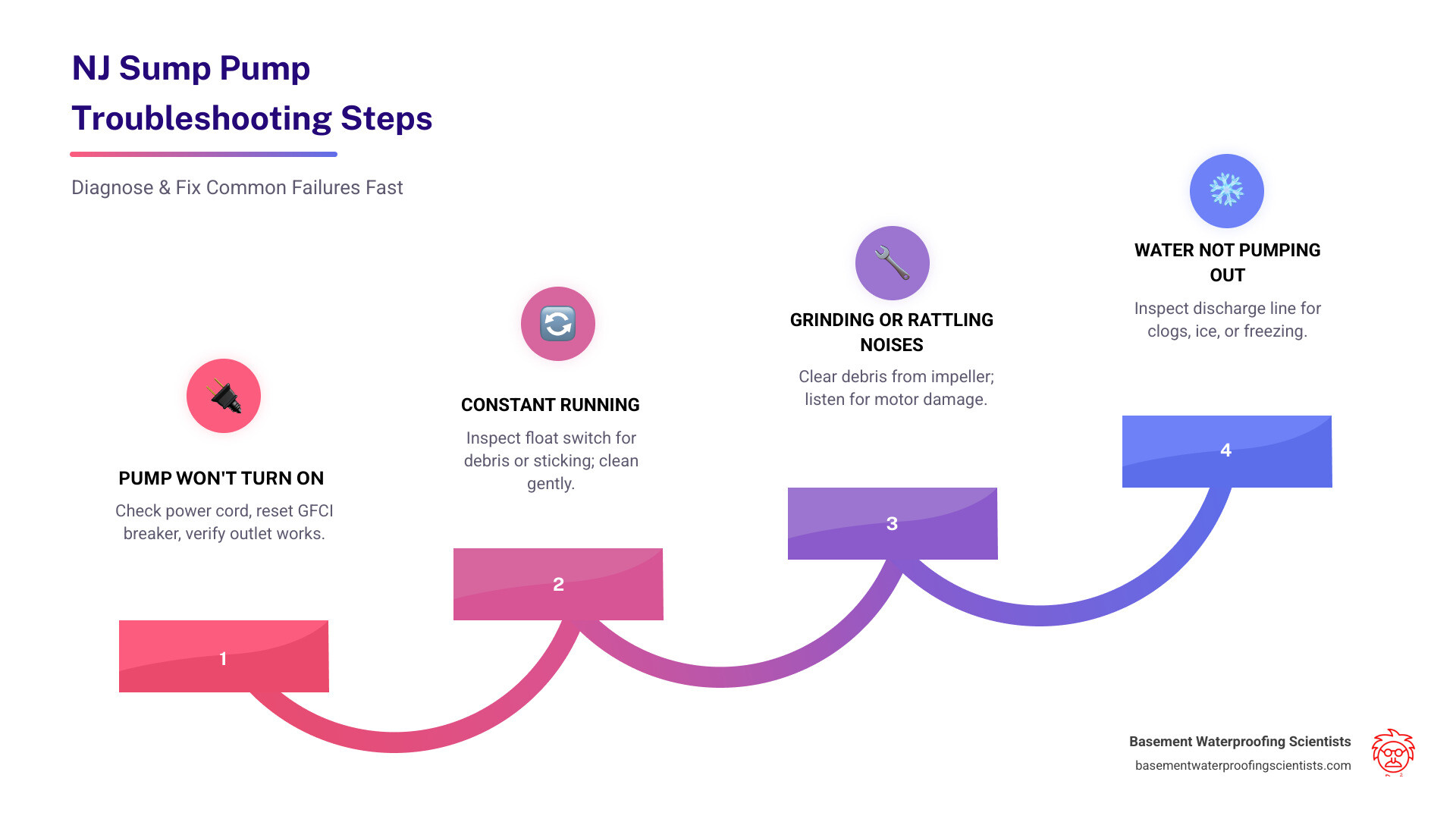
Sump pump repair NJ homeowners need most often comes down to a handful of fixable problems. Before calling a pro, check these common issues:
| Problem | Quick Check | DIY Fix? |
|---|---|---|
| Pump won’t turn on | Check power, reset GFCI breaker | Yes |
| Constant running | Inspect float switch for debris | Yes |
| Strange noises | Listen for grinding (motor) or rattling (debris) | Sometimes |
| Water not pumping out | Check discharge line for clogs or freezing | Sometimes |
| Pump activates but floods continue | Check valve or sizing issue | No – call a pro |
If your pump is over 7-10 years old, or shows signs of rust or motor failure, replacement is likely more cost-effective than repair.
New Jersey basements take a beating. Between Nor’easters, coastal storms, snowmelt, and a notoriously high water table in many counties, a failing sump pump here isn’t just an inconvenience – it can mean thousands of dollars in water damage, mold remediation, and ruined belongings.
The frustrating part? Most sump pump failures are preventable. A stuck float switch, a clogged discharge line, or a pump that’s simply too small for the job – these are problems that show warning signs long before a flood hits. The trouble is, most homeowners don’t notice until water is already on the basement floor.
This guide walks you through exactly how to diagnose, troubleshoot, and repair your sump pump – and helps you know when it’s time to call in a professional.
I’m Darin Garvey, and with over 30 years of combined experience in basement waterproofing and leak detection in the Philadelphia and NJ region, I’ve seen how the right approach to sump pump repair NJ homes need can protect a basement for decades. Let’s get into it.
Essential sump pump repair NJ terms:
Understanding Your System: Types and How They Work
To tackle sump pump repair NJ, you first need to know what’s sitting in your pit. At its simplest, a sump pump is your home’s first line of defense against groundwater. When rain or snowmelt saturates the soil around your foundation, the water is funneled into a sump pump for basement setup—specifically a basin or “pit” carved into the lowest point of your floor.
As the water level rises in that pit, it lifts a float switch (think of the ball inside your toilet tank). Once the float reaches a certain height, it triggers the motor. The water is then sucked up and pushed through a discharge pipe, past a check valve (which prevents water from falling back into the pit once the pump stops), and eventually out away from your home.
Submersible vs. Pedestal Pumps
In New Jersey, you’ll typically encounter two main types of primary pumps. Knowing which one you have changes how you approach repairs.
| Feature | Submersible Pump | Pedestal Pump |
|---|---|---|
| Location | Motor is inside the pit, underwater. | Motor sits on a pole above the pit. |
| Noise Level | Very quiet (water muffles the sound). | Loud (motor is exposed). |
| Lifespan | 7–10 years. | Can last up to 15 years. |
| Power | High; great for heavy NJ flooding. | Lower; best for minor dampness. |
| Clog Risk | Low (usually has a screen). | Moderate (intake is at the bottom). |
Submersible pumps are the gold standard for finished basements because they are tucked away and quiet. However, because the motor lives in water, it can eventually succumb to seal failures or rust. Pedestal pumps are easier to service because the motor is right there in the open, but they aren’t nearly as powerful when a Nor’easter is dumping three inches of rain on your lawn.
Battery Backup and Water-Powered Systems
If you live in a storm-prone area like Middletown or Toms River, a single pump isn’t enough. Power outages are the #1 cause of sump pump failure during storms.
- Battery Backup Systems: These are secondary, smaller pumps that sit in the same pit. If the power goes out or your primary pump dies, the battery kicks in. Most batteries provide enough juice to pump for several hours of continuous rain.
- Water-Powered Systems: These are fascinating because they don’t use electricity at all. They use the pressure from your home’s municipal water line to create a vacuum that sucks water out of the pit. As long as your city water is running, your basement stays dry. However, they aren’t compatible with well water systems.
Common Signs You Need Sump Pump Repair NJ
You don’t want to wait for a puddle to tell you there’s a problem. Your pump will usually “talk” to you before it gives up the ghost. If you notice any of the following, it’s time to investigate.
- Strange Noises: A healthy pump hums. If you hear grinding or clanging, it could mean a damaged impeller (the fan that moves the water) or a motor bearing that’s about to seize. Rattling often suggests a piece of hard debris—like a pebble—is trapped in the intake.
- Constant Cycling: Does your pump turn on and off every few seconds? This “short cycling” puts massive strain on the motor. It’s often caused by a faulty float switch or a check valve that has failed, allowing water to flow back into the pit and re-trigger the pump immediately.
- The “Stuck” Float: This is a classic sump pump repair NJ issue. Over time, the pump can vibrate and shift in the pit, causing the float to get pinned against the wall. If it’s stuck “up,” the pump runs until it burns out. If it’s stuck “down,” it never turns on.
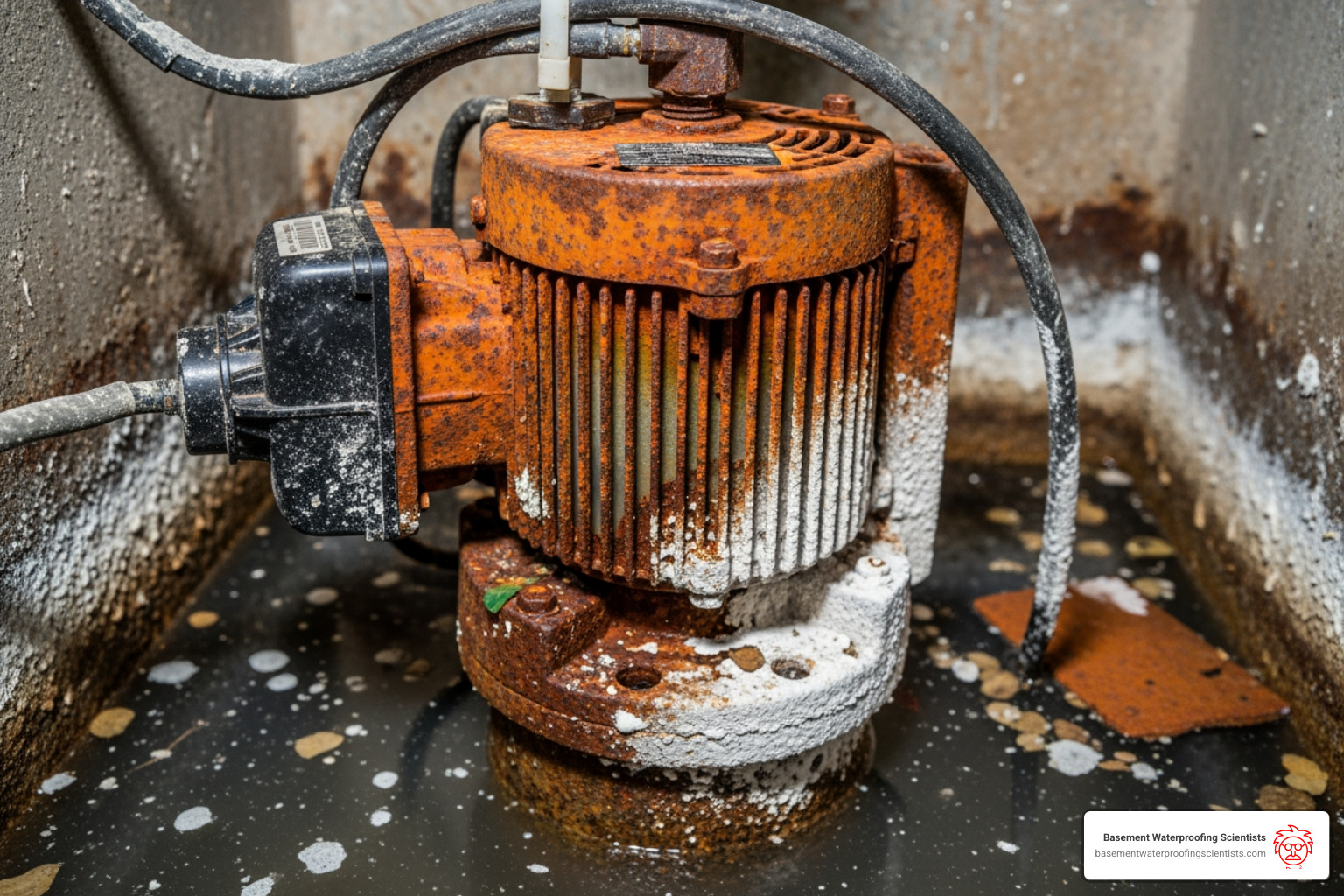
- Visible Rust or Corrosion: NJ groundwater can be mineral-heavy. If you see white “efflorescence” or orange rust on the pump body, the metal is degrading, and a mechanical failure is imminent.
- Vibrating Excessively: If the pump feels like it’s trying to dance across the pit floor, the impeller might be bent or out of balance.
If your pump is showing these signs in a crawl space, you might also need crawl space repair NJ services to address the humidity and mold that likely accumulated while the pump was struggling.
Troubleshooting Sump Pump Repair NJ Issues
Before you assume the motor is dead, run through this quick checklist:
- Check the Power: It sounds simple, but check if the plug has wiggled loose or if the GFCI outlet has tripped. Sump pumps are notorious for tripping breakers during power surges.
- Clean the Intake Screen: If the pump is humming but the water level isn’t dropping, the screen at the bottom is likely clogged with silt, hair, or debris.
- Check the Discharge Pipe: In the winter, NJ discharge lines can freeze. If the water has nowhere to go, the pump will run until the motor burns out. Ensure the pipe exits at least 10 feet away from your foundation.
When to Call a Professional for Sump Pump Repair NJ
While clearing a clog is a great DIY task, some things require a licensed expert. You should call us for nj basement waterproofing and pump repair if:
- The motor is humming but not turning (internal mechanical failure).
- You smell electrical burning or see smoke.
- The pump is correctly sized but still can’t keep up with the water.
- You need to install a backup system or a sump pump french drain to manage high water volume.
Why NJ Homes Face Unique Sump Pump Challenges
New Jersey isn’t like the Midwest. Our geology and weather patterns create a “perfect storm” for basement flooding.
- High Water Tables: Many parts of NJ, especially coastal areas and towns near the Delaware River, have high water tables. This means the soil is naturally “full” of water. Your sump pump might run even when it hasn’t rained for days.
- Hydrostatic Pressure: When the ground gets saturated, the water exerts thousands of pounds of hydrostatic pressure against your foundation walls. This pressure forces water through even the tiniest cracks. This is why basement waterproofing NJ is so critical—a pump is only half the battle; you also need to manage the pressure.
- The “Freeze-Thaw” Cycle: NJ winters involve lots of freezing and melting. This expands and contracts the soil, which can shift your sump pit or crack your discharge lines.
Local Regulations and Discharge Codes
You can’t just pump water anywhere. Most NJ municipalities have strict codes:
- The 10-Foot Rule: Generally, your discharge hose must terminate at least 10 feet away from your property line to avoid flooding your neighbor.
- No Sewer Connections: In almost all NJ towns, it is illegal to connect your sump pump to the sanitary sewer (the pipes that take your toilet water). This can overwhelm the local water treatment plant during storms.
- Street Drainage: Some towns allow you to pump to the curb/street, while others forbid it. Always check local ordinances before burying a discharge line.
DIY Maintenance and Testing Guide
We recommend testing your pump every three months and right before “hurricane season” (late summer/fall) or the spring thaw.
The “Bucket Test” (Step-by-Step):
- Clear the Pit: Remove any visible debris, rocks, or “sludge” from the bottom of the basin.
- Fill it Up: Slowly pour a 5-gallon bucket of water into the pit.
- Watch the Float: The float should rise smoothly. Once it reaches the “on” position, the pump should kick in instantly.
- Listen and Observe: The water should disappear quickly. Listen for the “thud” of the check valve closing when the pump stops—this means it’s working!
- Check the Outside: Walk outside to the discharge point. Ensure the water is actually flowing out and not bubbling up from a broken pipe underground.
For a more permanent solution, check out our sump pump installation guide 2025 to see how a professional-grade system should be configured.
Frequently Asked Questions about Sump Pump Repair
How long do sump pumps typically last?
On average, a quality sump pump lasts 7 to 10 years. However, if your pump runs every hour of every day due to a high water table, that lifespan might drop to 5 years. We generally recommend the “5-year rule”: if your pump is over 5 years old, you should have it professionally inspected annually. If it’s over 10, replace it before it fails. Waiting for a failure usually results in a much higher bill for foundation repair NJ due to water damage.
What is the average cost of sump pump repair in New Jersey?
The average cost for sump pump repair NJ homeowners pay is roughly $500. Minor fixes, like replacing a float switch or clearing a discharge clog, might cost between $100 and $250. However, if the motor is shot or the basin needs to be excavated and replaced, costs can exceed $1,000.
If you are looking at full basement waterproofing (which includes the pump, drainage, and wall treatments), the average cost is between $4K and $8K.
What should I do if my pump fails during a storm?
- Don’t Panic: If the water is rising, check the breaker first.
- Manual Bailing: If you have no power and no backup, you can use a bucket to manually remove water from the pit and dump it outside. It’s exhausting, but it saves the basement.
- Check for Clogs: Sometimes the “failure” is just a piece of mulch stuck in the intake. Reach in (carefully!) and feel for obstructions.
- Call for Emergency Help: If the water is approaching electrical outlets or your furnace, call a pro immediately. While waiting, you might need to address basement crack repair NJ later if the pressure caused new leaks.
Conclusion
A dry basement is the foundation of a healthy home. In New Jersey, your sump pump is the heart of that protection. Whether you’re dealing with a noisy motor or a pit that won’t drain, addressing sump pump repair NJ issues early is the smartest investment you can make.
At Basement Waterproofing Scientists, we bring 30 years of experience to every job. We don’t believe in guesswork. We use specialized equipment to identify the exact source of your leaks, allowing us to fix the problem for less than the big-box competitors. Whether you’re in Philadelphia, Cherry Hill, or anywhere in the NJ/PA area, we offer customized solutions backed by a lifetime guarantee.
Don’t wait for the next big storm to test your luck. Schedule your expert basement waterproofing NJ consultation with us today, and let’s make sure your basement stays permanently dry.