

Why Outside Foundation Crack Repair Protects Your Home’s Structural Integrity
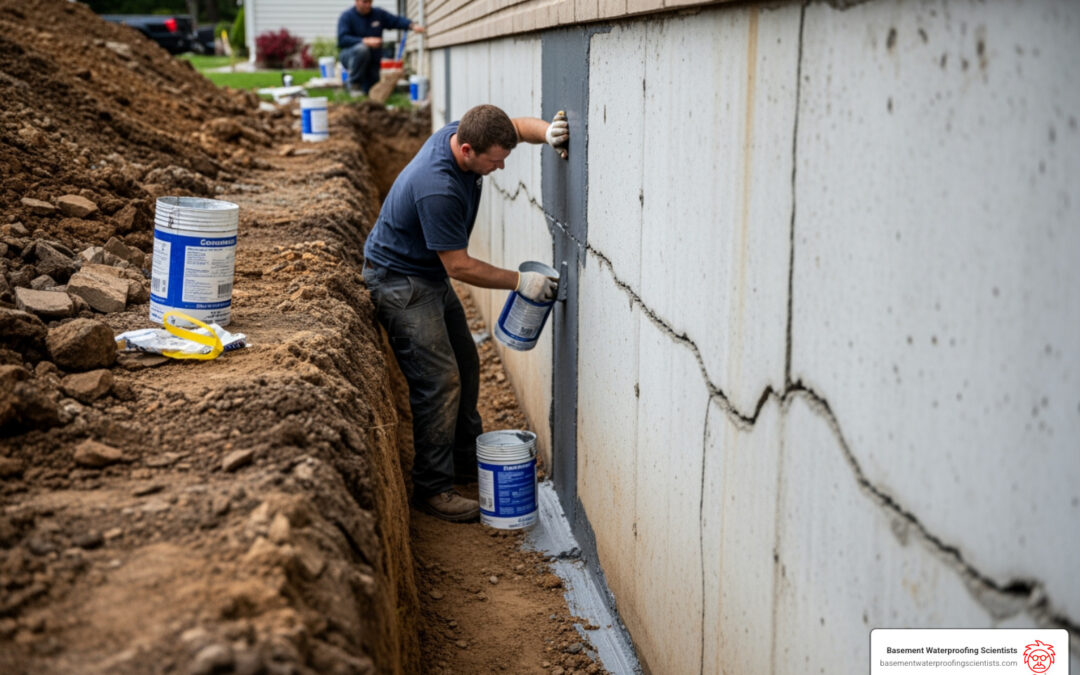
Outside foundation crack repair is the process of fixing cracks in your home’s foundation by excavating around the exterior wall, cleaning and sealing the damaged area, and applying waterproofing materials before backfilling. While interior repairs are faster and cheaper, exterior repair is often necessary when you need permanent protection from water pressure, when interior walls are inaccessible, or when cracks indicate serious structural issues.
Quick Answer: When You Need Outside Foundation Crack Repair
| Situation | Best Repair Method |
|---|---|
| Cracks behind finished walls, furnaces, or electrical panels | Exterior repair |
| Horizontal or widening cracks indicating structural pressure | Exterior repair |
| Persistent leaks despite interior sealing | Exterior repair |
| Minor vertical cracks in accessible areas | Interior injection (faster, less expensive) |
| Hairline cracks with no moisture | Monitor first, repair if worsening |
If you’ve noticed cracks in your foundation walls, you’re not alone. Research shows that soil movement causes roughly 60% of foundation cracks, often from water-saturated clay soil that expands and contracts with the seasons. In Philadelphia and the surrounding areas, our freeze-thaw cycles make this problem even worse.
The stakes are high. Foundation cracks don’t just threaten your home’s structural integrity—they create pathways for water infiltration, leading to basement flooding, mold growth, and decreased property values. Left unaddressed, a crack that seems minor today can widen and worsen, turning a $2,000 repair into a $10,000 problem.
Exterior repair is often more expensive than interior methods—typically running $2,000 to $10,000 per crack compared to $500 to $1,200 for interior injection. But when you’re dealing with significant water pressure from outside, obstructions that make interior access impossible, or structural damage that needs comprehensive attention, exterior repair becomes the only viable long-term solution.
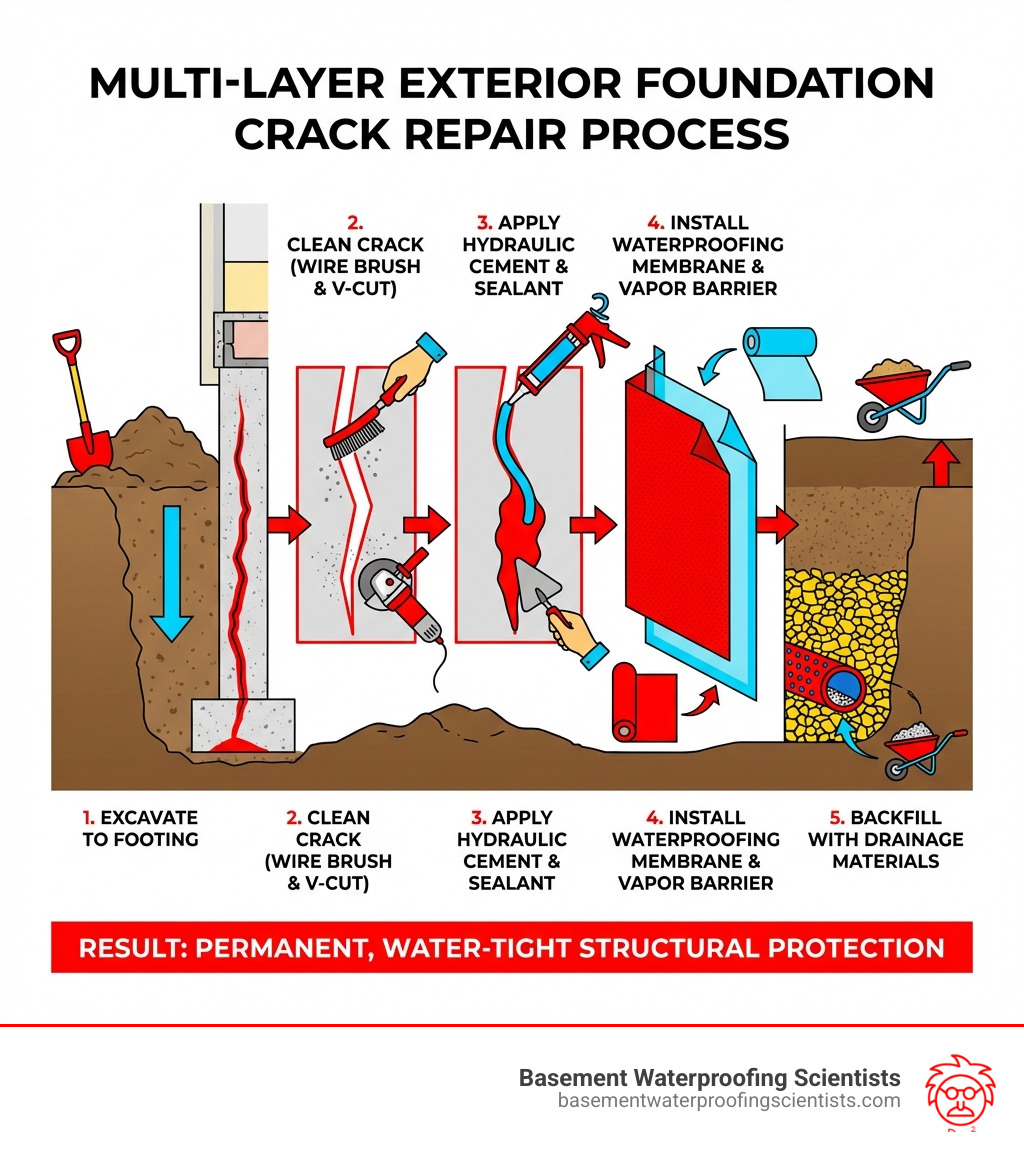
The process involves excavating soil down to your foundation’s footing, thoroughly cleaning the crack, applying multiple layers of sealants and waterproofing membranes, and carefully backfilling. It’s invasive work that disrupts landscaping and requires specialized equipment, but it addresses the root cause rather than just treating symptoms.
In this guide, I’ll walk you through everything you need to know: how to identify which cracks require outside repair, what the step-by-step process looks like, which materials work best, and when it makes sense to tackle this as a DIY project versus hiring professionals.
I’m Darin Garvey, and I’ve spent over 30 years diagnosing and repairing foundation issues in the Philadelphia area, with experience in outside foundation crack repair using state-of-the-art leak detection and targeted exterior waterproofing solutions. I’ve seen how proper exterior repair transforms basements from damp, unusable spaces into dry, healthy areas that homeowners can actually enjoy.
Outside foundation crack repair vocab to learn:
Understanding Crack Types and Severity
When we inspect a home in places like Norristown or Upper Darby, the first thing we look at is the orientation of the crack. Not all exterior foundation cracks are created equal. Some are just “growing pains” of a house settling, while others are SOS signals from your home’s skeleton.
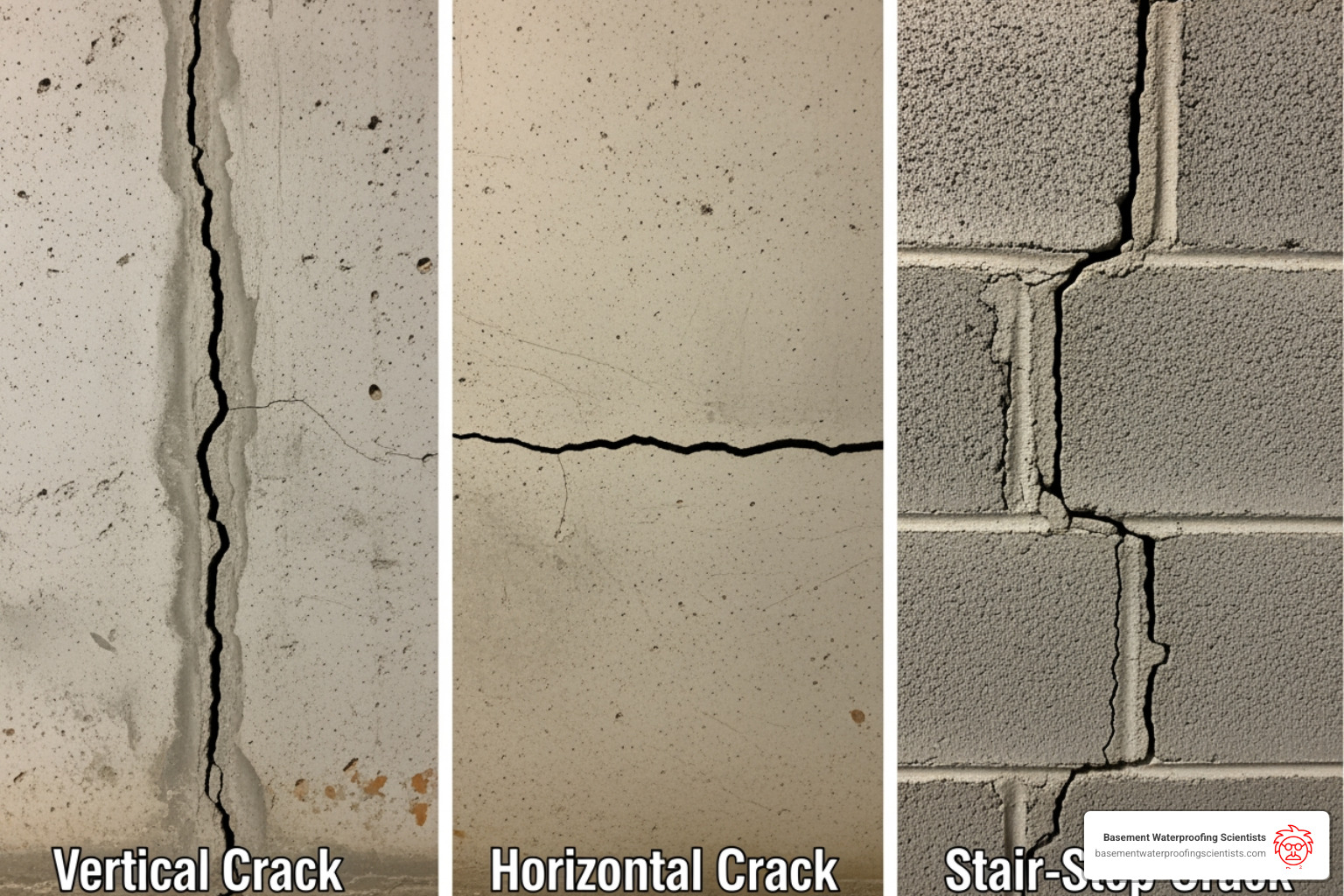
Vertical Cracks
These are the most common and are often caused by the natural concrete curing process or minor foundation settling. They usually run straight up and down or slightly diagonal. While they are often non-structural, they are the primary culprits for water leaks. Because they go from the top of the wall down to the footer, they provide a direct highway for groundwater to enter your basement.
Horizontal Cracks
If you see a horizontal crack, it’s time to pay attention. These are typically caused by lateral pressure—the soil outside is pushing against your wall with more force than the concrete can handle. This often happens in our region due to heavy clay soils that swell when wet. Horizontal cracks are structural issues that often require more than just a simple seal; they may need reinforcement or stabilizing piles.
Stair-Step Cracks
Commonly found in brick or concrete block foundations, these cracks follow the mortar joints. They often indicate differential settlement, where one part of the foundation is sinking faster than the rest. If you’re wondering how to repair a crack in a concrete foundation that looks like steps, the answer usually involves addressing the soil stability beneath the home.
Hairline Cracks
Almost every home has a few hairline cracks. These are very thin (less than 1/16th of an inch) and are usually the result of concrete shrinkage as it dries. If they aren’t leaking and aren’t growing, they generally aren’t a cause for panic, but we always recommend monitoring them.
Identifying Structural vs. Non-Structural Gaps
How do you tell if a gap is just an eyesore or a structural threat?
- Non-Structural: These are usually vertical or diagonal, narrow (under 1/4 inch), and don’t show signs of shifting. Their main threat is moisture intrusion and mold.
- Structural: These are often horizontal, wider than 1/4 inch, or show “stair-stepping.” You might also notice secondary signs like sticking doors, windows that won’t close, or bowed walls.
A great tip for homeowners is to use a crack gauge. You can mark the ends of a crack with a pencil and check it every few months. If the mark no longer aligns or the crack extends past your line, the foundation is still moving, and you need a professional evaluation immediately.
Outside foundation crack repair vs. Interior Methods
One of the most frequent questions we get in King of Prussia and West Chester is: “Can’t you just fix it from the inside?” The answer is usually yes, but should you is a different story.
| Feature | Interior Injection | Exterior Repair |
|---|---|---|
| Cost | $500 – $1,200 per crack | $2,000 – $10,000 per crack |
| Disruption | Low (inside basement) | High (excavation of yard) |
| Primary Goal | Stop water from entering | Stop water from touching the wall |
| Warranty | 1 – 5 years (typically) | 10 – 25 years (or Lifetime) |
| Effectiveness | High for minor leaks | Gold Standard for permanent protection |
Interior methods, like epoxy crack injection, are fantastic for many situations. They are cost-effective and don’t require us to dig up your prize-winning rose bushes. However, interior repairs are essentially a “plug.” They stop the water from getting into your basement, but the water is still pressing against the outside of your foundation wall.
Outside foundation crack repair is a more robust solution because it addresses the hydrostatic pressure at the source. By sealing the wall from the outside, you ensure the concrete stays dry, preventing the rebar inside from rusting and the concrete from deteriorating over time. According to our basement crack repair cost guide, while the upfront investment is higher, the long-term protection often adds more to your property value and provides better peace of mind.
When Exterior Repair is the Necessary Choice
There are times when fixing exterior foundation cracks isn’t just an option—it’s the only way.
- Finished Basements: If you have a beautiful man-cave or a guest suite with drywall and flooring, you probably don’t want us tearing it out to reach a crack. Fixing it from the outside preserves your interior finishes.
- Inaccessible Walls: Sometimes cracks are hidden behind furnaces, water heaters, or electrical panels. Moving these utilities can cost more than the excavation itself!
- Severe Hydrostatic Pressure: If your yard is a swamp every time it rains, an interior plug might eventually fail. Exterior waterproofing membranes are designed to handle that constant water weight.
- Brick or Block Foundations: While poured concrete can be injected from the inside, block foundations are hollow. Water can fill the cores of the blocks, making interior-only sealing very difficult.
Step-by-Step Guide to Exterior Foundation Repair
If we’ve determined that an exterior fix is the way to go, we follow a rigorous process to ensure the repair lasts for the life of the home. Here is how we do it:
1. Utility Locates and Site Prep
Before a shovel even touches the dirt, we call for utility locates. In Pennsylvania and Delaware, this is a legal requirement. We need to know exactly where your gas, water, and electric lines are. We then mark off a 2′ x 2′ or 3′ x 3′ area around the crack.
2. Excavation
We excavate all the way down to the “footing”—the wide concrete base your foundation walls sit on. This is hard work, often requiring a mini-excavator. We must expose the entire length of the crack to ensure a complete seal.
3. Cleaning and the V-Cut
Once the wall is exposed, we use wire brushes and scrapers to remove every bit of dirt and loose concrete. We then use a cold chisel to perform a V-cut. By widening the crack into a “V” shape, we create more surface area for the repair materials to bond to.
4. Filling the Void
We fill the V-cut with hydraulic cement or a non-shrink mortar. Hydraulic cement is unique because it expands as it cures, literally locking itself into the crack and stopping active leaks instantly.
5. Applying the Waterproofing Layers
This is where the magic happens. We don’t just put a “patch” on; we create a shield.
- Sealant: We apply an elastomeric membrane or waterproofing tar that remains flexible. This is crucial because foundations move slightly with temperature changes.
- Membrane: We often apply a heavy-duty waterproofing membrane (like a 14-mil plastic or rubberized sheet) over the sealant.
- Protection Board: To prevent the soil from puncturing the membrane during backfilling, we install a drainage mat or protection board.
6. Backfilling and Grading
Finally, we return the soil to the hole. We do this in layers, tamping it down to prevent future sinking. We often use a bentonite clay mixture near the wall, which swells when wet to create an additional natural water barrier. We always leave the soil slightly mounded so that as it settles, it doesn’t create a “bowl” that traps water against your house.
Materials for Outside Foundation Crack Repair
We use a variety of high-performance materials depending on the specific needs of your home:
- Polyurethane and Epoxy: While common in foundation crack injection services, these are sometimes used externally in combination with membranes.
- Elastomeric Bitumen: A rubberized tar that provides a thick, flexible waterproof coating.
- Non-Shrink Mortar: Ensures the crack is physically filled without leaving gaps as the material dries.
DIY Risks and Professional Safety
We love a good DIY project, but outside foundation crack repair is a heavy lift. There are significant risks involved:
- Soil Cave-ins: Any hole deeper than 4 feet is a death trap if not properly shored. Soil is incredibly heavy, and a collapse can happen in a split second.
- Utility Damage: Hitting a gas line isn’t just expensive; it’s dangerous.
- Incomplete Seals: If you miss even an inch of the crack at the bottom, the whole project will fail, and you’ll have to dig it all up again.
Required Safety Gear for Pros:
- Hard hats and steel-toed boots.
- Trench shoring or shielding for deep excavations.
- Eye protection and heavy-duty gloves for masonry work.
Frequently Asked Questions
How much does outside foundation crack repair typically cost?
As mentioned, the average cost for basement waterproofing and exterior repairs in our service area (from Philadelphia to Reading) generally ranges between $4,000 and $8,000. Factors that influence the price include the depth of the foundation, the presence of landscaping or decks that need removal, and the number of cracks being addressed.
Is DIY outside foundation crack repair feasible?
For a small, shallow crack (maybe 1-2 feet underground), a handy homeowner might find success using a small foundation crack repair guide. However, for deep cracks or structural issues, DIY success rates are low. Research shows that DIY hydraulic cement repairs only have a 29% success rate after one year, whereas professional multi-layer systems often last decades.
When to Hire a Pro for Outside Foundation Crack Repair
You should definitely call us if you notice:
- Cracks wider than 1/4 inch.
- Horizontal cracks or bowing walls.
- Water actively “squirting” or flowing through a crack.
- Cracks that continue to grow after you’ve marked them.
At Basement Waterproofing Scientists, we use specialized equipment to identify the exact source of the leak, which often allows us to fix the problem for less than companies that just guess.
Conclusion
Your foundation is the most important part of your home. While outside foundation crack repair is a significant undertaking, it is often the most effective way to ensure a permanently dry and stable home. By stopping water before it ever touches your concrete, you are protecting your investment for the long haul.
With 30 years of experience serving Pennsylvania, New Jersey, and Delaware, we’ve seen it all. From the shifting soils of Bensalem to the historic foundations of Philadelphia, we provide customized solutions backed by a lifetime guarantee.
Don’t wait for the next big storm to see if your foundation holds up. If you’ve spotted a gap that needs filling, request an exterior foundation waterproofing estimate from our team today. We’ll help you keep the water out and the peace of mind in!