

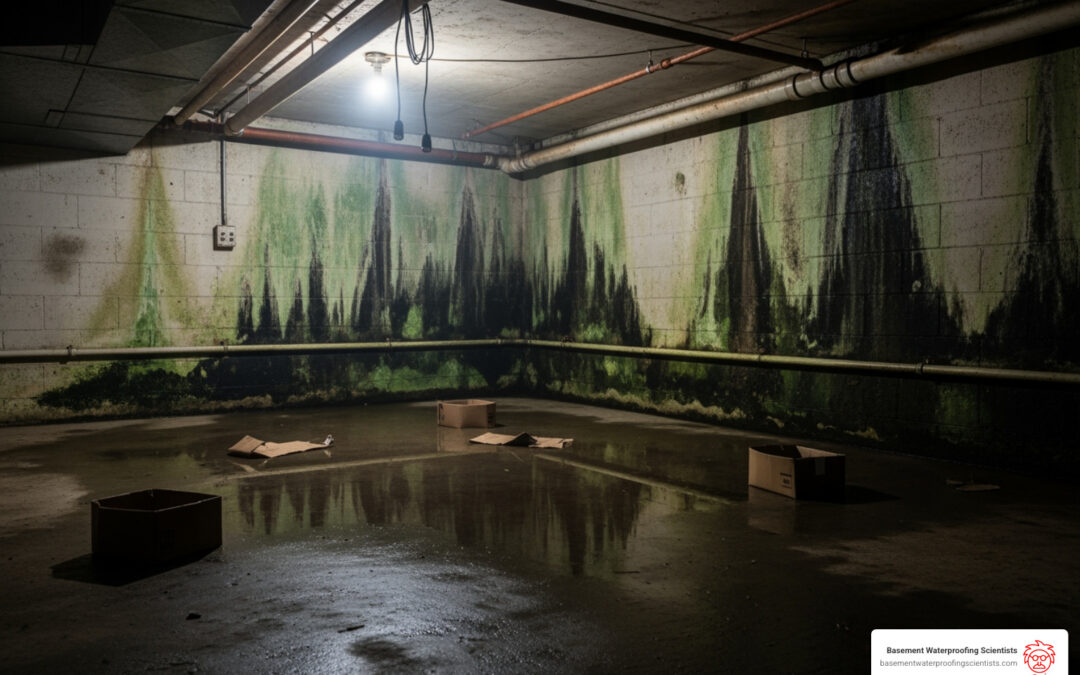
Why You Can’t Ignore a Wet Basement
The best way to waterproof basement from outside involves a comprehensive approach: excavating around your foundation, cleaning and repairing the walls, applying a waterproof membrane or coating, installing an exterior French drain system with perforated pipe and gravel, and ensuring proper grading so water flows away from your home.
Quick Overview of Exterior Waterproofing:
- Excavate – Dig down to the foundation footing around your home’s perimeter
- Clean & Repair – Pressure wash walls and fix any cracks or damage
- Apply Membrane – Install liquid or sheet waterproofing barrier
- Install Drainage – Add French drain with perforated pipe surrounded by gravel
- Backfill & Grade – Replace soil and slope it away from the foundation
A wet basement is more than an inconvenience; it’s a threat to your home’s structure, your family’s health, and your property value. Unchecked, water intrusion leads to mold, odors, foundation damage, and costly repairs.
According to industry research, exterior waterproofing and gravity drainage are recognized by the International Building Code as the most efficient methods for preventing structural damage. Unlike interior solutions that manage water after it enters, exterior waterproofing stops moisture at its source—before it ever reaches your basement walls.
The stakes are high. Saturated soil exerts immense hydrostatic pressure, forcing water through tiny cracks. The polymers used in modern exterior waterproofing can last for thousands of years, making this a long-term investment in your home’s protection.
Common signs your basement needs exterior waterproofing include:
- White mineral deposits (efflorescence) on walls
- Peeling paint or wallpaper
- Visible cracks in foundation walls
- Puddles or standing water after rain
- Persistent musty smell
- Bowed or bulging walls
Exterior waterproofing requires excavation and is more involved than interior paint, typically costing between $4K and $8K. But it addresses the root cause of water infiltration rather than just managing symptoms.
I’m Darin Garvey. With over 30 years of experience in the Philadelphia area, I know the best way to waterproof basement from outside is a systematic, professional approach using proper excavation, quality materials, and effective drainage. Let me explain how it works and why it’s a worthwhile investment.
Best way to waterproof basement from outside helpful reading:
- cost for waterproofing foundation from outside
- how long does waterproofing coating on concrete foundation exterior last
- best exterior foundation coating
Signs Your Basement Needs Exterior Waterproofing
The signs of a basement needing exterior waterproofing can be subtle, but catching them early prevents escalation. Look for these indicators of water infiltration from the outside.
One of the most common red flags is efflorescence, the white, powdery mineral deposits on your walls. This isn’t just cosmetic; it’s a clear sign water is seeping through the masonry. Similarly, peeling paint or wallpaper indicates moisture is pushing them off the wall.
More serious signs include bowed or cracked foundation walls, often caused by hydrostatic pressure from saturated soil. This force can compromise your home’s stability by pushing walls inward or creating cracks, which are entry points for water.
The most undeniable signs are puddles or standing water after rain, indicating a significant breach. Even without standing water, persistent condensation, a musty smell, and high humidity point to moisture intrusion and potential mold. These are all clear indicators your basement needs the best way to waterproof basement from outside.
If you’re noticing any of these signs, it’s time to investigate further. For a more detailed guide, check out our article on 8 Signs Your Basement Needs Waterproofing.
Exterior vs. Interior: Addressing the Root Cause
When faced with a wet basement, homeowners often wonder whether to waterproof from the inside or outside. Both methods aim for a dry basement but use different approaches, and understanding this is crucial to choosing the best way to waterproof basement from outside.
Exterior waterproofing is a proactive, preventative solution. It creates a complete barrier on the outside of your foundation, stopping water before it ever has a chance to penetrate the walls. Think of it like a robust raincoat for your home’s foundation. This method directly addresses the root cause of water infiltration: water accumulating in the soil around your foundation and exerting hydrostatic pressure. By diverting water away and sealing the exterior, we create a positive-side barrier, preventing moisture from even touching your structural components.
In contrast, interior waterproofing is a reactive solution that manages water after it enters. These systems, like interior drains and sump pumps, collect and channel seeping water away. As a negative-side solution, it treats symptoms, not the source. While often less expensive and disruptive, interior systems don’t stop the foundation walls from getting wet. This can still lead to efflorescence, mold, and continued structural stress from hydrostatic pressure.
The primary advantage of exterior waterproofing is its long-term effectiveness. By stopping water from reaching your foundation, it protects your home’s structure, reduces mold risk, and maintains a healthier indoor environment. Interior sealants are often temporary measures that can trap moisture within the wall, accelerating deterioration. Our experience across Pennsylvania and New Jersey shows that true waterproofing means addressing the problem where it starts.
For a deeper dive into how a combined approach can offer the most robust protection, explore our insights on the Benefits of Dual Approach: Interior and Exterior Basement Waterproofing.
The Comprehensive Exterior Waterproofing Process: A Step-by-Step Guide
The best way to waterproof basement from outside is a thorough and systematic process, not a quick fix. It involves significant work around your home’s perimeter but offers unparalleled protection. Here’s a step-by-step look at how we approach this critical home improvement.

Step 1: Excavation and Site Preparation
This is arguably the most labor-intensive part of the process, but it’s absolutely essential. We begin by carefully excavating the soil around your home’s foundation, digging down to the foundation footing. This means exposing the entire foundation wall that is below grade.
Before any digging begins, we always prioritize safety and compliance. We Contact 811 to mark utility lines, which is crucial to prevent accidental damage to underground pipes and cables. We then set up safety barriers around the project site and carefully remove any obstacles like shrubs, walkways, decks, or AC units that might be in the way. This meticulous preparation ensures a safe and efficient work environment.
While the idea of digging up your yard might sound daunting, it’s the only way to truly access and treat the exterior of your foundation. It’s a complex process that requires specialized equipment and expertise. For more information on the costs involved, you can refer to our guide on the Cost to Excavate and Waterproof Foundation.
Step 2: Cleaning and Repairing the Foundation
Once the foundation walls are exposed, the real work of preparing them for waterproofing begins. First, we thoroughly clean the walls, often using pressure washing to remove dirt, debris, efflorescence, and any old coatings. A clean surface is vital for the new waterproofing materials to adhere properly and effectively.
After cleaning, we conduct a meticulous crack inspection. Even hairline cracks can be entry points for water, and larger cracks can indicate more significant structural issues. We address all forms of damage:
- Fieldstone and Cinderblock Foundations: For older homes with fieldstone or cinderblock foundations, common in areas like Philadelphia and its surrounding counties, we repoint deteriorated mortar joints and patch any voids.
- Poured Concrete Foundations: For poured concrete, we repair cracks using techniques like hydraulic cement for smaller cracks or epoxy injection for structural cracks. Hydraulic cement expands as it cures, creating a watertight seal, while epoxy provides a strong, durable bond.
- We also address any “honeycombing” (porous areas) in concrete.
The goal here is to create a sound, smooth, and stable surface, free of imperfections, ensuring that the waterproofing membrane will perform optimally. This step is critical for the long-term success of the entire waterproofing system. Find out more about Fixing Exterior Foundation Cracks.
Step 3: Applying the Waterproofing Membrane
With the foundation walls clean and repaired, we move on to applying the primary waterproofing barrier. This is where we create that essential “raincoat” for your basement. The best way to waterproof basement from outside involves selecting and expertly applying high-quality waterproofing membranes.
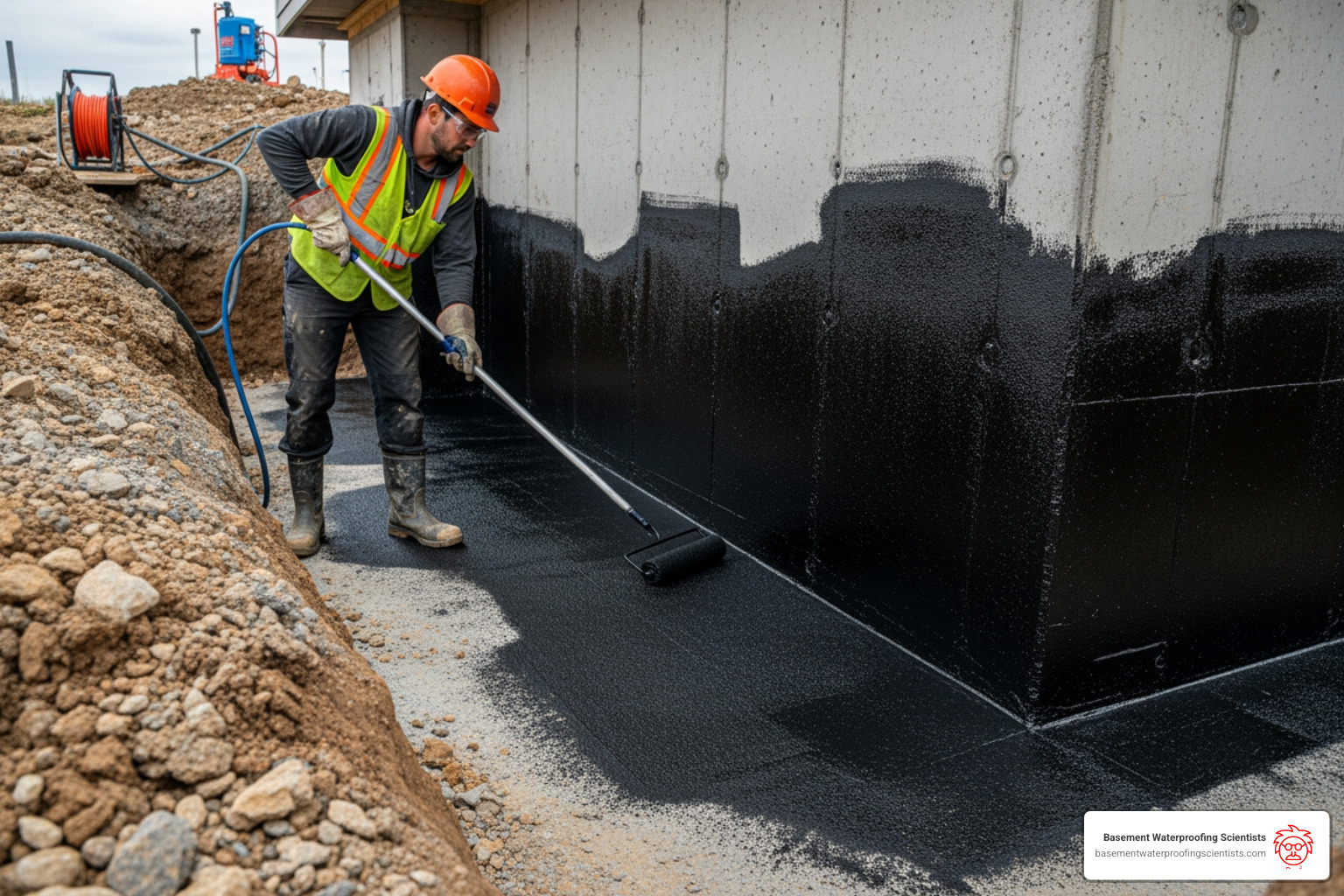
We typically use one of several types of membranes, often in combination:
- Liquid-Applied Membranes: These are sprayed or rolled directly onto the foundation walls, forming a seamless, flexible, and fully adhered barrier once cured. They conform to irregular surfaces and bridge small cracks.
- Sheet Membranes: These are large, flexible sheets that are adhered to the foundation walls. They offer a consistent thickness and high resistance to hydrostatic pressure.
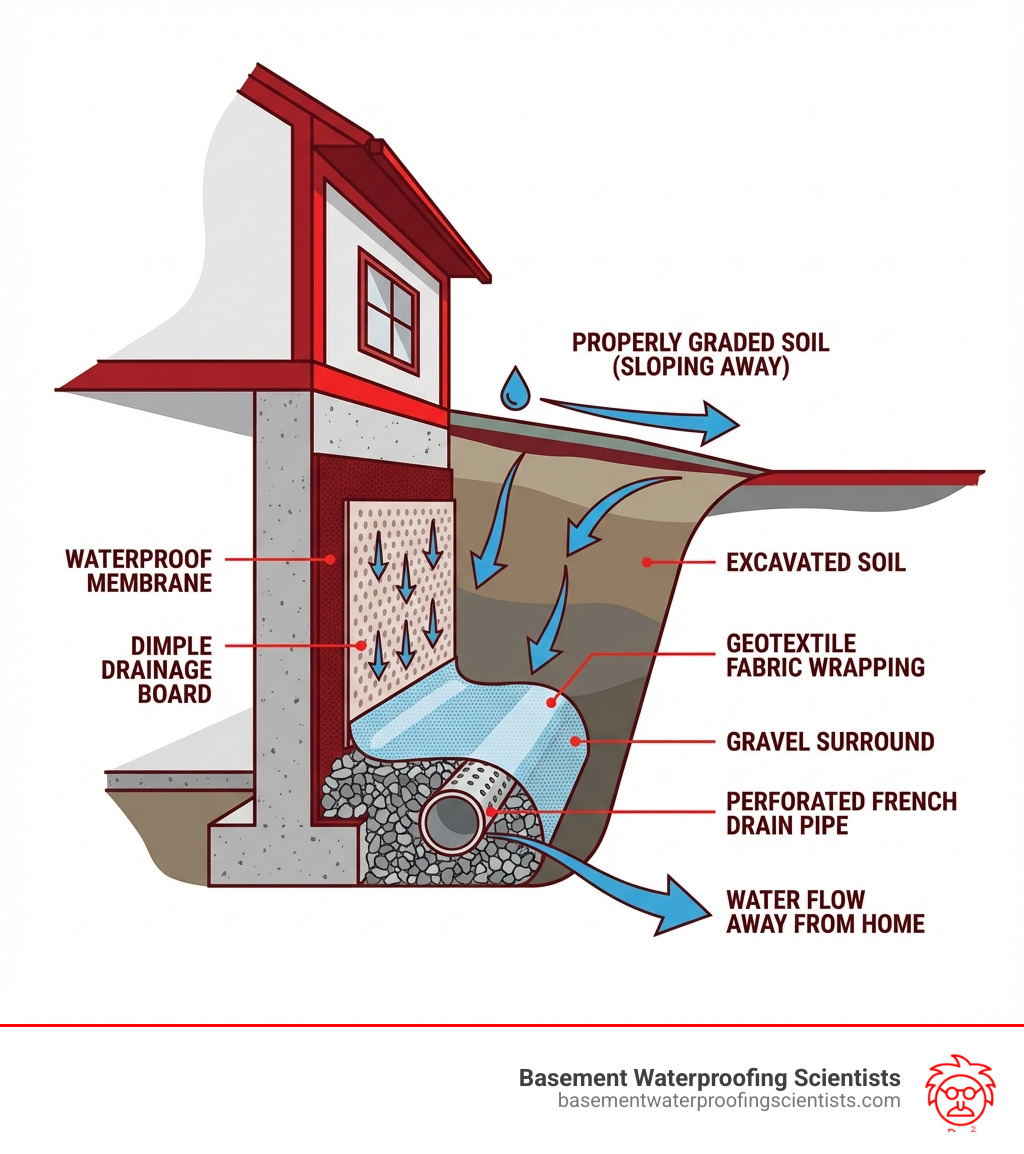
- Dimple Board: This rigid plastic sheeting features a dimpled surface that creates an air gap between the membrane and the soil. This allows any water that gets past the backfill to drain freely down to the perimeter drainage system, rather than pressing against the waterproofing membrane. It also protects the waterproofing membrane from damage during backfilling.
The chosen material is applied carefully, ensuring complete coverage from the footing to above the grade line. This creates a continuous, impervious barrier that prevents soil moisture and groundwater from penetrating your foundation. For insights into the best options, explore our guide on the Best Exterior Foundation Coating.
Step 4: Installing an Exterior Drainage System
While the waterproofing membrane provides an excellent barrier, an effective exterior drainage system is its crucial partner. This system collects any water that may accumulate around the foundation and directs it safely away from your home, relieving hydrostatic pressure. This is a cornerstone of the best way to waterproof basement from outside.
We install an exterior French drain system, which typically involves:
- Perforated Pipe: A specialized pipe with small holes is laid in a trench around the perimeter of the foundation, usually at or just below the footing level. This pipe collects water efficiently.
- Gravel Backfill: The perforated pipe is surrounded by a layer of clean, coarse gravel. This gravel allows water to flow freely to the pipe and prevents the pipe from becoming clogged with soil.
- Geotextile Fabric: We often wrap the gravel and pipe in a filter fabric (geotextile fabric). This permeable material allows water to pass through while preventing fine soil particles from migrating into the gravel and clogging the drainage system over time.
- Sump Pump Connection: The French drain system is sloped to direct collected water to a specific discharge point, often connected to a sump pump in your basement, which then pumps the water safely away from your home. Alternatively, it can be directed to a daylight drainage point if the topography allows.
This comprehensive drainage system ensures that water is actively managed and removed from around your foundation, working in tandem with the waterproofing membrane to keep your basement dry. For more details on this crucial step, see our Installing Drain Tile Around House Guide.
Key Materials and Systems for the Best Way to Waterproof a Basement from the Outside
Understanding the components that make up a robust exterior waterproofing system is key to appreciating its effectiveness. It’s not just one product, but a combination of specialized materials working in harmony.
Understanding the Best Way to Waterproof a Basement from the Outside: Damp Proofing vs. True Waterproofing
One of the most important distinctions to grasp when considering the best way to waterproof basement from outside is the difference between damp proofing and true waterproofing. These terms are often used interchangeably, but they refer to very different levels of protection.
| Feature | Damp Proofing | True Waterproofing |
|---|---|---|
| Purpose | Resists soil moisture and minor water penetration | Prevents liquid water penetration, even under pressure |
| Materials | Asphalt-based coatings, tar | Polymer-modified asphalt, rubberized membranes, bentonite clay, crystalline compounds |
| Flexibility | Rigid, prone to cracking | Flexible, elastic, bridges small cracks |
| Hydrostatic Pressure | Does not withstand hydrostatic pressure | Designed to withstand hydrostatic pressure |
| Application | Usually sprayed or rolled as a thin coating | Applied as thicker coatings or sheet membranes |
| Longevity | Less durable, can degrade over time | Long-lasting, often for the lifetime of the structure |
| Building Code | Recognized for moisture resistance | Recognized by International Building Code for preventing structural damage |
Damp proofing is a coating applied to the exterior of a foundation wall to prevent soil moisture from wicking into the concrete. It’s designed to resist dampness, not liquid water under pressure. Many new constructions only receive damp proofing, which can fail within 7-10 years, leading to leaks.
True waterproofing, on the other hand, involves applying a more robust, often polymer-based or rubberized, membrane that is elastic and designed to withstand significant hydrostatic pressure. It forms a continuous, impenetrable barrier that won’t degrade under constant exposure to water. The International Building Code recognizes true waterproofing and gravity drainage as efficient in preventing structural damage, highlighting its superior performance. For a more in-depth comparison, check out our article on Damp Proofing vs Waterproofing.
Choosing the Right Waterproofing Materials
The effectiveness of exterior waterproofing hinges significantly on the quality and type of materials used. For the best way to waterproof basement from outside, we rely on advanced, durable solutions.
- Liquid Synthetic Membranes: Materials like polyurethane and rubberized asphalt are popular choices. These are applied as a liquid, forming a seamless, flexible coating that bonds directly to the foundation. Rubberized asphalt, for example, can protect concrete for up to 25 years. These membranes are excellent at conforming to irregularities and sealing small cracks.
- Bentonite Clay: This natural clay expands significantly when it comes into contact with water, creating a dense, impermeable barrier. Bentonite waterproofing typically lasts the lifetime of the concrete structure it is attached to, making it an incredibly long-lasting solution. It’s often applied in sheet form or as a granular material.
- Thermoplastic Sheets: These synthetic sheet membranes, such as PVC or TPO, are melted into place, creating strong, watertight seams. They offer high resistance to chemicals and punctures.
- Dimple Drainage Board: As mentioned earlier, this rigid plastic sheeting is installed over the waterproofing membrane. Its dimpled surface creates an air gap that allows water to drain freely, protecting the primary membrane from backfill damage and relieving hydrostatic pressure. This acts as a secondary layer of protection and ensures efficient water flow to the drainage system.
These materials are chosen for their durability, flexibility, and ability to withstand the harsh below-grade environment. They are engineered to provide a long-lasting solution, often outliving the home itself. You can learn more about the longevity of these materials in our guide: How Long Does Waterproofing Coating on Concrete Foundation Exterior Last?. And for specifics on dimple boards, check out our resource on Dimple Board.
Beyond the Trench: Long-Term Protection and Maintenance
While the extensive work of exterior waterproofing provides a robust defense, the best way to waterproof basement from outside isn’t a one-and-done deal. Long-term effectiveness also relies on complementary strategies and consistent maintenance.
The Critical Role of Grading and Landscaping
Even the most advanced waterproofing system can be overwhelmed if surface water isn’t properly managed. This is where proper grading and landscaping become your first line of defense.
- Sloping Soil Away: The ground around your foundation should always slope away from the house. We recommend a minimum slope of 6 inches over the first 10 feet from the foundation. This ensures that rainwater and snowmelt naturally drain away rather than pooling against your walls.
- The 5-Foot Rule: Ensure gutters and downspouts channel water at least 5 feet away from your home. Extending downspouts, or even burying them and directing the water to a Yard Drain or a storm drain, is a simple yet highly effective measure.
- Swales and Dry Creek Beds: For properties with significant slopes or drainage issues, creating a swale (a shallow ditch) or a dry creek bed can guide large volumes of water away from the foundation naturally.
- Planting Wisely: Choose deep-rooted plants that help absorb excess moisture in the soil, but avoid planting large shrubs or trees too close to the foundation. Their roots can eventually compromise the waterproofing membrane or foundation itself.
These seemingly simple landscaping changes can significantly reduce moisture problems and alleviate pressure on your exterior waterproofing system.
Maintaining Your Exterior Waterproofing System
Once your exterior waterproofing is complete, a little ongoing attention goes a long way in ensuring its continued effectiveness. Think of it as protecting your investment.
- Annual Inspections: Periodically walk around your home’s exterior, especially after heavy rains or snowmelt. Look for any signs of soil settlement, new cracks in the foundation above grade, or issues with your grading.
- Gutter Cleaning: Keep your gutters and downspouts free of debris. Clogged gutters will overflow, dumping water directly against your foundation, negating much of your waterproofing efforts. Consider gutter guards, but still plan for periodic checks.
- Sump Pump Maintenance: If your exterior drainage system connects to a sump pump, test it annually to ensure it’s working correctly. Pour a bucket of water into the sump pit to watch it activate.
- Checking for Soil Settlement: Over time, the backfilled soil around your foundation may settle. If you notice depressions, add more soil to maintain the proper slope away from the house.
By following these maintenance tips, you can ensure moisture resistance and prolong the life of your system. At Basement Waterproofing Scientists, we stand by our work with a Basement Waterproofing Lifetime Warranty, giving you peace of mind that your investment is protected.
Costs, Risks, and When to Call a Professional
Understanding the financial and practical implications is essential when deciding on the best way to waterproof basement from outside. While effective, it’s a significant undertaking.
Budgeting for Exterior Waterproofing
Exterior waterproofing is an investment that protects your home’s value and structural integrity. The cost can vary widely but typically falls in our average range of $4K to $8K. Several factors influence the final price:
- Cost per Linear Foot: Installing an exterior French drain can cost $15–$35 per linear foot.
- Excavation Costs: This is often the largest component. Foundation depth, soil type, and obstacles (patios, landscaping, utilities) all impact excavation expenses.
- Material Costs: The type of waterproofing membrane and drainage materials selected will affect the price.
- Labor Expenses: Skilled labor is required for proper excavation, foundation repair, and system installation.
- Size of Home & Foundation Depth: Larger homes with deeper basements require more extensive work and materials, increasing the cost.
- Yard Regrading: If your yard’s slope needs significant adjustment, this typically costs $900–$3,000.
While the upfront cost for exterior waterproofing can be higher than interior methods, it’s a long-term solution that addresses the root cause. For a more detailed breakdown, refer to our page on Waterproofing Basement Walls From Outside Cost.
DIY vs. Professional: The Best Way to Waterproof a Basement from the Outside
Given the complexity, many homeowners consider a DIY approach. However, attempting to waterproof a basement from the outside without professional help carries significant risks. The best way to waterproof basement from outside almost always involves professional expertise.
- Risks of DIY Excavation: Digging around your foundation is dangerous. There’s a high risk of hitting utility lines, destabilizing your foundation, or causing injury. Improper excavation can lead to structural damage.
- Specialized Equipment: The process requires heavy machinery and specialized tools that most homeowners don’t possess.
- Structural Damage Risk: Incorrectly repairing cracks, applying membranes, or backfilling can compromise your foundation’s integrity, leading to more severe and costly problems.
- Professional Expertise: Professionals understand soil dynamics, hydrostatic pressure, and the nuances of various waterproofing materials. They can accurately diagnose the problem and implement the most effective solution for your property in Philadelphia, New Jersey, or Delaware.
- Warranty: Most professional companies, including Basement Waterproofing Scientists, offer warranties on their work. This provides crucial peace of mind and protection for your investment.
For complex issues like exterior waterproofing, a professional assessment is invaluable. Our expertise in Foundation Repair and Waterproofing ensures that the job is done right, the first time.
A Dry Basement is a Lasting Investment
Investing in exterior basement waterproofing is more than just a home repair; it’s a commitment to the long-term health, safety, and value of your property. The best way to waterproof basement from outside provides a multitude of benefits that extend far beyond simply eliminating puddles.
- Protecting Property Value: A dry, healthy basement significantly improves your home’s market value. Potential buyers are often wary of homes with moisture issues, and a professionally waterproofed basement is a major selling point.
- Improving Air Quality: By preventing water intrusion, you eliminate the conditions necessary for mold and mildew growth. This drastically improves your indoor air quality, reducing musty odors and potential allergens, which is crucial for your family’s health.
- Creating Usable Living Space: A dry basement opens up possibilities. Whether you want to finish it for extra living space, use it for clean storage, or simply enjoy a healthier utility area, exterior waterproofing makes it possible.
- Long-Term Peace of Mind: Knowing that your foundation is protected from the relentless forces of nature provides invaluable peace of mind. You won’t have to dread every heavy rainstorm or worry about the hidden damage moisture can cause.
At Basement Waterproofing Scientists, we specialize in providing custom Exterior Foundation Waterproofing solutions across Pennsylvania, New Jersey, and Delaware. With 30 years of experience, we’re dedicated to ensuring your basement remains permanently dry, protecting your home and enhancing your quality of life. We use specialized equipment to identify leak sources, ensuring we fix the problem for good, and for less. It’s an investment that pays dividends for years to come.