

A basement does not have to flood to have a water problem. A musty smell, peeling paint, damp walls, white chalky residue, or a hairline crack that gets darker after rain can all point to the same issue. If you are asking what is foundation waterproofing, the short answer is this: it is the process of stopping water from entering your home through the foundation and controlling the pressure and drainage conditions that cause leaks in the first place.
That sounds simple, but the real answer is more precise. Foundation waterproofing is not one product, one coating, or one standard package. It is a targeted system of materials and repairs designed around how water is getting in, where it is building up, and what parts of the structure are vulnerable.
What Is Foundation Waterproofing and What Does It Actually Do?
Foundation waterproofing is the combination of methods used to keep groundwater, rainwater, and moisture from penetrating foundation walls, floor joints, cracks, and other weak points below grade. Depending on the home, that may involve exterior waterproofing membranes, drainage boards, footing drains, crack repair, sump pump systems, interior drainage channels, vapor barriers, or grading corrections.
The goal is not just to hide water stains. The goal is to control water movement so the basement or lower level stays dry and the foundation is protected from long-term deterioration.
That distinction matters. Many homeowners think waterproofing means painting a sealant on the wall. In reality, paint-on products are rarely a permanent answer when hydrostatic pressure is pushing water through concrete or block walls. If the pressure outside the wall is not relieved, the water usually finds another path.
Why Foundations Leak in the First Place
Water problems almost always start outside the home. When rainwater is not directed away properly, or when the soil around the foundation stays saturated, water builds up against basement walls and footings. Over time, that pressure forces moisture through porous concrete, mortar joints, tie rod holes, floor-wall joints, and cracks.
Older homes in Greater Philadelphia, Southeast Pennsylvania, and South Jersey are especially vulnerable because many have aging masonry walls, original drainage systems, or settlement-related cracking. Even a well-built home can develop trouble if gutters overflow, grading slopes toward the house, or the perimeter drain fails.
Some leaks are straightforward. A single foundation crack may be the main entry point. Others are more complex. Water may travel along the footing, rise through the cove joint where the floor meets the wall, and show up several feet away from the actual source. That is why real diagnosis matters more than guessing.
Interior vs. Exterior Foundation Waterproofing
There is no universal best method. The right approach depends on where the water originates, how the foundation is built, and whether the issue is isolated or widespread.
Exterior waterproofing
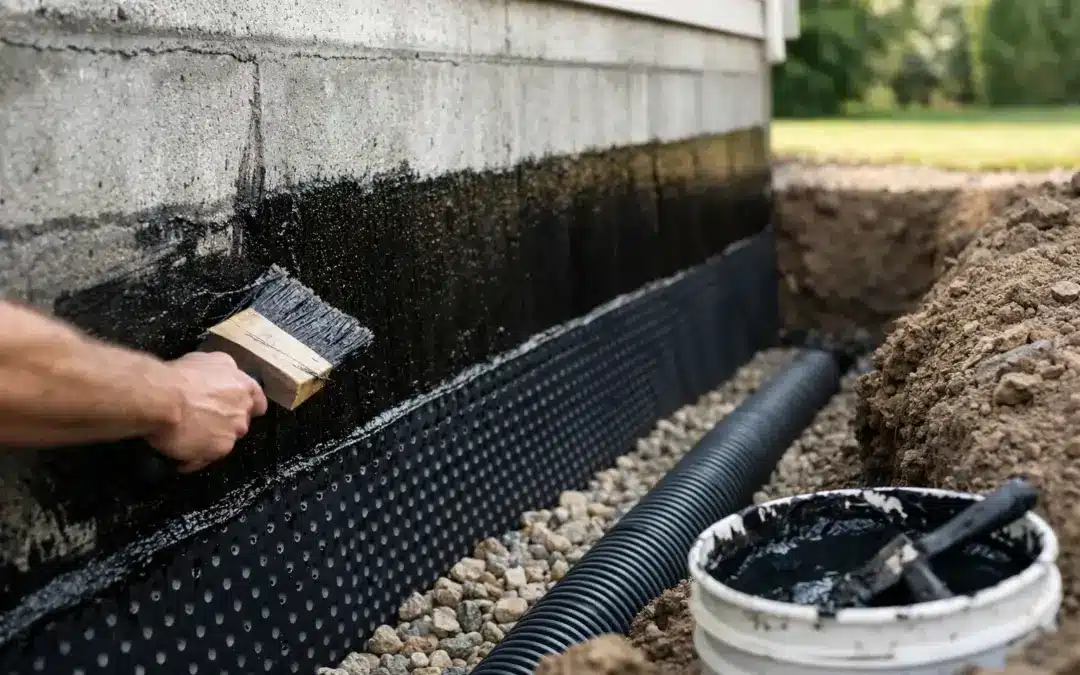
Exterior foundation waterproofing addresses the problem from the outside. This usually involves excavating along the foundation wall, cleaning the surface, sealing cracks or defects, applying a waterproof membrane, and installing drainage materials to move water down to a functioning footing drain.
This is often the most direct way to stop water before it reaches the wall. It can be an excellent solution when there is significant wall seepage, failed exterior coating, or heavy groundwater pressure. The trade-off is cost and access. Excavation is more labor-intensive, and patios, walkways, landscaping, decks, or tight property lines can make exterior work more complicated.
Interior waterproofing
Interior foundation waterproofing manages water after it reaches the foundation but before it damages the living space. This often includes an interior drain system installed along the perimeter, a sump pump to discharge collected water, and crack injection or wall repair where needed.
Homeowners sometimes assume interior systems are a shortcut. In many cases, they are not. A properly designed interior drainage system can be the most economical and permanent answer when exterior excavation is unnecessary or impractical. It depends on the structure and the water pathway.
What Is Included in Foundation Waterproofing?
The term covers several different repair methods, and not every home needs all of them. A proper system may include one or more of the following.
Crack repair
Foundation cracks are common, but they are not all equal. Some are cosmetic. Others are active water entry points or signs of settlement. Waterproofing may involve epoxy or polyurethane injection, surface sealing, reinforcement, or structural correction depending on the crack pattern and movement.
Drainage correction
If water is pooling near the house, correcting the drainage outside may be part of the waterproofing plan. That can include extending downspouts, improving grading, or addressing surface runoff that dumps water near the foundation.
Waterproof membranes and coatings
Applied products on the exterior wall help create a barrier between soil moisture and the foundation. These are usually much more effective than interior paint-on sealers because they stop exposure at the source.
Interior drain systems and sump pumps
When groundwater pressure is the issue, a perimeter drainage channel and sump pump system can be the most reliable way to collect and remove water before it reaches the floor surface.
Vapor control and moisture management
Not all basement moisture is liquid water. Some spaces have high humidity, condensation, or damp air moving through porous materials. In those cases, waterproofing may also involve vapor barriers, dehumidification, or sealing specific openings.
What Foundation Waterproofing Does Not Mean
This is where many homeowners get sold the wrong solution. Foundation waterproofing does not automatically mean you need full excavation, a complete perimeter system, or a major structural rebuild. It also does not mean every leak can be fixed with a simple sealant.
A wet basement wall could be caused by surface runoff at one corner of the home. A puddle near the center of the floor might be hydrostatic pressure below the slab. A recurring damp spot may trace back to one crack hidden behind finished walls. Treating all of those with the same package would be inefficient and expensive.
The smartest approach is to identify the actual water entry mechanism first, then match the repair to that problem. That is how homeowners avoid paying for work they do not need while still getting a permanent fix.
Signs You May Need Foundation Waterproofing
Some warning signs are obvious, like standing water on the basement floor. Others are easier to miss until damage spreads. If you notice musty odors, efflorescence on the walls, bubbling paint, warped trim, damp carpet, mold growth, visible cracks, rust on metal items, or basement humidity that never seems to go away, it is worth having the foundation inspected.
Water intrusion rarely stays in one lane. Moisture can damage stored belongings, reduce air quality, weaken finishes, and contribute to wood rot or mold. In some cases, ongoing water exposure can also worsen structural issues if cracks expand or masonry starts to deteriorate.
Why Diagnosis Comes Before the Fix
The biggest mistake in waterproofing is treating symptoms instead of causes. Two homes on the same block can have completely different leak patterns because of grading, construction type, soil conditions, additions, or prior repairs.
That is why a science-driven inspection matters. A good waterproofing contractor should look at crack patterns, wall materials, drainage conditions, discharge points, floor joints, exterior elevations, and signs of hydrostatic pressure before recommending work. In many cases, targeted leak detection can reveal a much smaller and more economical repair than a generic system.
At Basement Waterproofing Scientists, that diagnostic approach is central to the process. The goal is to find the source, prescribe the right fix, and avoid overselling. For homeowners, that means a clearer scope of work and a better chance of solving the issue permanently.
Is Foundation Waterproofing Worth It?
If water is entering the basement, yes. The cost of delaying repair is often higher than the cost of fixing the problem correctly. Moisture problems tend to spread. What starts as a damp wall can become mold growth, ruined finishes, damaged framing, or lower property value.
That said, worth depends on accuracy. Waterproofing is worth it when the solution matches the problem. It is not worth paying for a broad system when a focused crack repair and drainage correction would do the job. It is also not worth relying on cosmetic products when water pressure is clearly driving the leak.
A professional inspection should answer three things: where the water is coming from, why it is happening, and what repair will stop it for the long term.
If your basement smells damp after every storm, or you are seeing cracks, seepage, or staining along the walls, do not wait for a major flood to take it seriously. The right foundation waterproofing plan is not about selling the biggest system. It is about finding the exact failure point and fixing it before a manageable problem turns into a costly one.