

A basement can smell clean when you walk downstairs and still have a moisture problem developing behind a finished wall, beneath carpet, or along a rim joist. Knowing how to test basement mold helps you separate a minor surface issue from a condition that needs prompt correction. The goal is not simply to find mold. It is to identify why it has the moisture it needs to grow.
In Greater Philadelphia, Southeast Pennsylvania, and Southern New Jersey, basements often face a combination of humid summers, aging foundations, heavy rain, and older drainage systems. A test can provide useful information, but it cannot solve the source of dampness. If water continues entering the basement, mold can return after cleaning, repainting, or replacing damaged materials.
Start With the Signs of Basement Mold
Mold is not always black, and black staining is not always mold. Basement mold may appear as gray, green, white, brown, or black spotting. It can have a fuzzy, powdery, or slimy texture depending on the surface and the amount of moisture present.
Look closely at foundation walls, wood framing, floor joists, insulation, stored cardboard boxes, carpet backing, drywall near the floor, and the area around plumbing lines. Pay special attention to exterior corners and locations where you have seen seepage, condensation, or water stains.
A persistent musty odor is another meaningful clue. If the odor becomes stronger after rain, when the air conditioner runs, or when the basement has been closed for several days, moisture may be entering or collecting in a concealed area. Peeling paint, efflorescence on masonry, warped baseboards, rusted metal, and damp carpeting are not mold tests, but they are evidence that the basement environment is supporting mold growth.
How to Test Basement Mold Safely
Before sampling anything, protect yourself and avoid spreading spores unnecessarily. Wear gloves, eye protection, and an N95-style mask. Keep children, pets, and people with respiratory sensitivities away from the immediate work area. Do not scrape, sand, drill into, or aggressively brush suspicious material just to get a sample.
If the visible area is larger than roughly 10 square feet, if sewage or contaminated floodwater was involved, or if mold may be inside walls or HVAC components, skip the DIY approach. Large or hidden contamination requires a more controlled assessment and remediation plan.
Use a visual and moisture inspection first
The most useful first test is often a careful visual inspection paired with moisture checks. A handheld moisture meter can help compare a suspicious wall or wood member with a dry area nearby. Elevated readings can point to active dampness behind a finished surface, even when there is little visible mold.
A hygrometer is also useful. It measures relative humidity. Basement humidity that stays above 60% creates favorable conditions for mold, especially on cool foundation walls and pipes where condensation forms. A single reading does not tell the whole story, so check at different times of day and after rainfall.
Moisture readings do not identify a mold species. What they do provide is often more valuable to a homeowner: evidence of the condition allowing growth. A dry basement is the foundation of a lasting mold solution.
Consider a tape-lift or swab sample
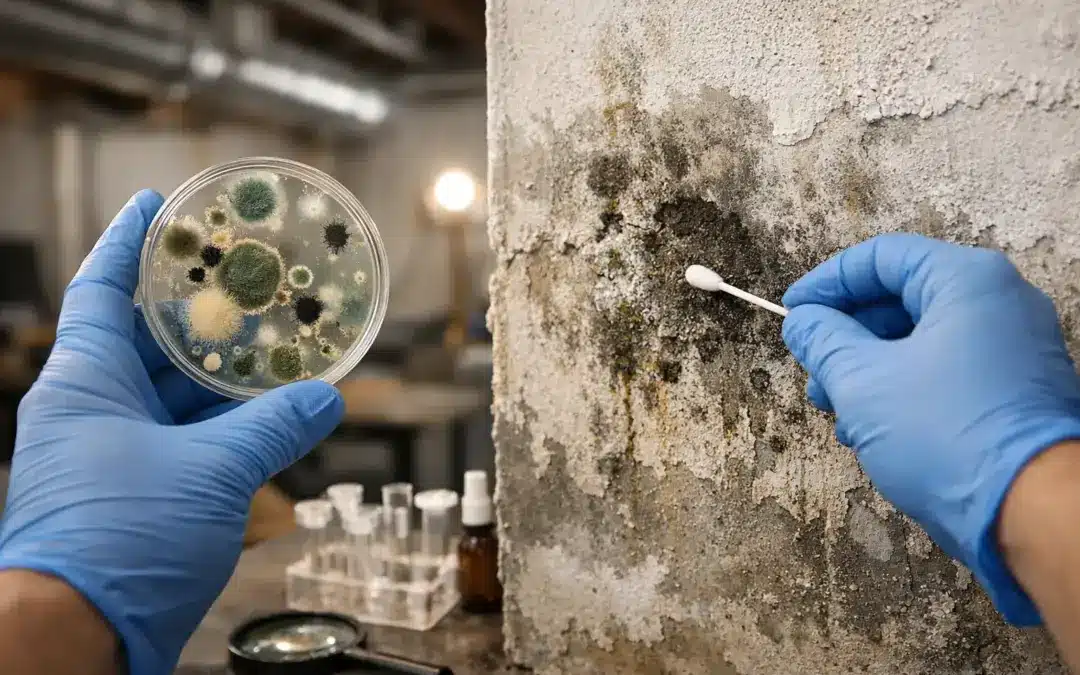
For a small, accessible suspicious spot, a tape-lift or swab sample sent to a qualified laboratory can help confirm whether the material contains mold. Follow the laboratory kit instructions exactly. Usually, that means taking a sample from the affected surface without wetting or cleaning it first, sealing it properly, and labeling where it came from.
These samples can identify mold structures or, in some cases, a general mold type. They have limits. A positive result confirms that mold was present on that exact surface, but it does not show how widespread the issue is. A negative result can also be misleading if the sample missed the growth or if the staining was old and inactive.
Avoid using a sample result as a reason to ignore a visible problem. If a material is moldy and damp, it needs to be cleaned or removed appropriately, and the moisture source needs to be corrected whether the lab report names a particular species or not.
Be cautious with petri-dish mold kits
Many store-bought kits use an open petri dish to collect particles from the air. Mold spores exist naturally in outdoor and indoor air, so these kits commonly grow something. That result can be alarming, but it rarely tells you whether your basement has an abnormal mold problem or where the growth is located.
Petri-dish kits may satisfy curiosity, but they are not a reliable way to diagnose a basement moisture issue. They can lead homeowners to spend money cleaning the wrong area while a wall crack, failed exterior drainage path, plumbing leak, or foundation seepage continues unnoticed.
Know when air testing makes sense
Professional air sampling can be useful when mold is suspected behind walls, below flooring, or in another concealed location. A qualified inspector may compare air samples from the basement with samples from outdoors or from a known dry area of the home. The comparison matters more than a single number.
Air testing has trade-offs. Results can change based on windows, HVAC operation, recent cleaning, weather, and activity in the space. It is not a standalone answer. It is most useful when paired with a full inspection, moisture mapping, and a review of the building conditions that may be feeding the problem.
Find the Moisture Source Before You Clean
Testing answers only part of the question. Mold needs moisture, so a permanent solution begins with a precise diagnosis of water intrusion or humidity.
Check whether the problem changes after rain. Water entering through a foundation wall, floor-wall joint, window well, or wall crack often creates staining or odor that worsens after storms. If the issue is steady regardless of weather, inspect plumbing, condensate lines, water heaters, and laundry connections.
Condensation is another common culprit. Cold masonry walls can collect moisture when warm, humid air enters the basement. Improperly insulated pipes, unsealed rim joists, and poor ventilation can make that problem worse. In other homes, grading directs water toward the foundation or downspouts discharge too close to the house.
Cleaning mold without correcting these conditions is a temporary patch. Even a freshly painted wall can develop new growth if moisture remains behind it.
What to Do With a Small Mold Area
For a small area on a hard, nonporous surface, cleaning may be reasonable once the moisture source has been stopped. Use appropriate protective equipment and a cleaning method suitable for the material. Dry the area completely afterward.
Porous materials are different. Moldy carpet padding, insulation, ceiling tiles, cardboard, and water-damaged drywall may need removal because growth can extend into the material where surface cleaning cannot reach. Do not cover moldy drywall with primer or paint. That hides evidence while allowing the underlying problem to continue.
Take photographs before cleaning, especially if you may need to document water damage for an insurer, landlord, contractor, or future repair decision. Record the date, weather conditions, location, and any moisture readings you collected. This information can help identify a pattern rather than treating each occurrence as an isolated event.
When to Bring in a Professional
Call for a professional inspection when you have recurring mold, visible growth over a significant area, a strong odor with no clear source, repeated basement leaks, warped finished walls, or moisture that returns after cleaning. The same applies if someone in the household is experiencing respiratory symptoms that seem worse in the basement.
A useful inspection should not begin with a one-size-fits-all waterproofing proposal. It should determine where moisture is entering, whether it is active, how far the damage extends, and which repair will solve the issue economically. Scientific leak detection can help pinpoint the source before unnecessary work is recommended.
Basement Waterproofing Scientists approaches mold concerns by looking beyond the visible staining to the water intrusion, humidity, drainage, or foundation condition behind it. That diagnostic step helps homeowners choose a repair designed for the actual problem, not just the symptom.
If your basement smells musty or shows new spotting after every storm, do not wait for the stain to become a larger renovation. Document what you see, keep the space as dry as possible, and have the moisture source evaluated before mold gets another chance to grow.