

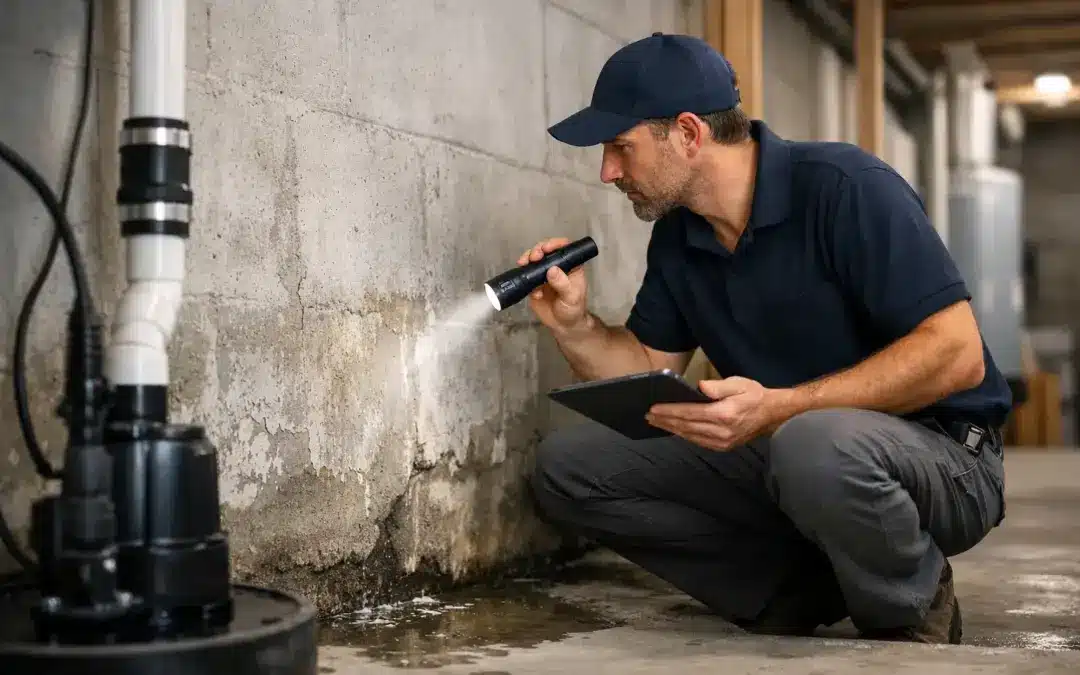
A wet spot along one basement wall rarely tells the whole story. Water can travel behind finished walls, through hollow block cores, along a footing, or beneath a slab before it becomes visible. That is why a basement waterproofing inspection should begin with diagnosis, not a prepackaged proposal for a drain system or wall coating.
For homeowners in Greater Philadelphia, Southeast Pennsylvania, and Southern New Jersey, the right inspection can mean the difference between a focused repair and thousands spent on work that never addressed the actual leak. Older stone foundations, clay soils, aging exterior drainage, and seasonal storms all create different moisture patterns. The solution depends on what the inspection finds.
Why a Basement Waterproofing Inspection Comes First
Waterproofing is not one service. It may involve exterior grading, gutters and downspouts, foundation crack repair, interior drainage, sump pump work, wall sealing, or mold remediation. Each has a place, but none should be recommended simply because it is the most familiar or most profitable option.
A professional inspection traces the path of water from outside the home to the place where it appears indoors. That process identifies whether the problem is active groundwater pressure, surface runoff, a plumbing issue, condensation, a foundation opening, or several issues occurring at once.
This matters because visible symptoms can be misleading. A damp lower wall may be caused by water entering near the top of the foundation. Efflorescence, the white mineral residue on masonry, may show that moisture has moved through the wall, but it does not automatically prove that a full interior drainage system is necessary. A musty odor can point to mold growth, high humidity, or hidden water intrusion. Good diagnosis separates evidence from assumptions.
What We Look for During an Inspection
A thorough inspection combines homeowner observations with a close review of the basement, foundation, and exterior water-management conditions. Homeowners often provide the most useful starting clues: Does water appear only after heavy rain? Is it worse in spring? Does it happen near one corner, a window, or a utility line? Has the problem changed since a patio, roof, or landscaping project?
Inside, the inspection looks for active seepage, staining, peeling paint, rusted appliances or columns, warped finishes, mold-like growth, and humidity conditions that can support mold. The pattern and location of damage matter. Water at the floor-wall joint suggests a different pathway than water coming through a vertical crack or around a basement window.
Foundation walls are also evaluated for cracks, bowing, movement, deteriorated mortar, and signs of settlement. Not every crack is structural, and not every structural concern is visible from one small area. A practical assessment considers crack width, direction, location, whether it is changing, and whether doors, floors, or framing show related movement.
Outside, the inspection should include the grade around the home, roof runoff, downspout discharge, walkways, window wells, exterior cracks, and areas where water pools near the foundation. In many homes, correcting a downspout that empties beside the wall or restoring proper grading can significantly reduce the water load before more extensive work is considered.
Scientific leak detection narrows the search
At Basement Waterproofing Scientists, state-of-the-art leak detection scanning is used to help locate the actual source of water intrusion. This is especially valuable when the basement is finished, when water travels away from its entry point, or when repeated repairs have failed.
The goal is not to sell the largest system. It is to identify the conditions causing the problem and recommend the most economical permanent fix. In some cases, targeted crack repair is enough. In others, the inspection may show that a drainage system, sump pump, or exterior correction is the reliable long-term answer.
Common Findings and What They Usually Mean
Foundation cracks are one of the most common findings. A narrow vertical crack can allow water through during heavy rain, particularly in poured concrete walls. Proper crack repair can often stop that specific pathway. However, if water pressure is high around the foundation or there are multiple entry points, treating one crack alone may not solve the broader problem.
Water at the cove joint, where the wall meets the floor, often indicates hydrostatic pressure beneath or beside the foundation. Water naturally seeks the lowest available path. An interior drainage system may be appropriate when that pressure is recurring, but the recommendation should be based on the home’s conditions, not a blanket rule.
Masonry walls need their own analysis. Stone, brick, and block foundations can admit moisture through mortar joints, porous material, cracks, or openings around penetrations. They may require repairs that preserve the wall while controlling water movement. Applying a surface coating without correcting active water pressure can lead to peeling, trapped moisture, and a return of the same problem.
Some basements are not leaking at all. Condensation can form when warm, humid air meets cold foundation walls, pipes, or floors. This is common in humid summer weather and can look like seepage. The correct solution may involve dehumidification, insulation, ventilation adjustments, or controlling humidity rather than major waterproofing work.
The inspection can also uncover conditions that deserve prompt attention, including mold growth, deteriorated framing, electrical concerns near water, or foundation movement. These problems do not improve when ignored. Addressing them early usually protects both the home and the eventual repair budget.
When to Schedule an Inspection
Do not wait for standing water to take action. A basement inspection is worthwhile when you notice recurring dampness, a musty smell, wall stains, new cracks, peeling paint, rust, or a sump pump that runs more often than expected. It is also smart before finishing a basement, purchasing an older home, or listing a property for sale.
Timing can affect what is visible. An inspection after rain may reveal active seepage patterns that are not obvious during a dry stretch. Still, dry-weather inspections are valuable because they can identify physical pathways, drainage flaws, past water damage, and risk factors. If the problem is intermittent, photographs and notes about weather conditions can help establish the pattern.
Homeowners should be cautious of estimates delivered without a meaningful inspection. A contractor who recommends extensive work before examining the exterior, the foundation condition, and the actual moisture pattern may be working from a standard sales script. Waterproofing systems can be excellent investments when justified, but the right system for one home may be unnecessary for another.
How to Prepare for the Visit
Make the affected areas accessible if possible. Move stored items away from wet walls, floor drains, sump pits, and visible cracks. There is no need to clean away evidence such as stains or mineral deposits before the inspection. Those details can help explain what has been happening.
It also helps to share prior repair records, home inspection reports, and any photos of flooding or leaks. Mention recent changes to the property, including new gutters, paving, landscaping, plumbing repairs, or finished basement work. Small details often help connect the symptoms to the source.
A good inspector should explain what was found in plain language, describe the available repair options, and be clear about why a recommendation fits your home. Ask what issue each proposed repair addresses, whether exterior drainage needs correction, and how the work is protected by a warranty or lifetime guarantee. Clear answers are part of a reliable waterproofing plan.
A Dry Basement Starts With Evidence
The best waterproofing work is often the work you do not have to buy. If a targeted repair, drainage correction, or crack treatment will solve the problem, that is the right place to start. If the evidence supports a larger system, you should know exactly why it is needed and what it is designed to prevent.
A careful basement waterproofing inspection gives you that clarity. It turns a frustrating leak, damp wall, or musty basement into a defined problem with a practical path forward – so you can protect your foundation, your home’s value, and the space below your feet.