


Why Water Gets Into Your Basement — and What You Can Do About It
Sealing your basement foundation is one of the most important steps you can take to protect your home from water damage, mold, and costly structural repairs.
Here’s a quick summary of how to do it effectively:
- Inspect your basement for cracks, efflorescence, water stains, and musty odors
- Clean all surfaces — remove paint, efflorescence, and debris
- Repair cracks using hydraulic cement or polyurethane injection
- Apply a waterproofing sealant — penetrating silicate sealers for porous concrete, elastomeric membranes for exterior walls
- Add drainage — French drains and a sump pump to manage hydrostatic pressure
- Consider exterior waterproofing for long-term, source-level protection
The numbers tell a clear story. Moisture affects over 60% of U.S. homes, and 38% are at risk of basement mold. Concrete — the material most foundations are built from — naturally absorbs up to 10% of its weight in water. Your foundation walls aren’t just solid barriers. They’re more like sponges under constant pressure from saturated soil.
Left untreated, that moisture doesn’t just cause puddles. It leads to mold growth, wood rot, structural damage, and even radon infiltration — all serious threats to your family’s health and your home’s value.
The good news? Most basement water problems are preventable and fixable — if you use the right approach.
I’m Darin Garvey, and with over 30 years of combined experience helping homeowners in the Philadelphia area seal basement foundations against persistent leaks, I’ve seen what works and what doesn’t. In this guide, I’ll walk you through everything you need to know to get a permanently dry basement.
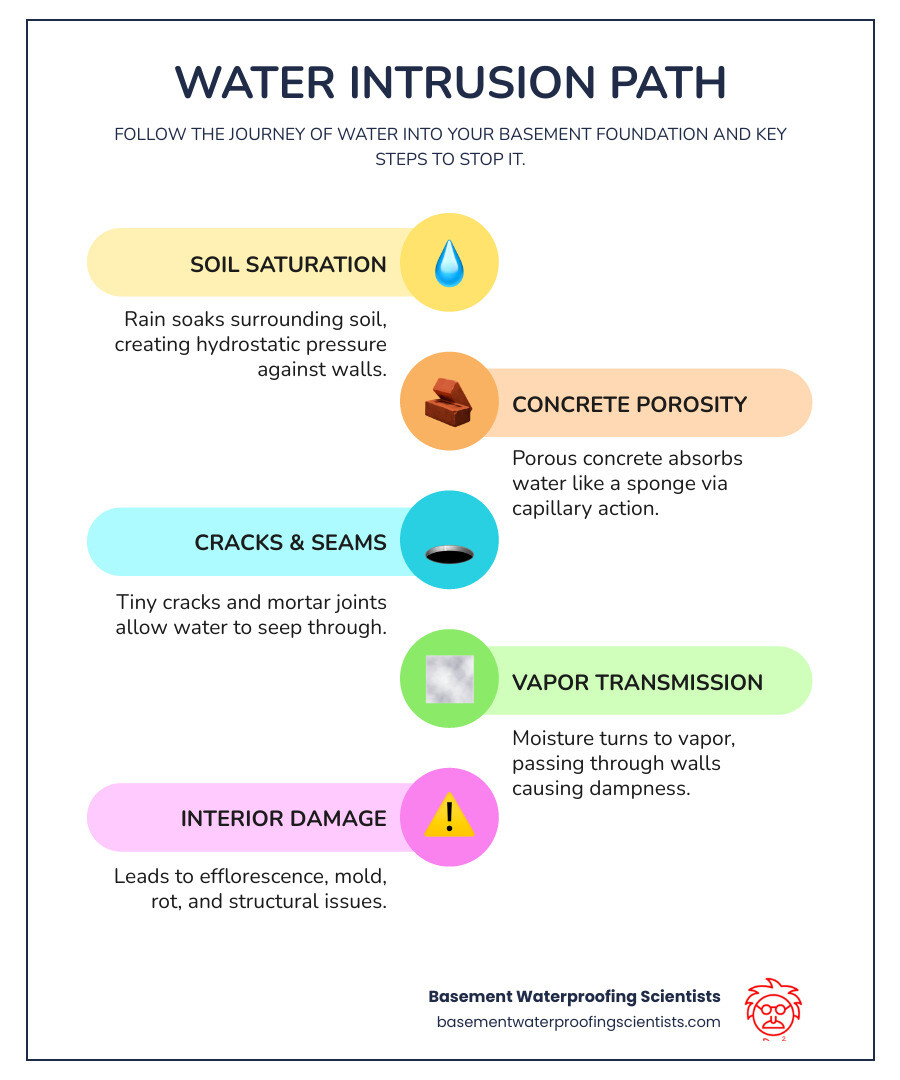
Relevant articles related to seal basement foundation:
Understanding the Need to Seal Basement Foundation Walls
When we talk about the need to seal basement foundation walls, we aren’t just talking about keeping your storage bins dry. We are talking about the structural survival of your home. To understand why sealing is necessary, we have to look at the science of concrete.
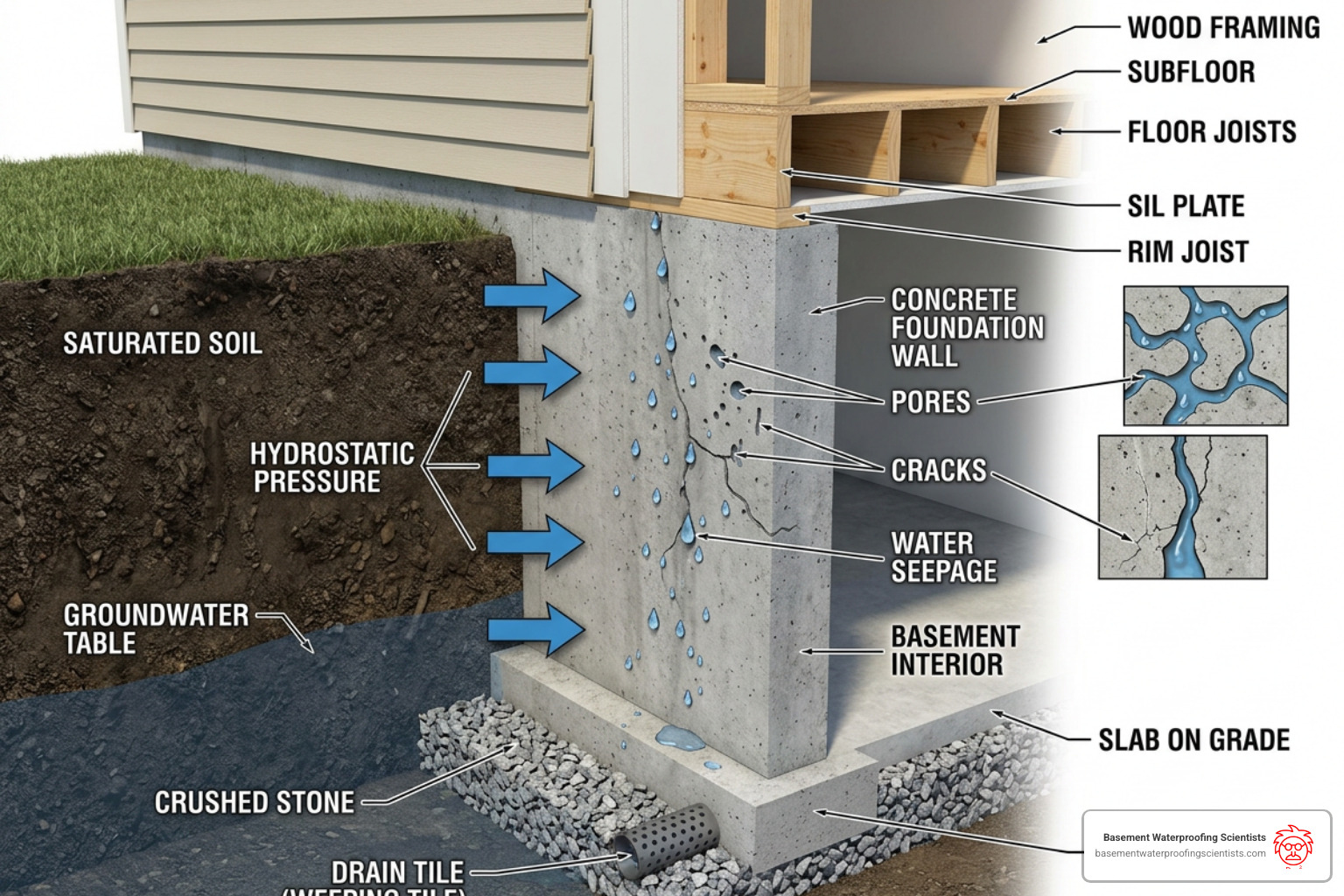
Concrete might look solid and impenetrable, but under a microscope, it’s a different story. It is a porous material with an air content of about 10% to 18%. During the curing process, excess water evaporates, leaving behind a network of tiny “capillary tracts.” These tracts act like microscopic straws, pulling water from the wet soil outside into your dry basement through a process called capillary action.
The Force of Hydrostatic Pressure
Beyond simple absorption, there is the “big bully” of the basement world: hydrostatic pressure. Water is heavy—it weighs about 60 lbs. per cubic foot. When the soil around your home in Pennsylvania or New Jersey becomes saturated after a heavy rain, that water presses against your foundation with thousands of pounds of force. This pressure can force water through even the tiniest pores and hairline cracks.
According to Scientific research on concrete waterproofing, temperature and humidity must stay within specific ranges for materials to cure properly. If your foundation wasn’t sealed correctly during construction—or if the original foundation sealer has degraded—you are essentially living in a house sitting in a “shallow bowl” of water.
Health Hazards and Structural Risks
The American Society of Home Inspectors reports that 60 percent of U.S. houses have moisture issues. This isn’t just an aesthetic problem; it’s a health hazard. Damp basements are breeding grounds for mold and mildew, which can trigger respiratory issues. Furthermore, water intrusion is a major gateway for radon—an odorless, radioactive gas—to enter your home through cracks or pores in the concrete.
Warning Signs and Preparation Requirements
Before we can effectively seal basement foundation surfaces, we have to know what we’re looking at. You can’t just slap some paint over a wet wall and call it a day. In fact, doing that often makes the problem worse by trapping moisture inside the concrete, leading to “saponification” or the breakdown of the coating.
Common Red Flags
If you notice any of the following, your foundation is crying out for help:
- Efflorescence: This is that white, crusty, or powdery substance you see on walls. It’s actually salt deposits left behind after water evaporates. It’s a clear sign of seepage.
- Musty Odors: That “old basement smell” is usually mold or mildew spores.
- Water Stains: Dark streaks or damp patches, especially near the floor-wall joint.
- Peeling Paint: If your current wall coating is bubbling or flaking off, moisture is pushing it from behind.
The Preparation Phase
You wouldn’t paint a car without sanding it first, and you shouldn’t seal a basement without intense preparation. For those following our cinder block foundation sealer guide, the first step is always cleaning.
- Remove Existing Coatings: Any old paint, wax, or sealer must be removed. Penetrating sealers need to reach the bare concrete pores.
- Scrub Efflorescence: Use a wire brush and a solution of white vinegar or a mild muriatic acid wash to dissolve salt deposits.
- Repair Cracks: You must address sealing small cracks in foundation walls before applying a general sealer. We recommend chiseling the crack into a “V” shape to give the repair material (like hydraulic cement) more surface area to bond to.
- Dry the Surface: The concrete needs to be dry to the touch. You can use the “foil test” to check for moisture: tape a piece of aluminum foil to the wall for 24 hours. If condensation forms on the outside of the foil, you have a humidity problem. If it forms on the inside (wall side), you have a leak that needs to be addressed by learning how to seal basement foundation walls from the source.
Identifying Signs Your Home Needs a Seal Basement Foundation Solution
Beyond the obvious puddles, look for subtle structural shifts. Are your doors or windows on the first floor sticking? This can sometimes indicate foundation movement caused by soil saturation. Check for wood rot in your floor joists and look for insect infestations; termites and carpenter ants love the soft, damp wood provided by a leaky basement. Our best foundation sealant guide emphasizes that early detection can save you thousands in structural repairs. If you have an older home, don’t forget to check the exterior brick foundation for crumbling mortar, which is a prime entry point for water.
Comparing Methods: Interior vs. Exterior Seal Basement Foundation Techniques
There are two main philosophies when it comes to waterproofing: fighting the water after it gets in (Interior) or stopping it before it touches the wall (Exterior).
Exterior (Positive Side) Waterproofing
This is the gold standard. By applying a foundation sealer exterior treatment, you are stopping water at the “positive side”—the side where the pressure is coming from.
- Process: This involves excavating the soil around your home down to the footings, cleaning the walls, and applying a heavy-duty elastomeric membrane.
- Pros: It protects the concrete itself from water damage and prevents hydrostatic pressure from ever reaching the interior.
- Cons: It is labor-intensive and more expensive due to the excavation required.
- Materials: Often involves a foundation tar sealer or a modern liquid rubber membrane that can stretch up to 900% without cracking.
Interior (Negative Side) Waterproofing
This is more common for existing homes where excavation isn’t feasible.
- Process: We use penetrating sealers, waterproof paints, or interior drainage systems.
- The Interior Drainage System: This is often the most effective interior method. We create a trench around the perimeter, install a “French drain” (a perforated pipe), and lead that water to a sump pump. This relieves the hydrostatic pressure so the water has somewhere to go other than through your walls.
- Crack Repair: We often use polyurethane injection to seal exterior foundation cracks from the inside. The resin expands to fill the entire void of the crack, all the way to the outside soil.
Dampproofing vs. Waterproofing
Don’t be fooled by “dampproofing.” Many new homes are dampproofed, which is just a thin asphalt coating designed to keep out soil moisture. It does not stop liquid water under pressure. True waterproofing requires a thicker, flexible membrane that can bridge small cracks that develop as the house settles.
Step-by-Step Process for a Permanently Dry Basement
If you are ready to seal basement foundation surfaces, follow this professional workflow we use at Basement Waterproofing Scientists.
Step 1: Source Identification
We use specialized leak detection equipment to find exactly where the water is coming from. Sometimes it’s a window well; other times it’s a hairline crack hidden behind a finished wall.
Step 2: Surface Prep and Cleaning
As mentioned earlier, we strip the walls. If you’re working on a mobile home foundation, ensure the skirting and footer are clear of debris. For traditional basements, we ensure the floor-wall joint (the “cove”) is cleaned thoroughly, as this is the most common point of failure.
Step 3: Crack Injection and Patching
For active leaks in cracks, we use hydraulic cement, which expands as it sets to “plug” the hole. For non-structural settling cracks, polyurethane resins are superior because they remain flexible. You can find more details in our comprehensive guide to basement wall sealants.
Step 4: Applying the Sealant
- Silicate Sealers: These are “penetrating” sealers. They soak into the concrete and react chemically with the free lime to form a hard, glass-like mineral (calcium silicate hydrate) inside the pores. This makes the concrete itself waterproof.
- Membranes: On the exterior, we apply a thick layer of rubberized coating. This acts as a raincoat for your house.
Step 5: Drainage and Backfilling
Once the walls are sealed, we often install a drainage mat (a dimpled plastic sheet) over the membrane. This creates an air gap so water can fall straight down to the French drain rather than sitting against the wall. When backfilling, we use gravel near the bottom to ensure fast drainage and ensure the topsoil slopes away from the house.
Frequently Asked Questions about Foundation Sealing
How much does it cost to seal a basement foundation?
The cost is the most common question we get in the Philadelphia and Delaware areas. On average, homeowners spend between $4,000 and $8,000 for a professional waterproofing system.
Several factors affect this price:
- Basement Size: More square footage means more materials.
- Method: Exterior excavation is significantly more expensive than interior sealing.
- Severity: A simple crack injection might cost a few hundred dollars, while a full perimeter drain system will be higher.
- Location: Homes in places like King of Prussia or Springfield Township might have specific soil types (like heavy clay) that require more robust drainage solutions.
How long do professional foundation sealants last?
A high-quality, professionally applied seal basement foundation solution should last at least 10 to 15 years for interior coatings. However, at Basement Waterproofing Scientists, we offer a lifetime guarantee on our structural repairs and waterproofing systems. Exterior membranes, when protected by drainage mats, can last the lifetime of the structure. Environmental factors like extreme freeze-thaw cycles in Pennsylvania can shorten the life of cheaper, DIY-grade products.
Can I seal my basement foundation myself?
You can perform minor tasks like cleaning efflorescence or applying a silicate sealer to a dry wall. However, we caution against DIY for major issues.
- Equipment: We use industrial-strength pumps and specialized injection tools you can’t get at a big-box store.
- Safety: Excavating around a foundation is dangerous; if done incorrectly, it can cause a wall to collapse.
- Warranty: DIY projects don’t come with a transferable lifetime guarantee, which is a major selling point when you eventually sell your home.
- Expertise: While YouTube videos can show you the basics, they can’t teach you how to diagnose the hydrostatic pressure levels unique to your property.
Common Mistakes to Avoid
One of the biggest mistakes we see is “spot sealing.” Homeowners see a leak in one corner and only seal that spot. Water is patient; it will simply move down the wall until it finds the next path of least resistance. Always seal the entire wall or system. Another error is relying on “waterproof paint” as a standalone solution for a major leak. Paint is a surface treatment; if the water pressure is high enough, it will simply push the paint right off the wall.
Conclusion
A wet basement is more than an inconvenience; it is a threat to your home’s foundation and your family’s health. Whether you are in Norristown, Bensalem, or Wilmington, the principles of keeping a basement dry remain the same: manage the water outside, relieve the pressure, and seal the pores.
At Basement Waterproofing Scientists, we bring 30 years of experience to every job. We don’t believe in “one size fits all” solutions. We use our specialized leak detection equipment to find the root cause of your moisture issues, allowing us to fix leaks for less than many of our competitors.
From Philadelphia to the surrounding counties in New Jersey and Delaware, we are committed to providing customized solutions backed by a lifetime guarantee. Don’t wait for the next big storm to see if your basement holds up.
If you’re ready to protect your investment, check out our foundation-sealant options or contact us today for an expert inspection. We’ll help you turn that “scary” basement back into a safe, dry, and usable part of your home.