

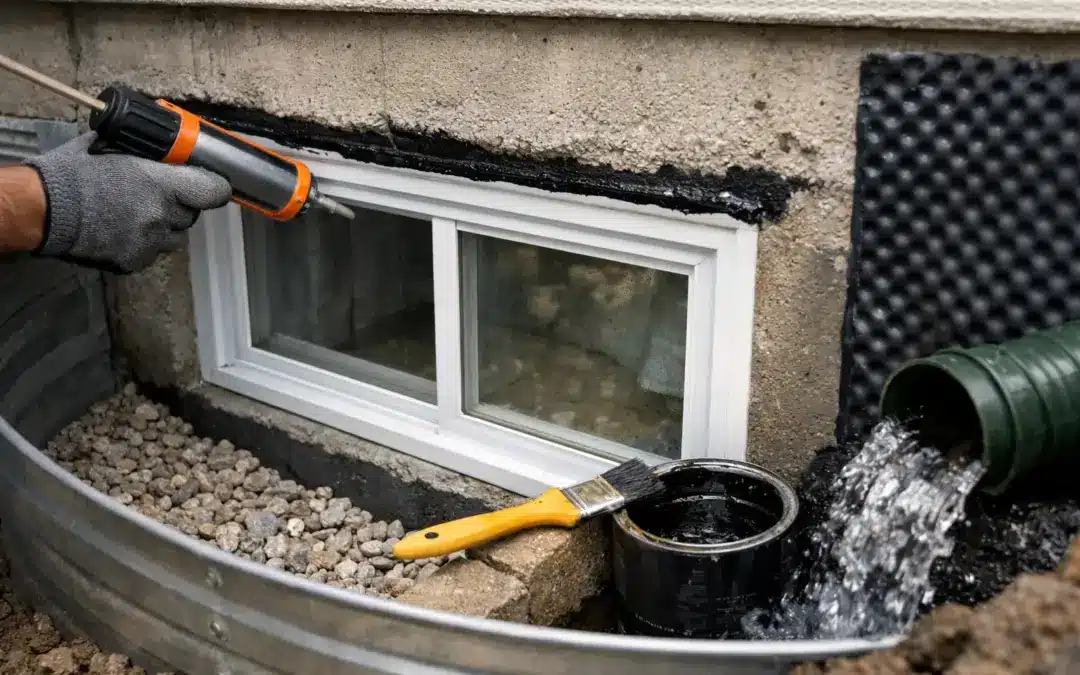
A wet basement window is rarely just a window problem. In many Philadelphia-area homes, water shows up at the glass, frame, or sill because something outside is directing water there – poor grading, failed caulk, clogged window wells, cracked masonry, or pressure building against the foundation. If you want to know how to waterproof basement windows, the real answer starts with finding the exact entry point before you spend money on the wrong fix.
That matters because basement leaks tend to repeat. Homeowners often replace a window, run a bead of caulk around the frame, and assume the problem is solved. Then the next heavy rain sends water back into the same corner. Permanent waterproofing comes from diagnosis first and repair second.
How to waterproof basement windows without guessing
The most effective approach is to treat the window area like a system, not a single component. Water can enter through the window frame itself, seep around the perimeter where the window meets the wall, collect in an overflowing window well, or travel through cracks in the surrounding foundation and appear at the window opening.
Start with a close inspection during or right after rain if possible. Look for stains on the wall below the window, wet insulation, bubbling paint, rotted trim, rust on metal frames, and water lines inside the window well. If the well fills with water, that points to drainage failure or heavy surface runoff. If the well stays mostly dry but the wall around the frame is damp, the issue may be failed sealant, mortar deterioration, or a gap between the frame and the masonry opening.
This is where many homeowners lose time and money. The visible drip is not always the source. Water can move along concrete, block, or framing before it becomes visible. A science-based inspection is what separates a targeted repair from a generic waterproofing package.
The most common reasons basement windows leak
Older homes in Southeast Pennsylvania and South Jersey often have a combination of age-related wear and water management problems. Basement windows sit low to the ground, which means they are exposed to splashback, saturated soil, clogged wells, and hydrostatic pressure.
One common failure point is exterior caulk. Caulk shrinks, cracks, and pulls away over time. When that happens, water gets into the joint between the frame and the wall. Another frequent issue is a deteriorated sill or masonry opening. If mortar joints are failing or the concrete around the opening is cracked, sealing the frame alone will not solve it.
Window wells are another major culprit. If leaves, mulch, or debris block the drain at the bottom, the well acts like a bucket. Once water rises high enough, it finds a path through the frame, over the sill, or through the surrounding wall. Poor grading makes this worse by pushing roof runoff and surface water directly toward the foundation.
Sometimes the problem is the window itself. Older steel or wood-framed basement windows can rust, rot, warp, or fail at the corners. In that case, repair may not be worth it. Replacement becomes the more economical long-term choice.
Start outside before sealing inside
If you are deciding how to waterproof basement windows, exterior water control should come first whenever possible. Interior sealants can help in limited situations, but they should not be your primary defense against active water intrusion.
Begin by checking the grading around the house. The soil should slope away from the foundation so rainwater moves away instead of pooling near the window. Downspouts should discharge far enough from the house that roof water is not dumping beside the basement wall. Even a well-sealed window can leak if thousands of gallons of roof runoff keep saturating that area.
Next, inspect the window well. Clear out debris and make sure the drain, if there is one, is open and functioning. If the well has no drain and regularly fills with water, that is a design problem, not just a maintenance issue. In some cases, adding or correcting well drainage is the repair that actually stops the leak.
A clear well cover can also help reduce direct rain entry, but it is not a cure-all. Covers are useful for limiting water, leaves, and snow buildup. They do not fix failed seals, foundation cracks, or drainage problems below the well.
Sealing the frame and surrounding wall
Once exterior drainage issues are under control, sealing the window assembly makes more sense. Remove loose or failing caulk completely before applying new material. Sealing over old, cracked caulk usually creates a short-lived patch.
Use a high-quality exterior-grade sealant designed for masonry and window perimeters. The goal is to seal the joint where the frame meets the foundation opening. If the gap is large, irregular, or crumbling, sealant alone may not hold. That usually means the substrate needs repair first.
Check the mortar joints, concrete edges, and sill area around the window. Small cracks can often be repaired, but wider cracks, shifting, or soft masonry may point to movement or deeper deterioration. In those cases, a cosmetic seal is not a permanent solution.
Inside the basement, resist the temptation to rely on waterproof paint as the fix. Coatings can help with moisture resistance, but if water is entering from outside under pressure, interior paint will eventually fail. It may hide the problem for a while, but it does not remove the source.
When window replacement is the better repair
Not every leaking basement window should be sealed and saved. If the frame is rusted through, the sash no longer closes properly, the glass assembly is failing, or the unit was poorly installed, replacement may be the smarter investment.
Modern basement windows can provide a tighter seal, better durability, and improved energy efficiency. That said, replacement only works if the opening itself is properly prepared and waterproofed. Installing a new window into a cracked, poorly drained, or deteriorated opening often leads to the same leak coming back.
This is why a targeted inspection matters so much. A good contractor should be able to tell you whether the problem is the window, the wall, the drainage around it, or some combination of all three. If someone recommends replacing every basement window without proving the source, that is a red flag.
How to tell if the leak is bigger than the window
Some signs suggest the water problem goes beyond the basement window area. If you see seepage where the wall meets the floor, efflorescence on the foundation wall, bowing or cracking masonry, recurring mold odors, or water entering in multiple spots, the issue may involve broader foundation waterproofing.
In those cases, sealing a basement window might reduce one symptom without solving the larger moisture problem. Water follows the path of least resistance. If hydrostatic pressure is building around the foundation, the window area may simply be where it becomes visible first.
For homeowners dealing with repeat leaks, this is usually the tipping point between patchwork and permanent repair. A precise inspection can identify whether you need localized window waterproofing, a crack repair, exterior drainage correction, or a more comprehensive basement waterproofing solution.
The difference between a patch and a permanent fix
The hard truth is that many basement window repairs fail because they were based on assumptions. A tube of caulk, a coat of waterproof paint, or a new cover might reduce water for a season, but if the true entry point remains open, the problem returns.
Permanent results come from matching the repair to the cause. If the well floods, improve drainage. If the frame joint failed, reseal it properly. If the masonry is cracked, repair the structure. If the window has reached the end of its life, replace it. If outside water pressure is overwhelming the wall, address the larger waterproofing issue.
That is the approach Basement Waterproofing Scientists is built around – diagnosing the actual leak source and prescribing the most economical permanent fix rather than selling a one-size-fits-all system.
If your basement window leaks every time it rains, the goal is not to keep trying random products until one seems to help. The goal is to stop water at the source, protect the surrounding foundation, and make sure the repair you pay for is the repair you actually need. A dry basement usually starts with a very specific answer, and that answer is worth finding before the next storm hits.