

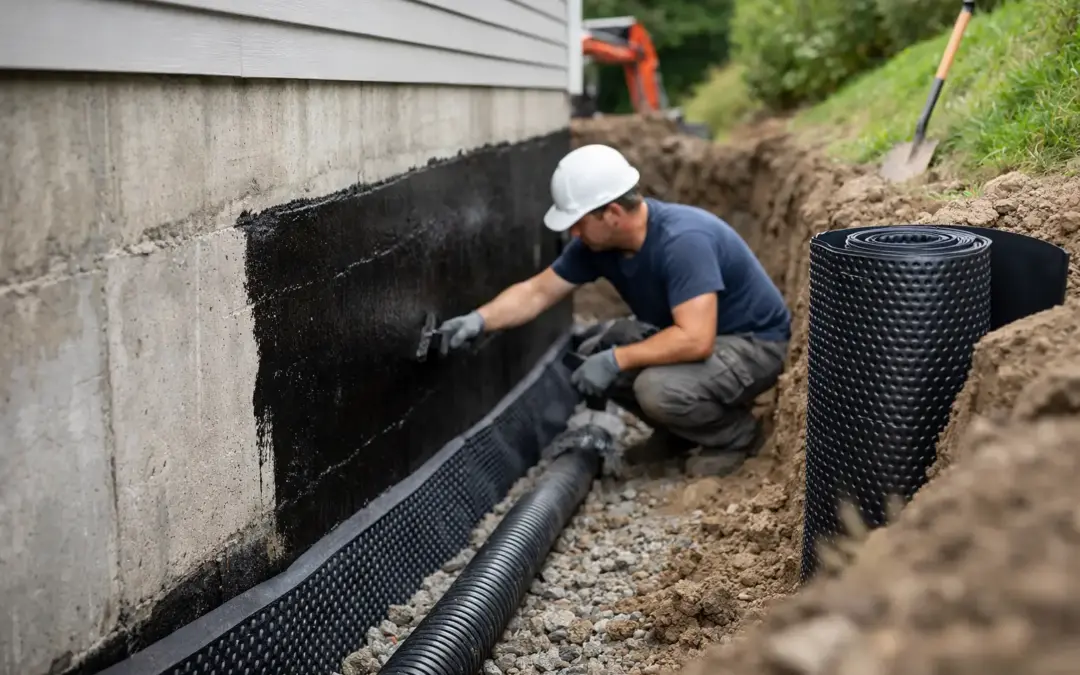
A basement that only leaks during hard rain usually tells you something useful: water is getting to the outside of the foundation and building pressure there. That is exactly where exterior foundation waterproofing comes in. Instead of managing water after it enters the basement, this approach is designed to stop it before it reaches the wall.
For many homeowners in Greater Philadelphia, Southeast Pennsylvania, and South Jersey, that distinction matters. Older homes, clay-heavy soils, aging parging, cracked masonry, and poor drainage patterns can all push water against the foundation year after year. If the real problem is outside, the right repair often starts outside too.
What exterior foundation waterproofing actually does
Exterior foundation waterproofing is the process of exposing the outside foundation wall, correcting defects that allow water in, and installing a barrier and drainage system that directs groundwater away from the structure. In practical terms, that usually means excavation down to the footing in the affected area, cleaning and inspecting the wall, repairing cracks or damaged mortar, applying a waterproof membrane, and adding drainage protection so water does not sit against the wall.
This is different from a simple damp-proof coating. Damp-proofing slows moisture transmission, but it is not built to resist hydrostatic pressure. True waterproofing is intended to hold up when soil becomes saturated and water is pressing against the foundation.
That difference gets overlooked all the time. Homeowners are sometimes told they need a full interior system when the actual failure is a specific exterior crack, a deteriorated wall section, or a drainage issue concentrated on one side of the house. Other times, the opposite is true, and an exterior excavation would be more work than necessary. The right answer depends on the source of the moisture, not on a one-size-fits-all sales pitch.
When exterior foundation waterproofing makes sense
Exterior repairs make the most sense when water intrusion can be traced to an outside defect or pressure point. If leaks appear at a wall crack, around a pipe penetration, along one foundation corner, or after water pools near the house, an exterior solution may be the most direct and economical permanent fix.
It is also a strong option when foundation walls show visible deterioration from the outside. Crumbling parging, open mortar joints, failed prior coatings, and root-related cracking can all create pathways for water. In those cases, covering the symptom from inside the basement does not fully address the cause.
Homes with finished basements can also be good candidates. If the problem can be solved from the exterior, you may avoid tearing into interior walls or flooring. That matters if you have already invested in making the basement livable.
Signs the outside of the foundation is the real problem
The pattern of water intrusion usually tells a story. If the basement stays dry most of the time but leaks after prolonged rain, snow melt, or when gutters overflow, exterior water pressure is often involved. A musty smell along one wall, white mineral deposits on masonry, peeling paint, and damp spots that reappear in the same area are also common clues.
Outside, the warning signs can be just as clear. Soil that slopes toward the home, downspouts discharging too close to the wall, sunken areas near the foundation, and standing water after storms all increase the chance of seepage. In older Philadelphia-area housing stock, it is also common to find masonry foundations with sections that have been patched multiple times over the years. Those patch layers can hide the real entry point without stopping it.
This is why inspection matters. A moisture problem should be diagnosed before a system is prescribed. A targeted repair is almost always better for the homeowner than paying for unnecessary work.
How the process works
A proper exterior waterproofing job starts with finding the exact failure area. That may sound obvious, but it is where many projects go wrong. If a contractor excavates the wrong section or assumes every wet basement needs the same treatment, the problem can continue and the cost goes up.
Once the affected wall is identified, the soil is excavated to expose the foundation. The wall is then cleaned so defects can be seen clearly. Cracks are repaired, weak mortar joints are restored, and any damaged areas of the wall surface are corrected before waterproofing materials are applied.
The next step is the actual barrier system. Depending on the foundation type and site conditions, this may include a liquid membrane, sheet membrane, drainage board, and footing-level drain components. The goal is not just to coat the wall, but to create a path that moves water down and away instead of letting it collect against the structure.
Backfilling also matters more than most homeowners realize. Using the right material and restoring grade correctly helps protect the waterproofing layer and reduces future water pressure. If the final grading still pitches water toward the home, even a well-installed system can be undermined.
Exterior waterproofing vs. interior waterproofing
This is where nuance matters. Exterior foundation waterproofing is not automatically better than interior waterproofing. It is better when the water source and wall condition make it the right solution.
Exterior work stops water before it enters the wall assembly. That helps protect the foundation itself, reduce long-term deterioration, and prevent moisture from reaching the basement interior. It is often the preferred choice for wall cracks, outside wall defects, and localized foundation seepage.
Interior systems, on the other hand, are often effective when groundwater pressure under the slab or along the wall-floor joint is the main issue. They can be less disruptive to landscaping and are sometimes more practical when access outside is limited by porches, walkways, neighboring structures, or utilities.
Some homes need a combination. For example, one wall may need exterior crack repair while the basement floor perimeter benefits from interior drainage. The point is not to force every basement into one category. The point is to solve the actual failure path with the least unnecessary work.
Common mistakes homeowners should avoid
The biggest mistake is treating every leak as a coating problem. Painting a wall with waterproof paint will not stop a structural crack or relieve hydrostatic pressure. It may hide moisture for a while, but it does not remove the cause.
Another mistake is assuming bigger is always better. Not every wet basement needs a full-house excavation, and not every contractor who recommends one is acting in the homeowner’s best interest. In many cases, the leak is limited to a specific section of wall, a single penetration point, or a drainage defect that can be corrected more economically.
It is also risky to ignore exterior drainage basics. Gutters, downspout extensions, grading, and settlement around the home can all affect basement moisture. If those conditions are left uncorrected, even a good waterproofing repair may be working harder than it should.
Cost depends on the cause, access, and scope
Homeowners understandably want a fast price, but exterior foundation waterproofing is one of those services where the range can vary for good reason. The final cost depends on how much of the foundation needs to be exposed, how deep the excavation must go, whether landscaping or hardscaping needs to be removed and restored, and what condition the wall is in once it is uncovered.
A single crack on one accessible wall is very different from a deep excavation along multiple sides of a home with tight access. That is why a real inspection is more valuable than a generic estimate. When the source is accurately identified, the repair can be sized correctly. That often saves homeowners thousands compared with broad recommendations that are not tied to the actual leak path.
Why diagnosis should come before the fix
Water problems can look similar from inside a basement even when the causes are completely different. A damp wall could be exterior seepage, condensation, plumbing leakage, or groundwater pressure below the floor. A crack may be cosmetic, or it may be the direct route for rainwater entry.
That is why a science-driven inspection matters. Before recommending exterior excavation, the contractor should be able to explain where the water is entering, why it is happening, and why that proposed repair is the most economical permanent solution. Basement Waterproofing Scientists has built its approach around that principle because homeowners deserve answers before they are asked to approve major work.
If you are dealing with recurring seepage, musty basement odors, or leaks that return every storm season, exterior foundation waterproofing may be the right answer – but only if the outside of the foundation is truly where the problem starts. The best repair is the one that matches the evidence, protects the structure, and ends the cycle of temporary fixes for good.