

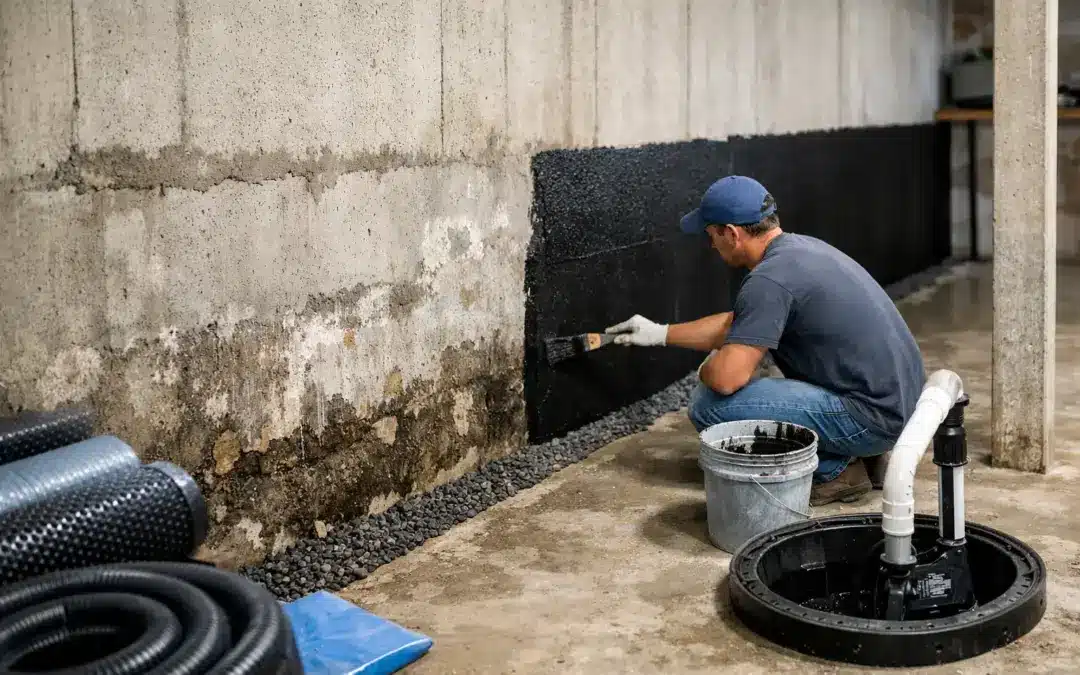
A wet basement rarely starts with a dramatic flood. More often, it begins with a musty odor after rain, a dark line along the wall, peeling paint, or one puddle that returns in the same corner. The best basement waterproofing methods address why that water is getting in, not just where it becomes visible. A permanent solution depends on the source of moisture, the condition of the foundation, the soil around the home, and whether groundwater is building pressure against the walls.
For homeowners across Greater Philadelphia, Southeast Pennsylvania, and Southern New Jersey, that distinction matters. Older stone foundations, aging concrete, heavy clay soil, high water tables, and poorly managed roof runoff can create very different water problems. Installing a generic waterproofing system without diagnosing the cause may cost more than necessary and still leave the real issue unresolved.
Start With Accurate Leak Detection
Water does not always enter at the wettest-looking spot. It can travel behind finished walls, along a footing, through a wall-floor joint, or across the underside of a slab before appearing on the opposite side of the basement. That is why a proper inspection should look beyond visible stains.
A science-driven assessment examines the pattern of moisture, wall cracks, drainage conditions, grading, gutters, sump performance, and signs of hydrostatic pressure. Moisture scanning and targeted leak detection can help identify whether the problem is surface runoff, a plumbing leak, groundwater, condensation, or a foundation opening.
This step protects homeowners from overspending. A small crack repair and gutter correction may solve a localized rain leak. If groundwater is rising beneath the slab, however, exterior caulk or a wall coating will not stop the water pressure. The right repair begins with an honest answer about the source.
The Best Basement Waterproofing Methods for Common Problems
Exterior waterproofing and foundation drainage
Exterior waterproofing is often the most comprehensive approach when water is entering through below-grade foundation walls. The process generally involves excavating down to the footing, cleaning and repairing the wall, applying a waterproof membrane, and installing or restoring a footing drain that carries water away from the house.
This method stops groundwater before it reaches the foundation wall. It is especially effective for deteriorated exterior coatings, failed footing drains, recurring wall seepage, and homes where water is creating pressure against the outside of the foundation.
The trade-off is access and cost. Excavation is labor-intensive, and landscaping, patios, decks, porches, utility lines, and tight property lines can make some areas difficult to reach. Still, when an exterior wall is the true source of the problem, properly installed exterior drainage is often the most direct long-term repair.
Interior drain tile systems
An interior drainage system is designed to manage water that reaches the foundation footing or comes up through the floor. Contractors install a drainage channel along the inside perimeter of the basement, typically beneath the concrete slab. The system directs water to a sump basin, where a pump discharges it safely away from the home.
Interior drain tile does not make the outside soil dry. Instead, it relieves water pressure and gives groundwater a controlled path out of the basement. This makes it one of the most dependable solutions for hydrostatic pressure, water at the wall-floor joint, and widespread seepage after prolonged rain.
For many finished or partially finished basements, this is a practical option because it can be installed from inside without excavating the entire property. The system must be sized correctly, pitched properly, and connected to a reliable sump pump. A poorly designed interior drain can leave sections of the footing unprotected or fail to move water efficiently.
Sump pumps and backup protection
A sump pump is the working heart of many basement drainage systems. When water enters the sump pit, the pump sends it through a discharge line that should terminate well away from the foundation. The pump must be powerful enough for the volume of water, and the discharge line must not freeze, clog, or release water beside the house where it can cycle back toward the basement.
A primary sump pump is not enough for every property. Homes with frequent power outages, a high water table, or a history of fast flooding should consider battery backup protection. During severe storms, the power can fail at the exact time the pump is needed most.
Homeowners should also test their pumps periodically. A system may be installed correctly but still fail because the float switch is stuck, the outlet has tripped, or the discharge line is blocked. Routine testing is inexpensive insurance against a costly cleanup.
Crack repair with injection or structural repair
Not every wall crack requires a full drainage system. A single vertical or diagonal crack that leaks during rain may be repaired with a professional polyurethane or epoxy injection, depending on whether the crack is actively moving and whether water is present.
Polyurethane is commonly used for active water leaks because it expands to fill the crack and can remain flexible. Epoxy is often used when structural bonding is needed in a stable concrete crack. The correct material depends on the condition of the wall, not simply the appearance of the crack.
Horizontal cracks, bowing walls, stair-step cracks in masonry, or cracks that widen over time require more attention. These can indicate soil pressure or foundation movement. Waterproofing alone may manage the water, but it will not correct a wall that is structurally compromised. In those cases, foundation repair should be part of the plan.
Grading, gutters, and downspout drainage
The most economical waterproofing repair is sometimes above ground. Rainwater should drain away from the foundation, not collect beside it. Soil should slope away from the house, gutters should be clean, and downspouts should discharge far enough away that roof runoff cannot saturate the foundation soil.
These improvements are essential, but they are not a cure-all. Regrading and downspout extensions can dramatically reduce rain-related leaks, especially near one wall or corner. They will not solve groundwater rising beneath the basement floor or a failed footing drain deep below grade. The key is matching the repair to the water pattern.
Vapor barriers and crawl-space moisture control
A vapor barrier can be useful in crawl spaces and unfinished basement areas where moisture is evaporating from exposed soil or masonry. It helps reduce humidity, mold risk, and musty odors. Dehumidification may also improve comfort and protect stored belongings.
However, vapor barriers are not a substitute for drainage. If liquid water is entering through walls or floors, covering surfaces without controlling the source can trap moisture and hide developing damage. Moisture control works best when drainage, leak repair, and ventilation needs are considered together.
Avoid Surface-Level Fixes for Active Water Problems
Waterproof paint, sealers, and quick caulk repairs can have a place in minor maintenance work, but they are commonly overused. If the wall is under water pressure, a coating applied from the interior may blister, peel, or allow water to find another path. It can also make a future diagnosis harder by concealing stains and efflorescence.
The same concern applies to finishing a basement before the water issue is resolved. Drywall, carpet, and cabinetry can make the space look better temporarily while trapping moisture against foundation walls. Repair the water entry first, confirm the basement stays dry through significant weather, and then consider finishing work.
Choosing a Permanent, Economical Repair
The right method is rarely the biggest system available. It is the system that solves the confirmed problem with the least unnecessary disruption. A localized crack may need injection. A wet wall-floor joint may call for interior drainage and a sump pump. Persistent exterior wall seepage may justify excavation, membrane waterproofing, and footing-drain repair.
Ask any contractor to explain where the water is entering, why the recommended method addresses that path, and what happens to the water after installation. You should also understand what warranty applies, whether the repair includes structural concerns, and what maintenance the system requires. Clear answers are a sign that the recommendation is based on evidence rather than a one-size-fits-all sales package.
Basement Waterproofing Scientists approaches inspections with that level of precision: identify the source, recommend the most economical permanent fix, and avoid selling work your home does not need. If your basement has recurring dampness, leaks, mold concerns, or wall cracks, a targeted inspection can turn a frustrating mystery into a clear repair plan.