

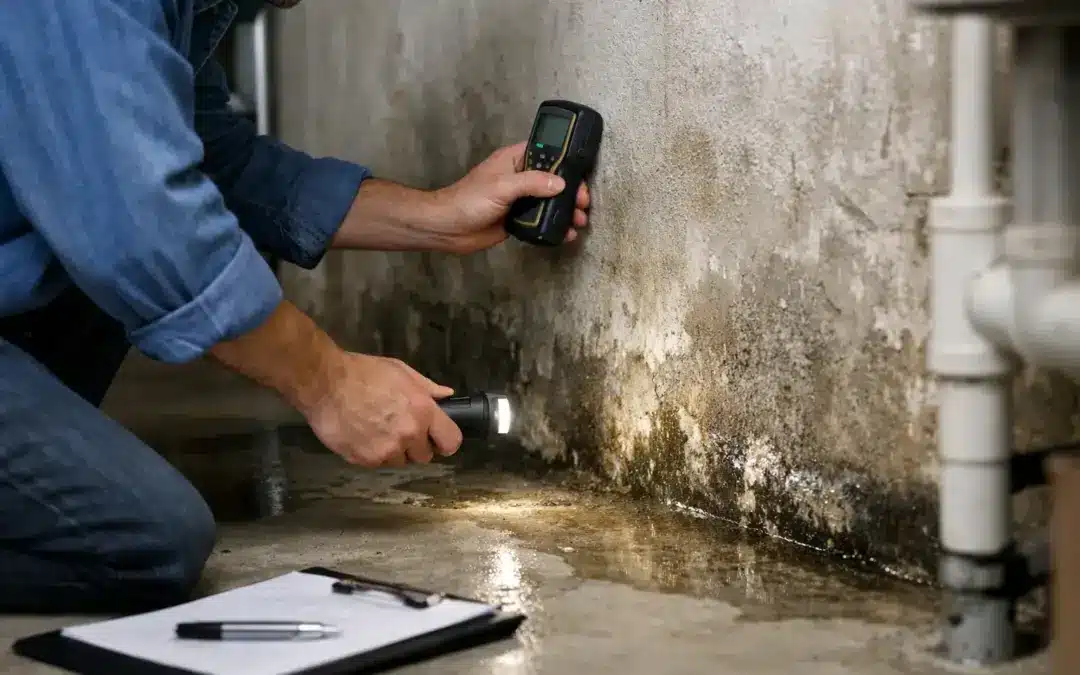
A basement can feel dry on a sunny afternoon and still be taking on water every time it rains. That is why knowing how to diagnose basement moisture starts with more than finding a wet spot. You need to identify the moisture pattern, trace its likely path, and separate a true foundation leak from humidity, plumbing, or exterior drainage problems.
For homeowners in Greater Philadelphia, Southeast Pennsylvania, and Southern New Jersey, that distinction matters. Our older homes, clay soils, seasonal storms, and freeze-thaw cycles can create several moisture sources at once. A permanent repair begins with an accurate diagnosis, not a one-size-fits-all waterproofing system.
Start by Identifying What You Actually See
Basement moisture leaves clues. The location, texture, timing, and appearance of those clues can point to the source.
A puddle that appears along the base of a wall shortly after rain often indicates water entering through a wall-floor joint, foundation crack, window well, or exterior grading issue. Moisture that is concentrated around a pipe, water heater, washing machine, or bathroom wall may be a plumbing leak instead. Do not assume every wet basement is a foundation problem.
White, chalky residue on concrete or masonry is called efflorescence. It forms when water moves through the wall and leaves mineral salts behind as it evaporates. Efflorescence does not tell you exactly where water is entering, but it does confirm that moisture has traveled through that material.
Peeling paint, bubbling wall finishes, warped baseboards, rusted metal columns, and soft drywall are also useful evidence. If the damage begins low on the wall and rises only a few inches, it often suggests water at the floor level. Damage that starts higher on a wall can point to a crack, window opening, exterior soil grade, or leaking gutter discharge.
Check Whether Humidity Is the Real Problem
Not all basement dampness comes through the foundation. Warm, humid air can enter a cool basement and condense on cold pipes, concrete walls, metal ductwork, and floors. This is especially common during humid Pennsylvania and New Jersey summers.
Condensation usually looks different from a rain-driven leak. It may appear across broad surfaces rather than in one defined area. Pipes may sweat, cardboard boxes may feel damp, and a musty odor may become worse on hot, humid days even when there has been no rain.
A simple hygrometer can help confirm the conditions. Basement relative humidity should generally stay below 60 percent. Readings consistently above that level create an environment where mold can grow and materials can deteriorate. A dehumidifier may manage indoor humidity, but it is not a repair for water that is actively entering through the foundation.
Pay attention to timing. If moisture appears only after heavy rain or snowmelt, exterior water management and foundation entry points deserve close attention. If it persists during dry weather, investigate condensation, plumbing, a hidden drain issue, or groundwater pressure.
Inspect the Outside Before Blaming the Basement Walls
Water problems below grade often begin above grade. During a careful exterior inspection, look for conditions that send roof or surface water toward the foundation.
Gutters should be clear and securely attached, and downspouts should discharge well away from the house. A downspout that releases water beside the foundation can saturate the soil exactly where you do not want it. Underground extensions can help, but they need to remain open, correctly sloped, and properly discharged.
Next, look at the ground around the home. Soil should slope away from the foundation so water sheds outward rather than pooling against the wall. Settled soil, patios that pitch toward the house, sunken walkways, and landscaping borders can all trap water near the basement.
Window wells require attention too. A window well filled with leaves, mulch, or standing water can leak through the window frame or overwhelm the drain beneath it. If water stains are directly below a basement window, inspect the well before assuming the wall itself has failed.
Exterior conditions do not always reveal the entire problem. A home can have good gutter extensions and still experience groundwater pressure beneath the slab. But correcting obvious drainage problems is often the most economical first step and may prevent a larger repair.
Map Moisture Patterns Inside the Basement
A useful diagnosis is based on patterns, not guesses. Walk the basement after a significant rain and note exactly where you see water, dampness, staining, or odor. Check the same locations again after several dry days.
Look closely at these common entry areas: the joint where the wall meets the floor, vertical or horizontal foundation cracks, utility penetrations, basement windows, bulkhead doors, and the area around sump pits. A wet line running along the perimeter may indicate water pressure at the footing level. A narrow wet path from a visible crack may indicate a more localized entry point.
If your basement is finished, evidence can be hidden behind paneling, insulation, or drywall. Watch for a musty smell, discoloration along trim, a damp carpet edge, or paint that bubbles in one section. Removing finished materials too quickly can make a repair more expensive, but ignoring those signs can allow mold and structural deterioration to spread.
It can also help to photograph the area and record the weather conditions. Note whether the problem follows a short, intense storm, several days of rain, snowmelt, or a humid stretch without precipitation. This information gives a waterproofing specialist a clearer starting point.
Test Suspected Sources Carefully
Some moisture sources can be tested without causing damage. For suspected condensation, tape a square of clear plastic tightly to a dry section of wall or floor and leave it for about 24 hours. Moisture on the room-facing side of the plastic suggests humid indoor air. Moisture behind the plastic suggests vapor or water movement through the concrete.
This is a screening test, not a final diagnosis. Concrete can retain moisture, and mixed conditions are common. A basement may have both high humidity and rainwater intrusion.
For a suspected plumbing leak, inspect nearby supply lines, drain connections, appliance hoses, and shutoff valves. Run fixtures above the basement and watch for new moisture. If staining changes after using a shower, dishwasher, or washing machine, call a qualified plumber before investing in foundation work.
Avoid using a hose to flood the outside of your foundation as a DIY test. You may force water into an area that would not normally leak, overload a window well, or misread the result. Controlled leak detection is more reliable because it evaluates the structure, moisture path, and surrounding conditions together.
Understand What Cracks May Be Telling You
A foundation crack is not automatically a structural emergency, but it should not be ignored when it is wet, widening, displaced, or paired with other changes. Vertical cracks are common as concrete cures and the house settles. When a vertical crack leaks, targeted crack repair may be the right solution.
Horizontal cracks, stair-step cracks in masonry, bowing walls, or one side of a crack that sits farther out than the other can indicate pressure or movement. These conditions may require foundation repair in addition to moisture control. Sealing the visible crack alone can be a short-term patch if water pressure and wall movement are not addressed.
The right repair depends on the cause. An interior drainage system may be appropriate for persistent groundwater pressure. Exterior drainage correction may solve runoff-related water. A single crack may need a precise injection repair. The goal is not to install the biggest system. The goal is to stop the actual water path permanently.
Know When to Schedule a Professional Inspection
Schedule a professional inspection when water returns after rain, stains continue to spread, you see mold-like growth, the basement has a persistent musty odor, or wall cracks are changing. Immediate attention is especially wise if you see standing water near electrical equipment, a finished basement is affected, or the walls are bowing.
A thorough inspection should look beyond the most obvious wet area. The point is to determine where water is entering, why it is reaching that point, and which repair will deliver the best long-term value. Basement Waterproofing Scientists uses scientific leak detection to identify the source before recommending a targeted, economical solution.
Do not let a dry week convince you the problem is gone. Moisture issues tend to return when the next storm, snowmelt, or humid spell recreates the conditions that caused them. A clear diagnosis gives you the confidence to fix the right problem once and protect the basement space you have worked hard to maintain.