

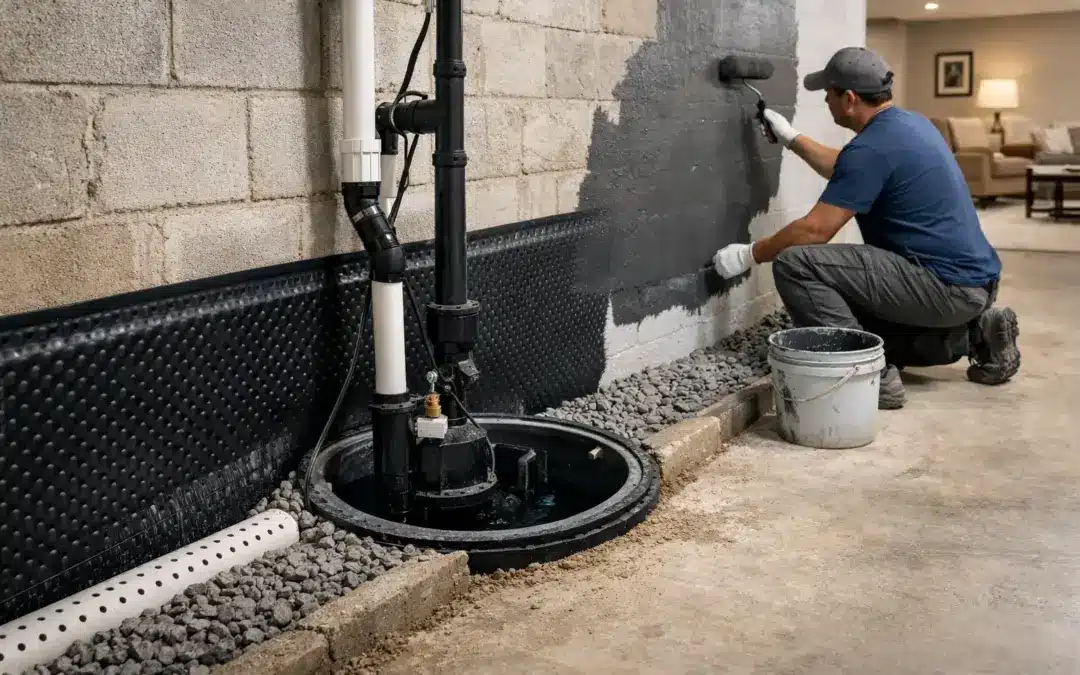
A basement that smells damp after every storm usually tells you two things at once – water is getting in, and the real problem may be bigger than the puddle you can see. That is why homeowners often ask, what is interior basement waterproofing, and is it actually the right fix? The short answer is that interior basement waterproofing is a system designed to manage water after it enters through the foundation or where the floor and wall meet, then direct it safely away before it can damage the space.
That sounds simple, but the details matter. Some basements need an interior drainage system and sump pump. Others need crack repair, grading correction, exterior waterproofing, or foundation work. The right answer depends on where the water is coming from, how often it happens, and whether the issue is seepage, hydrostatic pressure, or a specific structural defect.
What is interior basement waterproofing and how does it work?
Interior basement waterproofing is a method of controlling basement water from the inside of the home. Instead of trying to block every drop at the outside wall surface, it captures water that seeps through the wall, through cracks, or up from beneath the slab, then channels it into a drainage system that leads to a sump pump or discharge point.
In most homes, the system includes a perimeter drainage channel installed along the inside edge of the basement floor, sometimes called an interior French drain. Water enters that channel, flows to a sump basin, and is pumped out and away from the foundation. Depending on the basement, the system may also include a vapor barrier on the wall, drainage board, weep holes in block walls, or crack injection repairs at specific leak points.
This approach is popular because it is effective, less disruptive than full exterior excavation, and often more economical for homes with recurring seepage. It is especially common in older homes around Philadelphia, Southeast Pennsylvania, and South Jersey, where aging foundations, heavy rains, and shifting soil can create long-term moisture issues.
What interior basement waterproofing does well
When designed correctly, interior waterproofing is very good at controlling water intrusion that shows up along the cove joint, through porous masonry walls, or from pressure under the slab. It does not rely on a cosmetic coating to hold back groundwater. It gives water a managed path and removes it from the basement before it spreads.
That distinction matters. Many homeowners first try paint-on waterproofing products or store-bought sealers. Those can help with minor surface moisture in some cases, but they usually do not solve active seepage or hydrostatic pressure. If water is pushing in from outside, a coating alone is rarely a permanent answer.
A properly installed interior system can also reduce mold risk, protect finished basement materials, and make the space more usable. For many homeowners, the goal is not just to stop standing water. It is to protect framing, flooring, drywall, storage, HVAC equipment, and overall home value.
What interior basement waterproofing does not do
This is where honest diagnosis matters. Interior basement waterproofing manages water effectively, but it does not fix every cause of water intrusion by itself.
If your issue is a large foundation crack, bowing wall, failed exterior drainage, or improper grading that dumps roof runoff against the house, an interior system may be only part of the solution. If a window well leaks, the answer may involve the window area. If water enters through a single wall crack, targeted crack repair may solve the issue without a full perimeter system.
In other words, interior waterproofing is not a magic label. It is one category of solution. The best contractors do not prescribe the same system for every wet basement. They identify the source first, then recommend only what is necessary.
Common signs you may need interior basement waterproofing
Homeowners usually notice the symptoms before they understand the mechanism. You may see water along the perimeter after rain, white chalky residue on walls, damp basement air, musty odors, stained base of foundation walls, or recurring mold growth near lower wall areas.
You might also notice that the problem gets worse seasonally. In many local homes, spring rains and saturated soil create hydrostatic pressure that forces water through vulnerable joints and tiny openings. Even if you never see a major flood, chronic moisture can still damage materials over time.
If the basement has already been painted or patched and the problem keeps coming back, that is another sign the issue has not been diagnosed correctly.
When interior waterproofing is the right choice
Interior basement waterproofing is often the right solution when groundwater pressure is the main issue and the goal is reliable water management without major exterior excavation. It is frequently the practical choice for homes with limited access around the foundation, finished landscaping, porches, driveways, or neighboring structures that make exterior work more invasive and expensive.
It is also a strong option when seepage occurs at multiple points around the basement rather than from one isolated crack. In that situation, trying to chase every visible leak individually can become more costly than installing a system that controls water along the full perimeter.
That said, it depends on the house. Some basements need a combination approach. A targeted crack repair plus interior drainage may be the most economical permanent fix. In other cases, exterior correction is necessary because the water entry is tied to a very specific outside failure.
The most common components of an interior system
Most interior basement waterproofing systems are built around drainage and discharge. A trench is created along the inside perimeter, drainage material or channel is installed, and the floor is restored over it. Water collected there is directed to a sump basin with a pump that moves it outside, away from the home.
Depending on the foundation type, additional features may be added. Block walls often require drainage openings because water can fill the hollow cores. Wall membranes can help direct seepage downward into the drain system instead of allowing it to enter the room. A battery backup sump pump may be recommended if power outages are a concern during storms.
The exact layout should match the problem. A good design is not about adding the most equipment. It is about controlling the actual water pathways in your basement.
Why diagnosis comes before installation
This is the part many homeowners do not hear often enough. A wet basement is a symptom, not a diagnosis.
You want to know whether the moisture is coming through a wall crack, from the cove joint, under the slab, through a pipe penetration, around a window, or from condensation that only looks like leakage. Those problems can appear similar at first glance, but they are solved differently.
A science-driven inspection can save a homeowner a great deal of money because it separates true waterproofing needs from problems that call for a smaller repair. Basement Waterproofing Scientists has built its approach around that principle: identify the source accurately, then recommend the most economical permanent fix rather than a one-size-fits-all package.
Interior vs. exterior basement waterproofing
Homeowners often ask which method is better. The honest answer is that neither is universally better. It depends on the source of water, the structure, access conditions, and budget.
Exterior waterproofing aims to stop water before it reaches the foundation wall. That can be an excellent solution, especially when exterior wall defects are clearly accessible and isolated. But it can require excavation, more labor, and more disruption.
Interior waterproofing manages water after it enters the foundation envelope but before it affects the basement space. In many real-world situations, that makes it more practical and more cost-effective. It is also highly reliable when installed correctly with the right pump capacity and drainage design.
The mistake is assuming every wet basement needs the same answer. Good contractors do not sell methods. They solve causes.
What homeowners should watch out for
Be cautious of any contractor who recommends a full interior system without explaining where the water is entering and why. You should expect a clear inspection, a direct explanation of the problem, and a reasoned recommendation.
You should also ask about pump quality, discharge routing, warranty terms, and whether the proposal addresses mold-prone materials or wall moisture where relevant. A low price that leaves the actual source untreated can become expensive later.
The best waterproofing work is not the flashiest. It is the work that keeps the basement dry year after year because the system matches the problem.
If your basement has recurring seepage, damp smells, visible staining, or water after rain, do not guess based on surface symptoms alone. The right fix starts with finding the real water path, then choosing the simplest permanent solution that fits your home. That is how you protect the basement, the foundation, and the money you put into both.