


Understanding Your Basement Water Problem
Water in basement issues affect more than half of all homes with below-grade spaces, causing damage that ranges from minor dampness to catastrophic flooding. Whether you’re dealing with puddles after heavy rain, persistent musty odors, or visible moisture on your walls, understanding the root cause is the first step toward a dry, healthy basement.
Quick Answer: Common Water Entry Points and Immediate Actions
| Entry Point | Immediate Action | Long-Term Solution |
|---|---|---|
| Floor cracks or joints | Remove standing water, run dehumidifier | Interior drainage system with sump pump |
| Foundation wall cracks | Seal with hydraulic cement (temporary) | Professional crack injection |
| Window wells | Clean debris, check drainage | Install window well covers |
| Poor grading/gutters | Extend downspouts 5+ feet from foundation | Re-grade soil, maintain gutters |
| Hydrostatic pressure | Pump out water immediately | Exterior waterproofing membrane |
The research is clear: basement water problems stem from three main sources—rainfall and snowmelt, irrigation issues, and shallow groundwater. In Pennsylvania, where flooding events have increased significantly in recent years, these issues are becoming more common and more severe.
Water finds its way into your basement through multiple pathways. Concrete may look solid, but it’s actually porous and absorbs water through capillary suction. Add normal foundation cracks, wall-floor joints, and utility penetrations, and you have numerous entry points for moisture.
The consequences of ignoring even minor water intrusion include:
- Mold and mildew growth (develops within 24-48 hours)
- Rotted wood framing and structural damage
- Damaged belongings and reduced property value
- Poor indoor air quality affecting your entire home
- Foundation deterioration from hydrostatic pressure
The good news? Most basement water problems are solvable with the right diagnosis and approach. Some issues require simple fixes like cleaning gutters or adjusting your yard’s slope. Others need professional intervention with interior drainage systems, sump pumps, or foundation repairs.
I’m Darin Garvey, and I’ve spent over three decades helping homeowners in the Philadelphia area solve their water in basement challenges through scientific leak detection and targeted waterproofing solutions. Every basement is unique, which is why proper diagnosis always comes before any repair recommendation.

Water in basement definitions:
- basement foundation wall repairing crack injection
- concrete wall crack repair epoxy injection
- epoxy crack injection
Recognizing the Warning Signs of Water in Basement
Before a full-blown flood, your basement often sends out distress signals. Learning to recognize these common signs of a water in basement problem is crucial for early intervention and preventing extensive damage.
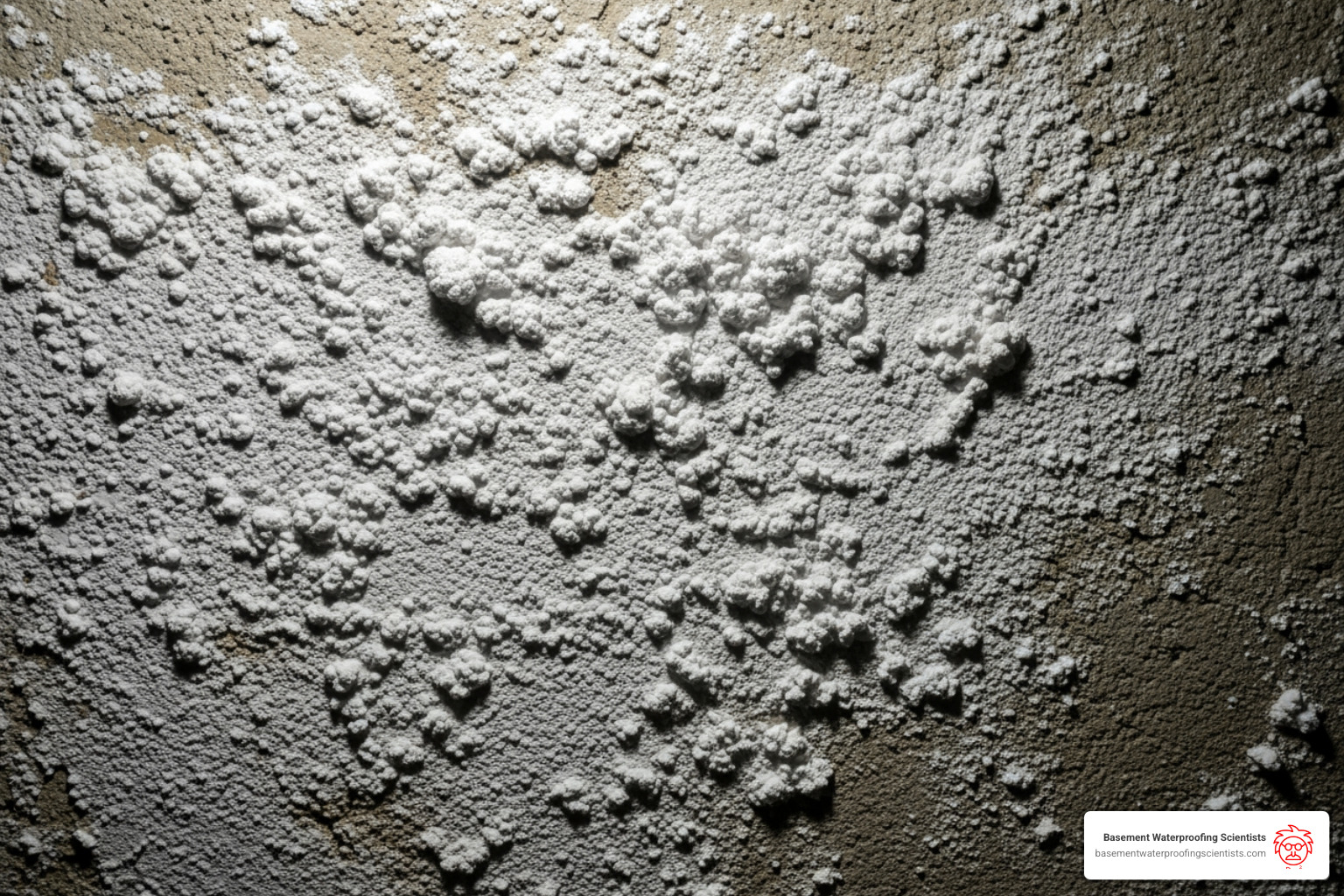
Here are the top warning signs we often encounter:
- Musty Odors: That earthy smell is often the first sign of hidden moisture or mold. It indicates your basement is harboring conditions for mildew and requires investigation.
- Visible Mold or Mildew: Fuzzy patches on walls, floors, or stored items signal a mold problem. Mold thrives in damp environments, posing health risks and damaging surfaces.
- Efflorescence: This white, chalky residue is left behind when water evaporates from masonry. It indicates moisture is actively moving through your foundation.
- Peeling, Bubbling, or Flaking Paint: Moisture pushing through surfaces causes paint to bubble or flake. This is usually a sign of water intrusion, not poor paint quality.
- Water Stains: Discoloration on walls or floors marks past or current water intrusion that may recur.
- Cracks in Walls or Floors: While hairline cracks are common, leaking or widening cracks are direct pathways for water. Horizontal cracks or bulging walls signal significant structural issues.
- Warped or Buckled Panels/Flooring: Buckling wood or drywall indicates moisture absorption and requires prompt attention.
- Rust on Appliances or Fixtures: Persistent high humidity causes metal appliances and fixtures to rust, signaling a damp environment.
- Damp Carpets or Flooring: Consistently damp flooring suggests a moisture problem beneath that can lead to mold and subfloor damage.
- Increased Humidity: A basement that feels clammy despite dehumidifier use suggests a constant source of moisture.
Early detection is your best defense against major catastrophes. If you notice any of these signs, it’s time to investigate further. For more details, visit our guide on 8 Signs Your Basement Needs Waterproofing.
Primary Causes: Why Moisture Infiltrates Your Foundation
Understanding why your basement is wet is half the battle. Water in basement problems rarely happen without a reason. Our scientific approach helps us pinpoint these causes, often stemming from the interplay between your home’s foundation and the environment.
At its core, water infiltrates through various entry points. Concrete is porous and absorbs water like a wick through capillary suction. Over time, shrinkage cracks, seams, utility penetrations, and basement windows become gateways for water.
Hydrostatic pressure is the most formidable force. This is the pressure exerted by groundwater against your foundation when the surrounding soil becomes saturated. During heavy rain or rising water tables, this pressure pushes moisture through cracks or wall-floor joints. As Angi.com explains, Groundwater In Your Basement Isn’t Good. Here’s What You Need to Know about these underground threats. For more on addressing floor seepage, see our resource on Water Seeping Through Basement Floor Cracks.
Exterior Factors and the Clay Bowl Effect
Often, the source of your woes is right outside your home. Exterior factors play a massive role in directing water towards your foundation.
- Grading Issues: The ground should slope at least 6 inches downward in the first 10 feet from the foundation to divert rainwater.
- Gutter Clogs and Downspout Extensions: Clogged gutters dump water at the foundation. Downspouts should extend at least 5 feet away from the house.
- Soil Permeability and the “Clay Bowl Effect”: When a home is built, the soil backfilled around the foundation is looser and more permeable than the surrounding undisturbed earth. This creates a “clay bowl” effect, where water collects in the loose soil and exerts pressure against your basement walls, even if exterior drainage seems adequate.
The University of Minnesota Extension highlights the importance of addressing these factors in their Moisture in basements: causes and solutions guide, emphasizing that controlling moisture at the source is the most effective approach.
Plumbing Issues and Window Well Failures
- Sump Pump Failure: Failure during heavy rain leads to rapid flooding. We recommend regular checks and battery backup systems for peace of mind.
- Pipe Bursts and Appliance Leaks: Burst pipes, leaking water heaters, or worn appliance hoses can release significant water suddenly or over time.
- Window Well Failures: Clogged or poorly drained wells fill with water, leaking through window frames. For targeted solutions, refer to our page on Basement Window Leak Repair.
Immediate Action: What to Do When You Find a Leak
Finding water in basement can be startling, but taking immediate steps can minimize damage and ensure safety.
Immediate Steps for Managing Water in Basement Floods
- Prioritize Safety: Do not enter standing water near electrical outlets. Shut off main power from a dry location and wear protective gear.
- Identify the Source: Determine if the water is from a plumbing issue or external seepage. Shut off the water main for internal leaks.
- Stop the Flow: For plumbing leaks, turning off the water main is the fastest fix. For external sources, temporarily divert water if safe.
- Remove Standing Water: Use wet-dry vacuums or pumps to extract water quickly and minimize damage.
- Begin Drying the Area: Use fans and dehumidifiers to reduce humidity and prevent mold growth.
- Remove Wet Materials: Remove porous materials like carpets or drywall if they have been wet for over 24-48 hours.
For a comprehensive guide, see our page on Wet Basement Repair.
Identifying the Source of Water in Basement Seepage
Understanding the difference between leakage and seepage is key. Leakage occurs when water enters through specific openings like cracks or pipe gaps. Seepage is the slow movement of moisture through porous materials like concrete, often appearing as damp spots or efflorescence.
We identify the source through:
- Visual Inspection: Checking for stains, mold, and cracks at the floor-wall joint.
- Moisture Meters: Tracing the path of intrusion in walls and floors.
- Diagnostic Questions: Determining if the problem is periodic or constant and if it worsens after rain.
The University of Minnesota Extension emphasizes starting with the easiest solutions, like gutters, before moving to complex systems. Their guide on Moisture in basements: causes and solutions provides a systematic approach. Our specialized equipment takes this further, scientifically pinpointing the exact source to fix the problem for less.
Long-Term Solutions and Professional Waterproofing
Once you’ve identified that you have a water in basement problem, the next step is implementing a lasting solution. While temporary fixes like dehumidifiers or interior sealants might offer brief relief, they rarely address the root cause and can even lead to further damage by redirecting water or exacerbating concrete issues like efflorescence and spalling. Our goal is to provide permanent, effective waterproofing.
We offer a range of solutions, often combining several approaches for comprehensive protection:
| Solution Type | Description | Primary Benefit | Best For |
|---|---|---|---|
| Interior Drainage Systems | Channels installed along the perimeter of the basement floor, leading to a sump pump. | Relieves hydrostatic pressure; collects water entering through walls/floor. | Persistent seepage, high water tables. |
| Sump Pumps | Mechanically pumps collected water from the basement away from the foundation. | Prevents basement flooding; essential for interior drainage systems. | All basements with water issues, especially in flood-prone areas. |
| Exterior Waterproofing Membranes | A waterproof coating applied to the exterior of foundation walls, often with drainage boards. | Prevents water from ever reaching the foundation walls. | New construction; severe exterior water issues; can be costly due to excavation. |
| Vapor Barriers | Heavy-duty plastic sheeting installed on basement walls or crawl space floors. | Controls moisture vapor, reduces humidity, prevents mold. | Damp basements, crawl spaces, finishing basements. |
| Grading & Gutter Solutions | Re-grading soil to slope away from the foundation; proper gutter/downspout installation. | Diverts surface water away from the foundation. | Initial preventative step for all homes. |
These solutions work together to manage water, whether it’s coming from surface runoff, groundwater pressure, or even internal plumbing leaks. For a deeper dive into our comprehensive offerings, explore our Basement Waterproofing Solutions.
The Role of Foundation Crack Injection
Foundation cracks are a common entry point for water in basement issues. While some hairline cracks are normal, actively leaking cracks, especially those that are growing or show signs of structural stress, require specialized attention. This is where foundation crack injection comes in.
We use advanced injection techniques, primarily with epoxy injection and polyurethane, to permanently seal these pathways and restore the structural integrity of your foundation:
- Epoxy Injection: Best for structural cracks, epoxy injections penetrate deep into the concrete, bonding the crack together and essentially making the foundation whole again. This is a strong, rigid repair that restores the load-bearing capacity of the wall.
- Polyurethane Injection: Ideal for non-structural cracks that are actively leaking, polyurethane is a flexible, expanding foam that fills the crack completely, creating a watertight seal. It can even expand to fill voids behind the wall, effectively blocking water.
Our method involves injecting these materials under pressure directly into the crack, ensuring a complete and long-lasting seal. This is a far cry from temporary surface sealants you might find at a hardware store, which often fail because they don’t address the full depth of the crack or the hydrostatic pressure behind it. Investing in professional crack injection is a crucial step in ensuring your foundation remains strong and dry. Learn more about our specialized services for Foundation Crack Injection Services.
Frequently Asked Questions about Basement Water
What are the risks of ignoring basement water problems?
Ignoring water in basement problems leads to severe consequences:
- Structural Damage: Persistent moisture weakens foundations, leading to bowing walls or settlement. Rotting wood framing further compromises your home’s integrity.
- Wood Rot: Wooden joists, beams, and studs are susceptible to rot when exposed to continuous moisture.
- Black Mold and Health Impacts: Mold growth poses serious respiratory health risks and allergies for your family.
- Damage to Belongings: Cherished items and electronics can be ruined by water and mold.
- Decreased Property Value: A wet basement is a major red flag that significantly reduces market value.
What is the difference between damp proofing and waterproofing?
- Damp Proofing: A coating applied to exterior walls to resist soil moisture and vapor transmission. While it prevents “wicking,” it cannot stop standing water or hydrostatic pressure.
- Waterproofing: A robust system designed to block all water intrusion. It typically combines a continuous exterior membrane with a drainage system, like a French drain, to collect and divert water away from the foundation.
Think of damp proofing as a rain jacket for drizzle, while waterproofing is a full-body dry suit for a deep dive.
When should a homeowner call a professional?
While some minor grading adjustments are DIY projects, call the experts for:
- Recurring Leaks: If temporary fixes keep failing.
- Visible Structural Cracks: Large or horizontal cracks indicating instability.
- Bowing or Bulging Walls: Signs of immense pressure against your foundation.
- Persistent Musty Odors or Mold: Indicators of an ongoing moisture source.
- Sump Pump Malfunctions: If your pump fails during heavy rains.
We offer free estimates to assess your unique situation. Don’t wait for a flood; contact us for a Basement Waterproofing Free Estimate today.
Conclusion
Dealing with water in basement issues can be one of the most frustrating and damaging problems a homeowner faces. From the subtle signs of musty odors and efflorescence to the dramatic reality of standing water, these issues demand attention. Ignoring them only leads to escalating costs, potential health hazards from mold, and compromised structural integrity of your home.
At Basement Waterproofing Scientists, we understand the science behind a dry basement. With over 30 years of experience, we’ve dedicated ourselves to providing lasting solutions for homeowners across Pennsylvania, New Jersey, and Delaware, including our neighbors in Philadelphia, Reading, Norristown, Pottstown, and many other communities. Our unique approach involves using specialized equipment to scientifically identify the precise source of your leaks, allowing us to fix them more effectively and for less.
We offer customized solutions, from interior drainage systems and sump pumps to exterior waterproofing membranes and foundation crack injections, all designed to ensure your basement remains permanently dry. We stand by our work with a lifetime guarantee, giving you peace of mind.
Don’t let water in basement problems dampen your spirits or your home’s value. Proactive measures and professional intervention are key to protecting your investment. While the average cost for comprehensive basement waterproofing can range between $4K and $8K, the long-term benefits of a dry, healthy basement far outweigh the costs of delayed action and recurring damage.
If you’re experiencing any signs of water intrusion, or simply want to ensure your basement is protected, reach out to us. We’re here to apply our scientific expertise to your basement challenges. Contact us today to learn more about our Foundation Repair services and how we can help you achieve a dry, healthy, and usable basement.