

Why Protecting Your Foundation Starts Outside
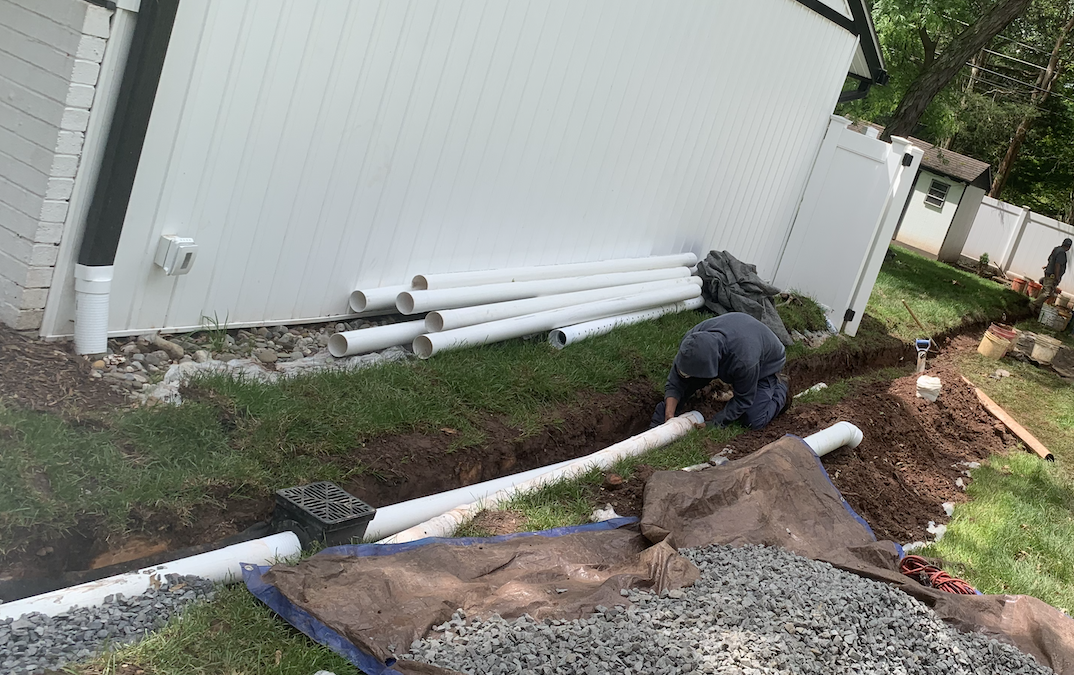
Exterior basement wall waterproofing is a comprehensive approach that prevents water from entering your basement by creating a barrier on the outside of your foundation walls. This method involves excavating around your home, applying waterproof membranes or coatings to the exterior walls, and installing drainage systems to redirect water away from your foundation.
Quick Facts:
- What it includes: Waterproof membrane application, drainage board installation, exterior French drains, and proper grading
- Best for: New construction, severe water issues, high water tables, and protecting finished basements
- Average cost: Between $4K and $8K for complete basement waterproofing
- Timeline: 1 day to 1 week depending on basement size and method
- Key benefit: Stops water at the source before it can enter your home
A wet basement isn’t just an inconvenience. It’s a threat to your home’s foundation, your family’s health, and your property value. Water damage can compromise structural integrity over time. Mold and mildew thrive in damp conditions, creating air quality issues. And that musty smell? It’s a warning sign that moisture is winning the battle.
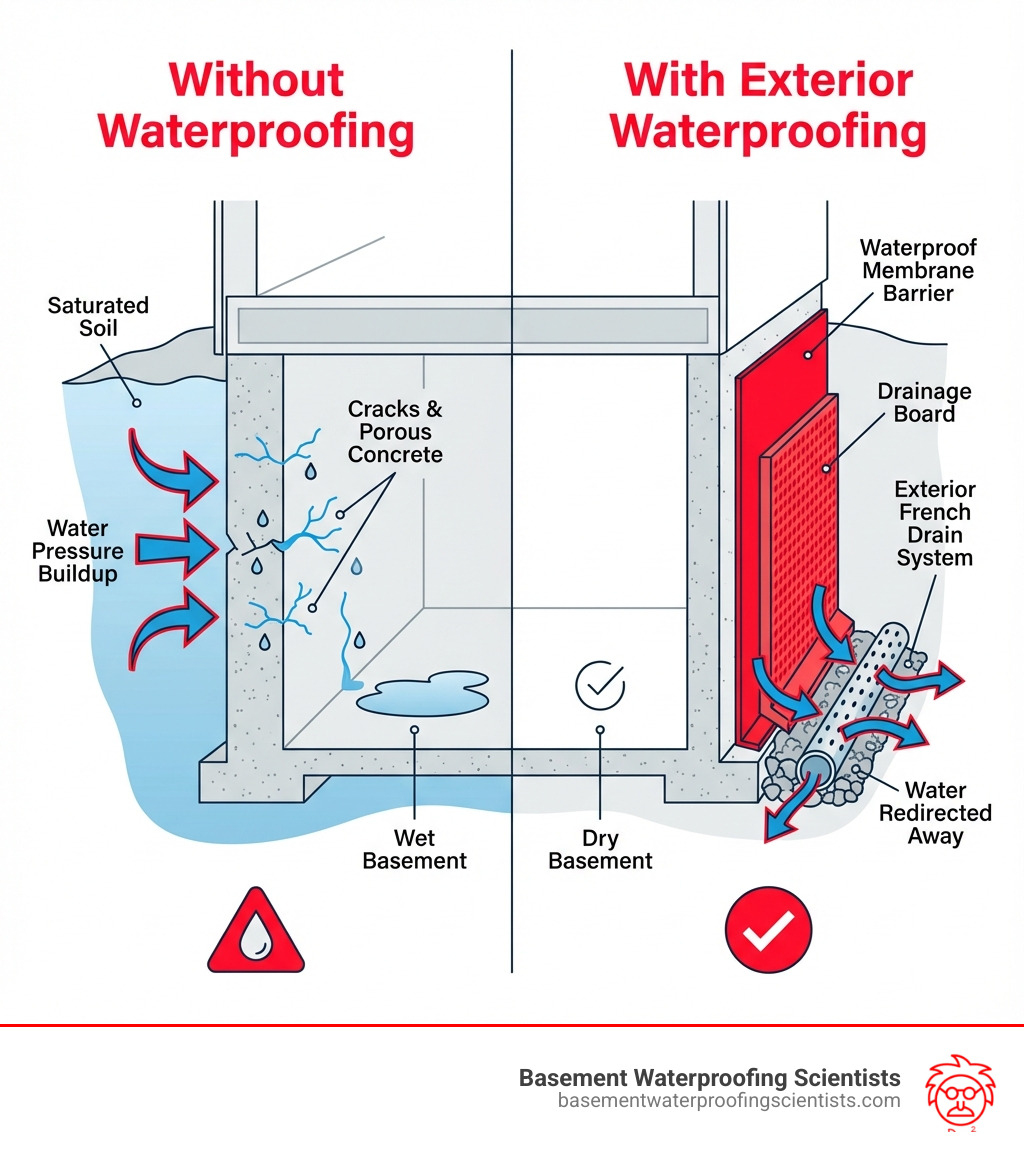
Many homeowners try interior solutions first—sealants, dehumidifiers, or interior drainage systems. But these approaches only manage water after it’s already penetrated your foundation walls. Exterior waterproofing takes a different approach. It stops water at its source, creating a protective barrier before moisture can seep through concrete or masonry.
Think of it like this: Would you rather fix a leaky roof from the inside or the outside? The same logic applies to your basement. By addressing the problem where it starts—on the exterior—you protect your foundation from hydrostatic pressure, prevent water infiltration, and create a truly dry basement space.
I’m Darin Garvey, and with over 30 years of experience in the industry, I’ve seen how exterior basement wall waterproofing transforms homes plagued by persistent moisture issues into dry, usable spaces. At Basement Waterproofing Scientists, we use state-of-the-art leak detection equipment to identify exactly where water is entering, allowing us to deliver targeted, permanent solutions.
Why Exterior Waterproofing is the Ultimate Defense for Your Foundation
When we talk about protecting your home, especially your basement, we’re not just talking about keeping it dry. We’re talking about safeguarding its very core. Exterior basement wall waterproofing offers a robust, proactive defense that tackles moisture problems at their source, providing benefits that interior solutions simply can’t match.
Primary Benefits
- Protecting Structural Integrity: Saturated soil creates hydrostatic pressure against basement walls, which can lead to cracks, bowing, and even foundation collapse. By preventing water from reaching the foundation, exterior waterproofing directly protects your home’s structural integrity, preventing the problem rather than just managing its symptoms.
- Preventing Mold and Mildew: Damp basements are breeding grounds for mold and mildew, which can trigger allergies and degrade indoor air quality. By stopping water before it enters, exterior waterproofing reduces the moisture that allows mold to thrive, creating a healthier home. The EPA confirms that controlling moisture is key to reducing moisture problems and preventing mold growth.
- Increasing Property Value: A dry basement is a significant asset that signals a well-maintained home and improves property value. Potential buyers are wary of water issues, so a professionally waterproofed exterior offers peace of mind and a clear market advantage.
- Creating Usable Living Space: Exterior waterproofing can transform a damp, musty basement into a living area, home office, or extra bedroom. By ensuring a permanently dry space, it effectively expands your home’s usable square footage without a costly addition.
To understand the power of exterior waterproofing, it helps to see how it stacks up against its interior counterpart:
| Feature | Exterior Waterproofing | Interior Waterproofing |
|---|---|---|
| Effectiveness | Stops water at the source, preventing entry entirely. Addresses root cause. | Manages water after it has entered the basement. Addresses symptoms. |
| Cost | Generally more expensive due to excavation and labor. | Typically less expensive and less disruptive. |
| Disruption | High disruption to landscaping and exterior of home. | Minimal disruption to interior finishes. |
| Longevity | Long-term solution that protects the foundation itself. | Often requires ongoing maintenance. |
| Foundation Protection | Directly protects the foundation from water pressure and saturation. | Does not protect the foundation from external water pressure. |
| Indoor Air Quality | Prevents moisture, significantly improving air quality. | Manages existing moisture, may not fully prevent humidity issues. |
In some homes, a dual approach offers the most complete solution, especially in challenging environments. You can learn more about this combined strategy at Benefits of Dual Approach: Interior and Exterior Basement Waterproofing.
When is Exterior Waterproofing the Best Choice?
While interior solutions are often less disruptive and quicker to install, they don’t prevent water from touching your foundation. This is where exterior basement wall waterproofing shines, offering distinct advantages in specific scenarios:
- New Construction: This is the ideal time for exterior waterproofing, as installation during the initial build is easier and more cost-effective than retrofitting.
- Severe Water Intrusion: For significant leaks, standing water, or persistent dampness that interior solutions can’t fix, exterior waterproofing is often the most effective solution.
- High Water Tables: In areas with high water tables, like many parts of Pennsylvania, New Jersey, and Delaware, foundations are under constant hydrostatic pressure. Exterior waterproofing provides a critical barrier.
- Poured Concrete or Masonry Block Walls: Whether your home has poured concrete or masonry block walls, exterior waterproofing systems are designed to seal these surfaces and help prevent water penetration. For older homes with fieldstone or cinderblock foundations, exterior solutions can be particularly effective in addressing deteriorating mortar joints and porous materials.
- Addressing Root Cause vs. Symptoms: Interior systems, while valuable, primarily manage water after it has entered your basement. Exterior waterproofing helps prevent this entry entirely, acting as a proactive shield against moisture.
- Protecting Finished Basements from the Outside: If you have a finished basement and want to avoid the disruption of interior demolition to install drainage, exterior waterproofing allows work to be done outside, preserving your interior finishes and usable space. For more on this, see Stone Cold Protection: Waterproofing Your Exterior Foundation Walls.
Potential Disadvantages and Challenges
It’s important to understand the potential drawbacks, as this method is typically the most complex and involved:
- Higher Upfront Cost: Exterior waterproofing is generally more expensive than interior methods due to extensive labor and excavation. Costs often fall in the higher end of the typical $4K to $8K range for complete waterproofing. For a deeper dive, see Waterproofing Basement Walls From Outside Cost.
- Extensive Excavation: The biggest hurdle is digging a trench around your foundation’s perimeter down to the footings. This involves heavy machinery and temporary disruption to your yard.
- Landscaping Disruption: Excavation requires removing landscaping, patios, or decks near the foundation. While care is taken to minimize damage and restore your property, this disruption is an unavoidable part of the process.
- Weather Dependency for Installation: Exterior work is at the mercy of weather. Heavy rain, freezing temperatures, or extreme heat can delay the project, impacting timelines and schedules.
- Project Duration: Depending on the size of your basement and the complexity of the job, exterior waterproofing can take anywhere from a day to a week to complete.
For many homeowners with persistent or severe water issues, the long-term peace of mind and superior protection offered by exterior basement wall waterproofing make it a worthwhile investment.
The Anatomy of an Exterior Waterproofing System
Understanding the components of an exterior waterproofing system is key to appreciating its effectiveness. It’s a multi-layered defense designed to block water and redirect it away from your foundation.
Core Waterproofing Components
At the heart of exterior waterproofing is the creation of an impermeable barrier on your foundation walls. This is achieved through various materials:
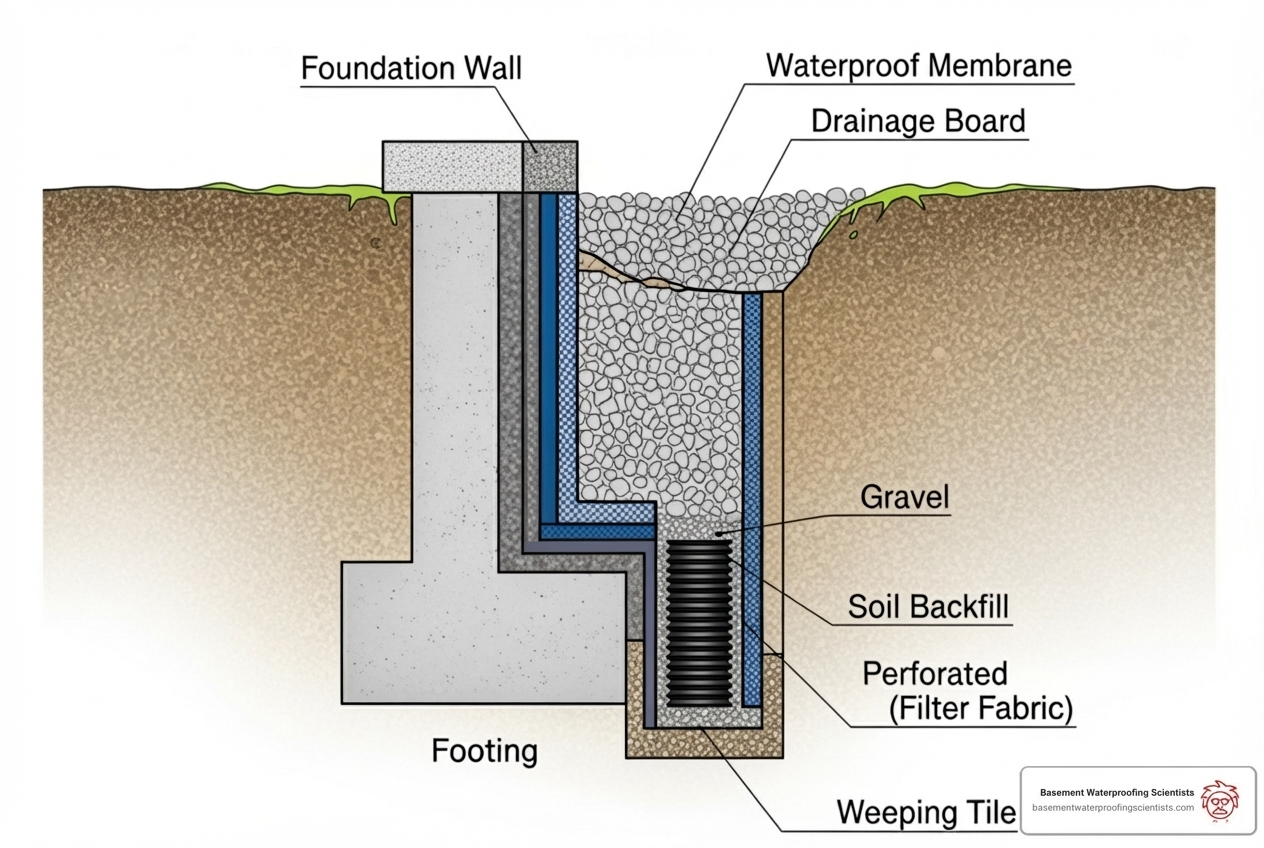
- Waterproofing Membranes: These form a continuous, watertight layer over your foundation walls.
- Liquid-Applied Coatings: Applied directly to clean foundation walls with a roller or sprayer. Products like polyurethane or rubberized asphalt create a seamless, flexible barrier that adheres tightly to the concrete. Some liquid membranes can offer protection for up to 25 years.
- Sheet Membranes (Peel-and-Stick): Pre-formed sheets, similar to those used on roofs, are a popular choice for their consistent thickness and ease of application. They often require a primer to ensure proper adhesion to the concrete. Brands like GCP Bituthene 3000 or Henry Blueskin WP 200 are well-known options.
- Dimple Drainage Boards: Applied over the waterproofing membrane, these boards feature a dimpled surface that creates an air gap between the foundation wall and the surrounding soil. This gap lets incidental moisture drain freely down to the footer drain and helps reduce direct pressure from saturated soil. These are sometimes referred to as “air gap membranes.”
For an overview of various exterior coatings, visit Best Exterior Foundation Coating. Our below-grade waterproofing solutions are designed to be robust and long-lasting, as detailed in Below Grade Waterproofing.
The Crucial Role of Drainage
A waterproofing membrane is only part of the solution. Once water is blocked from entering the foundation, it needs somewhere to go. This is where the drainage system comes into play:
- Exterior French Drains (Footer Drains): Trenches installed around the perimeter of your foundation, typically at the base of the footings. They collect water that has drained down the dimple board and redirect it away from your home.
- Perforated Pipe: Placed within the French drain, this pipe has small holes that allow water to enter. It is angled so gravity carries the water away from the foundation.
- Washed Gravel Backfill: The perforated pipe is surrounded by washed gravel, which helps prevent the pipe from clogging with soil and allows water to flow freely into the pipe.
- Sump Pump Integration: Often, the exterior French drain system will lead to a sump pit where a sump pump is installed. This pump then discharges the collected water far away from your foundation, often to a storm drain or a designated drainage area.
- Relieving Hydrostatic Pressure: The combination of dimple board, gravel backfill, and French drain works together to help relieve the hydrostatic pressure that water-saturated soil can exert on your foundation walls. This is a critical aspect of preventing leaks and structural damage, as explained in reports like BA-1015: Bulk Water Control Methods for Foundations.
The Importance of Grading and Surface Water Management
Even the best exterior waterproofing system can be overwhelmed if surface water isn’t managed correctly. This is often the first line of defense:
- Proper Yard Grading: The ground around your house should slope away from the foundation. A slope of about 6 inches over the first 10 feet helps rainwater flow away rather than pooling against your walls.
- Gutters and Downspouts: These collect rainwater from your roof. Without them, large volumes of water can be dumped directly next to your foundation during a heavy storm.
- Downspout Extensions: Downspouts should discharge water several feet from the house. Extensions help channel water 5 to 10 feet away from the foundation.
- Swales and Dry Creek Beds: For properties with significant slopes or drainage issues, creating swales (shallow depressions that guide water) or dry creek beds can direct water away from your home naturally.
The Step-by-Step Process of Exterior Basement Wall Waterproofing
Starting an exterior basement wall waterproofing project is a significant undertaking, but it’s a systematic process that, when executed correctly by experienced professionals, yields lasting results. Here’s a look at what the journey entails:

Homeowner Preparation and Safety
Before the crew even breaks ground, a few important steps help ensure a smooth and safe process:
- Clearing the Perimeter: You’ll be asked to clear away shrubs, plants, or outdoor installations that are immediately adjacent to your foundation. This provides a clear workspace and minimizes damage to your landscaping.
- Removing Obstacles: Patios, walkways, or decks near the foundation may need to be temporarily removed or carefully protected. These details are discussed with you beforehand.
- Setting Up Safety Barriers: Excavation creates a hazardous environment. The team will set up appropriate safety barriers around the work site to protect your family, pets, and property.
- Contact 811: This is crucial for any excavation project. Before digging begins, Contact 811 is used to have all underground utility lines (gas, water, electric, communication) marked. This helps prevent accidental strikes.
Key Steps for Professional Exterior Basement Wall Waterproofing
Once preparations are complete, an experienced team will systematically work through the following steps:
- Excavation to the Footing: Specialized equipment, like excavators, is used to dig a trench around the perimeter of your foundation, exposing the walls down to the footings. This allows access to the entire below-grade surface that needs waterproofing.
- Cleaning the Foundation Wall: Once exposed, the foundation walls are thoroughly cleaned. Dirt, debris, old coatings, and any loose material are removed to help the new waterproofing membrane adhere properly.
- Repairing Cracks and Defects: The exposed foundation walls are inspected for cracks, holes, or other defects. Small cracks are typically sealed with hydraulic cement or specialized sealants. For more significant issues, specific repair techniques are employed to ensure the wall is sound before waterproofing. Learn more at Fixing Exterior Foundation Cracks.
- Applying the Waterproofing Membrane: The chosen waterproofing membrane (liquid-applied coating or peel-and-stick sheets) is applied directly to the clean, repaired foundation walls, creating a continuous, impermeable barrier against water.
- Installing the Drainage Board: A dimple drainage board is installed over the waterproofing membrane, ensuring that any water reaching the foundation wall has a clear path to drain downwards to the footer drain.
- Installing the Exterior French Drain: At the base of the foundation, an exterior French drain system is installed. A perforated pipe is laid in a bed of washed gravel, which collects the water draining from the dimple board and directs it away from your home, often to a sump pump or a daylight discharge point.
- Backfilling with Gravel and Soil: The trench is backfilled. First, gravel is placed around the French drain to facilitate water flow. Then, the excavated soil is returned, taking care not to damage the newly installed system.
- Final Grading: The final step involves grading the soil around the foundation so it slopes away from the house, directing surface water away from the waterproofed area. This, combined with proper gutter and downspout management, provides strong exterior defense.
For a visual guide to this process, check out How to Waterproof Exterior Foundation Wall.
Cost, Maintenance, and Long-Term Care
Investing in exterior basement wall waterproofing is investing in the long-term health and value of your home. Like any significant home improvement, it comes with cost considerations and some ongoing care to ensure continued effectiveness.
Cost Considerations for Exterior Basement Wall Waterproofing Projects
The cost of exterior basement waterproofing can vary. While average costs for complete basement waterproofing projects often fall between $4K and $8K, exterior methods are usually at the higher end of this range due to their complexity. Several factors influence the final price:
- Basement Size and Foundation Depth: A larger basement or deeper foundation requires more excavation and materials.
- Severity of Water Issues: Significant existing damage, extensive crack repair, or specialized solutions for high water tables can increase the overall cost.
- Method Used: Different waterproofing membranes and drainage systems have varying material and labor costs. For example, installing an exterior French drain will typically cost $15–$35 per linear foot.
- Site Accessibility: Challenges accessing the foundation due to tight spaces, existing structures, or difficult terrain can add labor time and cost.
- Landscaping Restoration: The extent to which landscaping needs to be restored after excavation can impact the total budget. Yard regrading, for instance, typically costs $900–$3,000.
For a more detailed breakdown of potential expenses, refer to How Much Does It Cost to Waterproof Basement Walls.
Long-Term Maintenance Requirements
Once your exterior basement wall waterproofing system is installed, it is designed for durability and longevity. A little proactive maintenance helps ensure strong performance:
- Regular Inspections: Periodically walk around your home’s exterior, especially after heavy rains. Look for changes in grading, signs of pooling water, or issues with gutters and downspouts.
- Keeping Gutters and Downspouts Clean: Clogged gutters can overflow, directing water against your foundation. Keep them clear and make sure downspout extensions direct water away from the house.
- Monitoring Grading: Over time, soil can settle. Check that grading still slopes away from the house and address low spots where water collects.
- Checking Sump Pump Annually: If your exterior drainage system includes a sump pump, test it annually to ensure it activates and discharges water correctly.
By following these simple maintenance tips, you can help ensure the long-term effectiveness of your exterior waterproofing system and keep your basement dry. More tips on maintaining moisture resistance can be found at ensure moisture resistance.
Frequently Asked Questions about Exterior Waterproofing
Homeowners considering exterior basement wall waterproofing often have similar questions. Here are some of the most common ones:
How long does exterior waterproofing last?
The lifespan of an exterior waterproofing system largely depends on the quality of the materials used and the expertise of the installation. When professionally installed with high-grade materials like durable membranes and robust drainage components, an exterior waterproofing system can last for decades—often for the lifetime of your home. Some liquid-applied membranes, for instance, can offer protection for up to 25 years, while materials like bentonite sheets are known for providing long-term durability for the concrete structure.
Can I waterproof the outside of my basement myself?
While the DIY spirit is commendable, exterior basement wall waterproofing is generally not a recommended DIY project. It is widely considered one of the most complex and labor-intensive waterproofing methods. Key challenges include:
- Extensive Excavation: This requires heavy machinery (like an excavator) and specialized knowledge to dig safely and effectively around your foundation, often several feet deep.
- Specialized Materials and Application: Applying waterproofing membranes and drainage boards correctly requires precision to ensure a seamless, watertight seal.
- Safety Concerns: Working in deep trenches poses safety risks, including trench collapse. Professional crews are trained in proper safety protocols.
Because of these factors, most homeowners choose to entrust exterior waterproofing to experienced professionals.
Will exterior waterproofing fix cracks in my foundation?
Exterior basement wall waterproofing focuses on creating a barrier against water intrusion and managing drainage, but repairing existing cracks in your foundation walls is an essential step before applying any waterproofing membranes.
During preparation, foundation walls are inspected and cracks or defects are repaired:
- Sealing Non-Structural Cracks: Smaller, non-structural cracks are typically sealed with hydraulic cement or specialized epoxies to help prevent water seepage.
- Addressing Structural Cracks: Larger, structural cracks that indicate foundation movement need to be properly addressed and stabilized before the waterproofing membrane is applied, so the surface is sound.
For more on handling foundation cracks, see How to Seal Exterior Foundation Cracks.
Conclusion
We’ve explored exterior basement wall waterproofing, from its profound benefits to the intricate steps involved in its installation. It’s clear that this method stands as a proactive, comprehensive solution, offering superior protection by stopping water before it ever has a chance to enter your basement. This translates into a healthier home, preserved structural integrity, increased property value, and the freedom to transform your basement into truly usable living space.
The decision to waterproof your basement is an important one, and understanding the nuances of exterior waterproofing is key. While it may involve a greater initial investment and more disruption than interior methods, the long-term benefits and peace of mind it provides are invaluable.
At Basement Waterproofing Scientists, we understand that every home in Pennsylvania, New Jersey, and Delaware is unique, with its own specific challenges. That’s why we emphasize the importance of a professional assessment. With our 30 years of experience, we use specialized equipment to accurately identify the source of your leaks, ensuring that our solutions are not only effective but also cost-efficient. We’re committed to providing you with competitive pricing and a lifetime guarantee, because we believe in the lasting quality of our work.
For a permanent solution to your wet basement, trust the experts who fix leaks for less. Get your free estimate for exterior foundation waterproofing today!