


Why Understanding Mold in Your Home Matters
The ermi mold test mycometrics is a DNA-based mold testing service that analyzes dust samples from your home to identify 36 different mold species and calculate an Environmental Relative Moldiness Index (ERMI) score. Here’s what you need to know:
- Test Type: DNA analysis (MSQPCR) of settled dust
- Cost: $285 for ERMI, $150 for HERTSMI (5-species test)
- Turnaround: 5-7 business days standard
- Sample Collection: Swiffer-type cloth or vacuum canister kit
- Results: ERMI score comparing water-damage molds (Group 1) to common indoor molds (Group 2)
- Mycometrics: EPA-licensed laboratory founded in 2005 in New Jersey
Up to 50 percent of mold is hidden behind walls, under floors, or in other concealed spaces. Unlike air testing that only captures airborne spores at a single moment, the ERMI test examines settled dust that accumulates over time. This dust acts as a historical record of mold exposure in your home.
The test is particularly valuable for flood-prone areas where moisture intrusion creates ideal conditions for mold growth. However, it’s important to know that the EPA developed ERMI as a research tool and has not validated it for routine public use. Despite this limitation, many homeowners and health professionals use it to identify problematic mold species, especially when unexplained health symptoms arise.
I’m Darin Garvey, and over 30 years in basement waterproofing, I’ve seen countless homes where the ermi mold test mycometrics revealed hidden contamination that traditional visual inspections missed. Understanding what this test measures—and what it doesn’t—is the first step toward protecting your home and health.
Key terms for ermi mold test mycometrics:
What is the ERMI Mold Test? Understanding the Science and Score
The Environmental Relative Moldiness Index, or ERMI, is a sophisticated tool designed to assess mold contamination in indoor environments. Developed by the U.S. Environmental Protection Agency (EPA), ERMI was born out of a recommendation from the Institute of Medicine in 2004, which called for rapid, DNA-based measurement methods for specific microorganisms to improve exposure and risk assessments.
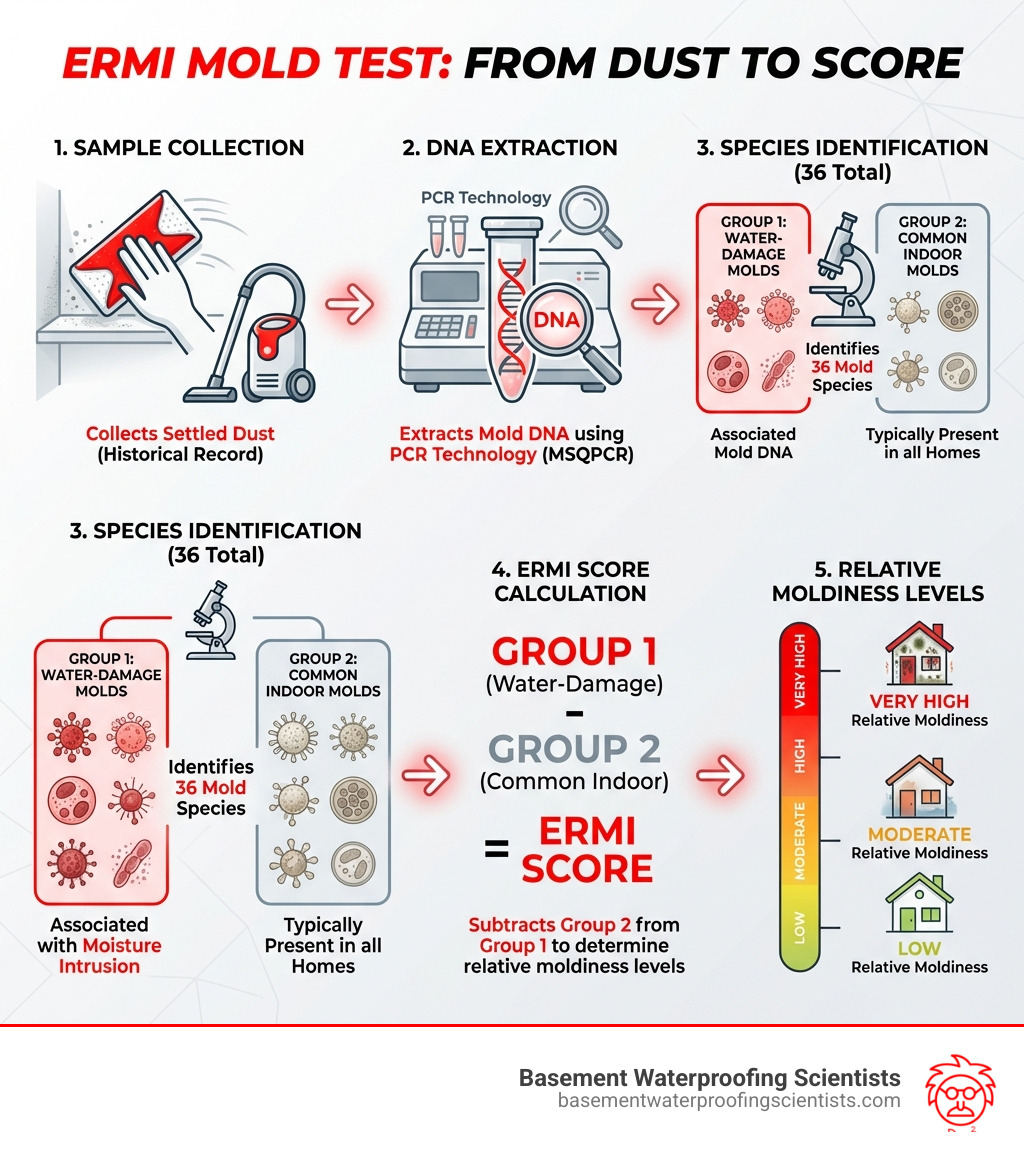
The ERMI test uses cutting-edge DNA analysis techniques to identify and quantify mold species present in dust samples. This method, specifically called Mold Specific Quantitative PCR (MSQPCR), was developed by the EPA after a decade of dedicated research. It’s a powerful tool that goes beyond traditional mold testing by providing a precise, objective, and standardized way to evaluate the mold burden in a home. The ermi mold test mycometrics screens for a comprehensive panel of 36 mold species, giving us a detailed picture of your home’s microbial inhabitants.
Unlike simple visual inspections or air sampling, which can be limited in scope and accuracy, ERMI digs deeper. It analyzes the DNA of mold spores that have settled in dust, offering a long-term snapshot of mold presence rather than a momentary glimpse. This is particularly important because mold spores can settle and accumulate over time, even if active mold growth isn’t immediately visible or if spores aren’t airborne at the exact moment of sampling.

The ERMI was initially created as a research tool to compare mold concentrations in “moldy homes” with those in “reference homes” as part of the 2006 HUD American Healthy Home Survey. This scientific foundation allows it to provide insights into potential mold issues that might otherwise go undetected.
ERMI Group 1 vs. Group 2 Molds
To calculate an ERMI score, the 36 mold species detected by the test are divided into two distinct groups:
- Group 1 Molds (Water-Damage Indicators): These are species commonly associated with water-damaged buildings. Their presence and higher concentrations are typically indicative of past or current moisture problems. Examples include Stachybotrys chartarum (often called “black mold”), Aspergillus versicolor, and certain Penicillium species. These are the molds we really don’t want to see thriving in our homes.
- Group 2 Molds (Common Indoor Molds): This group consists of mold species that are commonly found in most indoor environments, regardless of water damage. While their presence isn’t necessarily a red flag, their concentrations are used as a baseline for comparison.
The ERMI score itself is calculated by subtracting the sum of the log-transformed concentrations of Group 2 molds from the sum of the log-transformed concentrations of Group 1 molds. This mathematical approach helps to normalize the data and provide a comparative index of moldiness. A higher ERMI score indicates a greater presence of water-damage-indicator molds relative to common indoor molds, suggesting a higher likelihood of mold contamination.
How to Interpret ERMI Test Results
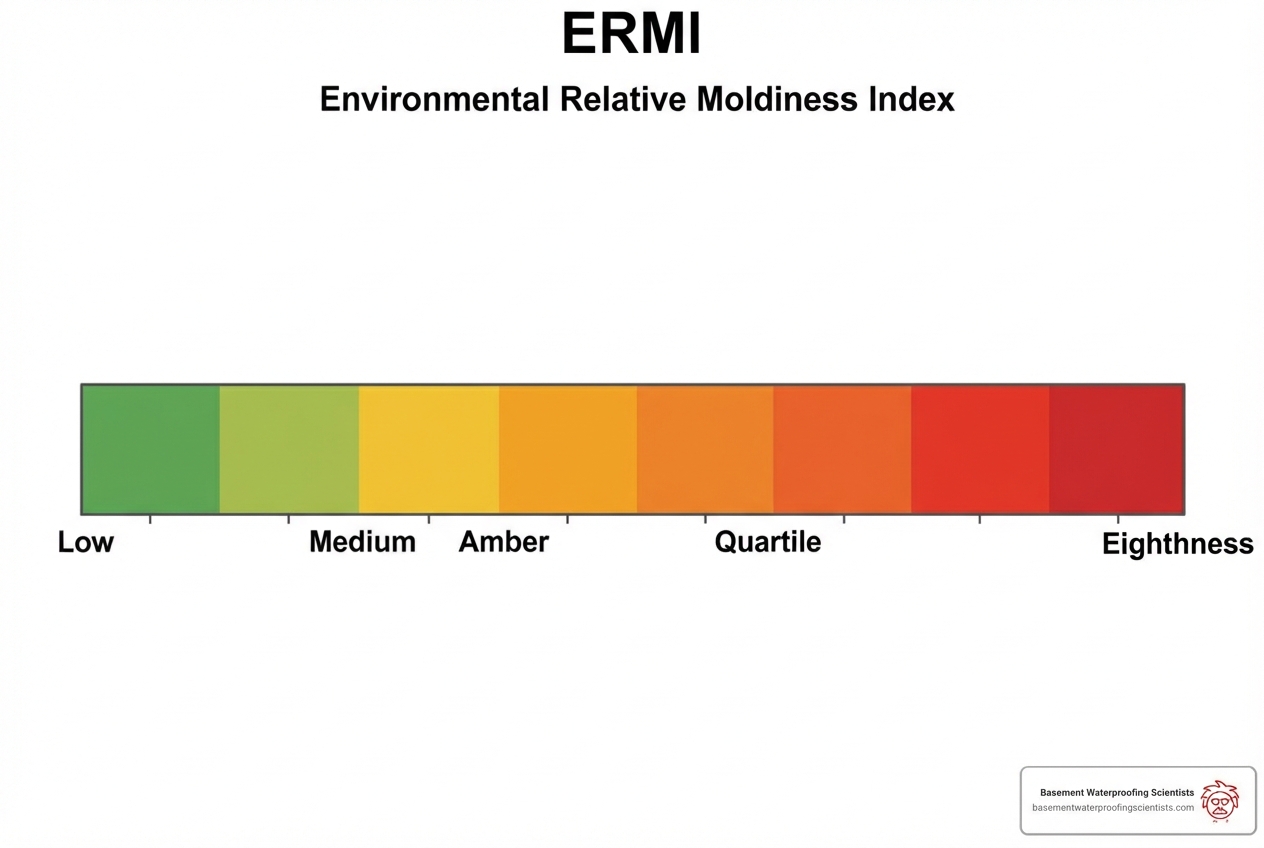
Interpreting your ermi mold test mycometrics results involves understanding the ERMI scale, which categorizes homes into quartiles based on their moldiness index. These quartiles, typically ranging from Q1 to Q4, represent different levels of “Relative Moldiness”:
- Q1 (Green Zone): This quartile usually represents homes with ERMI values between -10 to -4, indicating “Low Relative Moldiness.” These homes generally have a lower burden of water-damage molds.
- Q2 (Amber Zone): With ERMI values between -4 to 0, this quartile signifies “Low to Medium” relative moldiness. It suggests a moderate presence of some water-damage indicators.
- Q3 (Amber Zone): ERMI values from 0 to 5 fall into this quartile, representing “Medium to High” relative moldiness. This range warrants closer attention, as it indicates a more significant presence of molds associated with water damage.
- Q4 (Red Zone): ERMI values between 5 to 20 are in this quartile, signaling “High” relative moldiness. Homes in this category have a considerable presence of water-damage molds.
- Red Zone (Greater than 20): An ERMI score above 20 indicates “Very High Relative Moldiness,” suggesting a severe mold problem likely linked to significant water intrusion.
These quartiles and zones provide a straightforward way to understand where your home stands compared to the national database. It’s a useful benchmark, but the ERMI is a research tool. For those of us in the mold remediation business, any score above the lowest quartile usually means it’s time for a professional inspection. If you’re concerned about how to check for mold in your house, we have resources that can help guide you on initial steps.
How to Check for Mold in House
A high ERMI score indicates that your home likely has a higher concentration of molds associated with water damage. This doesn’t just mean your home might smell musty; it can point to underlying moisture issues that need to be addressed. In our service areas across Pennsylvania, New Jersey, and Delaware, we’ve seen how these scores correlate with hidden water problems that homeowners often overlook.
A Practical Guide to the Mycometrics ERMI Test
When it comes to getting an ERMI test done, Mycometrics is a prominent and well-regarded laboratory. Founded in 2005, Mycometrics specializes in microbiology services, offering EPA-licensed MSQPCR analysis for mold identification. They are dedicated to combining conventional and emerging technologies to provide accurate and unique testing solutions for environmental microbiology.
Mycometrics is known for its efficient processing and clear communication. Once your sample arrives, the standard turnaround time for an ERMI test is typically 5-7 business days. However, we understand that sometimes you need answers fast. Mycometrics offers several expedited options:
- Same Day (1 Business Day): An additional $285 per test for ERMI, $150 for HERTSMI.
- Two Business Days (24 hours): An additional $142.50 per test for ERMI, $75.00 for HERTSMI.
- Three Business Days (48 hours): An additional $71.25 per test for ERMI, $37.50 for HERTSMI.
These expedited services can be a lifesaver when you’re dealing with urgent health concerns or real estate transactions. To help you understand your results, Mycometrics also provides a free thirty-minute consultation for ERMI test results, which can be invaluable for interpreting the complex data.
It’s also good to be aware of their policies regarding cancellations and returns. Mycometrics has non-refundable initial, handling, and shipping fees. If you cancel an order, cancellation fees apply depending on the processing stage: $20 for log-in, $40 for dust retrieval, and $60 for DNA extraction. In cases where a sample fails quality control twice, 50% of the test fee is refunded. This transparency helps set expectations from the start.
How to Collect a Sample for Your Test
Collecting a dust sample for an ERMI test is designed to be straightforward, whether you use a kit provided by Mycometrics or assemble your own. Mycometrics offers two main types of collection kits:
- Swiffer AccuCloth Kit: This kit uses a Swiffer-type cloth to wipe above-floor surfaces. It’s an excellent choice for homes with wood floors, tile, or other hard surfaces, or if you have pets that might influence carpet dust. You can collect samples from furniture, vents, or other areas where dust accumulates.
- Vacuum AccuDust Kit: This kit uses a vacuum canister attachment to collect dust directly from carpets. It’s recommended for homes with wall-to-wall carpeting, as carpets are excellent repositories for mold spores.
When collecting your sample, the goal is to get a representative amount of settled dust. We recommend collecting from various areas that don’t get cleaned frequently, such as refrigerator coils, under appliances, the top of kitchen cabinets, or even inside ventilation ducts. If you’re trying to pinpoint a specific area of concern, you might consider taking separate samples.
If you opt to use your own kit (which is perfectly acceptable and can save you a few bucks), you’ll need a dry, unscented Swiffer-type cloth, rubber gloves, and Ziploc bags. The key is to collect enough dust so that at least 50% of the cloth is darkened. If your home is exceptionally clean or you don’t have much visible dust, Mycometrics suggests a clever trick: place dark cover sheets or black garbage bags on above-floor surfaces in different areas for 1 to 3 months. This allows dust to settle and accumulate sufficiently for a good sample.
For those interested in exploring DIY options for mold detection, we have more information on our site about how to approach mold testing yourself.
When collecting any sample, minimizing contamination is crucial. Wear gloves, use clean materials, and seal your sample quickly to ensure the most accurate results.
Ordering and Submission Process
Ordering your ermi mold test mycometrics is a streamlined process. Individual customers can easily place orders through the Mycometrics online ordering system. If you’re a consultant or represent a company, Mycometrics asks that you call them directly to arrange your order.
Once you’ve collected your sample, you’ll need to submit it along with a properly filled-out Chain-of-Custody (COC) form and a signed payment form. These documents are vital for ensuring your sample is processed correctly and that you receive your results without delay. If you’re using your own collection materials, you’ll still need to obtain these forms from Mycometrics.
As we mentioned, if you find you don’t have enough dust for a sample, Mycometrics provides excellent guidance on how to facilitate dust accumulation over a longer period. Patience can be a virtue when trying to capture a comprehensive mold history of your home!
While DIY testing like the ERMI test can provide valuable insights, it’s often just the first step. If your ERMI results indicate significant mold contamination, especially in our service areas of Pennsylvania, New Jersey, or Delaware, professional mold testing and remediation services become essential. We’re here to help interpret those results and guide you on the next steps to ensure your home is safe and healthy.
Understanding the Limitations and Key Considerations
While the ermi mold test mycometrics is a powerful diagnostic tool, it’s crucial to understand its context and limitations. The U.S. Environmental Protection Agency (EPA), which developed the ERMI, explicitly states that it is a research tool and has not been validated for routine public use in homes, schools, or other buildings.
Environmental Relative Moldiness Index (ERMI) | US EPA
The EPA does not recommend that homes routinely be tested or sampled for mold using this index. Instead, they emphasize that physical inspection for water damage and visible mold is a key part of current EPA mold remediation guidance. This means that while an ERMI test can tell you what mold might be present, it doesn’t replace the need for a thorough inspection by a qualified professional to locate the source of moisture and mold growth.
For us at Basement Waterproofing Scientists, this distinction is important. We see the ERMI test as an excellent investigative tool, especially when visual inspections are inconclusive or when residents are experiencing health issues. However, it’s one piece of a larger puzzle. If an ERMI test comes back high, our next step is always to conduct a detailed inspection to find the root cause of the moisture and mold.
It’s also important to remember that the ERMI score is a comparative index. It tells you how your home compares to a database of other homes, but it doesn’t directly translate to a health risk for every individual. People react differently to mold exposure. Some might experience severe symptoms at low mold levels, while others tolerate higher levels without apparent issues. This is why a medical consultation is always recommended if you suspect mold-related health problems.
When might other testing methods be considered? If you’ve recently undergone mold remediation, for instance, a post-remediation verification test (which might include air samples or surface swabs) is critical to ensure the job was done effectively. The ERMI test, while good for a historical overview, isn’t typically used for immediate post-remediation clearance because it reflects settled dust over a longer period. We often perform specific mold testing after remediation to confirm the success of the cleanup.
Mold Testing After Remediation
In summary, the ERMI test is a valuable arrow in our quiver for understanding potential mold issues, but it should be used judiciously and in conjunction with professional inspections and, if necessary, other targeted testing methods.
Frequently Asked Questions about the ermi mold test mycometrics
What is the pricing for the ermi mold test mycometrics?
Understanding the cost is always a key factor. For the ermi mold test mycometrics, the pricing is quite straightforward:
- ERMI Test: The comprehensive ERMI test, which screens for 36 mold species, costs $285.
- HERTSMI Test: The more targeted HERTSMI test, which screens for 5 mold species, costs $150.
When you order a kit from Mycometrics, there’s an initial non-refundable deposit of $50, which covers the kit, handling, and shipping. The remaining balance for the test ($240 for ERMI, $105 for HERTSMI) is then charged once your sample is received by the lab.
Mycometrics also offers expedited services, which come with additional fees:
- Expedited ERMI Test:
- Same Day (1 Business Day): additional $285
- Two Business Days (24 hours): additional $142.50
- Three Business Days (48 hours): additional $71.25
- Expedited HERTSMI Test:
- Same Day (1 Business Day): additional $150
- Two Business Days (24 hours): additional $75.00
- Three Business Days (48 hours): additional $37.50
Additionally, if you’re concerned about bacterial contamination, Mycometrics offers a Streptomyces add-on test. This test identifies a genus of spore-forming Gram-positive bacteria that can also release toxins. It costs an additional $15 when added to an ERMI test, or $30 when added to a HERTSMI test.
These costs are for the lab analysis. They do not include any potential costs for professional sample collection (if you choose not to do it yourself) or subsequent professional inspections or remediation. For context, the average cost for basement waterproofing, which often addresses the root cause of mold, is between $4,000 and $8,000, depending on the severity and specific solutions needed.
What is the difference between the ERMI and HERTSMI tests?
The ERMI and HERTSMI tests from Mycometrics are both valuable DNA-based mold tests, but they serve slightly different purposes due to the number of mold species they screen for.
| Feature | ERMI Test (Mycometrics) | HERTSMI Test (Mycometrics) |
|---|---|---|
| Species Screened | 36 mold species | 5 mold species |
| Scope | Comprehensive assessment of indoor mold burden | Targeted screening for common and toxic water-damage molds |
| Purpose | General mold assessment, historical record of mold exposure | Often used by individuals with CIRS concerns |
| Cost | $285 | $150 |
| Expedited Cost | Higher (e.g., $285 for Same Day) | Lower (e.g., $150 for Same Day) |
| Interpretation | ERMI score, quartiles, relative moldiness levels | HERTSMI-2 scoring system (often used by Surviving Mold) |
The ERMI test is the more comprehensive option, screening for 36 mold species. This broader analysis provides a more complete picture of the mold ecology in your home, including both water-damage indicators and common indoor molds. It’s often chosen when you want a thorough understanding of your home’s overall mold burden, especially if you’re experiencing general health concerns or suspect widespread contamination.
The HERTSMI test, on the other hand, is a more targeted approach, screening for just 5 specific mold species. These five species are typically among the most common and toxic molds associated with water-damaged buildings. The HERTSMI test is particularly relevant for individuals who are sensitive to mold, especially those dealing with Chronic Inflammatory Response Syndrome (CIRS), a condition often triggered by exposure to toxins from water-damaged buildings. The HERTSMI-2 scoring system, often referenced by organizations like Surviving Mold, helps these individuals assess their environment based on the presence of these specific problematic molds.
So, while ERMI gives you the full story, HERTSMI gives you the highlights of the most concerning characters. Your choice between the two might depend on whether you need a general overview or are looking to specifically identify high-risk species.
Why is the ermi mold test mycometrics better than an air test?
This is a fantastic question, and one we encounter frequently. The short answer is that the ermi mold test mycometrics, by analyzing settled dust, offers a more reliable and comprehensive assessment of mold contamination than typical air sampling. Here’s why:
Dust vs. Air Sampling – A Historical Record vs. a Snapshot:
- Air samples are like a single photograph: they capture what’s floating in the air at a precise moment in time. Mold spore counts can fluctuate wildly depending on ventilation, humidity, cleaning activities, and even whether someone just walked across a carpet. A “good” air sample could simply mean there was no disturbance during collection, not necessarily an absence of mold. Initial air samples in a Bermuda building, for example, indicated low spore counts, but disturbing the air revealed counts as high as 250,000 spores per cubic meter – a dramatic difference!
- Dust samples collected for ERMI are like a historical video recording. Dust accumulates over weeks or months, trapping mold spores that have settled from the air. This gives a much more stable and representative picture of the mold burden over time, reflecting long-term exposure.
DNA vs. Spore Counts – Species vs. Genus Identification:
- Most traditional air sampling identifies mold only to the genus level (e.g., Aspergillus or Penicillium). The problem? Many species within these genera are harmless, while others are highly toxic. Furthermore, some dangerous species like Aspergillus versicolor, fumigatus, and flavus have almost identical spore structures, making it impossible to differentiate them by microscopic examination of air samples.
- The ermi mold test mycometrics uses DNA-based PCR analysis, allowing for precise identification of mold down to the species level. This is crucial because identifying the specific species tells us much more about potential health risks and the nature of the water damage.
Detecting the Elusive Stachybotrys:
- Stachybotrys chartarum, often referred to as “black mold,” is a highly concerning mold species associated with significant health issues. However, Stachybotrys does not readily shed its spores into the air unless disturbed. This means an air test might completely miss its presence, even if there’s a significant colony growing behind a wall.
- Because the ermi mold test mycometrics analyzes settled dust, it can detect the DNA of Stachybotrys spores that have settled, even if they weren’t actively airborne during the sampling period. This makes it a superior method for detecting this particularly problematic mold.
While air testing has its place (and we do offer various mold testing methods, including air sampling, as part of our comprehensive services), for a deep dive into your home’s mold history and to identify specific problematic species, the ermi mold test mycometrics using dust analysis often provides more actionable and reliable information.
From Test Results to a Mold-Free Home
So, you’ve received your ermi mold test mycometrics results, and perhaps you have a high score. What now? A high ERMI score is a strong indicator that your home has a significant presence of water-damage-associated molds, which almost always points to an underlying moisture problem. This is where our expertise at Basement Waterproofing Scientists truly comes into play.
We understand that mold is a symptom, not the root cause. The root cause is almost always water or excessive moisture. Whether it’s a leaky foundation, high humidity, or undetected plumbing issues, these problems create the perfect environment for mold to thrive. We’ve dedicated 30 years to mastering how water intrusion happens and, more importantly, how to stop it for good. Our work in Pennsylvania, New Jersey, and Delaware has taught us that a dry home is a healthy home.
How Wet Basements Create Mold: The Perfect Environment for Growth
If your ERMI test reveals a problem, our team will conduct a thorough inspection, utilizing specialized equipment to identify the exact source of moisture. We don’t just treat the mold; we fix the water problem that caused it. Our customized solutions ensure permanently dry basements, preventing mold from returning. Plus, all our work is backed by a lifetime guarantee, giving you peace of mind.
Don’t let hidden mold compromise your health or the integrity of your home. If you’ve received concerning ERMI results, or even if you just suspect a mold issue, it’s time to take action. From identifying the problem with advanced testing to implementing lasting waterproofing solutions and professional mold remediation, we’re here to guide you every step of the way.
We offer professional mold solutions, including comprehensive mold testing and remediation services, designed to make your home safe and healthy.