

A wet basement usually starts with a simple question that turns expensive fast: should you fix the water from the inside or stop it from getting in outside? When homeowners compare interior vs exterior waterproofing, they are often already dealing with seepage, musty odors, wall stains, or a basement they cannot fully trust.
The right answer is not based on what system a contractor prefers to sell. It depends on where the water is entering, how your foundation is built, how severe the hydrostatic pressure is, and whether the problem is isolated or widespread. If you want a permanent and economical repair, the starting point is diagnosis, not a package.
Interior vs exterior waterproofing: what is the difference?
Interior waterproofing manages water after it reaches the foundation or basement interior. Exterior waterproofing is designed to prevent water from reaching the foundation wall in the first place. That sounds straightforward, but in real homes the line is not always clean.
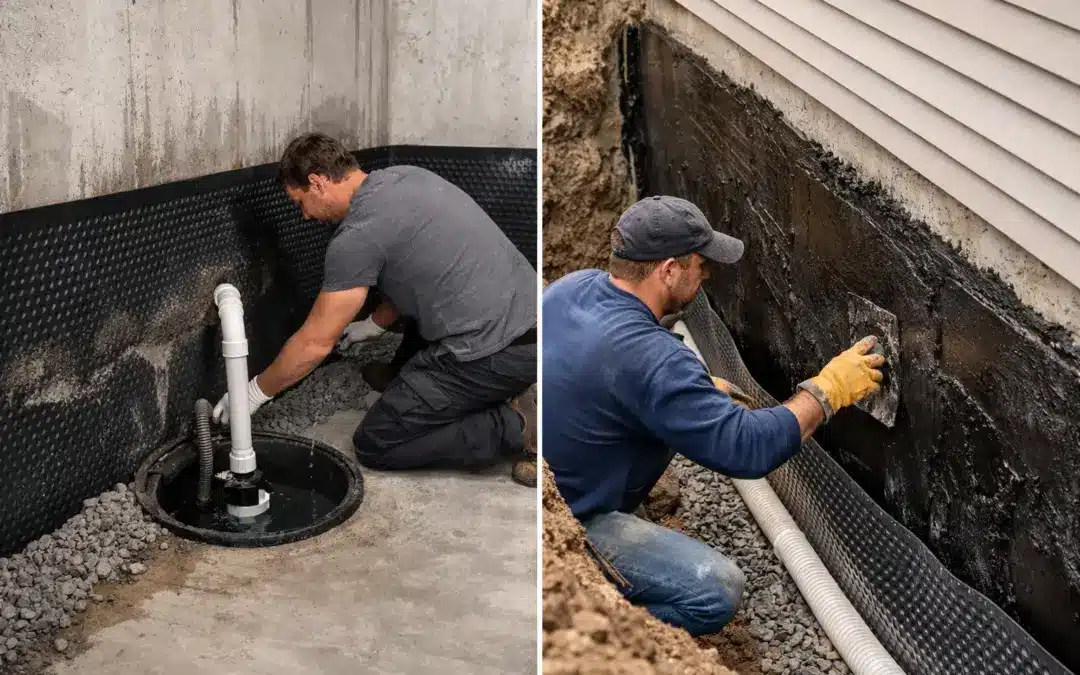
An interior system may include a drainage channel along the basement perimeter, a sump pump, vapor management, crack injection, or targeted wall and floor repairs. These methods are often effective when water pressure is forcing moisture in through joints, cracks, or porous masonry. They are also less disruptive because they usually avoid major excavation.
Exterior waterproofing typically involves excavating down to the foundation wall, repairing cracks from the outside, applying waterproof membranes, installing drainage board, and correcting footing drain issues. It may also include grading improvements and gutter discharge corrections. This method attacks the source more directly, but it is more labor intensive and usually more expensive.
Neither option is automatically better in every case. A reliable recommendation comes from identifying the true water entry path.
When interior waterproofing makes sense
Interior waterproofing is often the smartest choice when the main issue is groundwater pressure under or around the basement floor. In many older Philadelphia-area homes, water does not pour through a giant opening in the wall. It seeps at the wall-floor joint, rises through floor cracks, or enters through isolated wall cracks during heavy rain.
In those cases, an interior drainage system can relieve pressure and direct water to a sump basin before it spreads across the basement. If the basement has recurring perimeter seepage, this can be a durable solution. It is also practical when exterior access is limited by porches, sidewalks, neighboring structures, finished landscaping, or tight lot lines.
Interior solutions are also a strong fit when the problem is highly specific. A single crack can often be permanently repaired with the right injection method. A leaking tie rod hole or pipe penetration may need a focused repair, not full perimeter excavation. This is where homeowners save money by working with a contractor who diagnoses before prescribing.
That said, interior waterproofing does not make outside water disappear. It controls and redirects it. If a wall is deteriorating because water is constantly saturating it from the exterior, managing the water inside may not fully address the long-term condition of the wall itself.
When exterior waterproofing is the better answer
Exterior waterproofing is usually the stronger option when the foundation wall is taking on water broadly, when exterior cracks are open and accessible, or when drainage defects outside the home are driving the leak. If downspouts dump near the house, grading slopes inward, or footing drains have failed, keeping the water away from the wall may be the most direct path to a permanent fix.
This method is also worth serious consideration when basement walls show prolonged saturation, visible structural cracking, or signs that exterior materials are breaking down. A wall that stays wet year after year can lead to more than puddles. It can contribute to mold growth, efflorescence, masonry damage, and, in some cases, structural movement.
For homeowners planning a major exterior project anyway, such as foundation repair, new drainage work, or excavation around the house, exterior waterproofing can be especially efficient because access is already part of the job.
The trade-off is disruption. Excavation can affect walkways, patios, planting beds, and hardscaping. On row-adjacent or tightly spaced properties, access may be limited or impossible without much more involved work. It is often the most complete approach, but not always the most economical one.
Cost is important, but value matters more
Many homeowners start with price, and that is understandable. Interior waterproofing is often less expensive upfront because it avoids heavy excavation and exterior restoration. Exterior waterproofing usually costs more because of labor, equipment, soil removal, wall preparation, membrane installation, and site reconstruction.
But low cost only matters if the repair fits the problem. A cheaper interior system is not a bargain if the real issue is an exterior wall crack saturating the foundation. On the other hand, full excavation is not a smart investment if the leak is coming from one crack, one window well, or one failed penetration.
This is why one-size-fits-all recommendations frustrate homeowners. You should not be pushed into the most expensive system or the fastest system. You should be shown where the water is coming from and why a certain repair will solve it.
The real deciding factors homeowners should look at
The best way to choose between interior vs exterior waterproofing is to look at conditions, not marketing. Start with the pattern of water entry. If seepage appears at the cove joint, floor cracks, or multiple interior points during heavy rain, an interior drainage approach may be appropriate. If leaks are tied to a specific wall section, outside crack, window well, or drainage failure, exterior correction may be more logical.
Foundation type matters too. Stone, block, and poured concrete foundations behave differently under water pressure. Older homes throughout Southeast Pennsylvania and South Jersey often have aging materials, multiple past repairs, and grading changes that make the source less obvious than it first appears.
Use of the basement also matters. If the space is finished or planned for living use, moisture control has to be more precise. It is not enough to stop visible puddles. You need to address humidity, hidden seepage, and mold risk. In those cases, targeted waterproofing paired with the right drainage and crack repair strategy is often more effective than a broad guess.
Why misdiagnosis leads to unnecessary work
One of the biggest problems in this industry is treating every wet basement like the same basement. Homeowners are often sold a full interior system when they need an exterior repair, or sold excavation when a focused interior solution would solve the issue for far less.
A proper inspection should separate surface water problems from groundwater pressure, structural cracks from cosmetic ones, and isolated entry points from full-perimeter conditions. It should also account for gutter discharge, grading, window wells, plumbing leaks, and humidity issues that can mimic foundation water intrusion.
That diagnostic step is where permanent repairs start. Basement Waterproofing Scientists built its approach around finding the actual source first, because that is how homeowners avoid overspending and repeated failures.
Sometimes the right answer is both
There are cases where interior vs exterior waterproofing is the wrong way to frame the decision because the house needs a combination approach. For example, a home may have poor exterior drainage on one wall and hydrostatic pressure under the slab across the basement floor. An exterior wall repair alone will not solve the floor seepage. An interior drain alone will not correct the outside concentration of water.
Combination solutions are also common when a basement has one major wall crack, aging foundation materials, and a need for interior drainage backup. That does not mean every home needs everything. It means the repair plan should match the full picture.
A good contractor should be able to explain why each component is necessary, what problem it solves, and what would happen if it were left out.
How homeowners should make the final call
If you are comparing estimates, do not just ask which system is better. Ask where the water is entering, how the contractor confirmed it, whether the issue is isolated or systemic, and what repair is truly permanent for your specific foundation. Ask what is being fixed versus what is simply being managed.
The best waterproofing plan is the one that solves the actual problem with the least unnecessary work. Sometimes that is an interior drainage system. Sometimes it is exterior excavation and membrane protection. Sometimes it is a crack repair, grading correction, or a combination that addresses both source and pressure.
A dry basement is not the result of choosing a popular method. It comes from accurate diagnosis, targeted repair, and doing the job right the first time. If you are dealing with water intrusion, the smartest next step is not guessing between inside and outside. It is getting clear evidence of why the basement is leaking so the fix fits the house.