

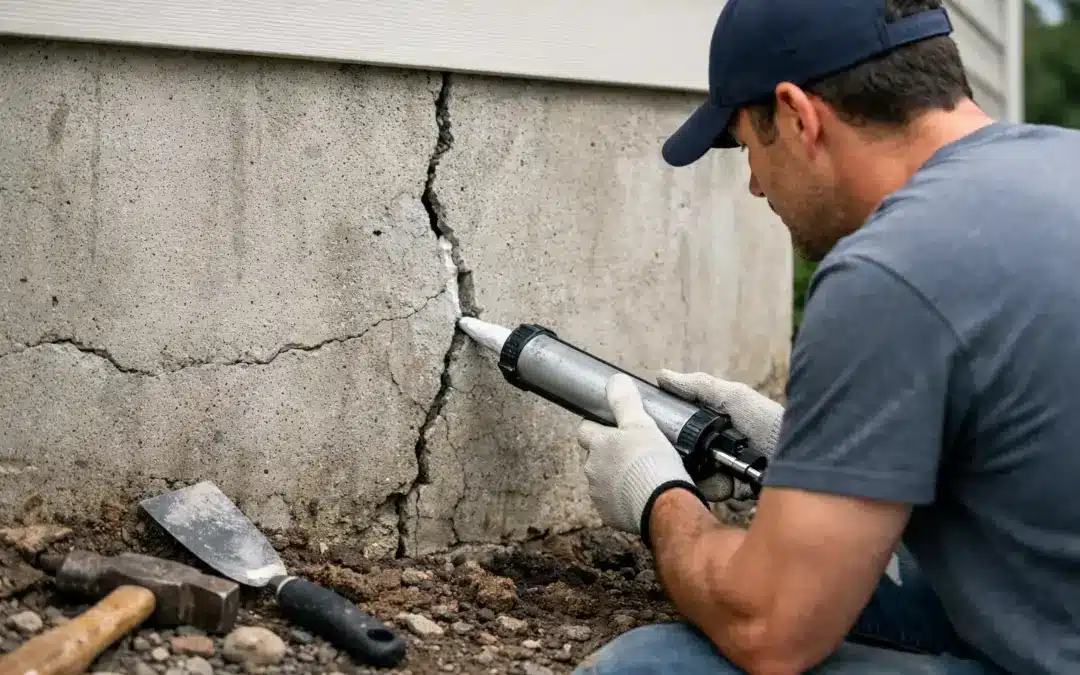
A crack in a foundation wall changes the conversation fast. One day it looks cosmetic. After the next heavy rain, there is dampness, a musty smell, or a thin line of water tracking across the floor. If you are trying to figure out how to repair foundation cracks, the first step is not buying a tube of filler. It is identifying what kind of crack you actually have and whether it is letting in water, signaling movement, or both.
That distinction matters because not every crack needs the same repair. Some can be sealed effectively from the interior. Others point to pressure against the wall, settlement, or ongoing structural stress that a surface patch will not solve. The right repair is the one that matches the cause.
How to Repair Foundation Cracks Starts With Diagnosis
Homeowners often get into trouble by treating all cracks like the same problem. They are not. A narrow vertical crack in poured concrete is different from a long horizontal crack in a block wall. A dry hairline crack is different from one with mineral staining, efflorescence, or visible seepage.
In practical terms, the repair method depends on four things: the crack direction, the wall material, whether water is entering, and whether the crack is stable or still moving. If a contractor skips those questions and jumps straight to a generic waterproofing package, you should be cautious.
Vertical and diagonal cracks are commonly associated with shrinkage or settlement. They may be repairable with injection methods if the wall is otherwise sound. Horizontal cracks, especially in block or concrete walls, are more concerning because they can indicate lateral soil pressure. Stair-step cracks in masonry can also suggest structural movement. When those cracks widen over time or are paired with bowing walls, sticking doors, or sloping floors, a simple seal is not enough.
When a Foundation Crack Is Cosmetic and When It Is Not
Small shrinkage cracks can happen as concrete cures. If they are very narrow, remain unchanged, and show no signs of moisture, they may be mostly cosmetic. Even then, they should be monitored. A crack that is quiet today can become an active leak under hydrostatic pressure later.
The signs that a crack needs more than cosmetic attention are usually clear. Water stains, damp drywall, peeling paint, mold odor, white mineral deposits, and pooling after rain all suggest an active moisture path. Wider cracks, repeated reopening after patching, or multiple cracks in the same wall raise the stakes further.
If the wall is displaced, bulging, or leaning inward, stop thinking in terms of crack filler. That is now a structural evaluation issue. Repairing the visible line without addressing wall movement is like repainting over a ceiling stain while the roof still leaks.
Common Methods Used to Repair Foundation Cracks
For poured concrete walls, epoxy or polyurethane injection is often the most effective repair for certain vertical or diagonal cracks. The two materials do different jobs. Epoxy bonds the concrete and is typically used when structural restoration is the goal. Polyurethane expands and is often used to stop water intrusion because it can fill small voids and remain more flexible.
If the crack is leaking, polyurethane injection is often the better choice. If the crack is dry and the goal is to restore structural continuity in sound concrete, epoxy may make sense. It depends on site conditions, wall condition, and whether the crack is still active.
For masonry or block foundations, repairs can be more complicated. Water may not travel only through the visible crack. It can move through hollow block cores, mortar joints, or along the wall-floor joint. In those cases, surface sealing alone is rarely a permanent answer. Depending on the problem, the right fix may involve crack repair, drainage improvements, wall reinforcement, or a combination of methods.
Exterior excavation and sealing can also be part of a permanent repair, especially when the issue involves heavy outside water pressure, failed exterior waterproofing, or poor grading. This approach is more invasive and more expensive, but in some homes it is the correct repair instead of another interior patch.
How to Repair Foundation Cracks Yourself – and When Not To
Some homeowners can handle a very minor, non-structural crack, but DIY only works in a narrow set of circumstances. The crack should be small, stable, clearly non-structural, and not associated with active wall movement. You also need enough access to prepare the surface properly and use the repair product exactly as directed.
The challenge is not squeezing material into the crack. The challenge is knowing whether that crack is truly minor. Many DIY repairs fail because the visible opening was only part of the problem. Moisture may be entering from outside pressure, poor drainage, clogged gutters, window well issues, or a crack path that extends beyond what you can see from the basement.
A store-bought masonry patch can improve appearance, but appearance is not the same as a permanent fix. If water is involved, surface products often fail because they do not address pressure behind the wall. If the crack is active, rigid patch materials may simply split again.
DIY is generally not the right move when the crack is wider than a hairline, leaking repeatedly, located in a horizontal pattern, part of a block wall, or accompanied by bowing, settlement signs, or mold. In those situations, a diagnostic inspection is the economical choice because it prevents spending money twice.
What a Proper Foundation Crack Repair Process Looks Like
A professional repair should begin with inspection, not sales pressure. The crack is measured, mapped, and evaluated in context with drainage conditions, grading, gutter discharge, soil pressure, wall type, and signs of movement elsewhere in the home.
If the crack is suitable for injection, the wall surface is prepared, injection ports are placed, and the repair material is installed in a controlled sequence to fill the crack depth rather than just coat the surface. After curing, the ports are removed and the area is finished.
If water intrusion is part of the problem, the repair plan should also address why water is concentrating at that location. Sometimes that means extending downspouts, correcting grading, or resolving window well drainage. Sometimes it means an interior drainage solution or exterior waterproofing at the affected wall. The permanent fix is not always the cheapest line item, but it is usually the least expensive path over time.
That is why a science-driven approach matters. Basement Waterproofing Scientists and other true diagnostic specialists look for the actual source of moisture instead of assuming every crack needs the same treatment.
Warning Signs You Should Not Ignore
A foundation crack deserves prompt attention if it changes size, leaks during storms, or appears alongside other symptoms. Watch for nail pops in drywall, doors that stop latching, uneven floors, widening gaps around windows, or repeated basement dampness in the same zone.
These are not always signs of severe structural failure, but they are signs that the problem should be evaluated before repairs become larger and more expensive. In older homes across Greater Philadelphia, Southeast Pennsylvania, and South Jersey, foundation issues often overlap with drainage deficiencies and aging masonry. That combination rewards careful diagnosis.
Cost Depends on the Cause, Not Just the Crack
Homeowners understandably ask what foundation crack repair costs. The honest answer is that cost follows the repair scope. A straightforward injected crack in poured concrete is a very different project from a leaking block wall with outside grading problems and lateral pressure.
This is where overselling becomes a real concern. Some companies propose full systems when a targeted repair would work. Others offer a cheap patch that does not last through the next wet season. The better approach is to identify the least invasive permanent solution. That may be a single crack injection, or it may be a broader waterproofing or structural correction if the evidence supports it.
Choosing the Right Repair the First Time
If you are deciding how to repair foundation cracks, focus less on the product and more on the diagnosis. Ask what type of crack it is, whether it is active, whether water is entering, and what conditions around the home are feeding the problem. Ask whether the proposed repair is sealing a symptom or eliminating the cause.
A good contractor should be able to explain that in plain language, show you why the crack formed, and recommend only the work that solves it permanently. That is what protects your basement, your indoor air quality, and your home value.
A foundation crack does not always mean a major structural crisis, but it does mean your home is giving you useful information. The smart move is to read that signal correctly and fix the real problem before a small line in the wall turns into a much bigger repair.