

Why Acting Fast on Home Foundation Repair Service Could Save Your Home
Home foundation repair service is something every homeowner hopes they’ll never need — but ignoring early warning signs can turn a small fix into a very expensive problem.
Here’s what you need to know right away:
| Situation | What to Do |
|---|---|
| Hairline cracks, no water | Monitor closely, inspect regularly |
| Cracks wider than 1/10 inch | Call a foundation repair professional now |
| Horizontal cracks or bowing walls | Urgent — contact a structural expert immediately |
| Water leaking through foundation | Schedule an inspection without delay |
| Sticking doors, uneven floors, gaps around windows | Get a professional assessment |
Your home’s foundation does one job: hold everything up. When it starts to fail, every part of your home is at risk — from your floors and walls to your roof and structural framing.
The hard truth? Foundation problems only get worse over time. What costs a few thousand dollars to fix today can balloon into a major structural repair if left alone.
And it’s not just about cracks. Moisture is a silent threat. Over 50% of the air in your crawlspace can travel upward into your living space, carrying mold spores with it. Foundation damage and moisture go hand in hand.
I’m Darin Garvey, owner of Basement Waterproofing Scientists, with over 30 years of combined experience delivering targeted home foundation repair service solutions across the Philadelphia area. I’ll walk you through everything you need to know to protect your home from the ground up.
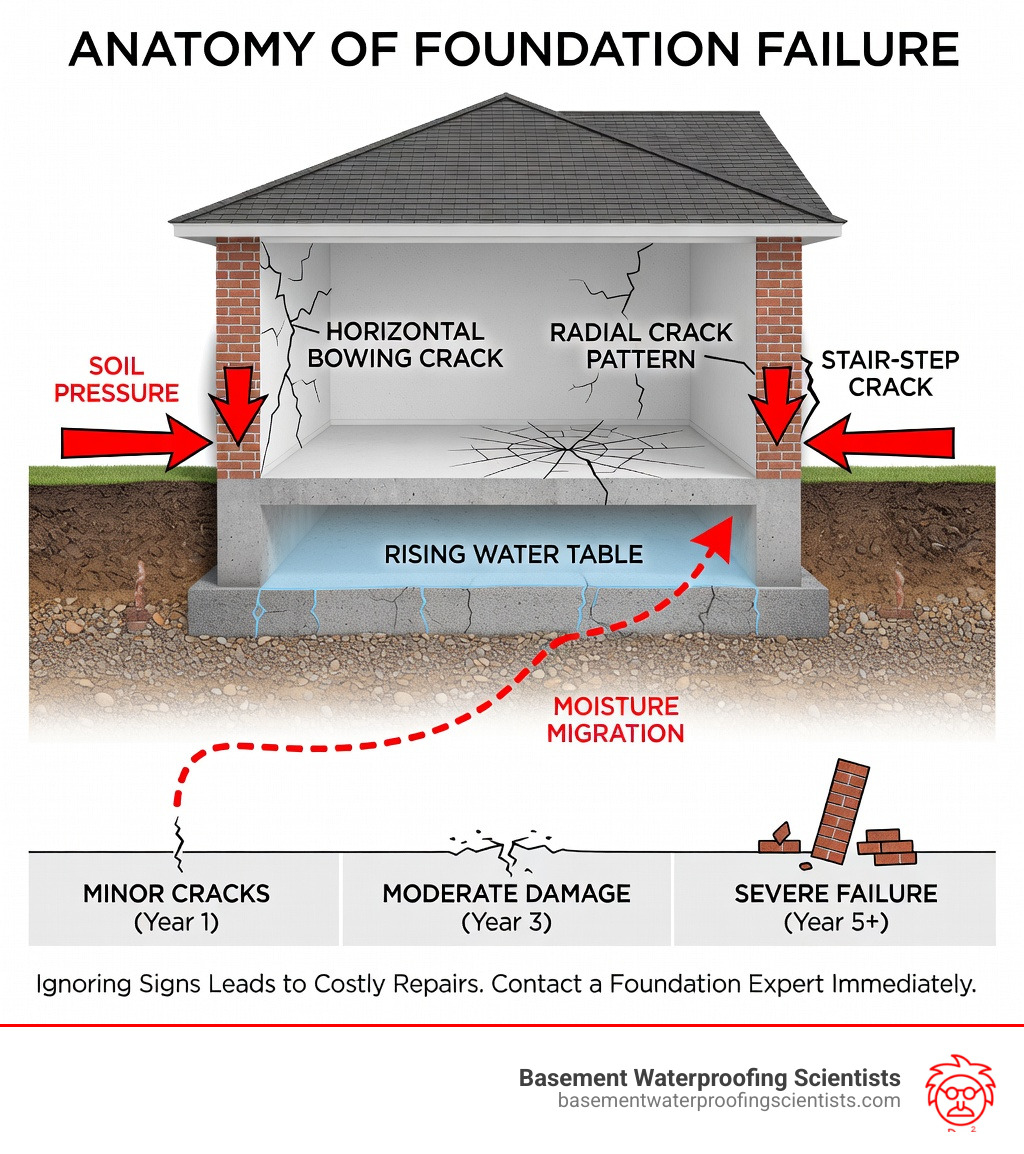
Home foundation repair service definitions:
Recognizing the Warning Signs of Foundation Distress
Recognizing that your home is in trouble isn’t always as obvious as a giant hole opening up in the living room. Often, the house “whispers” its problems through small changes. You might notice a door that used to swing freely now sticks every time you try to leave the room, or perhaps you see a gap between the crown molding and the ceiling that wasn’t there last summer.
In our experience across Pennsylvania and New Jersey, these symptoms are the house’s way of telling you the ground beneath it is shifting. Common signs include:
- Cracked Brickwork: Zig-zag or “stair-step” cracks in the exterior brick are classic indicators of settlement.
- Interior Drywall Cracks: Especially those radiating from the corners of doors and windows.
- Uneven or Sloping Floors: If you drop a marble and it consistently rolls toward one wall, your floors are no longer level.
- Gaps Around Window Frames: When the foundation shifts, window units can pull away from the siding.
To understand the severity of what you’re seeing, check out our basement wall crack repair guide. While some cracks are merely cosmetic, others signal a structural emergency.
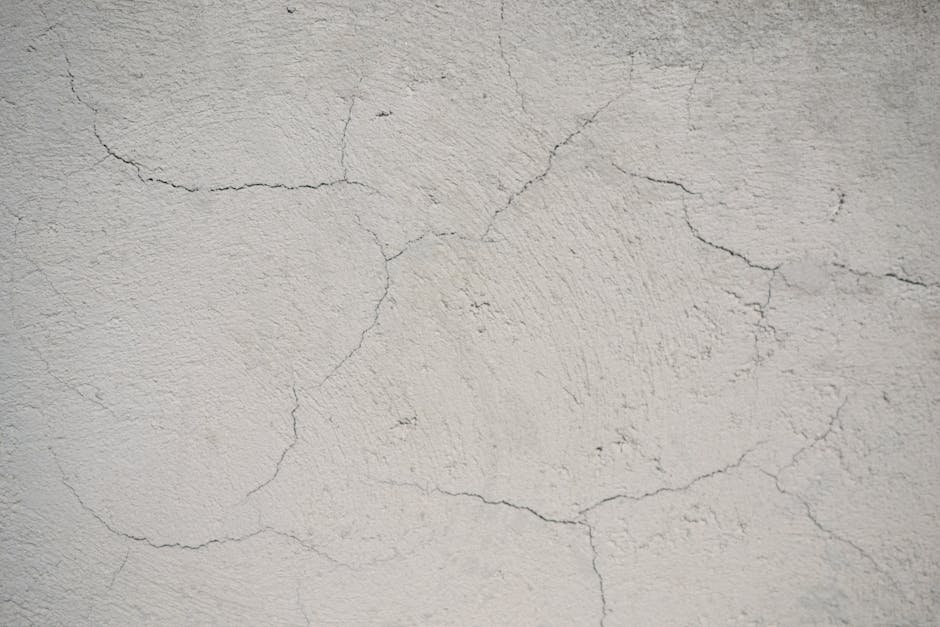
Cosmetic vs. Structural: How to Tell the Difference
Not every crack means the sky is falling. Concrete naturally shrinks as it cures, which can lead to hairline fractures. However, knowing the difference can save you a lot of sleep (and money).
| Feature | Cosmetic Crack | Structural Crack |
|---|---|---|
| Width | Hairline (under 1/16 inch) | Wider than 1/10 inch |
| Direction | Vertical or diagonal | Horizontal or “stair-step” |
| Shape | Uniform width | Wider at one end than the other |
| Leakage | Usually dry | Often leaks water or shows efflorescence |
| Location | Often in the middle of a wall | Near corners or spanning the entire wall |
If you find a minor issue, you can refer to our small foundation crack repair guide for maintenance tips.
When to Call a Home Foundation Repair Service
Timing is everything. If you wait until a wall actually collapses, the cost of repair can triple. You should call for a professional inspection if you notice any of the following “red flag” conditions:
- Horizontal Cracks: These are almost always caused by hydrostatic pressure (water-heavy soil pushing against the wall). This is a precursor to a total wall failure.
- Bowing Walls: If a basement wall looks like it’s “bulging” inward, it needs immediate structural repair contractors.
- Leaning Chimneys: A chimney that is pulling away from the rest of the house is a major safety hazard and a sign of deep foundation settlement.
- Water Infiltration: If water is actively seeping through a crack, it’s eroding the soil behind the wall, making the structural problem worse every time it rains.
Common Causes and Regional Soil Factors
Why do foundations fail? In our service areas—from Philadelphia and Norristown to the Jersey shore—the culprit is usually the soil.
Hydrostatic Pressure is the number one enemy. When the ground around your home becomes saturated with water, it expands and becomes incredibly heavy. This “heavy” soil exerts thousands of pounds of pressure against your foundation walls. If your drainage isn’t perfect, that pressure has nowhere to go but into your basement.
Expansive Clay is another major factor in regions like Pennsylvania. Clay soil acts like a sponge; it swells when wet and shrinks when dry. This constant “heaving” and “shrinking” puts immense stress on concrete, eventually leading to cracks.
To prevent these issues, soil management and proper drainage solutions are essential. If your gutters are clogged or your downspouts pour water right next to the foundation, you are essentially inviting a foundation disaster.
The Role of Moisture in Home Foundation Repair Service
Moisture doesn’t just damage the concrete; it ruins the environment inside your home. Over 50% of the air in your crawlspace or basement eventually moves upward into your living areas. If your foundation is cracked and damp, you aren’t just breathing air—you’re breathing mold spores and musty odors.
Controlling crawlspace air quality is a vital part of any home foundation repair service. This often involves:
- Exterior Sealing: Applying a foundation sealer exterior to prevent moisture from ever touching the concrete.
- Gutter Maintenance: Ensuring water is diverted at least 10 feet away from the house.
- Dehumidification: Removing the “damp” feeling that leads to wood rot in floor joists.
Modern Methods for Structural Stabilization
The good news is that foundation repair technology has come a long way. We no longer have to dig up your entire yard and replace the whole foundation. Modern, non-invasive methods allow us to stabilize your home with surgical precision.
Piering Systems
When a house is sinking, we need to move its weight from the unstable surface soil down to competent load-bearing strata or bedrock. We do this using piering systems.
- Push Piers: These use the weight of the house to drive steel tubes deep into the earth.
- Helical Piers: These look like giant screws and are twisted into the ground. They are excellent for lighter structures like porches or for new construction.
Carbon Fiber Reinforcement
For walls that are starting to bow but haven’t completely failed, carbon fiber foundation repair is a “space-age” solution. These strips are stronger than steel but thinner than a penny. We bond them to the interior of your basement walls to provide incredible tension strength, preventing the wall from moving further.
Epoxy and Polyurethane Injections
If you have a crack that is leaking but the wall is structurally sound, epoxy injection is the gold standard. The epoxy welds the crack shut, often making that section of the wall stronger than the original concrete. For sinking concrete slabs (like a garage floor or patio), we use polyurethane foam lifting. We inject a high-density foam under the slab, which expands to lift and level the concrete.
Specialized Home Foundation Repair Service Solutions
Every home is different. A slab repair in a modern home requires a different approach than pier and beam support in a historic Philadelphia rowhome.
If your walls are already significantly bowed, we may use wall stabilization techniques like GeoLock anchors or PowerBrace systems. These systems can often be tightened over time to actually move the wall back toward its original, straight position.
Financing and Government Assistance Programs
We know that the words “foundation repair” can be scary for your wallet. However, there are several ways to make these necessary repairs affordable.
Government Assistance and Loans
The federal government doesn’t give out “free money” for home repairs (be wary of any ad that says otherwise!), but they do offer excellent low-interest loan programs:
- HUD Title 1 Loans: These HUD Title 1 property improvement loans are specifically for repairs that make your home more livable and useful.
- 203(k) Rehabilitation Mortgage: If you are buying a “fixer-upper” with foundation issues, the 203(k) program allows you to wrap the repair costs (up to $35,000) directly into your mortgage.
- HECM for Seniors: Homeowners over age 62 can use a Home Equity Conversion Mortgage to access their home’s equity to pay for major structural repairs without a monthly payment.
Private Financing
Many reputable home foundation repair service providers (including us!) offer flexible financing options. This often includes “no interest” periods or low monthly payments, allowing you to fix the problem now before it gets more expensive.
Frequently Asked Questions about Foundation Repair
How much does foundation repair typically cost?
The cost depends entirely on the severity of the damage. A simple crack injection might cost a few hundred dollars, while a full piering job can reach $10,000 to $20,000. For basement waterproofing specifically, homeowners typically spend between $4,000 and $8,000. You can find more details in our carbon fiber foundation repair cost guide. Foundation problems only get more expensive the longer you wait.
Are foundation repairs covered by home insurance?
In most cases, no. Standard homeowners insurance covers “sudden and accidental” damage (like a pipe bursting). Most foundation issues are caused by “earth movement” or “gradual maintenance issues,” which are typically excluded. However, it’s always worth checking your policy or consulting insurance insights for specific riders you may have added.
What should I look for in a reliable contractor?
Choosing the right foundation contractor near me is critical.
- Licensing: Ensure they are licensed general contractors.
- Experience: Look for companies with decades of experience in your specific soil type.
- Warranties: Reputable companies should offer a lifetime guarantee or at least a 25-year structural warranty.
- Specialized Equipment: Ask if they use technology to find the source of the leak rather than just patching the symptom.
To ensure you don’t get scammed, read our guide on avoiding foundation repair mistakes.
Conclusion
Your home is likely your largest investment. Don’t let a shifting foundation or a damp crawlspace take that value away from you. At Basement Waterproofing Scientists, we bring 30 years of experience to every job, from Philadelphia to Allentown and across New Jersey.
We don’t believe in “one-size-fits-all” fixes. We use specialized equipment to identify the exact source of your foundation’s distress, allowing us to fix the problem for less. Whether you are dealing with a leaning chimney, a bowing wall, or a wet basement, we provide customized structural solutions backed by a lifetime guarantee.
Don’t wait for the cracks to get wider. Schedule a professional inspection with us today and get the peace of mind that comes from a solid foundation.