

Why Cement Block Foundations Need Waterproofing
Cement block waterproofing is essential because these porous materials are far more vulnerable to water intrusion than poured concrete. Here’s what you need to know:
Key Waterproofing Methods:
- Exterior Membranes – Most effective, applied during construction or via excavation
- Penetrating Sealers – React internally with concrete to block pores
- Cementitious Coatings – Interior polymer-modified barriers
- Interior Drainage Systems – French drains and sump pumps to manage water pressure
- Combined Approach – Best results use multiple methods together
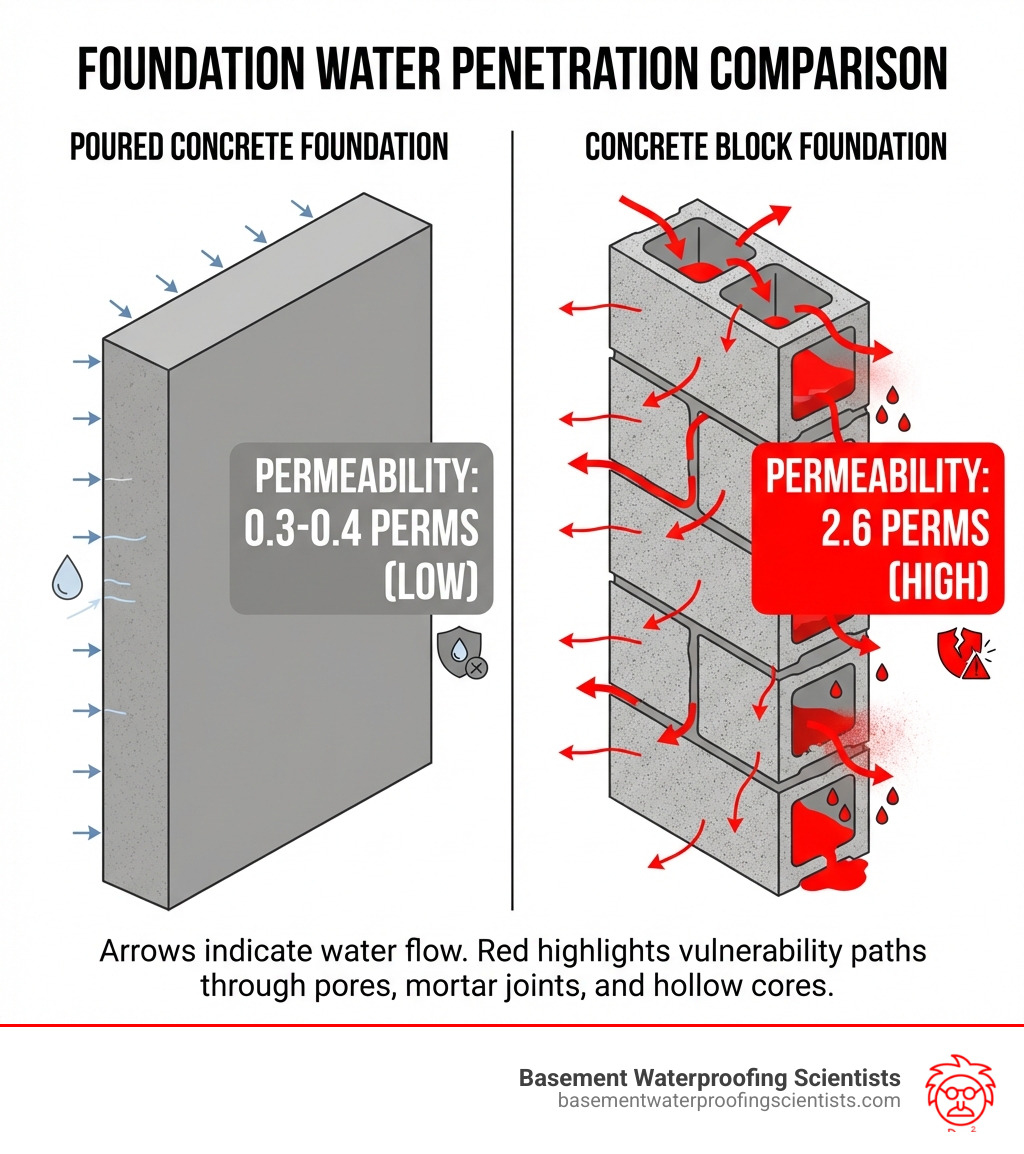
While concrete blocks are a common foundation material, they are much more permeable to water than poured concrete walls. An 8- to 10-inch-thick poured concrete wall has a permeability of about 0.3 to 0.4 perms, while concrete blocks clock in at around 2.6 perms—six to eight times more permeable.
This higher permeability allows moisture to enter your foundation, leading to structural damage, efflorescence (white crystalline deposits), mold growth, and a musty basement smell.
Mortar joints add another vulnerability. Unlike solid concrete, block walls have dozens of seams where mortar can crack or deteriorate, providing a path for water. Hydrostatic pressure—the force of groundwater—worsens the problem. Saturated soil forces water through cracks and porous blocks. The hollow cores can also fill with water, creating a lasting source of moisture.
Effective cement block waterproofing is achievable with the right solutions. It requires a systematic approach that addresses the water source and its path through your foundation, not just a coat of paint. The average cost for basement waterproofing ranges between $4K and $8K, but the investment protects your home’s structural integrity.
With over 30 years of experience solving complex basement water problems for Philadelphia-area homes, I’ve seen the challenges of cement block waterproofing. The strategies in this guide are proven methods to address these unique issues.
Cement block waterproofing terms made easy:
Why Cement Blocks Are a Magnet for Moisture
In our experience across Pennsylvania, New Jersey, and Delaware, concrete block foundations have inherent vulnerabilities to water. Understanding these is key to effective cement block waterproofing.
Porosity vs. Poured Concrete
The main reason for water intrusion is the inherent porosity of concrete blocks. Compared to a poured concrete wall (0.3-0.4 perms), concrete blocks (CMUs) are far more permeable, with an effective permeance of around 2.6 perms, and sometimes as high as 4.8 perms. This places them in the “semi-permeable” category, allowing water and vapor to pass through easily. For more details, you can refer to insights from ASHRAE.
Mortar Joint Vulnerability
Unlike a solid poured wall, a block foundation has many mortar joints—often the weakest link. Mortar is less durable than concrete and can crack or deteriorate from soil movement, settling, or freeze-thaw cycles. Each joint is a potential water pathway, complicating cement block waterproofing.
Hydrostatic Pressure
Hydrostatic pressure is the force of groundwater against foundation walls. Saturated soil from rain or snowmelt pushes water against your basement. The porous nature of blocks and their numerous mortar joints provide many entry points for this pressure, causing leaks.
Capillary Action
Water also enters through capillary action, wicking into the tiny pores of the blocks without needing a visible crack. This constant moisture can lead to efflorescence, mold, and a damp, unhealthy basement.
Hollow Core Water Collection
The hollow cores of concrete blocks present a unique challenge, as they can fill with water and act like reservoirs. This trapped water can later seep into the basement, even after the surrounding soil has dried. This is a common issue for cinder block foundation walls.
Cracks from Settling
Natural home settling can cause cracks in foundation walls, especially in the mortar joints of block foundations. Even small cracks are direct channels for water. Repairing these imperfections is a critical part of any cement block waterproofing strategy.
Prepare for Success: The Crucial First Steps
Meticulous surface preparation is non-negotiable before applying any waterproofing product. Proper prep is essential for cement block waterproofing as it ensures maximum adhesion and effectiveness of your chosen solution.
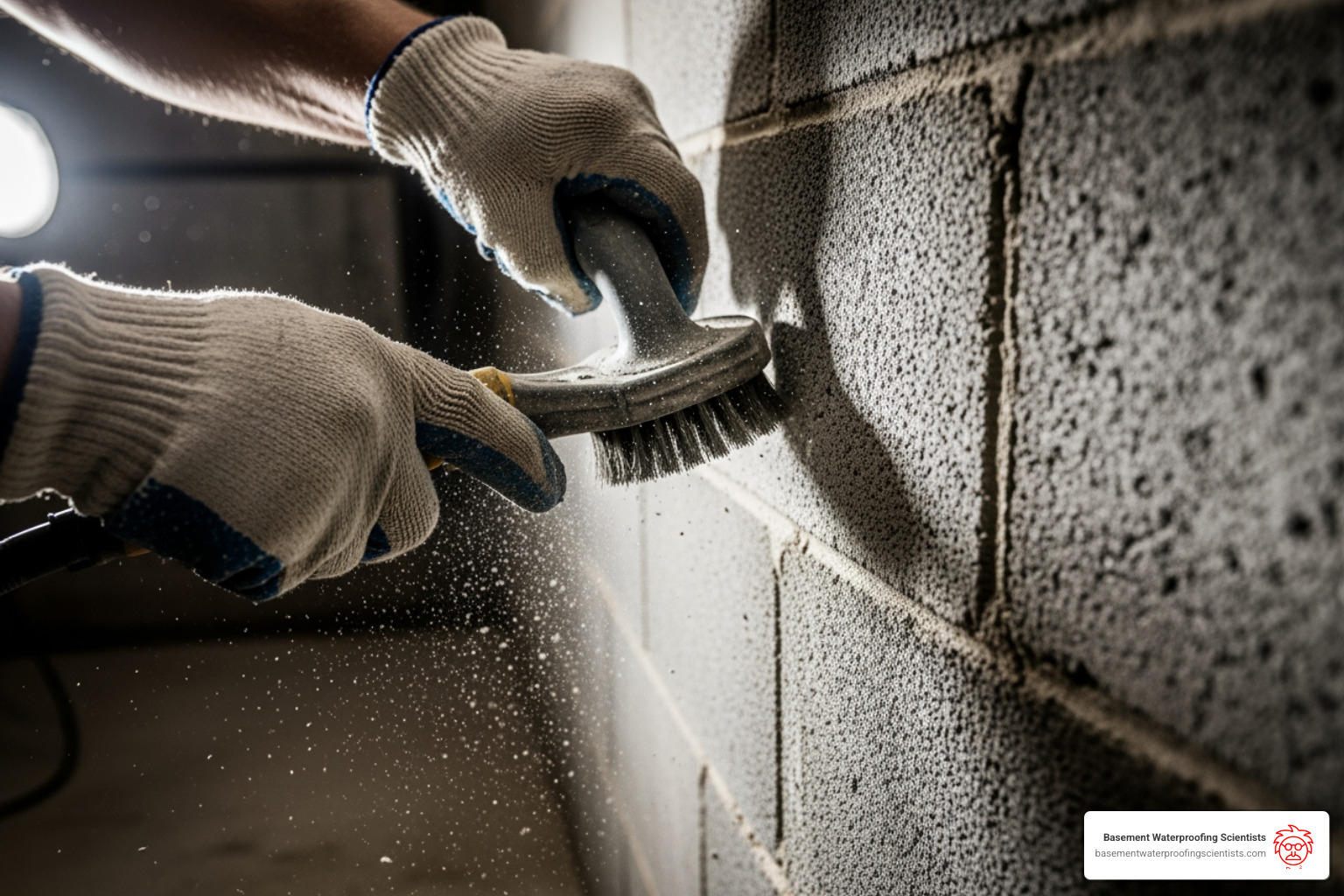
Meticulous Cleaning
First, thoroughly clean the walls. Remove all dirt, dust, debris, and flaking paint using a wire brush or pressure washer. Contaminants will compromise the waterproofing bond.
Removing Efflorescence
Efflorescence—powdery white deposits—indicates water moving through the block. It must be removed before waterproofing, as products won’t adhere to it. Use a stiff wire brush or a specialized cleaner. For stubborn deposits, a wire-wheel drill attachment can be used, though safer cleaners are preferred.
Mold Remediation
Mold and mildew must be removed before waterproofing. Use appropriate remediation techniques, like scrubbing with a detergent solution and rinsing, to ensure a clean surface.
Repairing Cracks and Filling Voids
After cleaning, inspect and repair all cracks, holes, and voids before waterproofing. Use hydraulic cement or masonry caulk. Hydraulic cement is ideal as it sets in wet conditions. Use a concrete patching compound for larger voids and allow repairs to cure for at least 24 hours per manufacturer instructions.
Mortar Joint Repointing
Pay close attention to mortar joints. If deteriorated or cracked, they may need repointing. This involves replacing old mortar with new to create a solid surface for waterproofing.
Ensuring a Dry Surface
Many products, especially penetrating sealers, require a dry surface. For wet walls, you may need to drill weep holes to drain moisture and allow several days for drying. Some cementitious products can be applied to damp (not wet) surfaces, which is an advantage in basements.
Essential Tools for Preparation:
- Wire brush (manual or drill attachment)
- Chisel (for removing loose mortar or concrete)
- Trowel (for applying hydraulic cement or patching compound)
- Safety glasses
- Gloves
- Pressure washer (optional, but highly effective)
- Stiff-bristle broom
Choosing Your Shield: Types of Waterproofing Products
There is no one-size-fits-all solution for cement block waterproofing. The best approach uses a combination of products custom to your foundation’s challenges to create a comprehensive defense. Our Waterproofing Block Wall Foundation Guide offers a good overview.
Here’s a comparison to help you choose:
| Product Type | Cost (Relative) | Application Difficulty | Effectiveness |
|---|---|---|---|
| Interior Coatings | Low-Medium | Medium | Good for dampness/vapor, less effective against hydrostatic pressure |
| Exterior Membranes | High | High (professional) | Excellent, true barrier against water entry and hydrostatic pressure |
| Penetrating Sealers | Medium | Medium | Good for porosity, reacts internally, moderate against hydrostatic pressure |
Interior Waterproofing Coatings
Interior coatings are a common choice for cement block waterproofing from the inside, forming a barrier against moisture.
- Cementitious Coatings: These polymer-modified, cement-based products chemically bond with masonry, becoming part of the wall. They are durable and can be applied to damp surfaces, making them ideal for basements in areas like Philadelphia. Products described by Hydroblocker offer excellent adhesion and protection.
- Waterproofing Paints: Standard waterproofing paints are a quick fix but are less effective than cementitious coatings or penetrating sealers. They form a surface barrier easily compromised by hydrostatic pressure or efflorescence. We don’t recommend them for serious water issues. For better options, see our guide on the best concrete block wall waterproofer.
Penetrating and Crystalline Sealers
These products work from within the concrete itself.
- How Crystalline Products Work: Crystalline products are cementitious substances that penetrate concrete. They react with moisture and lime to form insoluble crystals within pores and hairline cracks, blocking water pathways and making the concrete itself waterproof.
- Deep-Penetrating Sealers: Deep-penetrating sealers like RadonSeal react chemically within the concrete’s pores, not just on the surface. This forms a hardened mineral that makes the block denser and impermeable to water and radon gas. They are ideal for mild to moderate dampness, offering a long-term solution. Learn more in our Cinder Block Foundation Sealer Guide.
Exterior Waterproofing Membranes
Sealing from the outside is often the most effective long-term solution for cement block waterproofing.
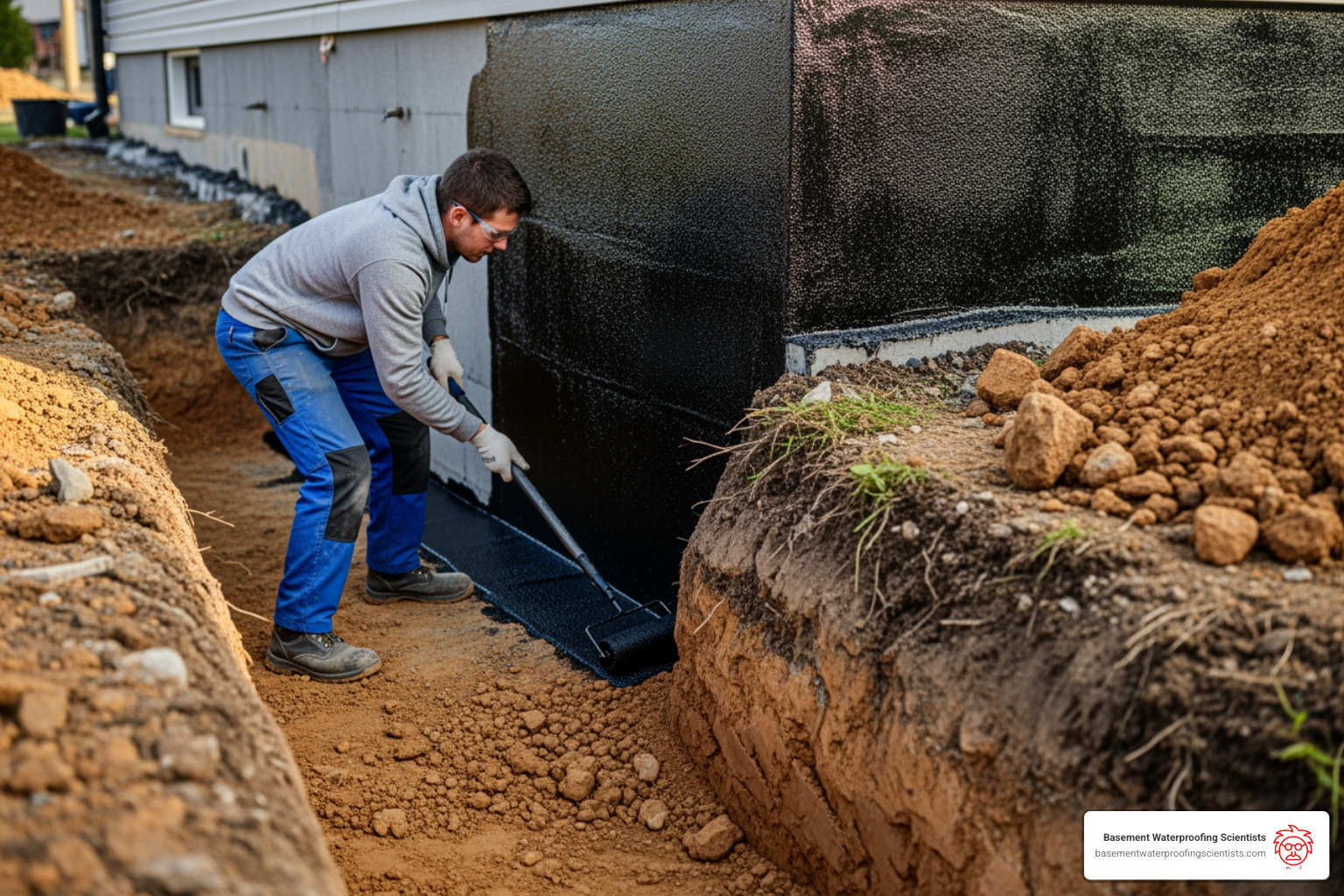
- Liquid Rubber Membranes: Modern liquid rubberized asphaltic membranes are a major improvement over older materials. These fluid-applied products use polymers for elasticity and durability. Applied to the exterior foundation, they create a seamless barrier that adheres to the block, excellent for sealing below-grade walls against hydrostatic pressure.
- Self-Adhering Sheet Membranes: These are pre-formed sheets of a controlled thickness applied to the exterior foundation. They use a primer for bonding and are fully cured, reducing project time. Both sheet and liquid membranes create a robust, puncture-resistant barrier.
- The Most Effective Method: Sealing block walls from the outside is considered the most effective method. It stops water at the source, before it can penetrate the porous blocks or mortar joints. For details, see our article on Waterproofing Concrete Block Walls Outside.
A System-Based Approach to Cement Block Waterproofing
Our 30 years of experience show that successful cement block waterproofing requires a comprehensive system, not a single product. Combining methods provides the most robust defense. This strategy is detailed in our Concrete Block Wall Waterproofing Complete Guide. Using a single manufacturer’s system ensures product compatibility and performance.
The Role of Interior Drainage Systems
Even with excellent exterior waterproofing, water can reach the foundation, especially in areas with high water tables like Pennsylvania, New Jersey, and Delaware. Interior drainage systems are crucial for managing this hydrostatic pressure.
- French Drains and Sump Pumps: An interior French drain, installed along the basement perimeter, collects water from walls and the floor. It channels water to a sump pump, which pumps it away from the foundation. This system relieves hydrostatic pressure and prevents pooling.
- Weep Holes: Weep holes are drilled into the bottom course of blocks in conjunction with a French drain. These holes let trapped water from the block cores drain into the system, preventing accumulation and further leaks.
- Cove Diverters: Cove diverters are often used with interior drainage. Installed at the cove joint (where wall meets floor), they direct water from the wall into the French drain, keeping the floor dry. For more on repairs, see our guide on How to Repair a Leaking Cinder Block Basement Wall.
Effective use of vapor barriers for cement block waterproofing
Beyond liquid water, moisture vapor can cause humidity and mold. Vapor barriers help control this.
- Controlling Moisture Vapor: A vapor barrier resists moisture vapor passage. Applied to interior basement walls, it stops moisture from entering the living space, which is crucial for protecting finished basements from humidity.
- Dimple Boards: A dimple membrane can be installed over exterior waterproofing or used inside as part of a drainage system. The dimples create an air gap, allowing water to flow to the drain. Internally, they manage moisture and provide a surface for finishing materials.
- Protecting Finished Basements: A vapor barrier is essential for finished basements. It protects drywall, insulation, and flooring from moisture damage, ensuring a healthy living space. Our article on Sealing Block Basement Walls offers more detail.
Managing Water on the Outside
No waterproofing system is fully effective if external factors overwhelm your foundation with water.
- Proper Grading: The ground around your home should slope away from the foundation (at least six inches over ten feet). This directs rainwater away, preventing it from pooling. Poor grading is a common cause of leaks.
- Gutter and Downspout Maintenance: Clogged gutters and poorly placed downspouts are major causes of water intrusion. Ensure gutters are clear and downspouts extend at least 5-10 feet from the foundation using extensions or buried pipes.
- Window Well Drainage: Basement window wells can collect water, putting pressure on windows and the foundation. Ensure they are clean and have proper drainage, such as a gravel base connected to a drain tile.
- Reducing Water Load on the Foundation: By implementing these exterior measures, you reduce the amount of water reaching your foundation, lessening the burden on your waterproofing systems. For more on exterior solutions, visit our page on Basement Cinder Block Wall Leak Repair From The Outside.
Advanced Considerations for Specific Wall Types
While general principles of cement block waterproofing apply broadly, some blocks require specific considerations. Our expertise across Pennsylvania, New Jersey, and Delaware allows us to tailor solutions to these unique challenges.
Applying stucco over cement block waterproofing
If you plan to apply stucco over block walls, particularly above-grade, do not seal the blocks first.
- Stucco Bonding Requirements: Stucco is a cement-based material needing moisture to bond to its substrate. Sealing the block wall first creates a barrier that prevents this bond, weakening the stucco.
- Trapped Moisture Risk: Sealing the wall first can also trap moisture. If water gets behind the stucco, it gets trapped by the sealer, leading to adhesion failure, cracking, and mold.
- Why You Shouldn’t Seal Before Stuccoing: Sealing walls before applying stucco is unnecessary and can cause problems. Instead, use cementitious waterproofing products that become part of the substrate and serve as a base for stucco. These products bond chemically, providing a waterproof surface that allows for proper stucco application. For more, see Merlex’s cementitious waterproofing information.
- Proper Layering: The correct approach is to ensure the block wall is clean and sound, then apply the stucco directly. Any waterproofing should be compatible with the stucco system.
Waterproofing Lightweight and Split-Face Blocks
Some block types are more challenging to waterproof due to higher porosity.
- Higher Porosity Challenges: Lightweight blocks (cinder, split-face, Haydite, or “popcorn” blocks) are far more permeable than standard blocks. With a permeance over 10 perms (compared to 2.6 for standard CMUs), they absorb water efficiently, making them harder to waterproof.
- Specific Sealer Requirements: These blocks often have less cement, so some penetrating sealers (like RadonSeal) that react with cement are less effective. Different sealers, such as LastiSeal Brick & Masonry Sealer or DryWay Water-Repellent Sealer, are designed for these porous, low-cement blocks. Identifying your block type is crucial for selecting the right product.
Frequently Asked Questions about Cement Block Waterproofing
We often hear similar questions from homeowners in Philadelphia, Reading, Norristown, and other areas we serve. Let’s tackle some of the most common ones about cement block waterproofing.
Can I just paint my cement block walls with waterproof paint?
Simply painting your cement block walls with waterproof paint is rarely a long-term fix for serious water issues.
- Waterproof Paint as a Temporary Fix: Most waterproof paints are for “negative-side” application (on the interior) to hold back water. As a surface coating, they can bubble, peel, or crack under significant hydrostatic pressure or ongoing infiltration.
- Negative-Side Waterproofing Limitations: Interior paints don’t stop the water source. Water still enters the block, which can trap moisture, cause deterioration, or push efflorescence through the paint.
- Importance of Addressing the Source: For true cement block waterproofing, it’s always best to stop the water before it enters the wall. Interior paints don’t do this.
- Efflorescence Bubbling: If efflorescence forms behind the paint, the pressure from the salt crystals will cause the paint to fail, often bubbling and peeling off.
Is exterior or interior waterproofing better for block walls?
Generally, exterior waterproofing is superior for cement block waterproofing, but the best choice depends on your situation.
- Exterior as the True Barrier: Exterior waterproofing (e.g., liquid rubber or sheet membranes) creates an impermeable barrier, stopping water before it reaches the block walls. It’s the most effective way to prevent intrusion and manage hydrostatic pressure.
- Interior as Water Management: Interior waterproofing (coatings, sealers, drainage systems) manages water after it has entered the wall. It’s a reactive solution, not a preventative one, but crucial for keeping a basement dry.
- Cost and Disruption Comparison: For existing homes, exterior waterproofing requires costly and disruptive excavation. Interior drainage systems are generally less disruptive to install.
- When to Choose Each Method: We recommend exterior waterproofing for new construction or major foundation work. For existing homes, a combination of exterior repairs (grading, gutters) and a robust interior drainage system with sealers often provides the best balance of effectiveness and practicality.
How do I fix a leak at the bottom of my block wall?
A leak at the cove joint (where the wall meets the floor) is common and typically indicates hydrostatic pressure.
- Cove Joint Leaks: This joint is a prime location for leaks because hydrostatic pressure is often highest there, forcing water through any gaps.
- Hydrostatic Pressure Forcing Water: When soil is saturated, water pushes against the foundation. If exterior waterproofing is compromised, water will seek the path of least resistance, often the wall-floor junction.
- Role of an Interior Drainage System: The most effective solution for leaks at the bottom of a block wall is an interior French drain and sump pump. This system captures and removes water as it enters, relieving hydrostatic pressure.
- Weep Holes to Relieve Pressure: As part of this system, weep holes are drilled into the bottom course of blocks. This allows water from the hollow cores to drain into the French drain, preventing pressure buildup and deterioration.
Conclusion
We’ve covered why concrete block foundations are vulnerable and the strategies to protect them. The key takeaway is that while these foundations are magnets for moisture due to porosity and mortar joints, a permanently dry basement is achievable with the right approach.
Effective cement block waterproofing is a system, not a quick fix. It requires meticulous preparation, the right combination of products (interior or exterior), and support from drainage and exterior water management.
For properties in Pennsylvania, New Jersey, and Delaware, our expertise at Basement Waterproofing Scientists means we understand the unique challenges your home faces. We specialize in identifying the source of leaks and providing customized, guaranteed solutions. Don’t let a damp basement compromise your home’s integrity or your family’s comfort.
For a professional assessment and guaranteed solution, trust the experts at Basement Waterproofing Scientists. Get a permanent solution with exterior foundation waterproofing and reclaim your dry basement today!