


Why Every Homeowner Should Understand Foundation Cracks
Cracks in poured concrete foundation walls are common, but understanding which ones matter can save you thousands of dollars. Here’s what you need to know:
Quick Assessment Guide:
| Crack Type | Width | Severity | Action Needed |
|---|---|---|---|
| Hairline/Vertical | Less than 1/8″ | Low – Normal settling | Monitor, seal if desired |
| Vertical/Diagonal | 1/8″ – 1/4″ | Medium – Potential concern | Professional evaluation recommended |
| Any Horizontal | Any width | High – Serious | Immediate professional assessment |
| Any Crack | Over 1/4″ wide | High – Structural issue | Urgent professional repair |
Most homes develop some foundation cracks as a normal part of how concrete cures and houses settle. But not all cracks are created equal.
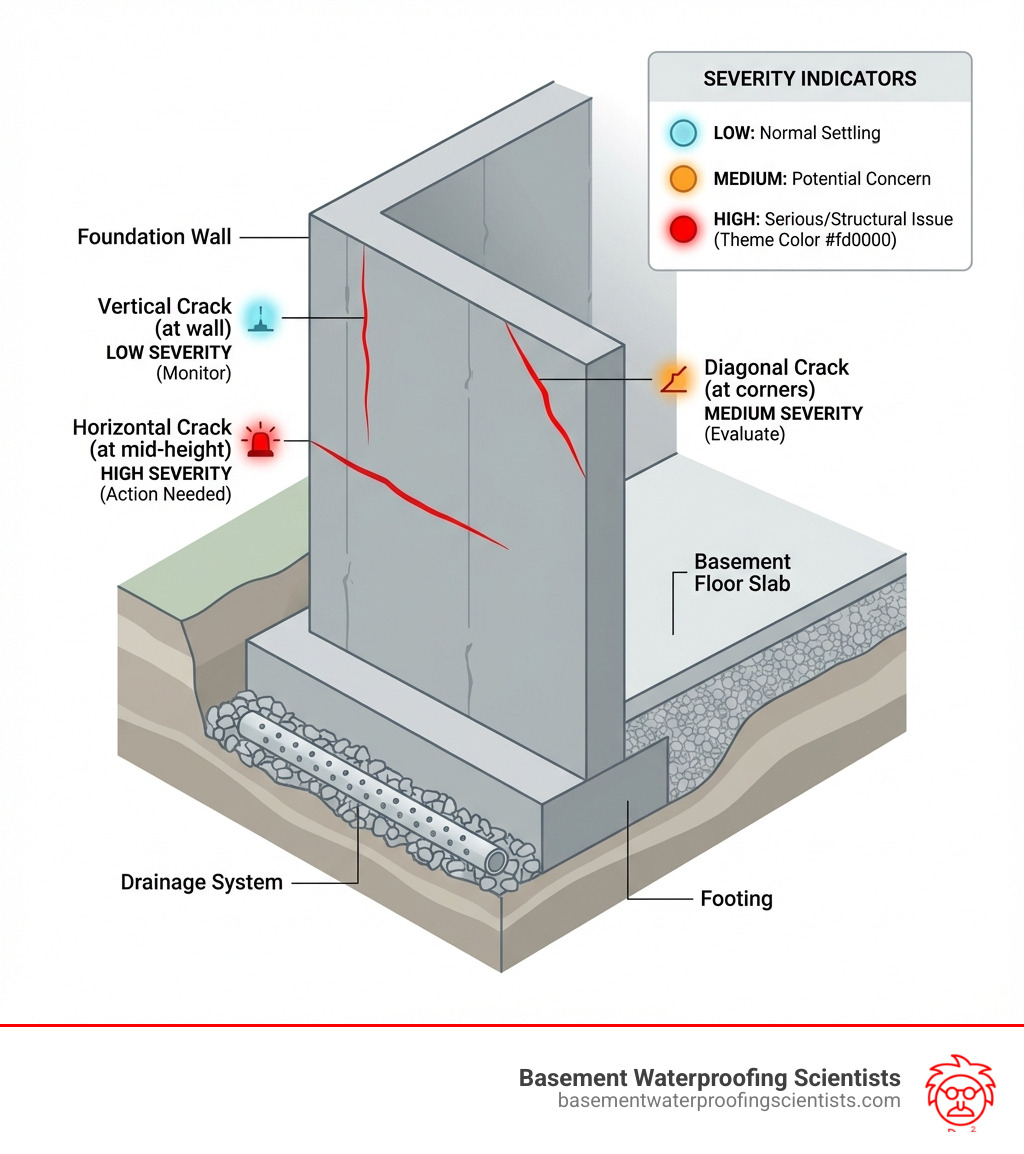
Vertical cracks often result from normal concrete shrinkage. These are usually cosmetic if they’re narrow (under 1/8 inch wide).
Horizontal cracks are different. They typically signal external pressure from soil or water pushing against your foundation wall. This is a red flag.
Width matters. A hairline crack is rarely a problem. A crack you can fit a quarter into demands immediate attention.
The real danger isn’t always the crack itself—it’s what happens next. Water intrusion leads to mold, and soil pressure leads to bowing walls. Small problems become expensive disasters when ignored.
Your basement is foundational to your home’s value. Understanding these cracks is about protecting your investment and creating the dry, usable space you deserve.
With over 30 years specializing in basement waterproofing, we’ve inspected thousands of homes with cracks in poured concrete foundation walls—from harmless hairline fissures to serious structural failures. The key is knowing which cracks need action now and which you can simply monitor.
Similar topics to cracks in poured concrete foundation:
The Root Causes: Why Do Poured Concrete Foundations Crack?
Cracks in concrete walls and slabs are common and not always a sign of impending doom. They appear in floors, driveways, and walls. While cracking cannot be prevented entirely, it can be significantly reduced when the causes are understood. The vast majority of cracks are of little concern. The common causes can be grouped into a few key categories: the nature of concrete itself, the ground it sits on, and external forces like water.
The Role of Concrete Curing and Shrinkage
One of the most frequent reasons for cracks in poured concrete foundation walls, especially in newer homes, is the curing process.
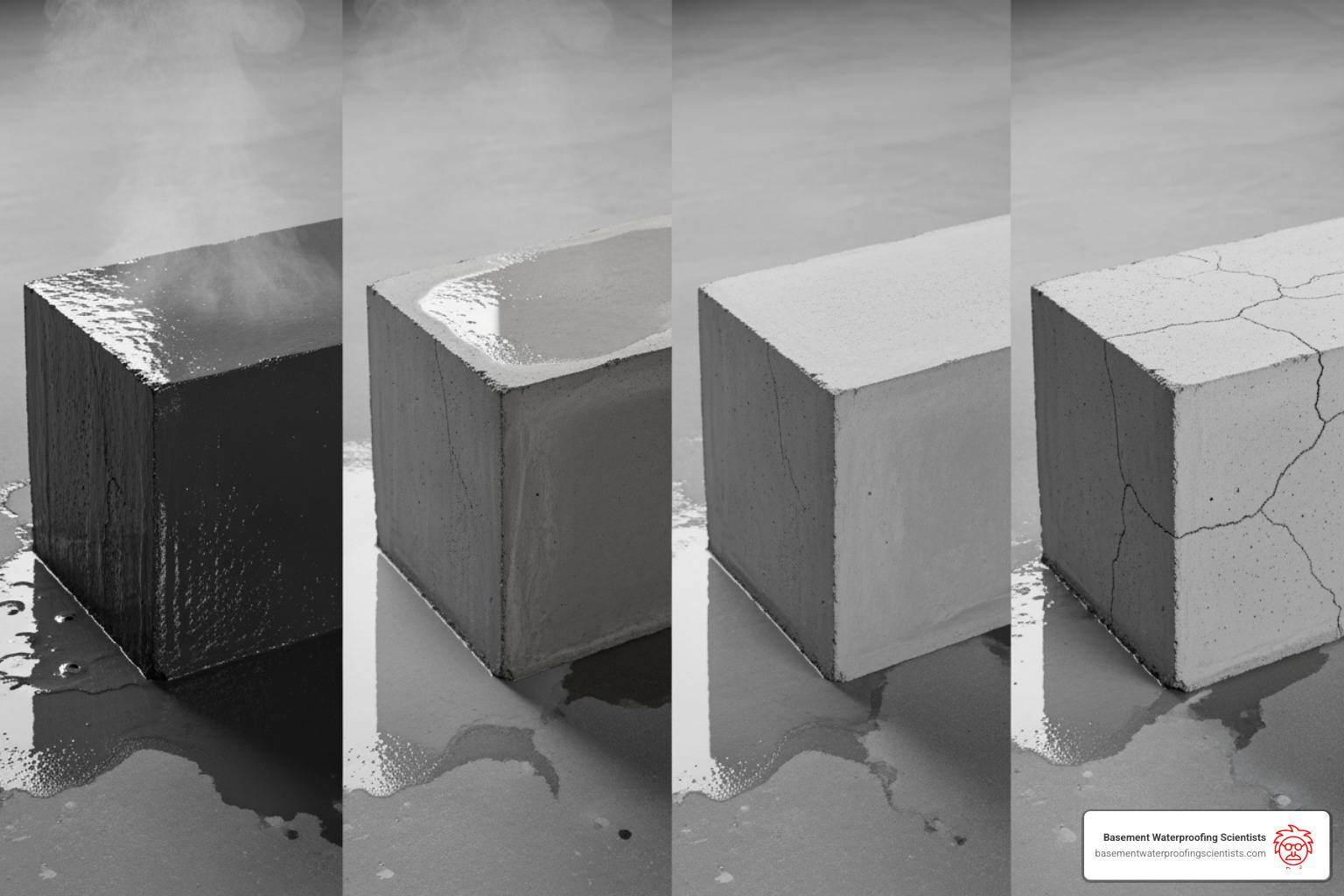
When concrete is poured, it contains a lot of water. As this water evaporates, the concrete shrinks, a process called drying shrinkage. If this contraction is restrained, it can create stress that leads to cracks. Plastic shrinkage happens earlier, while the concrete is still wet, if the surface dries too quickly.
Temperature changes also cause concrete to expand and contract. Rapid fluctuations during curing can lead to hairline cracks, which are often less than 1/16th of an inch wide and considered cosmetic. As one expert notes, “Shrinkage cracks, less than 1/16 wide, are typically harmless and occur during concrete curing.” It’s normal for new concrete to develop these types of cracks as it cures. For a more technical overview of how concrete behaves as it cures, see this explanation of concrete cracking on Wikipedia.
How Soil and Water Pressure Lead to Cracks
The ground and water around a foundation are major contributors to cracking. While all foundations settle, serious cracking can occur from uneven or differential settlement.
-
Soil Settlement and Expansion: Soils in Pennsylvania, New Jersey, and Delaware vary. Expansive clay soils swell when wet, exerting immense pressure on foundation walls. During droughts, these soils shrink, causing the foundation to lose support and settle unevenly.
-
Hydrostatic Pressure: This occurs when water saturates the soil, building pressure against foundation walls. This force can push walls inward, leading to horizontal cracks or bowing. Hydrostatic pressure will exploit any existing crack, causing leaks.
-
Freeze-Thaw Cycles: In our region, water in the soil freezes, expands, and then thaws, putting constant stress on the foundation. This cycle can widen existing cracks and create new ones.
Poor drainage is a major factor. Improper yard grading or clogged gutters cause water to pool against the foundation, increasing soil saturation and hydrostatic pressure. This Old House notes that proper grading should have at least 6 inches of fall in the first 10 feet. Water intrusion through cracks can lead to mold, pests, and further concrete deterioration. To understand more about protecting your foundation from water, explore our guide on waterproofing foundations.
A Visual Guide to Cracks in Poured Concrete Foundation
Identifying the type of crack is the first step in understanding its severity. The direction and width of a foundation crack often tell us whether it’s a cause for concern. Many cracks are aesthetic and may only need a cosmetic repair.
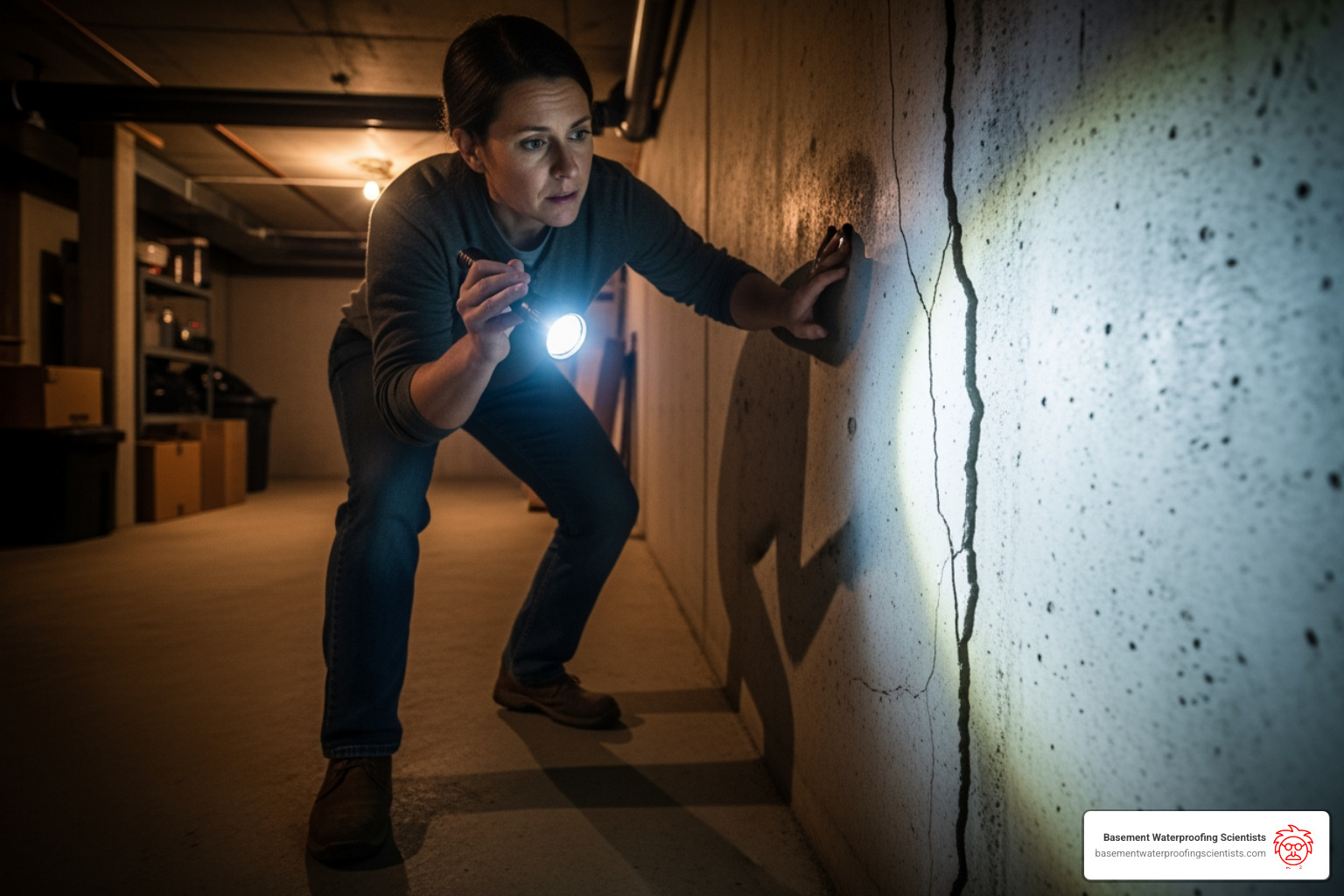
When inspecting your poured concrete foundation, pay close attention to:
- Crack identification: What does the crack look like? Is it jagged or straight?
- Crack width: How wide is it? Can you fit a dime or a quarter into it?
- Crack direction: Does it run vertically, horizontally, or diagonally?
- Location of cracks: Is it near a window, a corner, or in the middle of a wall?
These observations will help determine the probable cause and necessary action.
Hairline vs. Structural Cracks
This is the first distinction to make when assessing cracks in poured concrete foundation walls.
-
Hairline cracks: These are very thin, often less than 1/8 inch wide. They are usually caused by normal concrete settling and curing and are often cosmetic. While usually thin, they can run deep. If they are dry and stable, they are generally not a major concern. For more tips on dealing with these smaller issues, see our homeowner tips for small foundation cracks.
-
Structural cracks: These are more significant and demand attention. They are typically wider than 1/4 inch, may show lateral displacement (one side is offset from the other), or appear as long horizontal cracks. These cracks indicate a severe foundation problem. If you can fit a quarter into the crack, it’s time to call a contractor.
Vertical, Horizontal, and Diagonal Cracks
The orientation of a crack provides crucial clues about its underlying cause.
| Crack Type | Cause | Severity | Recommended Action |
|---|---|---|---|
| Vertical Cracks | Normal foundation settlement, concrete curing and shrinkage. | Generally low. Often non-structural. | Monitor. Seal if leaking or for aesthetic reasons. Usually the least troublesome. |
| Horizontal Cracks | Unbalanced soil pressure (hydrostatic pressure), frost heave, heavy equipment near walls. | High. Indicates serious structural issue, potential for bowing walls. | Immediate professional assessment. Suggests wall is bowing. |
| Diagonal Cracks | Differential settlement (uneven support), foundation movement. | Medium to high. Can signify serious structural problems. | Professional assessment recommended. Especially if wider than 1/8 inch. |
Vertical cracks run up and down the wall. As mentioned, these are often the least troublesome and result from normal settlement or concrete curing.
Horizontal cracks run lengthways and are often caused by outside soil pressure. This pressure can be from hydrostatic forces or expansive soils. Horizontal cracks are a definite cause for concern as they can indicate bowing walls and a serious structural issue.
Diagonal cracks run at an angle (often 30-75 degrees). They are frequently caused by differential settlement, where one part of the foundation settles faster than another. Diagonal or horizontal cracks, especially those wider than 1/8 inch, often point to differential settlement or soil pressure and may signify serious structural problems.
When to Worry: Red Flags That Demand Professional Attention
While some cracks in poured concrete foundation walls are benign, others are screaming for help. Knowing when to call in the experts is critical. If a crack’s width exceeds 1/4 inch, shows 1/4 inch in lateral displacement, leaks water, or is a long horizontal crack, it is time to seek professional assistance.
Here are the red flags that should prompt you to call Basement Waterproofing Scientists for an expert assessment:
- Crack width over 1/4 inch: This is a widely accepted threshold for concern and typically requires professional repair.
- Actively growing cracks: If a crack gets longer or wider over time, it indicates ongoing movement.
- Wall displacement or bulging: If one side of a crack is offset from the other, or if the wall is bowing, this is a major structural warning sign.
- Water intrusion: Any crack that allows water into your basement is a problem. Water leaks can lead to mold, mildew, and property damage. For insights on dealing with this, check out our article on what to do about a crack leaking water.
- Dampness, mold or mildew: These are direct indicators of moisture intrusion, often through foundation cracks.
- Efflorescence (white powdery stains): This mineral deposit is left when water evaporates from concrete, indicating moisture is passing through the wall.
Warning Signs Throughout Your Home
Foundation problems often manifest elsewhere in your home first. These signs indicate your foundation is in distress.
Keep an eye out for:
- Sticking doors and windows: If doors and windows become difficult to operate, it could be due to the frame shifting with the foundation.
- Uneven or sloping floors: Floors that feel bouncy or slope can indicate foundation settlement.
- Gaps between walls and ceilings: As a foundation settles unevenly, walls can pull away from the ceiling, creating gaps.
- Tilting chimney: A chimney pulling away from the house or tilting is a classic sign of foundation settlement.
- Cracks in interior drywall: Cracks in drywall, especially around door and window frames, can be secondary indicators of foundation movement.
These signs, especially when combined with visible cracks in poured concrete foundation walls, strongly suggest it’s time for a professional evaluation.
Evaluating Cracks in a New Concrete Foundation
Finding cracks in poured concrete foundation walls of a new home can be unsettling, but hairline cracks are normal. As concrete cures and settles, thin cracks can appear. These “normal” cracks often occur within the first year and are usually not structural.
However, even in new foundations, some cracks warrant concern. Here’s how to evaluate them:
- Normal curing cracks: These are typically hairline vertical cracks from concrete drying and shrinking.
- First-year settling: Minor, uniform settlement is natural.
- When to contact your builder: If you notice cracks wider than a hairline, horizontal cracks, or active leaking, contact your home builder immediately. Many warranties cover such issues.
- How to monitor new cracks: Mark a new crack’s ends with a pencil and date. Take photos with a ruler to document its width. Check it monthly. If it expands or leaks, it’s time for professional advice.
It’s crucial to address any concerns promptly. To understand the timelines involved, you might find our article on how long is too long to fix basement wall cracks? helpful.
Repair, Costs, and Prevention Strategies
When dealing with cracks in poured concrete foundation walls, it’s important to decide between a DIY fix and professional repair. While DIY kits seem appealing for minor cracks, improper repairs can mask a serious underlying issue or even make it worse. Foundation cracks worsen over time, leading to moisture, pests, poor air quality, and more expensive future repairs. Promptly repairing foundation problems is essential to protect your home’s safety and value. To avoid common pitfalls, it’s wise to learn about how to avoid common foundation repair mistakes.
Common Methods for Repairing Cracks in Poured Concrete Foundation
The right repair method depends on the crack’s type, size, and cause. We use specialized equipment to identify leak sources, ensuring the correct and most cost-effective solution for your home.
- Epoxy Injection: This method bonds dry, non-moving cracks, restoring the concrete’s structural integrity. Learn more in our guide on concrete wall crack repair with epoxy injection.
- Polyurethane Foam Injection: For actively leaking cracks, polyurethane foam expands to fill the void, creating a flexible, watertight seal that accommodates minor foundation movement.
- Structural Reinforcement: For serious issues like horizontal cracks or bowing walls, more robust solutions are needed:
- Carbon fiber straps: These strong straps are epoxied to the interior wall to resist inward pressure.
- Steel piers: For settling foundations, these piers are driven into stable soil to support and stabilize the structure.
- Wall anchors: These systems use an exterior anchor in stable soil to pull bowing walls back into place.
Our team offers a range of custom solutions. Explore more options in our guide to 7 Top-Rated Foundation Repair Techniques.
What is the Typical Cost for Foundation Crack Repair?
The cost to repair cracks in poured concrete foundation walls varies based on the severity of the issue.
- Minor repairs ($250 – $800): Simple injection or sealing for small, non-structural vertical cracks with minor seepage.
- Major repairs ($2,000 – $6,000+): For structural issues, extensive cracking, or bowing walls. These projects often involve reinforcement like carbon fiber straps, wall anchors, or underpinning with steel piers. The average cost for basement waterproofing, which often accompanies crack repair, is between $4,000 and $8,000.
Factors influencing the final cost include crack size and type, repair method, accessibility, and geographic location within our service areas of Pennsylvania, New Jersey, and Delaware. While homeowners insurance rarely covers foundation repair, the investment is crucial for protecting your home’s value.
How to Prevent Future Foundation Cracks
Proactive maintenance can significantly reduce the risk of future foundation problems.
- Manage Drainage: This is the most critical step.
- Keep gutters clean and ensure downspouts extend at least 5-10 feet away from the house.
- Grade your yard so it slopes away from the foundation (at least 6 inches of fall in the first 10 feet).
- Control Soil Moisture:
- During droughts, lightly water the soil around your foundation to prevent it from shrinking away.
- Keep large trees and shrubs with extensive root systems several feet away from the foundation to prevent soil drying and settlement.
- Regular Inspections: Regularly inspect your foundation, inside and out, to catch small cracks before they become big problems.
For a comprehensive approach, consult our exterior foundation waterproofing guide.
Frequently Asked Questions about Foundation Cracks
Homeowners often have similar questions about cracks in poured concrete foundation walls. Here are some of the most common ones:
Are all cracks in a poured concrete foundation serious?
No. Most homes have some normal foundation cracks. Hairline cracks (less than 1/8 inch wide) from concrete curing or normal settling are usually cosmetic. As one expert notes, “Vertical foundation cracks are normally nothing to be concerned about.” The key indicators of severity are width and direction. Vertical cracks are generally less concerning than horizontal cracks, which almost always signal a more serious structural issue from external pressure.
Can I repair foundation cracks myself?
You can seal minor, non-leaking hairline cracks with DIY products, but this is often a superficial fix. For any crack wider than 1/8 inch, actively leaking, or showing structural movement (horizontal, displaced), a professional assessment is crucial. A DIY repair on a significant crack is risky and could mask the root cause or make the problem worse. A professional can provide a lasting solution.
What happens if I ignore a foundation crack?
Ignoring a foundation crack can lead to far more expensive problems:
- Water Intrusion: Cracks allow water into your basement, causing dampness and property damage.
- Mold and Mildew: Moisture creates a breeding ground for mold, impacting health and air quality.
- Pest Entry: Cracks are an open door for insects and rodents.
- Worsening Structural Damage: Unaddressed structural cracks will worsen, potentially leading to bowing walls or foundation failure.
- Decreased Home Value: Foundation problems are a major red flag for potential buyers.
- Expensive Future Repairs: A small repair today can prevent a major restoration project costing thousands tomorrow.
Timely intervention is always the most cost-effective approach.
Protect Your Investment: The Final Word on Foundation Health
Understanding cracks in poured concrete foundation walls is an essential part of responsible homeownership. While a crack can be alarming, a clear-eyed assessment and timely action can prevent minor issues from becoming major, costly problems.
We’ve covered the common causes, types, and warning signs of foundation cracks. Proactive monitoring and proper maintenance, especially focusing on drainage, are your first lines of defense. But when in doubt, or when signs point to a serious issue, professional assessment is invaluable.
Ignoring foundation cracks can significantly impact your home’s value and structural integrity. Water intrusion, mold, and worsening structural damage are all potential consequences that far outweigh the cost of early intervention.
At Basement Waterproofing Scientists, we bring 30 years of experience to every inspection. We’re committed to providing customized solutions, backed by a lifetime guarantee, to ensure your basement remains permanently dry and your foundation sound. Don’t let uncertainty turn into regret.
Get a professional assessment for your basement wall cracks today.