
by Darin Garvey | Jun 17, 2026 | Basement Waterproofing
Hydrostatic pressure is the pressure exerted by water at rest. In a basement, groundwater can exert pressure against foundation walls and beneath the floor when its level is above the surface being considered. Pressure increases with water depth; a damp wall or musty...
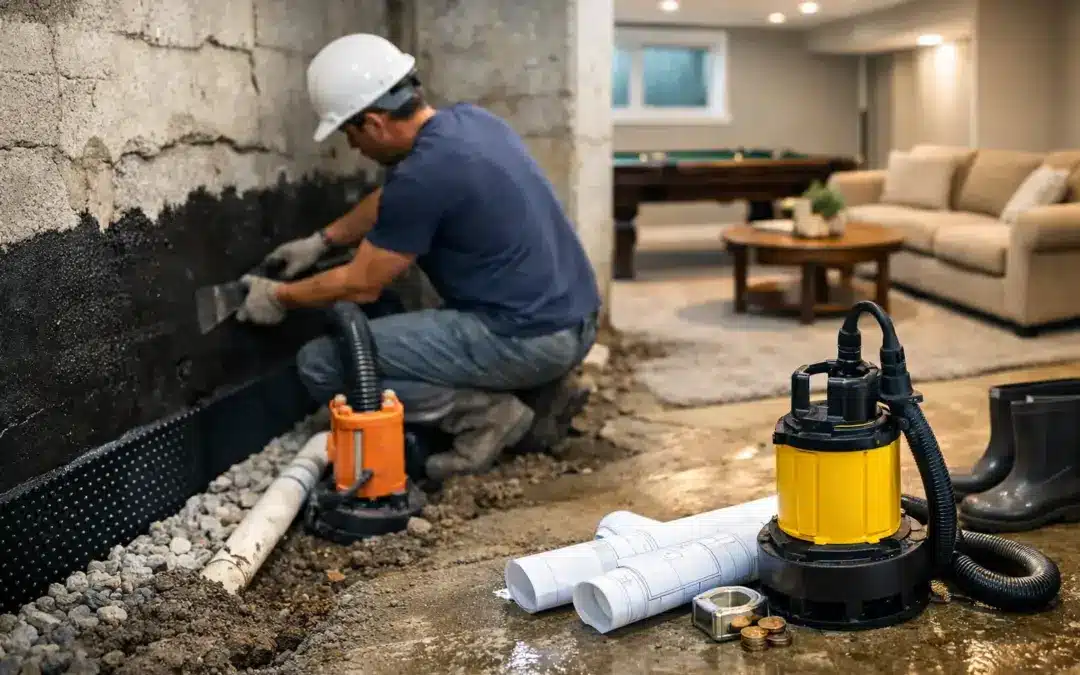
by basementwaterproofingscientists_7dzu40 | Jun 17, 2026 | Basement Waterproofing, Uncategorized
If you are considering staged basement waterproofing to manage cost, define what each phase addresses and what remains unresolved. A smaller first phase can be appropriate when supported by the diagnosis, but it is not automatically equivalent to the complete...

by basementwaterproofingscientists_7dzu40 | Jun 10, 2026 | Basement Waterproofing
Basement moisture can return because the original source was not fully identified, the repair addressed only one entry route, equipment needs service or a new problem has developed. Recurrence does not automatically prove that every localized repair fails or that the...

by basementwaterproofingscientists_7dzu40 | Jun 5, 2026 | Basement Waterproofing
Basement waterproofing services can reduce recurring water damage when the work addresses the diagnosed source and entry route. Success should be evaluated against a defined scope, not a promise that every future leak will stop. Collection, discharge, localized...

by Darin Garvey | Apr 18, 2026 | Basement Waterproofing
Crawl space moisture control works best when liquid water, ground vapor and airborne humidity are addressed separately. Identify leaks and drainage problems first, then plan the liner, drying, air sealing and insulation as a coordinated assembly. Buying a dehumidifier...

by Darin Garvey | Apr 18, 2026 | Basement Waterproofing
A floating floor, a concrete slab and a basement drainage channel are different parts of a building. Before combining them, identify the actual construction and water source. A flooring underlayment should not be assumed to provide a complete drainage system or make...

