

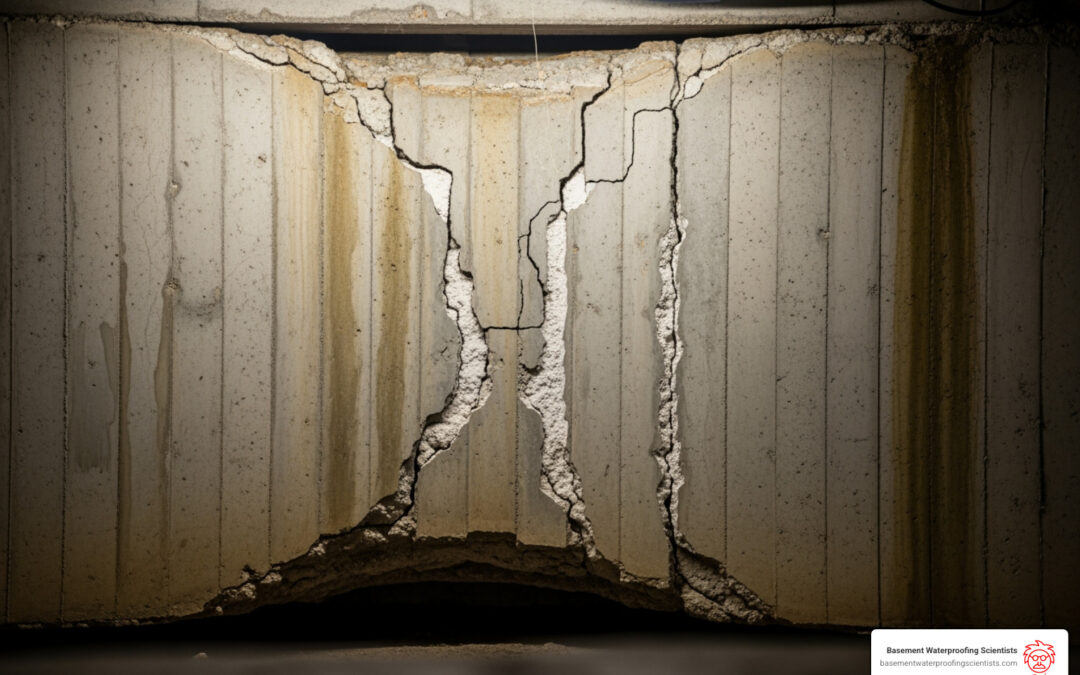
Understanding the Urgency of Bowing Basement Walls
Bowing basement wall repair is a critical structural issue that demands immediate attention. A bowing wall signals that your foundation is under serious stress from outside pressure, and left unchecked, it can lead to cracks, leaks, or even a total collapse.
Quick Answer: Repair Methods by Severity
- Minor bowing (under 2 inches): Carbon fiber straps stabilize the wall for $1,750-$5,000.
- Moderate bowing (2-4 inches): Wall anchors or steel I-beams restore stability for $1,600-$7,500.
- Severe bowing (over 4 inches): Full excavation and replacement may be required, costing $20,000-$100,000.
The problem starts when water saturates the soil around your foundation, creating immense pressure. In areas with clay soil, this is worsened by expansion and contraction cycles. Over time, walls buckle inward, showing subtle cracks before visibly bulging.
Most homeowners don’t notice the issue until horizontal cracks appear or the wall leans. By then, simple fixes may no longer be an option. The good news is that modern repair methods can stabilize or straighten bowing walls if caught early.
As Darin Garvey, I’ve spent over 30 years helping Philadelphia-area homeowners solve complex foundation issues. My team at Basement Waterproofing Scientists specializes in identifying the root causes of bowing basement wall repair needs and implementing permanent solutions to protect your home.
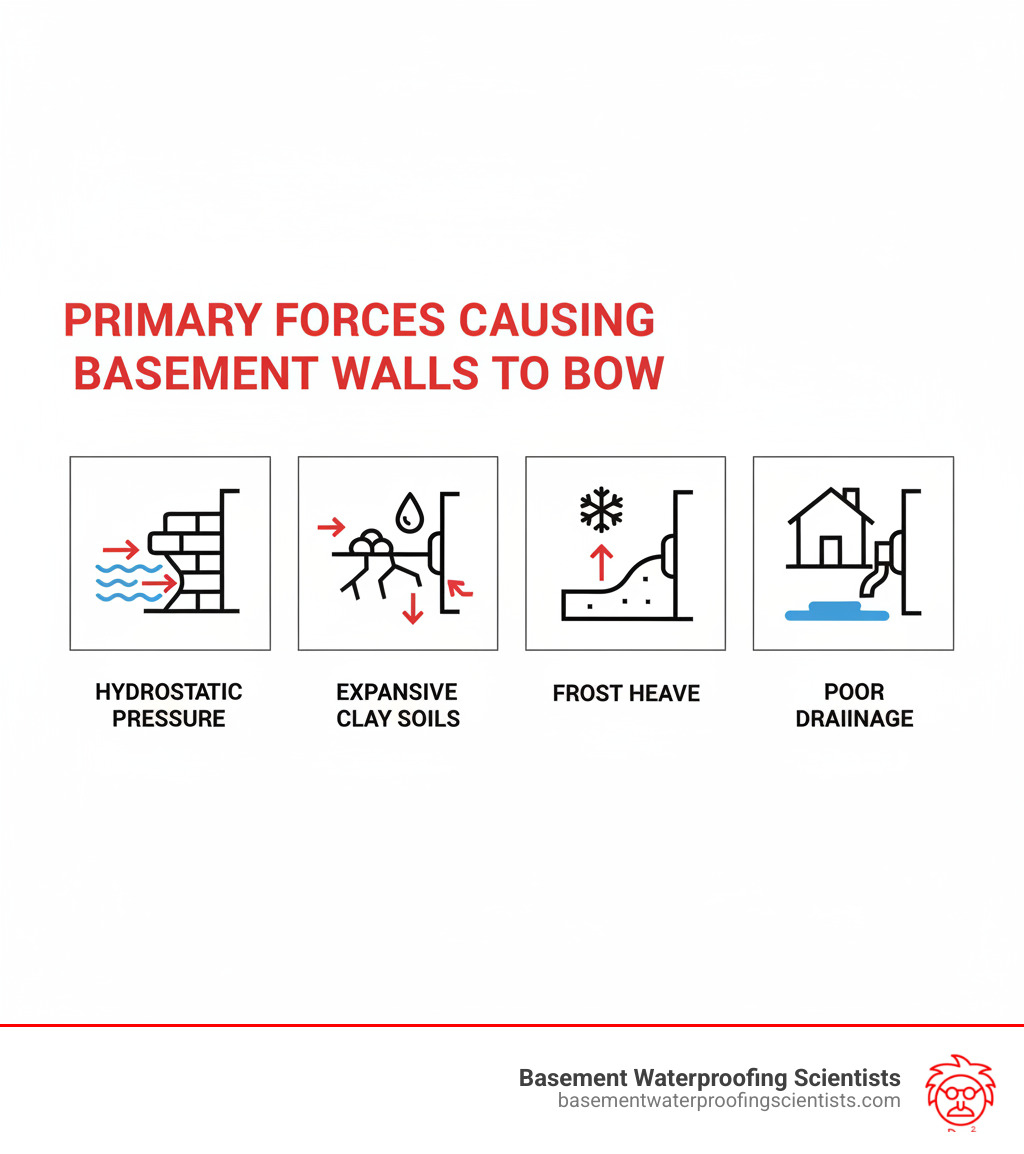
What Causes Basement Walls to Bow?
Basement walls are designed to support your home from above, not to withstand intense pressure from the side. After three decades of bowing basement wall repair, I’ve seen a few key culprits team up to cause serious damage.
- Hydrostatic Pressure: The biggest troublemaker is water. When soil around your foundation becomes saturated from rain or poor drainage, it gets heavy and exerts immense force, known as hydrostatic pressure, against your walls. According to the Association of State Floodplain Managers, soil saturation intensifies pressure on foundations.
- Expansive Clay Soil: In Pennsylvania, New Jersey, and Delaware, clay soil is a common problem. It acts like a sponge, swelling dramatically when wet and shrinking when dry. This constant expansion and contraction cycle pushes and pulls on foundation walls. The American Society of Civil Engineers notes that these expansive soils damage one in four homes nationwide.
- Frost Heave: During cold winters, moisture in the soil freezes and expands, pushing sideways against your foundation and gradually forcing it inward.
- Poor Drainage: These natural forces become much worse with poor drainage. Common issues include clogged gutters, downspouts discharging too close to the house, and improper grading that slopes toward the foundation. Proper Waterproofing Foundations is key to managing this water.
- Other Lateral Pressure: Sometimes, pressure comes from large tree roots, heavy equipment compacting soil nearby, or even subpar original construction.
The key to effective bowing basement wall repair is addressing the root cause of the pressure. Our team uses specialized equipment to pinpoint the source of the problem, ensuring a lasting solution.
Identifying a Bowing Wall: Signs and Severity
Spotting the warning signs of a bowing wall early can save you thousands on repairs. What starts as a hairline crack can quickly become a structural emergency. Here’s what to look for:
- Horizontal or Stair-Step Cracks: These are the most common red flags. Horizontal cracks appear in poured concrete walls, while stair-step cracks follow the mortar joints in block walls. Both indicate intense outside pressure.
- Inward Bulging or Leaning: The wall may visibly curve or lean inward, especially in the middle section.
- Water Intrusion: Moisture seeping through cracks is a clear sign of hydrostatic pressure at work. This can lead to both structural damage and mold. Learn more about a Crack in Basement Wall Leaking Water.
- Diagonal Cracks or Shearing: In severe cases, you may see cracks from corners or the bottom of the wall sliding inward, separating from the floor.
Measuring the Bow and Assessing Severity
The amount of bowing determines the repair method and cost.
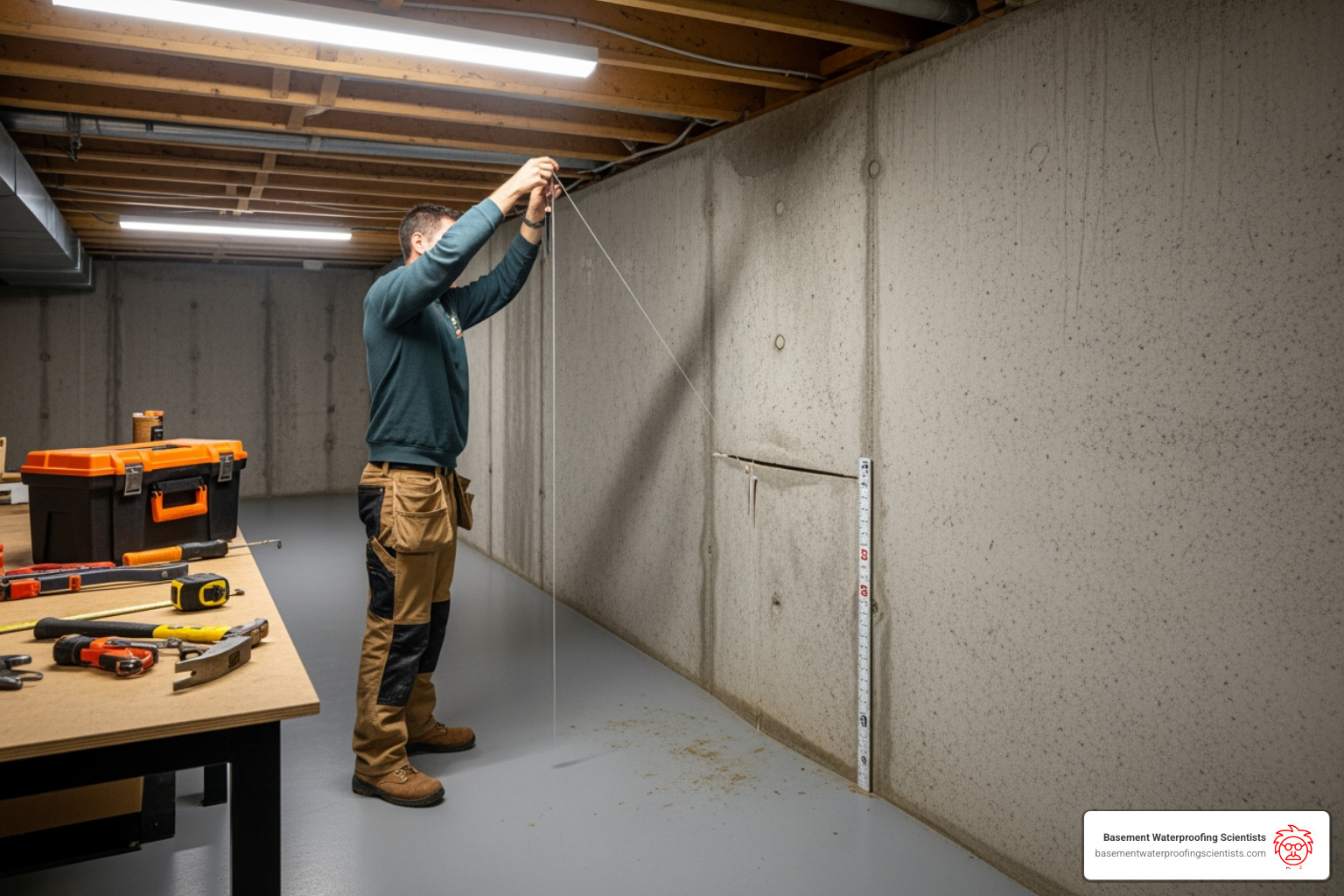
We measure the bow by hanging a plumb line from the top of the wall and measuring the largest gap.
- Minor bowing (under 2 inches): Can often be stabilized with less invasive methods like carbon fiber straps. The wall is secured in its current position.
- Moderate bowing (2-4 inches): Requires more robust solutions like wall anchors or steel I-beams, which can stop movement and sometimes help straighten the wall over time.
- Severe bowing (over 4 inches): When a wall has moved significantly or is shearing away from the floor, stabilization isn’t enough. Full excavation and wall replacement may be necessary.
When to Call a Professional
The moment you spot horizontal cracks, bulging, or water, it’s time to call a professional. As we explain in our guide to Understanding Structural Basement Repair, early intervention is key. A minor bow might cost a few thousand dollars to fix, but waiting until it’s severe can lead to repairs costing $20,000 or more. Our team at Basement Waterproofing Scientists can assess your situation, identify the cause, and recommend the most cost-effective solution for your bowing basement wall repair.
An In-Depth Look at Bowing Basement Wall Repair Methods
The right bowing basement wall repair method depends on the severity of the bow, your foundation type, yard accessibility, and budget. A wall bowing half an inch requires a different approach than one that has moved four inches. Below are the most effective methods we use.
| Repair Method | Average Cost (per unit) | Best Use Case | Intrusiveness | Ability to Straighten vs. Stabilize |
|---|---|---|---|---|
| Carbon Fiber Straps | $350-$1,000 per strap | Minor bowing (under 2 inches), stabilization | Low (interior only) | Stabilizes (doesn’t straighten) |
| Wall Anchors | $400-$600 per anchor | Moderate bowing (over 2 inches), straightening | High (interior & exterior excavation) | Can straighten over time |
| Steel I-Beams | $200-$500 per beam | Moderate to severe bowing, stabilization | Medium (interior only, visible) | Stabilizes (doesn’t straighten) |
| Helical Tiebacks | $1,000-$2,500 per tieback | Severe bowing, when anchors aren’t feasible | Medium (exterior excavation, less intrusive than anchors) | Can straighten over time |
For a broader look at what’s available, check out our guide on 7 Top-Rated Foundation Repair Techniques for Homeowners in 2024.
Carbon Fiber Straps: A Modern Bowing Basement Wall Repair Solution
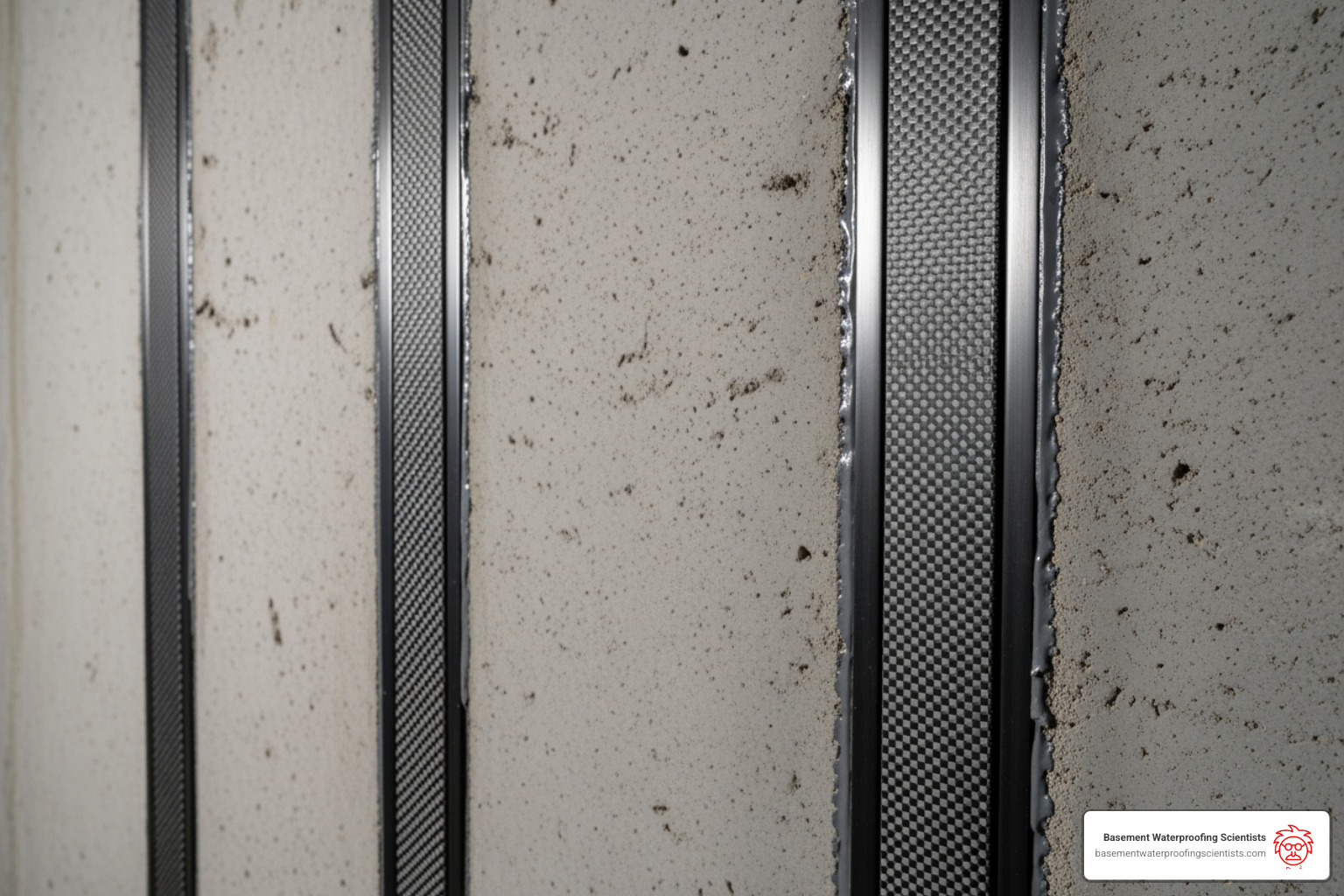
For walls bowing less than two inches, carbon fiber straps are a strong, fast, and minimally invasive solution. These straps are ten times stronger than steel but are thin enough to be painted over, making them nearly invisible in a finished basement.
We bond the straps to your wall with industrial-grade epoxy, a process that typically takes only a day or two with no exterior excavation. The straps lie flat against the wall, preserving your basement’s space and appearance.
It’s important to know that carbon fiber stabilizes the wall, preventing further bowing, but it does not straighten it. This makes it ideal for catching problems early, providing permanent stabilization without major disruption or cost. Our team specializes in Carbon Fiber Foundation Repair and can determine if it’s the right fit for your home.
Wall Anchors: A Proven Bowing Basement Wall Repair Technique
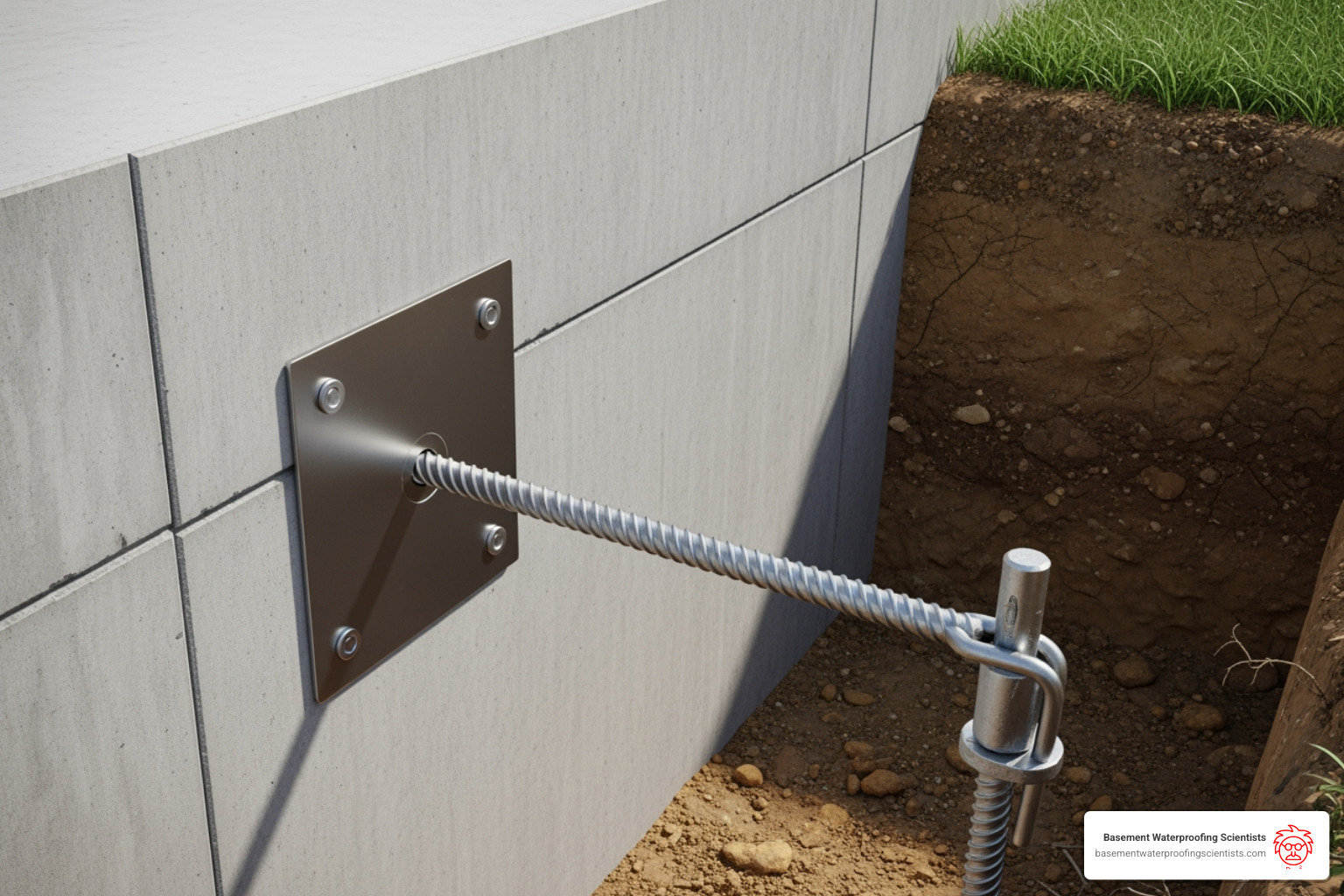
For walls with more than two inches of bowing, wall anchors provide the pulling power needed for bowing basement wall repair. This system uses an exterior earth anchor buried in stable soil in your yard, connected by a steel rod to a plate on the interior of your basement wall.
This setup counteracts the external pressure and, unlike other methods, can be gradually tightened over time to straighten the wall back toward its original position. The results can be remarkable, reversing significant bowing.
The main drawback is the need for exterior excavation, which can be disruptive to landscaping, decks, or patios. If your yard has limited space or obstructions, this method may not be feasible. However, when conditions permit, wall anchors offer a permanent solution that both stabilizes and corrects. Our Structural Repair Contractors can assess if wall anchors are right for you.
Steel I-Beams and Bracing Systems
When exterior excavation isn’t possible due to landscaping, pools, or limited yard space, steel I-beams offer a powerful interior solution. We install heavy-duty steel beams vertically against the bowing wall, anchoring them to the basement floor and the overhead floor joists.
This creates a rigid frame that provides immediate, robust stabilization, stopping any further inward movement. The entire installation is done inside your basement, causing zero disruption to your yard.
The trade-off is that I-beams are visible and protrude a few inches into the basement. If you plan to finish the space, they must be framed into the new walls. Like carbon fiber, I-beams primarily stabilize the wall in its current position and do not straighten it. They are an effective solution for moderate to severe bowing when yard access is a concern.
Helical Tiebacks and Full Excavation
For severe bowing (four inches or more) or complex site challenges, more advanced solutions are required.
Helical Tiebacks are essentially high-strength steel screws installed through the basement wall and deep into stable soil. They are ideal for situations where traditional wall anchors can’t be used due to obstacles like decks, pools, or property lines. While more expensive, they provide immense straightening force with less exterior disruption than wall anchors.
Full Wall Excavation and Replacement is the last resort, reserved for walls that are beyond repair. This occurs with severe bowing (over 4-5 inches) or when the wall is shearing away from the foundation. The process involves excavating the foundation, demolishing the old wall, and building a new one. While disruptive and expensive, it allows for the installation of modern waterproofing and provides a completely new, stable wall. To learn more, see our guide on the Cost to Excavate and Waterproof Foundation.
We only recommend this when stabilization methods are insufficient. Our goal is to provide an honest assessment of what your home needs to be safe.
Understanding the Costs and Factors Involved
The cost of bowing basement wall repair can range from a few thousand dollars for minor stabilization to over $100,000 for a full wall replacement. The final price depends on several key factors.
Primary Cost Factors:
- Severity of the Bow: This is the biggest driver. A minor bow (under 2 inches) suitable for carbon fiber straps ($1,750-$5,000) is far less expensive to fix than a severe bow (over 4 inches) requiring full excavation ($20,000+).
- Repair Method Chosen: Costs vary significantly between carbon fiber, wall anchors, steel beams, and helical tiebacks.
- Wall Size: Longer and taller walls require more materials and labor, increasing the total cost.
- Accessibility: Difficult-to-access areas, finished basements, or extensive landscaping can increase labor hours and project costs.
Additional Costs to Consider:
- Addressing the Root Cause: A bowing wall is a symptom of a water problem. Your estimate may include necessary waterproofing work, such as drainage systems or sump pumps, to provide a permanent solution.
- Permits and Inspections: Structural repairs often require municipal permits, which add a few hundred dollars to the cost but ensure the work meets safety codes.
Catching a bowing wall early is the best way to control costs. A minor issue that costs $3,000 to stabilize today could become a $30,000 problem if ignored. For more details on pricing, see our guide on Leaking Basement Wall Repair Cost. We provide detailed estimates that address both the symptom and the cause, ensuring a long-term fix.
Frequently Asked Questions about Bowing Walls
Finding a bowing wall can be overwhelming. Here are answers to the most common questions we hear from homeowners in the Philadelphia, Reading, and South Jersey areas.
How quickly should a bowing basement wall be addressed?
Immediately. A bowing wall will only get worse over time. The external pressure from soil and water is constant, and every rainstorm or freeze-thaw cycle can worsen the problem. Addressing the issue at the first sign—like a hairline horizontal crack—leads to less invasive, less expensive repairs. Waiting can turn a simple stabilization job into a major reconstruction project.
Is it advisable to buy a house with existing bowing basement walls?
It can be, but only with extreme caution. A bowing wall isn’t an automatic deal-breaker, but you must take these steps:
- Get a professional inspection from a foundation specialist, not just a general home inspector.
- Obtain detailed repair estimates from a qualified contractor like Basement Waterproofing Scientists.
- Use the repair cost to negotiate the home’s price or ask the seller to complete the repairs before closing.
A home with minor, repairable bowing can be a good investment if the price reflects the needed work. Severe bowing, however, is a major red flag for high costs.
What are the long-term implications of ignoring a bowing wall?
Ignoring a bowing wall is a costly mistake with severe consequences:
- Progressive Structural Damage: The wall will continue to bow, crack, and lean, eventually risking a catastrophic collapse that compromises your entire home’s structure.
- Water Damage and Mold: Widening cracks allow water to enter, leading to flooding, property damage, and the growth of unhealthy mold. We offer services for mold testing and remediation.
- Decreased Property Value: An unrepaired bowing wall will drastically lower your home’s value and make it nearly impossible to sell.
- Skyrocketing Repair Costs: The longer you wait, the more severe the damage becomes, and the more expensive the repair will be.
Protect Your Home’s Foundation Today
A bowing basement wall is a serious warning that your foundation is under stress. Acting quickly can save you thousands of dollars and prevent catastrophic structural damage. Modern bowing basement wall repair methods—from carbon fiber straps to wall anchors—are highly effective, but only when the root cause is also addressed.
At Basement Waterproofing Scientists, we don’t just patch the problem; we solve it. With over 30 years of experience in Pennsylvania, New Jersey, and Delaware, we use specialized equipment to identify the source of water pressure and design a permanent solution. Our scientific approach ensures your foundation is stable for decades, and our work is backed by a lifetime guarantee.
Don’t wait for a small crack to become a major failure. Your family’s safety and your home’s value are too important. If you’ve noticed any signs of bowing, bulging, or cracking in your basement walls, we are here to help.
Schedule your expert inspection for mold testing and remediation today. Let’s work together to keep your basement dry, your foundation strong, and your home protected.