


Is Block Sealing the Right Fix for Your Leaky Basement?
Block sealing is the process of applying a waterproof barrier — penetrating, elastomeric, or epoxy-based — to concrete or cinder block walls to stop water intrusion and moisture damage.
Here’s a quick overview of what you need to know:
| Question | Quick Answer |
|---|---|
| What is block sealing? | Applying sealers to porous masonry blocks to prevent water and moisture entry |
| Does it work? | Yes — when the right method is matched to the right block type and water source |
| Best approach for foundations? | Penetrating sealers (applied inside) + elastomeric coat for severe cases |
| Is surface sealing alone enough? | Not always — split-face and parapet issues need structural fixes too |
| Typical cost? | DIY products vary; professional waterproofing averages $4,000–$8,000 |
If your basement walls are damp, streaked with white powder, or outright dripping after heavy rain, you’re not alone. Concrete and cinder blocks are far more porous than most people realize. Unlike a solid poured concrete wall — which can have a permeability rating as low as 0.4 perms — cinder blocks can measure above 10 perms, meaning water passes through them with very little resistance. Add in mortar joints (which are equally porous), hollow cores that can fill like a cup, and years of soil pressure pushing groundwater inward, and you have a recipe for a chronically wet basement.
The good news? Block sealing — done correctly — can turn a damp, musty basement into a dry, usable space. The key word is correctly. The wrong sealer, applied to an unprepared surface, on the wrong type of block, won’t hold. That’s why understanding the process matters before you buy a single can of product.
I’m Darin Garvey, and with over 30 years of combined experience at Basement Waterproofing Scientists, I’ve seen every variation of block sealing success and failure a Philadelphia-area basement can throw at you. In this guide, I’ll walk you through exactly what works — and what doesn’t.
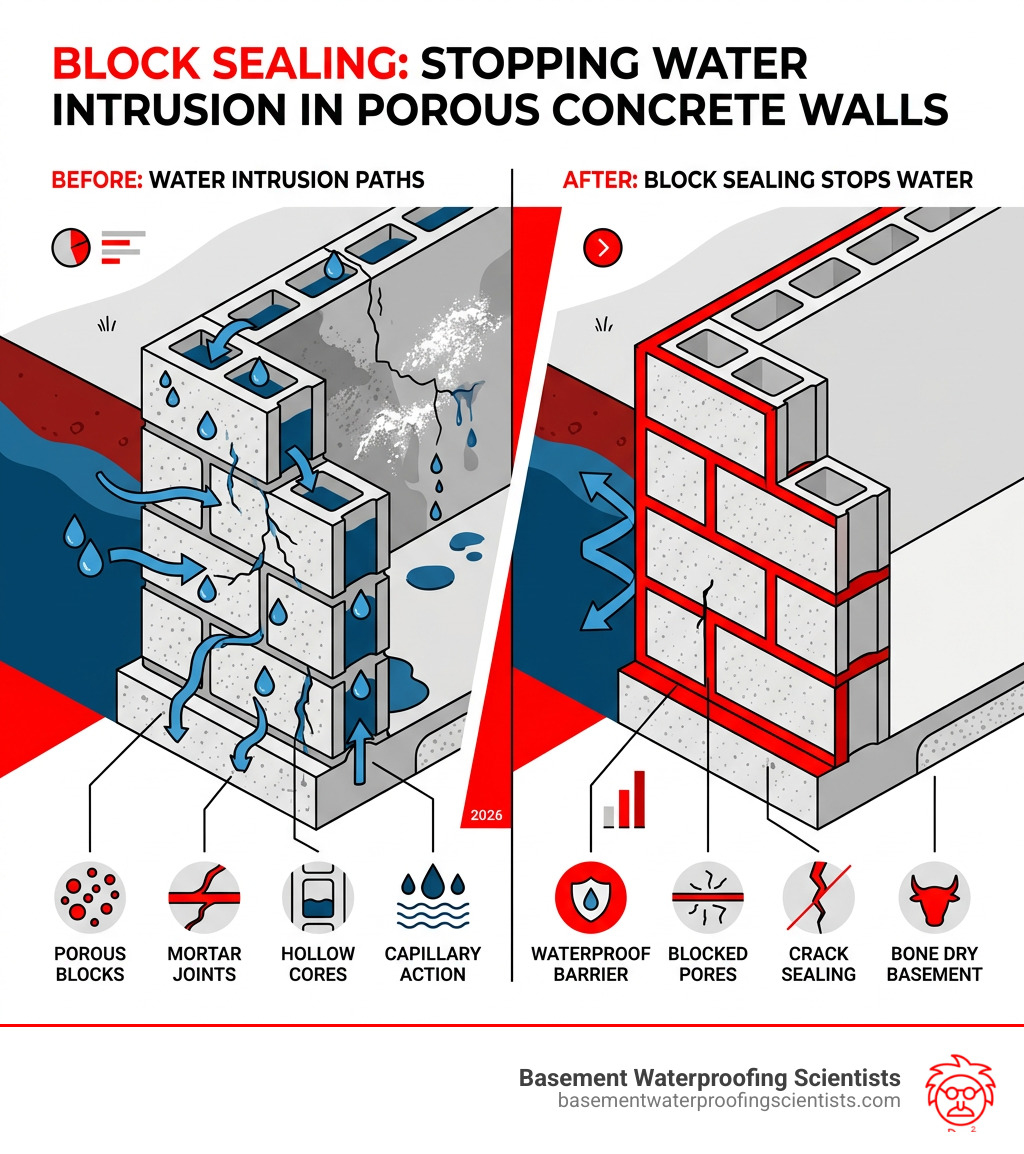
Quick block sealing definitions:
Understanding Your Walls: CMUs, Cinder Blocks, and Porosity
To effectively stop a leak, we first have to understand what we are sealing. In masonry, not all blocks are created equal. Most modern homes use Concrete Masonry Units (CMUs), but depending on when and where your home was built in the Pennsylvania or Delaware area, you might be dealing with several different materials.
The Permeability Gap
The ASHRAE Handbook provides a sobering look at how much water these materials actually let through. Permeability is measured in “perms.” The higher the number, the more like a sponge the material acts.
| Block Type | Estimated Weight (8x8x16) | Permeability (Perms) | Characteristics |
|---|---|---|---|
| Poured Concrete (8-10″) | N/A | 0.3 – 0.4 | Extremely dense, nearly impermeable. |
| Heavyweight CMU | 36 – 42 lbs | ~5.0 | Semi-permeable; standard modern block. |
| Cinder Block | 26 – 33 lbs | 10.0+ | Highly permeable; made with coal cinders or volcanic pumice. |
| Lightweight/Popcorn Block | 22 – 28 lbs | 10.0++ | Very large pores; looks like “popcorn” texture. |
Cinder Blocks vs. Concrete Blocks
While people use the terms interchangeably, a true cinder block foundation is a different beast than a standard concrete one. Historical cinder blocks were made using coal cinders (the residue from coal combustion). Interestingly, research from Coal Combustion and Gasification Products (CCGP) notes that some older cinder blocks can release mercury or heavy metal contaminants, making block sealing a health-conscious choice as well as a waterproofing one.
Modern “lightweight” blocks often use haydite (expanded shale) or volcanic pumice. These materials create massive air pockets within the block wall. While this makes them lighter and easier for masons to lay, it also means they have very thin “webs” (the walls between the hollow cores), often only 1-1/4 to 1-3/4 inches thick. When hydrostatic pressure builds up outside, that thin wall is the only thing keeping the water out.
Why Concrete Block Walls Leak: The Science of Intrusion
Water doesn’t just “fall” into your basement; it is pushed, pulled, and sucked in through three primary scientific forces.
1. Hydrostatic Pressure
This is the big one. When the clay-heavy soil common in Norristown or Upper Darby becomes saturated with rain, it acts like a giant, heavy sponge pressing against your foundation. This pressure forces liquid water through the microscopic pores of the block and the larger cracks in the mortar joints.
2. Capillary Action
Think of this as “wicking.” Even if there isn’t standing water outside, the block can pull moisture from the damp earth like a wick in an oil lamp. This is why you often see a “tide line” of dampness at the bottom of a block wall.
3. Hollow Core Saturation
Concrete blocks are hollow. If your exterior waterproofing has failed, water enters the top or middle of the wall and flows down into these hollow cores. The wall essentially becomes a series of vertical pipes filled with water. This water then sits there, slowly leaching through the inside face of the block long after the rain has stopped.
Signs of Trouble: Efflorescence and Leaching
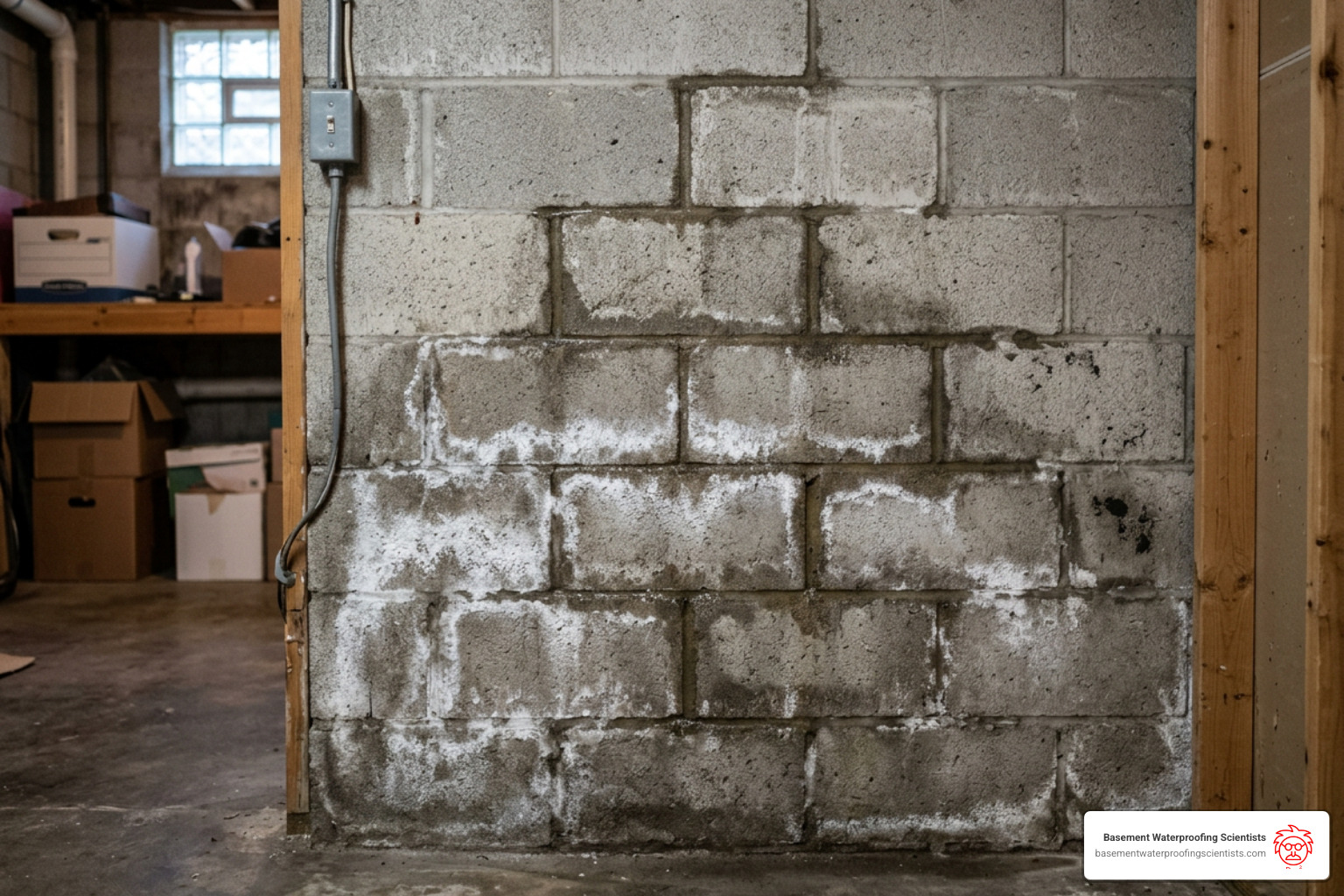
Have you noticed a white, fuzzy, or powdery substance on your basement walls? That’s efflorescence. As water moves through the block, it dissolves natural salts and minerals. When the water evaporates on the inside surface, it leaves the salt behind. Over time, this process of “leaching” actually enlarges the pores of the block, making it even more permeable. This is why we always say prevention is better than the cure; sealing a “virgin” block is much easier than sealing one that has been leaching for twenty years.
For those dealing with above-grade issues, such as on a garage or a split-face block building, the culprit is often wind-driven rain or porous parapet capstones. In these cases, sealing exterior brick foundation areas and blocks is vital to prevent the “raincoat without an umbrella” effect.
The Block Sealing Process: A Step-by-Step Guide
Effective block sealing is 90% preparation and 10% application. If you slap a sealer over dirt, old paint, or efflorescence, it will peel off within a year. Here is how we approach a professional-grade sealing project.
Preparing Your Walls for Block Sealing
Before the first drop of sealer touches the wall, the surface must be “bare and bored”—meaning bare masonry with open pores.
- Dry It Out: You cannot seal a soaking wet wall. If the wall is actively seeping, we may need to drill small “weep holes” in the bottom course of blocks to drain the hollow cores. Use fans and dehumidifiers to dry the surface for at least 4-7 days.
- Mechanical Cleaning: Use a wire brush or a drill with a wire wheel attachment to scrub away loose mortar and efflorescence. For stubborn areas or “bumps” on mortar joints, a 36-grit aluminum-oxide sanding disc is effective for grinding the surface smooth.
- Chemical Cleaning: If efflorescence is heavy, a specialized efflorescence remover (non-acidic is best for indoor use) should be used.
- Vacuuming: Dust is the enemy of adhesion. Use a HEPA vacuum to remove every speck of masonry dust from the pores.
- Crack Repair: Before sealing the whole wall, use a high-quality cinder block crack filler or an epoxy-based filler to bridge any visible gaps in the mortar joints.
Advanced Solutions for Challenging Block Sealing
Once the wall is prepped, we choose the sealer based on the block type.
- Penetrating Sealers: Products like RadonSeal Plus are our go-to for standard CMUs. These aren’t “paints.” They are reactive liquids that soak deep into the capillaries of the concrete and chemically react with the lime and alkali to form a glass-like crystalline structure. This happens inside the wall, making it impossible for hydrostatic pressure to blow it off.
- The Wet-on-Wet Method: For maximum protection, we apply a second coat while the first is still damp. This ensures the block is completely saturated with the reactive mineral.
- Elastomeric “Ion-Bond” Boosters: For highly porous “popcorn” blocks or cinder blocks that have been badly leached, a penetrating sealer alone might not be enough. We often follow up with a subsurface elastomeric sealer. This creates a flexible, rubber-like internal membrane that can handle minor vibrations and thermal expansion.
- The Epoxy Method: In dilapidated basements where the block is literally crumbling, we may use a “thinset” or epoxy-filler method. We prime the wall and then squeegee a specialized epoxy filler across the entire surface to physically plug every enlarged pore.
If you are looking for the best concrete block wall waterproofer, “penetrating” beats “topical” every single time for basement foundations.
Permanent Solutions for Split-Face and Foundation Blocks
Sometimes, block sealing is only half the battle. This is especially true for split-face blocks, which are common in newer construction and additions. Split-face blocks are incredibly porous—often described as “drinking water” during a storm.
Why Sealing Alone Fails Split-Face Block
Research shows that in many split-face buildings, only about 8-11% of water enters through the face of the block. The majority actually enters from the top—specifically through porous limestone parapet capstones. If you seal the sides of the block but don’t fix the top, you’ve essentially created a “bucket” that holds water inside your walls, leading to mold and structural rot.
The “Umbrella” Fix: Ventilated Flashing
The permanent solution involves more than just a liquid sealer. We recommend:
- Parapet Flashing: Installing a non-porous metal or rubber membrane under the capstones to stop water from entering the top of the wall.
- Vapor Release Systems: Products like Wick Right ventilated flashing allow the block to “breathe.” This allows moisture vapor to escape out the top of the wall while preventing liquid rain from getting in.
- Weep Vents: Adding vents to the bottom of the wall to ensure airflow through the hollow cores, preventing the “stale water” smell and mold growth.
For a deeper dive, check out our concrete block wall waterproofing complete guide.
Benefits, Costs, and Maintenance of Waterproofing
Investing in block sealing and professional waterproofing isn’t just about stopping a puddle; it’s about protecting your home’s value.
The Benefits
- Mold Prevention: By eliminating the dampness, you remove the primary food source for mold and mildew.
- Structural Integrity: Water leaching through blocks eventually weakens the concrete and corrodes the steel reinforcement (rebar) inside.
- Health: Sealing blocks can reduce the intrusion of Radon gas and prevent the release of heavy metals found in old cinder blocks.
- Aesthetics: No more ugly white salt stains or peeling paint.
Cost Analysis
We know that budget is always a concern. In our service areas—from Philadelphia to King of Prussia—the average cost for basement waterproofing is between $4K and $8K.
Comparatively:
- DIY Sealing: Can cost $500–$1,500 in materials but carries a high risk of failure if preparation is skipped.
- Exterior Waterproofing: This is the “gold standard” but involves excavating around your house, which can cost $15,000–$30,000 and disrupt your landscaping.
- Interior Sealing + Drainage: This middle-ground approach (our specialty) often provides the best ROI, combining high-grade sealers with an interior French drain to manage any water that might still try to bypass the seal.
For more strategies, see our guide on how to dont get soaked effective strategies for cement block waterproofing.
Long-Term Maintenance for Block Sealing
While a high-quality penetrating sealer like RadonSeal can last for decades because it becomes part of the concrete, no solution is “set it and forget it” forever.
- Annual Inspections: Check for new cracks in the mortar joints, especially after a hard freeze-thaw cycle.
- Gutter Maintenance: 90% of basement water issues start at the roof. Keep your gutters clean and your downspouts extended at least 6-10 feet away from the foundation.
- Humidity Control: Keep a dehumidifier running in the summer to prevent condensation on the newly sealed (and therefore cooler) walls.
For more maintenance tips, refer to our cinder block foundation sealer guide.
Frequently Asked Questions about Block Sealing
Is sealing the surface of split-face block a permanent fix?
Usually, no. Surface sealers on split-face block typically last 3-5 years before UV rays and weather break them down. For a permanent fix, you must address the flashing at the top of the wall (parapets) and ensure the wall has a way to breathe (ventilation).
How much does professional block sealing typically cost?
While the average basement waterproofing project ranges from $4,000 to $8,000, the “sealing” portion specifically depends on the square footage and the amount of preparation required. Grinding off old paint or removing heavy efflorescence can add to the labor cost.
Can I seal my cinder block foundation from the inside?
Yes! In fact, for many homeowners in urban areas like Philadelphia or Reading where exterior excavation isn’t possible (due to shared alleys or sidewalks), interior block sealing with penetrating sealers is the most effective solution available.
Conclusion
A wet basement doesn’t have to be your home’s “dirty little secret.” Whether you’re dealing with a standard CMU foundation or a highly porous cinder block wall, the right block sealing strategy can reclaim that space for storage, a home gym, or a playroom.
At Basement Waterproofing Scientists, we don’t believe in “one size fits all” solutions. We have 30 years of experience serving Pennsylvania, New Jersey, and Delaware, and we use specialized leak detection equipment to find the source of your problem, not just the symptom. This allows us to fix your leaks for less, often saving homeowners thousands compared to “big box” waterproofing companies. All of our structural work is backed by a lifetime guarantee, giving you the peace of mind you deserve.
Ready to dry out your basement for good? Schedule your professional exterior foundation waterproofing today or contact us for a comprehensive inspection in Philadelphia, Norristown, Pottstown, or any of our surrounding service areas. We’re here to help you get the science of waterproofing on your side!