

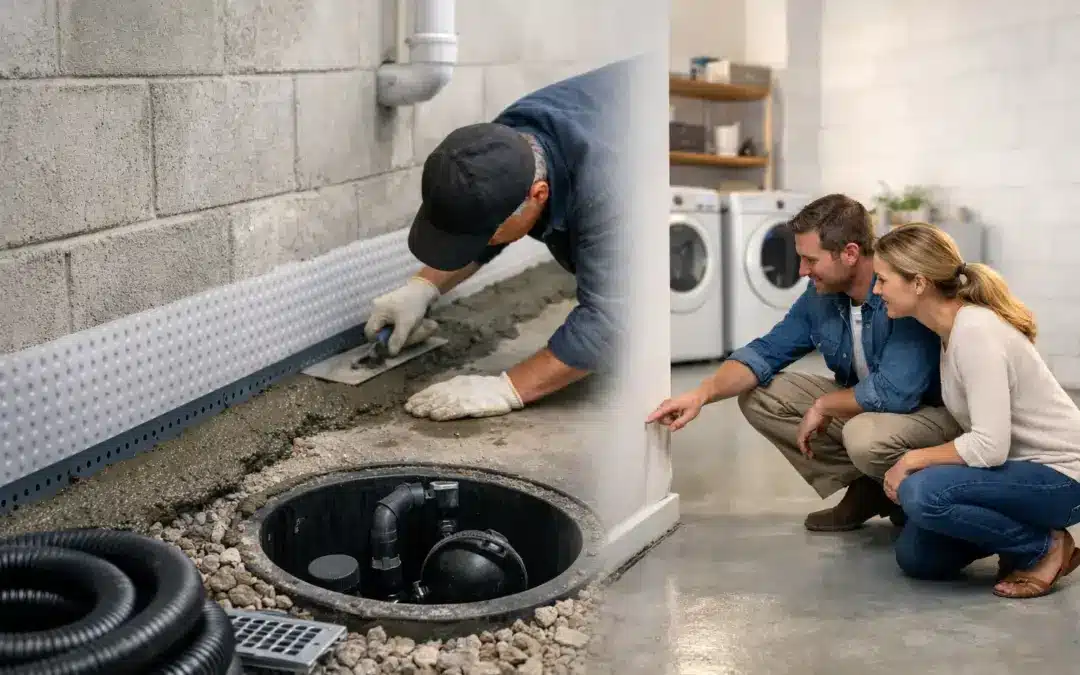
A wet basement rarely needs the biggest package a contractor can sell. It needs the correct diagnosis. This basement waterproofing system review helps homeowners understand what a system should do, where common recommendations fall short, and how to judge whether a proposed repair addresses the actual source of water.
For homes across Greater Philadelphia, Southeast Pennsylvania, and Southern New Jersey, water problems often come from a mix of aging foundations, heavy rain, high water tables, clogged exterior drainage, and cracks that have slowly widened over time. The right solution may be an interior drainage system. It may be a targeted crack repair, exterior grading correction, a sump pump upgrade, or a combination of repairs. A careful inspection should determine that before work is priced.
What a Basement Waterproofing System Should Accomplish
A proper waterproofing system does more than hide dampness or redirect water after it has already damaged the space. Its job is to control water at the point where it enters or collects, relieve pressure around the foundation when necessary, and direct water safely away from the house.
That sounds straightforward, but the system design depends on the problem. Water appearing at the base of a wall after long storms may indicate hydrostatic pressure beneath the slab. A single wet spot on a wall can point to a foundation crack, failed window well, overflowing gutter, or poor grading outside. Musty odors without obvious puddles may be caused by chronic humidity, condensation, or concealed seepage.
A system should also be sized for real conditions, not just average weather. If a basement takes on water during the heaviest storms, the drainage path, sump basin, pump capacity, discharge line, and backup plan all need to work when demand is highest.
Basement Waterproofing System Review: The Main Options
Interior drainage systems
An interior drainage system is often recommended when groundwater is pushing up through the floor-wall joint or seeping through the lower portion of a foundation wall. The installer creates a drainage channel along the perimeter, typically beneath the basement floor edge, to collect incoming water and direct it to a sump basin.
This is a practical solution for many homes because it manages water after it reaches the foundation rather than requiring excavation around the exterior. It can be especially useful for older Philadelphia-area homes where exterior access is limited by driveways, neighboring properties, patios, or landscaping.
The trade-off is that an interior system does not repair every exterior defect. If roof runoff is dumping next to the foundation or a specific wall crack is leaking, drainage alone may control the symptom without eliminating the cause. A good recommendation explains why interior drainage is needed and whether exterior water management still requires attention.
Sump pumps and battery backups
A sump pump is the mechanical heart of many interior waterproofing systems. Once water reaches the basin, the pump moves it through a discharge line to a safe location away from the foundation. The pump itself matters, but so do the basin size, check valve, discharge routing, and electrical reliability.
Homeowners should ask where the water will discharge and whether the line can freeze, clog, or return water toward the house. A pump that sends water only a few feet from the foundation can create a cycle of repeated intrusion.
A battery backup is worth serious consideration for homes with frequent storms, a history of power outages, finished basements, or valuable items stored below grade. Heavy rain and power loss often happen together. The backup is not a substitute for a correctly designed primary system, but it can prevent a manageable problem from becoming an emergency.
Foundation crack repair
A crack repair may be the most economical permanent fix when water is entering through one identifiable point. Depending on the crack and wall material, professional repair can involve polyurethane injection, epoxy injection, exterior sealing, or a different structural repair method.
Not every crack is structural, but no active crack should be dismissed without inspection. Horizontal cracks, bowing walls, stair-step cracking in block walls, and cracks that grow over time may indicate pressure or foundation movement. Those conditions require a foundation repair evaluation, not simply a cosmetic sealant.
Surface caulk and hardware-store coatings can sometimes reduce minor moisture temporarily, but they rarely hold up against ongoing water pressure. If water has a route behind the coating, it will often find it.
Exterior waterproofing and drainage corrections
Exterior waterproofing can be the right approach when a foundation wall has significant deterioration, an outside crack is accessible, or water is reaching the home because of poor grading and failed drainage. This work may involve excavation, wall cleaning and sealing, protective drainage materials, footing drain repair, downspout extensions, or regrading soil so it slopes away from the house.
Exterior work can directly address water before it reaches the foundation wall, but it is not automatically the best answer. Excavation is more disruptive and may cost more, particularly where decks, landscaping, hardscaping, or tight property lines are involved. The value comes from using it where conditions justify it, not adding it by default.
How to Evaluate a Waterproofing Proposal
The most useful basement waterproofing system review is not a list of brand names. It is an evaluation of the contractor’s reasoning. Before agreeing to work, look for a clear explanation of where water is coming from, how the proposed system intercepts it, and why less extensive options would or would not solve the problem.
A trustworthy proposal should identify the affected areas, describe the installation method, and state what happens to collected water. It should also explain what is included in restoration. For example, ask whether concrete is replaced after an interior drain is installed, whether wall materials need to be removed, and who handles cleanup.
Pay close attention to the warranty. A lifetime guarantee can be meaningful, but homeowners should understand what it covers. Does it cover water intrusion in the repaired area? Is the sump pump covered separately? Does the warranty transfer to a future owner? Are there exclusions for clogged gutters, plumbing leaks, or changing site conditions? Direct answers are a positive sign.
Price matters, but an unusually low quote can omit critical components, while a high quote can bundle work that is not necessary. Compare scope, diagnosis, materials, drainage discharge, pump specifications, and warranty terms before comparing final numbers.
Warning Signs of a One-Size-Fits-All System
Be cautious when a contractor recommends full-perimeter drainage without thoroughly inspecting the basement and exterior conditions. Full systems are appropriate in many cases, but they should be supported by evidence: recurring seepage along multiple walls, water at the floor joint, groundwater pressure, or a broad pattern of moisture.
Other warning signs include vague explanations, no discussion of gutters or grading, pressure to sign immediately, and promises that paint or a dehumidifier alone will permanently stop active water intrusion. Dehumidification is helpful for humidity control, but it does not stop groundwater. Waterproof paint can improve appearance, but it is not a replacement for drainage or crack repair when water pressure is present.
A contractor should also distinguish between water intrusion and plumbing leaks. A leaking pipe, failed appliance line, or HVAC condensate issue needs a different repair than a foundation problem. Accurate leak detection prevents homeowners from paying for the wrong system.
Questions Worth Asking Before You Hire
Ask what evidence supports the proposed repair and whether the contractor inspected both the basement and the exterior drainage conditions. Ask how water will leave the property, what happens during a power outage, and whether the work addresses a single entry point or a widespread groundwater issue.
You should also ask about permits where applicable, cleanup, disruption to finished areas, expected installation time, and warranty details in writing. If mold is present or the basement has been damp for a long time, ask whether moisture testing or remediation should be completed before rebuilding walls, flooring, or storage areas.
The Best System Is the One Your Basement Actually Needs
There is no universal best basement waterproofing system. An interior drain and sump pump can be excellent for persistent groundwater. A precision crack repair can be the smarter, lower-cost answer for a localized leak. Exterior drainage improvements may prevent the problem altogether when roof runoff and grading are the real culprits.
Basement Waterproofing Scientists approaches these decisions with leak detection and problem-specific recommendations, so homeowners can avoid paying for work their home does not need. If you are seeing water, staining, musty odors, peeling finishes, or new foundation cracks, arrange a professional inspection before the next major storm turns a small clue into a larger repair.