

Why Basement Mold Remediation Demands Immediate Action
Basement mold remediation is the process of identifying, containing, removing, and preventing mold growth in below-grade spaces where moisture accumulates. Here’s what you need to know right away:
Key Steps in Basement Mold Remediation:
- Identify the moisture source – Fix leaks, cracks, or humidity issues first
- Assess the scope – Areas under 10 sq ft can often be DIY; larger needs professionals
- Protect yourself – Wear N-95 respirator, gloves, and goggles
- Remove the mold – Clean hard surfaces or discard porous materials
- Dry completely – Within 24-48 hours to prevent regrowth
- Prevent recurrence – Address waterproofing and humidity control
If you’re experiencing a musty odor, seeing dark spots on walls, or noticing health symptoms like allergies and respiratory issues, you likely have a mold problem that needs immediate attention.
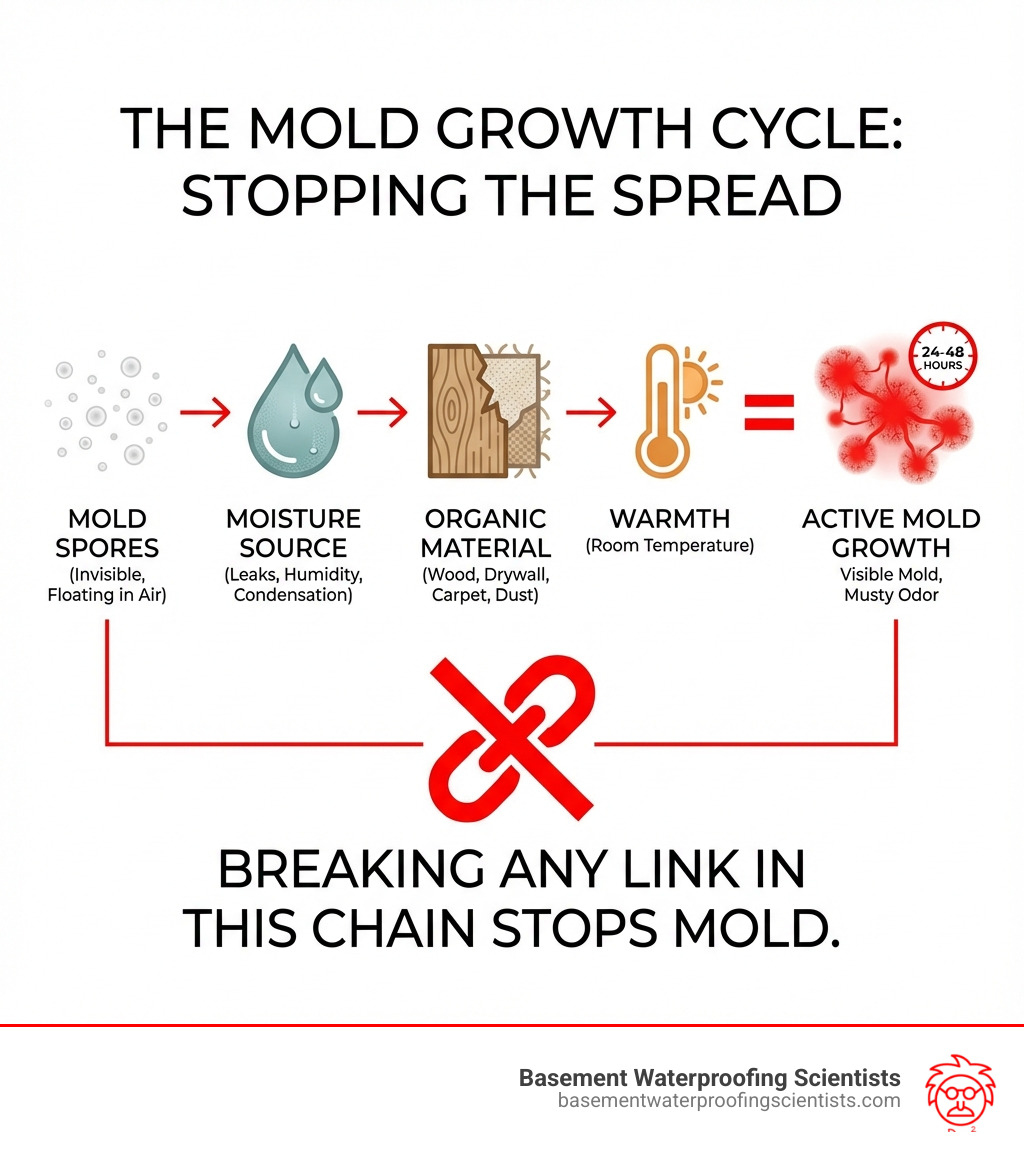
Basements are breeding grounds for mold. They’re typically dark, damp, and filled with organic materials like wood, drywall, and cardboard. When moisture from foundation cracks, leaky pipes, or high humidity meets these surfaces, mold can begin growing within 24 to 48 hours.
The health implications are serious. Mold exposure causes allergic reactions, triggers asthma attacks, and creates respiratory distress. According to the American Lung Association, 88 million people in the United States suffer from some form of respiratory ailment, and basement mold contributes to this problem.
But here’s the critical point: mold is just a symptom. The real enemy is moisture. You can scrub away visible mold with bleach or vinegar, but unless you fix the underlying water problem, it will return. That’s why effective basement mold remediation requires both removal and prevention.
The cost varies widely. Small DIY projects might run $50-$300 for supplies. Professional remediation typically costs between $1,125 and $3,345, with basement-specific jobs averaging $500-$3,000 depending on the severity. If your remediation requires waterproofing to prevent recurrence, expect to invest between $4,000 and $8,000 for a comprehensive solution.
I’m Darin Garvey, and I’ve spent over 30 years helping Philadelphia-area homeowners solve persistent moisture and basement mold remediation challenges through targeted waterproofing solutions. In this guide, I’ll walk you through everything you need to know about identifying, removing, and preventing basement mold for good.
Understanding the Enemy: What Causes Basement Mold and Why It’s a Problem
Basements are uniquely susceptible to mold growth, often acting as the perfect storm of conditions for these unwelcome guests. Mold spores are always present in the air, but they only become a problem when they find the right environment to settle and multiply.
Our basements, common in areas like Philadelphia, Reading, and Norristown, often provide everything mold needs:
- Moisture: This is the absolute primary cause. Common sources include leaky pipes, foundation cracks, issues with exterior drainage, and even appliance malfunctions. Water can seep in through porous concrete walls or rise from the ground through capillary action.
- High Humidity: Even without active leaks, basements often have higher humidity levels than the rest of the house. Humidity levels consistently above 60% create the perfect breeding ground for mold.
- Poor Ventilation: Basements are frequently enclosed spaces with limited airflow. Stagnant air traps moisture, allowing mold to thrive.
- Organic Food Sources: Mold isn’t picky. It feeds on almost any organic material, including wood, drywall, insulation, cardboard boxes, fabrics, and even dust.
- Darkness: While not strictly necessary, mold prefers dark environments, which basements provide in abundance.
Mold can begin growing in as little as one to two days after water exposure. This rapid growth means that even a small, unaddressed leak can quickly turn into a significant problem. To understand more about this process, read our guide on How Wet Basements Create Mold: The Perfect Environment for Growth.
Health Risks Associated with Basement Mold Exposure
Beyond the unpleasant musty smell and unsightly stains, mold poses significant health risks. When mold grows, it releases microscopic spores into the air, which can then be inhaled by occupants.
According to the EPA, mold can cause a variety of health effects, from mild irritation to serious conditions. According to the EPA, mold can cause a variety of health effects. These include:
- Allergic Reactions: Sneezing, runny nose, red eyes, skin rashes, and irritation of the throat and lungs are common.
- Respiratory Issues: Mold can trigger asthma attacks in sensitive individuals and worsen symptoms for those with existing respiratory conditions. Chronic coughing, wheezing, and shortness of breath are also possible.
- Irritation: Even non-allergic individuals can experience eye, skin, nose, and throat irritation from mold exposure.
- Mycotoxins: Some molds produce toxic substances called mycotoxins, which can lead to more serious conditions. While rare, prolonged exposure to these can have severe health consequences.
The impact of basement mold isn’t limited to the basement itself. Mold spores can circulate throughout your entire home via the “Stack Effect,” where warm air rises, drawing air and spores upwards from lower levels. This means a moldy basement can affect the air quality in your living room or bedrooms, impacting everyone’s health.
Signs and Indicators of a Mold Infestation
Catching mold early is crucial for effective basement mold remediation. Look out for these tell-tale signs:
- Musty Odor: This is often the first and most reliable indicator. A damp, earthy, or stale smell is a strong sign of hidden mold growth, even if you can’t see it.
- Visible Spots or Stains: Mold can appear in various colors—black, green, white, or even pink and orange—and often has a fuzzy, slimy, or powdery texture. Look on walls, ceilings, floors, and stored items.
- Warped or Damaged Materials: Peeling paint, bubbling wallpaper, warped drywall, or stained wood are all signs of moisture intrusion that could be fostering mold growth.
- Condensation: Persistent condensation on cold surfaces like pipes, windows, or concrete walls can indicate high humidity, a precursor to mold.
- Health Symptoms: If family members experience unexplained allergies, respiratory problems, or skin irritation when spending time in the basement or even throughout the home, mold could be the culprit.
It’s important to differentiate mold from other basement issues, particularly efflorescence. Efflorescence is a powdery white or crystalline substance that appears on concrete or masonry surfaces. It’s caused by salt deposits left behind when water evaporates from the material. Unlike mold, efflorescence is harmless, has no odor, and doesn’t have a fuzzy texture. If it crumbles into a powder when touched, it’s likely efflorescence, not mold. However, its presence still indicates moisture intrusion, which could eventually lead to mold.
The Battle Plan: DIY vs. Professional Basement Mold Remediation
Once you’ve identified a potential mold problem, the next step is to decide whether it’s a DIY job or if you need to call in the professionals. This decision largely hinges on the size and nature of the infestation.
The EPA provides clear guidelines: if the moldy area is less than about 10 square feet (roughly a 3-foot by 3-foot patch), you can often handle the cleanup yourself. The Environmental Protection Agency (EPA) provides guidelines on cleanup.
When to Hire a Professional for Basement Mold Remediation
For anything beyond a small patch, it’s always best to bring in experts. We recommend professional basement mold remediation if:
- Large Infestations: If the mold covers an area larger than 10 square feet, the risk of disturbing spores and spreading the problem, or exposing yourself to harmful levels, increases significantly.
- HVAC System Contamination: If you suspect mold has infiltrated your heating, ventilation, and air conditioning (HVAC) system, do not run it. This can rapidly spread mold spores throughout your entire home. Professional cleaning is essential here.
- Suspected Toxic Mold: While all mold should be treated with caution, if you suspect black mold (Stachybotrys chartarum), which can produce mycotoxins, professional handling is critical.
- Health Sensitivities: If anyone in your household has asthma, severe allergies, is immunocompromised, or is elderly or very young, it’s safer to have professionals handle any mold removal.
- Water Damage from Sewage: If the mold resulted from sewage or other contaminated water, professionals with specialized equipment and disinfection protocols are necessary.
- Hidden Mold: If you smell mold but can’t see it, it might be hidden behind walls, under flooring, or in other inaccessible areas. Professionals have tools like moisture meters and borescopes to locate and address these issues.
A professional remediation process typically follows these steps:
- Inspection and Assessment: Identifying the type of mold, the extent of the infestation, and, most importantly, the source of moisture.
- Containment: Setting up barriers (e.g., plastic sheeting) to prevent spores from spreading to unaffected areas of your home. Negative air pressure may be used to ensure air flows into the contaminated area, not out.
- Air Filtration: Using HEPA air scrubbers to clean the air of airborne mold spores.
- Mold Removal: Physically removing mold from surfaces, which may involve scrubbing, sanding, or even removing and replacing contaminated building materials.
- Cleaning and Disinfection: Cleaning all affected surfaces and personal belongings.
- Drying: Ensuring all areas are thoroughly dried to prevent recurrence.
- Post-Remediation Testing: Optional, but highly recommended, to confirm that mold levels have returned to normal. To learn more about this, see our guide on Mold Testing After Remediation.
Costs Associated with Professional Basement Mold Remediation
The cost of professional basement mold remediation can vary significantly. Nationally, the average cost for mold remediation ranges from $1,125 to $3,345. For basements specifically, costs often fall between $500 and $3,000. However, factors that affect the price include:
- Size of the Infestation: Larger areas naturally cost more to remediate.
- Accessibility: Mold hidden behind finished walls or in tight crawl spaces will increase labor costs.
- Type of Material: Removing mold from porous materials like drywall or insulation often means replacement, which is more expensive than cleaning non-porous surfaces.
- Moisture Source Repair: The cost to fix the underlying water problem (e.g., foundation repair, pipe leaks) is often separate from the mold removal itself but is essential for long-term success.
- Containment Needs: Extensive containment for large or toxic mold jobs adds to the expense.
- Post-Remediation Testing: While recommended, this is an additional cost.
If your basement mold remediation requires extensive waterproofing to prevent recurrence, the total investment could range from $4,000 to $8,000, which includes fixing the root cause of the moisture. For more information on testing, check out Mold Testing & Remediation: The Ultimate Guide.
DIY Methods for Small-Scale Basement Mold Remediation
For small patches of mold (less than 10 square feet) and if you don’t have underlying health issues, you might consider a DIY approach. However, safety must always come first.
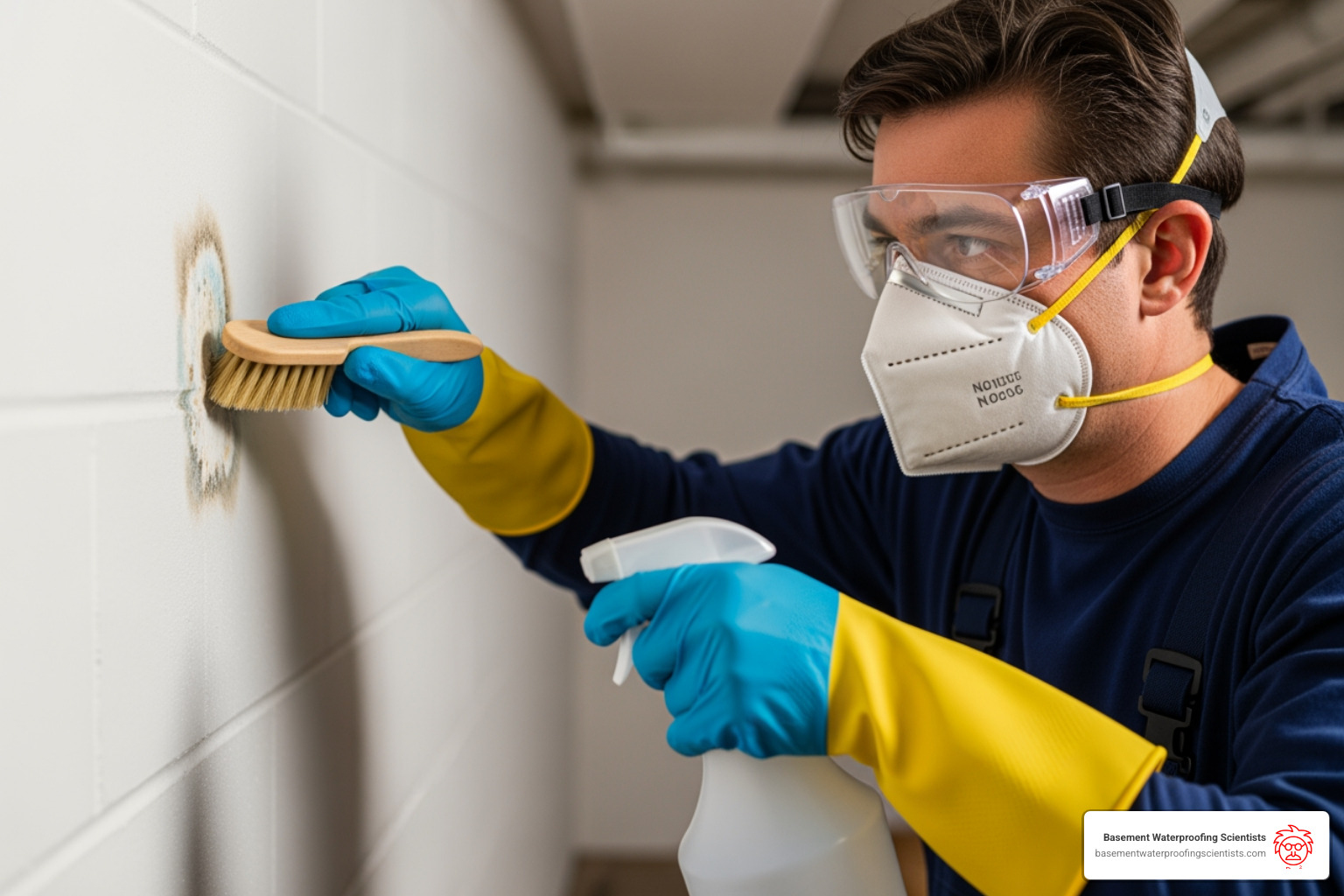
Safety First: Personal Protective Equipment (PPE) Before you even think about scrubbing, gear up! Disturbing mold can release millions of spores into the air.
- N-95 Respirator: This mask filters out mold spores and fine particles. OSHA recommendations for PPE emphasize respiratory protection.
- Gloves: Wear long, disposable rubber gloves to protect your skin from mold and cleaning solutions.
- Goggles: Protect your eyes from spores and splashes.
- Disposable Clothing: Wear old clothes that can be washed immediately or disposed of.
Effective DIY Cleaning Solutions:
- White Vinegar Solution: Mix equal parts white vinegar and water in a spray bottle. Spray directly onto the moldy surface, let it sit for about an hour, then scrub with a brush and wipe clean. Vinegar is effective on many surfaces and won’t bleach.
- Baking Soda Paste: For tougher stains, mix baking soda with a small amount of water to create a paste. Apply it to the mold, let it dry, then scrub with a brush and rinse. Baking soda also helps absorb odors.
- Hydrogen Peroxide: A 3% hydrogen peroxide solution can be sprayed directly onto mold, left for 10-15 minutes, then scrubbed and wiped. It’s a good alternative to bleach and safe for many surfaces.
Techniques by Material:
- Concrete Cleaning: Concrete is non-porous (mostly), making it easier to clean. Use a stiff brush with any of the above solutions. For stubborn areas, a diluted bleach solution (1 cup bleach to 1 gallon water) can be used, but always ensure good ventilation and never mix bleach with other cleaners like ammonia or vinegar.
- Wood Surface Cleaning: For wood, vinegar is often preferred over bleach, as bleach can damage or discolor wood and isn’t effective at penetrating porous surfaces. Scrub with a stiff brush and ensure the wood dries completely afterward.
- Drywall Removal: If mold has penetrated drywall, it’s usually best to cut out and remove the affected section rather than trying to clean it. Drywall is highly porous, and mold can grow deep within it. Always contain the area and double-bag removed materials.
After cleaning, ensure the area dries thoroughly. Use fans and dehumidifiers to speed up the process. For persistent musty odors even after cleaning, our guide on Remove Mold Smell From Basement offers additional tips.
The Professional Approach to Basement Mold Remediation
When facing significant mold growth, especially in a basement, professional remediation is the most reliable path to a mold-free home. We, Basement Waterproofing Scientists, understand the unique challenges basements in areas like Pottstown, Bensalem Township, and Upper Darby Township present.
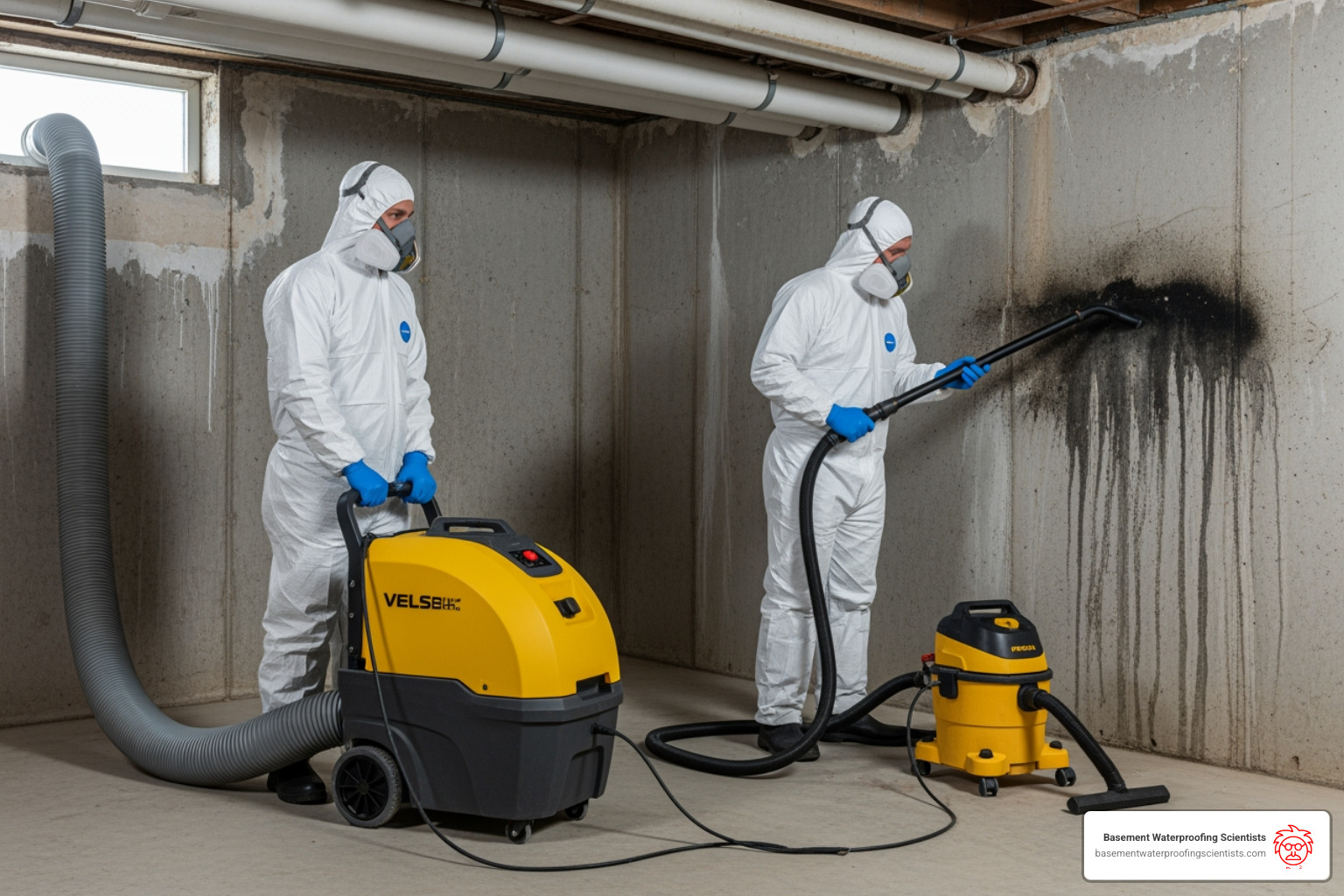
Specialized Equipment and Techniques: Professionals come equipped with tools that go far beyond household cleaners:
- HEPA Vacuums: High-Efficiency Particulate Air (HEPA) vacuums are crucial for capturing microscopic mold spores that regular vacuums would simply recirculate. They are used for final cleanup and to remove settled dust outside the remediation area.
- Air Scrubbers: These powerful machines continuously filter the air, removing airborne mold spores and other contaminants, significantly improving air quality during and after remediation.
- Moisture Meters and Thermal Imagers: These tools allow us to pinpoint hidden moisture sources behind walls or under floors, ensuring the root cause of the mold is addressed.
- Containment Barriers and Negative Air Pressure: For larger jobs, we create sealed containment zones using plastic sheeting. Negative air pressure machines draw contaminated air out of the containment, preventing spores from spreading to other parts of your home.
Structural Repairs and Post-Remediation Verification: A crucial part of our approach is not just removing the mold, but also fixing the underlying structural issues that allowed it to grow. This might involve:
- Foundation Crack Repair: Sealing cracks in your basement walls to prevent water intrusion.
- Waterproofing Solutions: Implementing interior or exterior waterproofing systems to keep your basement dry.
- Sump Pump Installation: Ensuring efficient water removal during heavy rains or floods.
After the physical mold removal and structural repairs are complete, we conduct thorough checks. This often includes post-remediation verification, which can involve visual inspections, moisture readings, and sometimes air quality testing (performed by independent third parties) to confirm that mold levels have returned to normal and the environment is safe. For information on who performs these tests, consult our article on Companies That Test for Mold.
Fortifying Your Defenses: Long-Term Mold Prevention Strategies
The most effective basement mold remediation isn’t just about cleaning up existing mold; it’s about preventing it from ever returning. Since moisture is the root cause, moisture control is the key to mold control.
Humidity and Moisture Management
- Dehumidifiers: A high-quality dehumidifier is your basement’s best friend. It actively removes moisture from the air, keeping humidity levels low. For optimal results, use a hygrometer to monitor humidity and aim for levels between 30% and 50%. Running a dehumidifier consistently, especially in humid months, is crucial for homes in areas like King of Prussia, Horsham, and Springfield Township.
- Waterproofing Solutions: This is where our expertise shines. We offer comprehensive Basement Waterproofing solutions custom to your home’s specific needs. This might include:
- Foundation Repair: Addressing cracks or weaknesses in your foundation to prevent water entry. See our services for Basement Wall Crack Repair.
- Sump Pumps: Installing or upgrading a Basement Sump Pump Installation to automatically remove water that collects in your basement.
- Drainage Systems: Implementing Basement Drainage Systems like interior drain tiles to channel water away from your foundation.
- Exterior Waterproofing: Sealing the exterior of your foundation to create a barrier against moisture.
Ventilation Improvement
Good airflow helps dry out damp areas and reduces humidity.
- Exhaust Fans: Ensure basement bathrooms and laundry areas have properly vented exhaust fans.
- Air Circulation: Use fans to promote air movement in less-used basement areas.
- Open Windows/Doors: When weather permits, open basement windows (if safe and dry outside) to allow for cross-ventilation.
Insulation
Proper insulation can prevent condensation, a common source of basement moisture.
- Pipe Insulation: Insulate cold water pipes to prevent them from “sweating” in humid air, which can lead to drips and standing water.
- Wall Insulation: Properly insulated basement walls, often combined with Basement Vapor Barriers, can help regulate temperature and prevent condensation on interior surfaces.
Don’t wait for mold to appear before addressing moisture issues. Recognizing the signs your basement needs attention early can save you from costly basement mold remediation down the line. Check out our guide on 8 Signs Your Basement Needs Waterproofing to learn more.
Frequently Asked Questions about Basement Mold
Can homeowners insurance cover the cost of basement mold remediation?
This is a common and complex question. Generally, homeowners insurance coverage for mold remediation is highly policy-dependent. Most policies will cover mold damage if it results from a “covered peril” that was sudden and accidental. For example, if a sudden burst pipe floods your basement and leads to mold, the remediation might be covered.
However, policies typically exclude mold damage that results from:
- Gradual Leaks: Slow, undetected leaks over time are often considered a maintenance issue and not covered.
- Poor Maintenance: Neglecting to address known moisture problems or maintain your home properly.
- Flood Damage: Standard homeowners insurance policies usually exclude flood damage. You would need a separate flood insurance policy (e.g., through the National Flood Insurance Program) for this.
It’s crucial to review your specific policy documents or contact your insurance provider directly in areas like Quakertown, Royersford, or Conshohocken to understand your coverage limits and exclusions.
What’s the difference between mold and mildew?
While often used interchangeably, mildew is actually a specific type of mold. Both are fungi that thrive in damp, warm conditions, but they have some key differences:
- Appearance: Mildew typically appears as a flat, powdery or downy growth that is white, gray, or yellowish. Mold, on the other hand, can be fuzzy, slimy, or cottony and comes in a wider range of colors (black, green, brown, orange, pink, purple).
- Growth: Mildew tends to grow on the surface of materials, making it easier to clean. Mold often penetrates deeper into porous surfaces, making it more difficult to remove completely without specialized techniques.
- Smell: While both can have a musty odor, mold’s smell is generally stronger and more pungent.
- Damage: Mildew usually causes surface damage and can be unsightly. Mold can cause significant structural damage to materials it grows on, weakening them over time, in addition to posing greater health risks.
Both require moisture to grow, and both indicate an underlying moisture problem that needs to be addressed.
Can mold return after remediation?
Yes, mold absolutely can return after remediation if the underlying moisture problem that caused it in the first place is not fully resolved. This is why our approach to basement mold remediation focuses on both removal and prevention.
Here’s why mold might return:
- Unaddressed Moisture Source: If the leaky pipe, foundation crack, or high humidity isn’t permanently fixed, mold will find its way back. Mold spores are ubiquitous; they just need water to activate.
- Incomplete Removal: If some mold was missed, or if spores were allowed to spread during the remediation process, new growth can appear.
- Lack of Post-Remediation Verification: Skipping the step of confirming that mold levels are normal and moisture issues are resolved leaves room for recurrence.
- Ongoing Prevention Neglect: Even after professional remediation and waterproofing, maintaining proper humidity levels and ensuring good ventilation are ongoing tasks.
Our goal is to provide lasting results. That’s why we emphasize comprehensive solutions, from initial inspection to fixing leaks and waterproofing. For more on how we ensure lasting dryness, read How to Waterproof and Repair Your Home’s Basements for Lasting Results.
Conclusion: Achieving a Permanently Dry and Healthy Basement
In this guide, we’ve explored the critical aspects of basement mold remediation, from understanding its causes and health risks to outlining effective DIY and professional solutions. The overarching theme is clear: mold is a symptom, and moisture is the disease. You can clean mold until you’re blue in the face, but unless you eliminate the water source, it will keep coming back for more.
Effective remediation and diligent prevention go hand-in-hand. For homeowners in areas like Willow Grove, King of Prussia, and Hatboro, ensuring a dry basement is not just about aesthetics or property value; it’s about protecting your family’s health and the structural integrity of your home.
At Basement Waterproofing Scientists, we specialize in providing customized solutions to achieve permanently dry basements. With over 30 years of experience, we pride ourselves on our expert inspections and competitive pricing, all backed by a lifetime guarantee. We use specialized equipment to identify the exact source of leaks, allowing us to fix them efficiently and effectively.
Don’t let basement mold compromise your home or your health. If you suspect mold or are struggling with persistent moisture issues, we’re here to help. Contact us for a comprehensive mold and moisture inspection today, and let us help you achieve a healthy, dry basement for good.