

Why a Basement Bathroom Drain System Matters for Your Home
A basement bathroom drain system is the critical infrastructure that moves wastewater from your basement fixtures to your home’s main sewer line. Because basements are below grade, you can’t always rely on gravity alone. Your choice of system will depend on your home’s existing plumbing, your budget, and your willingness to break through concrete.
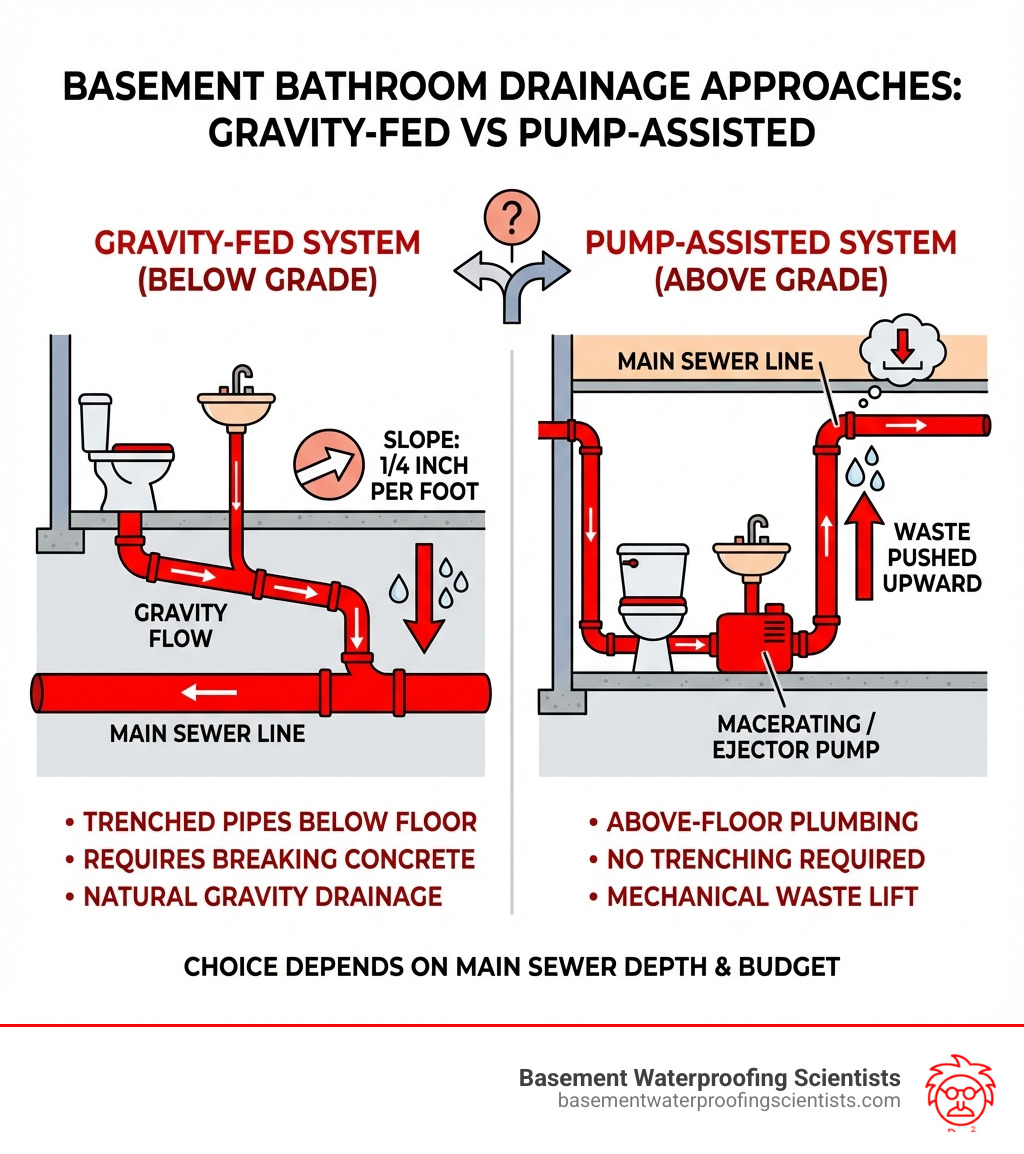
There are two primary approaches:
- Gravity-Fed Systems: These traditional systems use sloped pipes buried beneath the concrete floor to carry waste to the main sewer line. They are highly reliable but require significant excavation.
- Pump-Assisted Systems: These use a macerating or ejector pump to move waste upward to the main drain. They are less invasive to install but require electricity and more maintenance.
Adding a bathroom can significantly boost your home’s value, but the plumbing is complex. It involves navigating building codes, ensuring proper venting to prevent sewer gas leaks, and choosing the right pipe sizes and materials. A DIY approach without proper knowledge can lead to costly repairs and water damage.
Furthermore, any new plumbing must be installed in a way that doesn’t compromise your basement’s waterproofing. At Basement Waterproofing Scientists, we’ve spent over 30 years helping homeowners in the Philadelphia area ensure their basements are dry and functional, providing a solid foundation for projects like a new bathroom.
Understanding the Core Challenges of Basement Plumbing
Installing a basement bathroom drain system is more complex than plumbing on other floors, primarily because of gravity. Since the basement is below the main sewer line, wastewater won’t flow out on its own. Here are the key challenges:
- Below-Grade Elevation: The basement floor is lower than the municipal sewer line or septic tank, making standard gravity drainage difficult or impossible.
- Main Sewer Line Depth: The depth of your home’s main sewer line determines whether a gravity-fed system is even an option. If it’s too high, you’ll need a pump.
- Concrete Slab: Most basements have a concrete floor that must be broken and trenched to install traditional drain pipes, a labor-intensive and messy job.
- Basement Moisture: Adding plumbing can introduce new moisture problems if not installed and sealed correctly. A dry basement is the best foundation for any renovation, which is where our expertise in basement waterproofing becomes invaluable.
- Venting Challenges: All plumbing needs vents to allow air in, ensuring smooth drainage and preventing sewer gases from entering your home. A P-trap (the U-shaped pipe under a sink) holds water to block these gases, but it won’t work without proper venting. Routing these vent pipes in a basement with low ceilings and existing ductwork can be tricky.
- Structural and Code Constraints: Basements often have low ceilings, beams, and other obstructions that complicate pipe routing. Furthermore, all plumbing work must adhere to strict local building codes, which dictate everything from pipe size and slope to the minimum clearance around fixtures. For example, the International Residential Code (IRC) requires at least 21 inches of clear space in front of a toilet.
Choosing Your Basement Bathroom Drain System
When adding a bathroom to a basement, one of the most critical decisions is selecting the right basement bathroom drain system. This choice hinges on the elevation of your main sewer line, your budget, and long-term maintenance considerations.
Gravity-Fed System
This is the most traditional and reliable option if your home’s main sewer line is deep enough.
- How it Works: Pipes are laid in trenches cut into the basement floor, using gravity to carry waste to the main sewer line. This requires a precise slope of at least 1/4 inch per foot.
- Pros: Extremely reliable with no moving parts, quiet operation, and minimal maintenance.
- Cons: The installation is a major construction project involving breaking concrete, which is messy, labor-intensive, and expensive. It’s only possible if your main drain is below the level of your new bathroom fixtures.
Pump-Assisted Systems
When breaking up the floor isn’t feasible or desired, pump systems are the solution. They actively move wastewater upward to the main drain line.
-
Upflush Toilets (Macerating Systems): These units, like those from Saniflo, sit behind the toilet. They use a grinder to turn solid waste and paper into a slurry, which is then pumped through a small pipe to the sewer line. They can also handle wastewater from a sink or shower.
- Pros: Less invasive installation (no need to break concrete), flexible placement.
- Cons: Relies on electricity, makes noise when operating, and the pump/grinder will eventually need replacement (typically a 10-15 year lifespan).
-
Sewage Ejector Pumps: This is a more robust system for a full bathroom. The pump sits in a sealed basin (sump pit) installed below the floor. Waste from all fixtures flows into the basin, and when it reaches a certain level, the pump turns on and forces the sewage up to the main drain.
- Pros: Can handle a full bathroom’s waste, more powerful than a macerating toilet.
- Cons: Requires digging a pit for the basin, needs electricity, and has mechanical parts that can fail. Brands like Superior Pump are common choices.
-
Composting Toilets: A green alternative that doesn’t use water or connect to a drain system at all. It composts waste in a self-contained unit.
- Pros: Eco-friendly, no plumbing required.
- Cons: Only handles toilet waste (not sink or shower water), requires regular maintenance (emptying compost), and needs a vent pipe to the outside.
Your choice depends on your home’s layout, budget, and long-term maintenance preferences. While pump systems have a lower upfront installation cost, gravity-fed systems offer unparalleled, maintenance-free reliability once installed.
Step-by-Step: Installing a Gravity-Fed Drain System
A gravity-fed system is a reliable, long-term solution if your home’s main drain is low enough. It involves cutting into the concrete floor to lay new pipes. While it’s a major project, the result is a low-maintenance basement bathroom drain system.
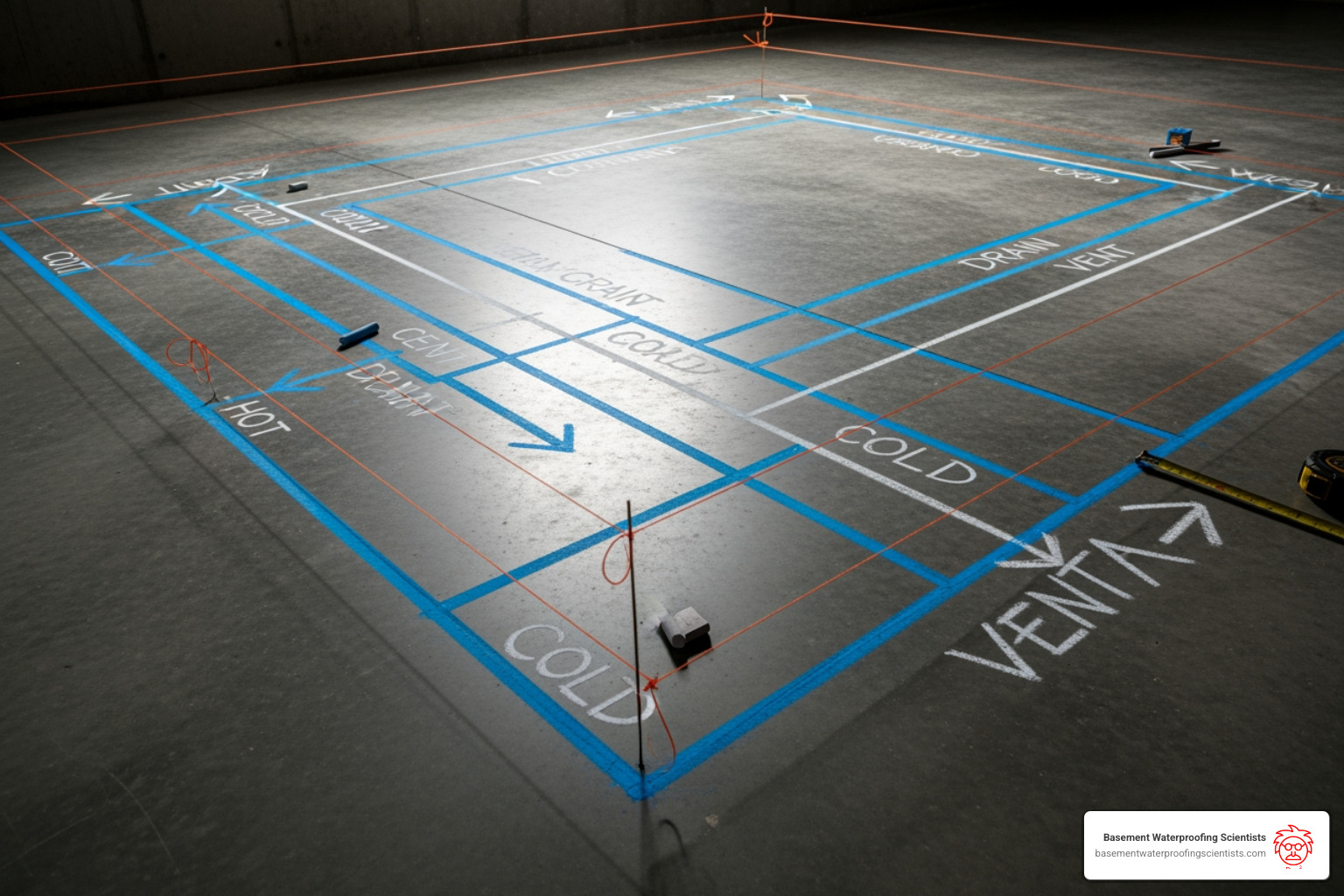
This image shows a basement floor marked with chalk lines for plumbing layout, indicating where trenches will be cut and pipes will be run.
Step 1: Plan and Prepare
Proper planning is crucial. Before any work begins:
- Check Local Codes & Get Permits: Contact your local building department. Codes for plumbing, especially in basements, are strict and require permits.
- Design the Layout: Draw a floor plan, marking the exact locations for the toilet, sink, and shower. Remember to account for required clearances, such as 21 inches of space in front of a toilet.
- Locate the Main Drain: Find your home’s main sewer line. This is typically a 3- or 4-inch vertical pipe. You’ll need to confirm its depth to ensure you can achieve the necessary 1/4-inch-per-foot slope for all new drain lines. If the main line is too high, a gravity system won’t work.
Step 2: Trenching and Connecting to the Main Line
This is the most labor-intensive part of the job.
- Break the Concrete: Using a rented electric jackhammer (which is more efficient and creates less dust than a sledgehammer), carefully break up the concrete along your marked lines.
- Dig the Trenches: Excavate the trenches to the required depth, ensuring you maintain a consistent downward slope toward the main drain.
- Tie Into the Main Drain: After shutting off the water and ensuring no one uses any fixtures, cut into the main drain line. Install a Y-fitting using rubber couplers to connect your new drain line. This fitting is essential for smooth, clog-free flow.
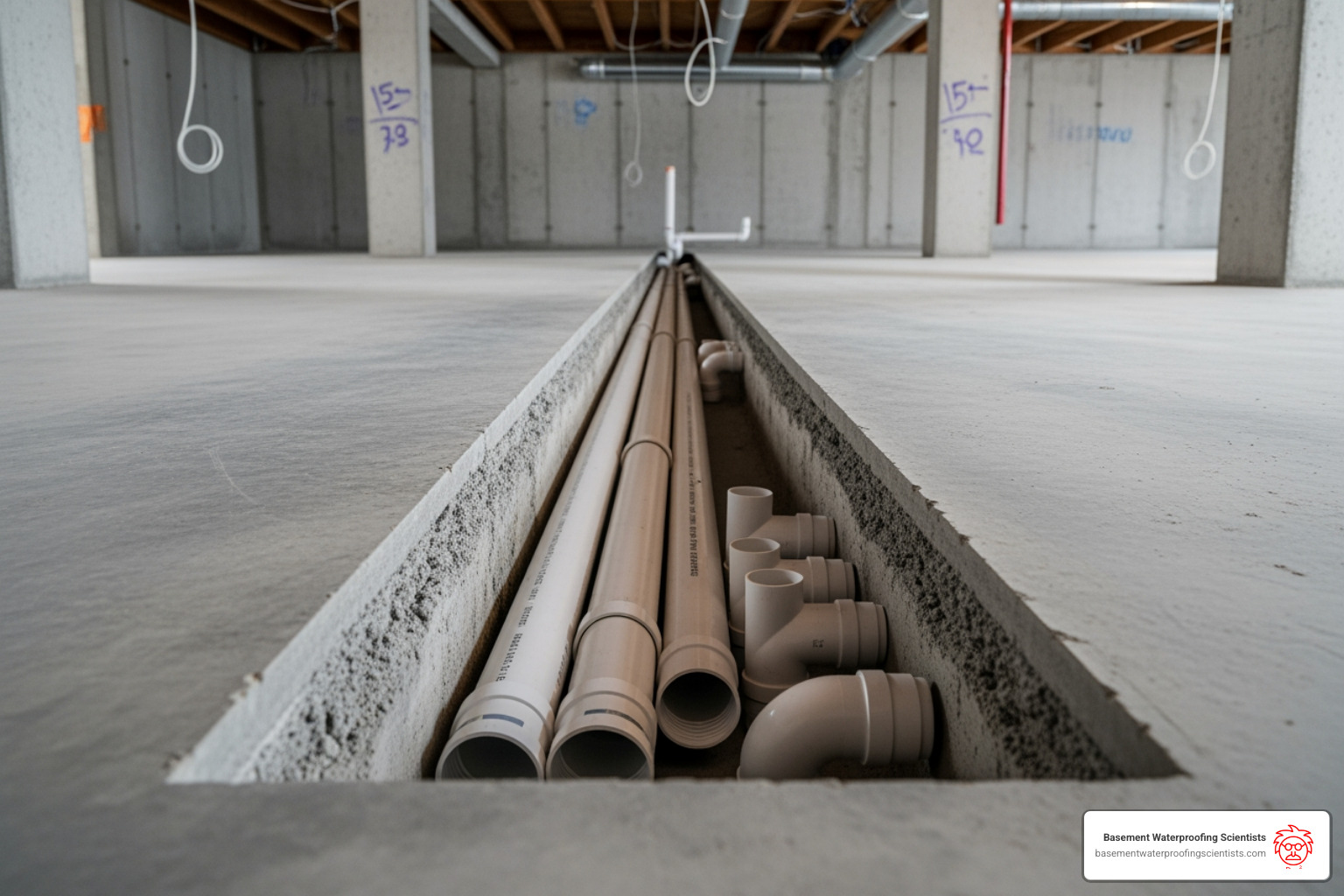
This image shows a trench cut into a concrete basement floor with pipes laid inside, demonstrating the initial stage of a gravity-fed drain system installation.
Step 3: Lay the Drain and Vent Pipes
With the trenches ready, you can assemble the new plumbing.
- Dry-Fit Everything First: Before gluing any PVC or ABS pipes, lay out all the drain lines, P-traps, and fittings. Use a level to double-check that every pipe maintains the 1/4-inch-per-foot slope.
- Install the Vent System: Every fixture must be vented to prevent sewer gas from entering your home. Vent pipes run upwards from the drain lines and connect to your home’s existing vent stack, often through the ceiling joists. Horizontal vent pipes must also be sloped correctly.
- Glue the Pipes: Once you’ve confirmed the fit and slope, use the appropriate PVC or ABS primer and cement to permanently join all pipes and fittings.
Step 4: Backfill and Finish
- Get an Inspection: Before you cover your work, a plumbing inspector must approve the rough-in. Do not skip this step.
- Backfill and Patch: Once the inspection passes, fill the trenches with soil or gravel, tamping it down firmly around the pipes. Pour new concrete to create a smooth, level floor.
Following these steps, as detailed in resources like How To Plumb a Basement Bathroom, will help ensure your basement bathroom drain system is built to last.
Maintaining Your System and Avoiding Common Mistakes
Proper installation and maintenance are key to a long-lasting basement bathroom drain system. Overlooking details can lead to significant problems.
A plumber inspecting a sewage ejector pump, emphasizing the importance of professional maintenance for pump-assisted drain systems.
The Critical Role of Venting in a basement bathroom drain system
Venting is the unsung hero of your plumbing. It equalizes air pressure in the drain lines, which:
- Prevents Sewer Gas: Allows P-traps to hold their water seal, blocking foul and hazardous gases from entering your home.
- Ensures Proper Drainage: Stops the vacuum effect that causes gurgling and slow drains.
- Meets Code: Venting requirements are strict and vary by location. Alternatives like Air Admittance Valves (AAVs) or wet venting may be allowed, but require precise installation.
Maintenance for Your basement bathroom drain system
- Gravity-Fed Systems: The main goal is clog prevention. Be mindful of what goes down the drains—avoid flushing anything other than toilet paper and human waste. Use drain strainers to catch hair.
- Pump-Assisted Systems: These require more attention.
- Be Careful What You Flush: Never flush wipes (even “flushable” ones), feminine products, or grease. These can jam the pump and lead to costly repairs.
- Regular Checks: Periodically inspect the pump and test its alarm (if it has one) to ensure it’s working correctly.
- Professional Service: Consider an annual check-up to maximize the pump’s 10-15 year lifespan.
When to Hire a Professional Plumber
While some DIY is possible, professional help is essential for:
- Code Compliance: A licensed plumber understands the complex local codes for pipe sizing, slope, and venting, preventing plumbing rough in errors that can lead to costly repairs.
- Complex Work: Tying into old cast iron pipes or installing pump systems requires specialized tools and expertise.
- Peace of Mind: A professional ensures all connections are leak-proof, protecting your basement from water damage and mold. The cost of a professional rough-in is a smart investment against future problems.
Frequently Asked Questions about Basement Bathroom Drains
Here are answers to some common questions about installing a basement bathroom drain system.
How much does it cost to install a basement bathroom drain system?
The total cost for a complete basement bathroom drain system and professional installation typically ranges from $5,000 to $15,000. This varies based on the system type (gravity-fed vs. pump-assisted), labor rates, and the complexity of your project.
- Gravity-fed systems have higher labor costs due to concrete work.
- Pump-assisted systems require purchasing the pump unit (from $900 to over $4,000) but have less invasive installation.
- Other costs include materials ($500-$2,000) and permits ($200-$800).
Can a toilet, sink, and shower share the same drain?
Yes, they can and usually do. In a properly designed Drain, Waste, and Vent (DWV) system, all fixtures connect to a branch drain that flows into the main sewer line. The key is that each fixture must be correctly vented to prevent slow drains and the release of sewer gas into your home.
What is the difference between a sewage ejector pump and a sump pump?
This is a critical distinction for basements:
- Sump Pump: Manages groundwater only. It sits in an open pit and pumps water that seeps into the basement to the outside, preventing flooding. It cannot handle waste.
- Sewage Ejector Pump: Handles wastewater and solid waste from bathroom fixtures. It sits in a sealed basin, grinds the waste, and pumps it up to the main sewer line. The sealed system prevents odors and is essential for any below-grade bathroom.
A Dry Foundation for Your New Bathroom
Installing a basement bathroom drain system is a major upgrade, but it must be done right. Whether you choose a gravity-fed or pump-assisted system, success depends on careful planning, adherence to building codes, and flawless execution.
Most importantly, a new bathroom requires a dry foundation. Any plumbing work introduces new risks for water intrusion, and a small leak can lead to significant mold and structural damage. Before you begin, ensure your basement is completely waterproofed.
At Basement Waterproofing Scientists, we specialize in creating permanently dry basements in Pennsylvania, New Jersey, and Delaware. Our expert inspections identify and address moisture problems at the source, providing a secure foundation for your renovation. With over 30 years of experience, we ensure your new bathroom is built on solid, dry ground.
Protect your investment. Learn more about our basement drainage systems and get a free estimate to ensure your project starts right.