

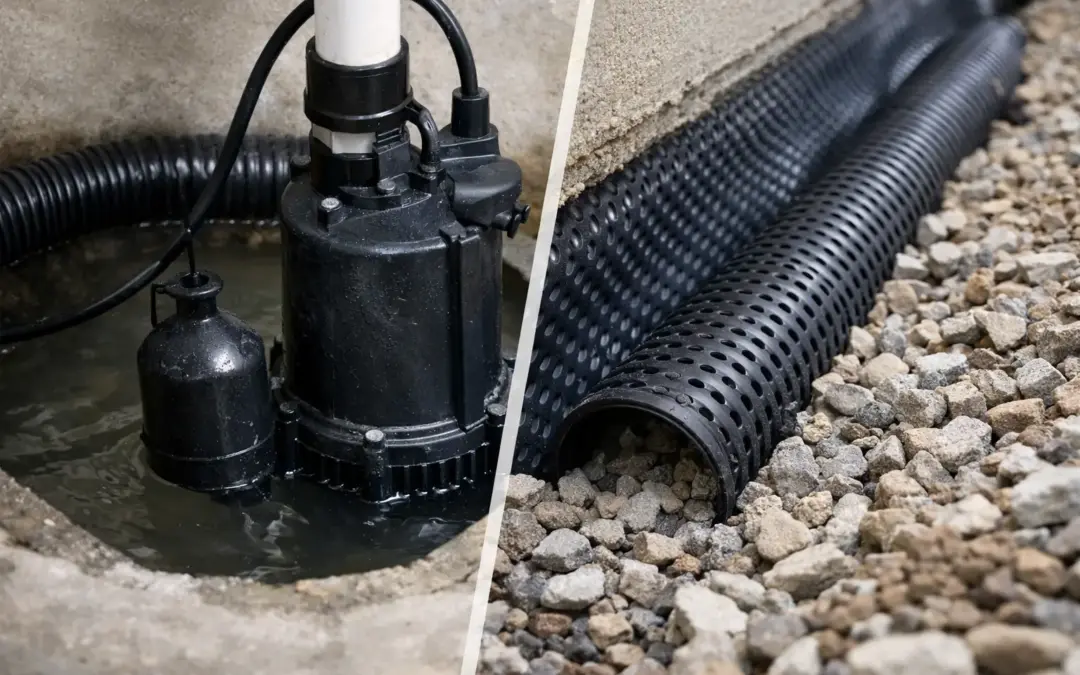
A basement can stay dry through dozens of ordinary rainstorms, then take on water during one hard Pennsylvania downpour. When that happens, homeowners often hear two possible solutions: a sump pump or drain tile. The sump pump vs drain tile question is not really about choosing a winner. These systems do different jobs, and many wet basements need both working together.
The right answer depends on where the water is entering, how groundwater behaves around your foundation, the condition of your exterior grading and gutters, and whether the problem is occasional or recurring. A proper diagnosis can prevent you from paying for a larger system than your home actually needs.
What a Sump Pump Does
A sump pump removes water after it has been collected in a sump pit, usually located at the lowest point of the basement or crawlspace. When water in the pit rises to a set level, the pump switches on and discharges it through a pipe to a safe location away from the foundation.
Think of the sump pump as the mechanical exit point for unwanted water. It does not seek out water under the floor or along the foundation walls. It only pumps water that reaches its pit.
This makes a sump pump especially useful when groundwater rises beneath the slab during prolonged rain, snowmelt, or seasonal changes in the water table. It is also useful as a backup measure in homes that already have a drainage system but need a reliable way to move collected water out.
A pump alone may solve a limited issue, such as a low spot where water naturally collects beneath the basement floor. But it may not be enough if water is entering through several points along the footing. Without a route that directs water to the pit, a sump pump can sit ready while water continues to pressure the foundation elsewhere.
Sump Pump Strengths and Limitations
A properly sized and installed sump pump can move a substantial amount of water quickly. It is generally less invasive than installing a full interior drainage channel, and it is often part of an economical solution when diagnostics show water is already collecting near one location.
Its limitation is clear: it relies on electricity and mechanical components. A power outage during a storm, a failed float switch, a clogged discharge line, or an undersized pump can leave the system unable to keep up. Battery backup pumps and properly routed discharge lines add protection, but routine testing still matters.
What Drain Tile Does
Drain tile is a drainage system, not a type of tile. Modern drain tile typically consists of perforated pipe installed around the foundation footing, either outside the home or beneath the basement floor on the interior. The pipe collects groundwater and redirects it before that water can build damaging pressure against the foundation.
Exterior drain tile is installed beside the outside foundation wall. It is often considered during new construction, major excavation, or foundation repair because access requires digging around the perimeter of the house. When installed correctly with drainage stone, filter fabric, and appropriate waterproofing measures, it can intercept water before it reaches the wall.
Interior drain tile is installed by removing a narrow strip of the basement slab around the perimeter. A perforated pipe and drainage stone are placed beside the footing, then the concrete floor is restored. Water that reaches this channel flows toward a sump pit, where a pump discharges it outside.
Why Interior Drain Tile Is Common in Existing Homes
For many established homes in Greater Philadelphia, Southeast Pennsylvania, and Southern New Jersey, exterior excavation is not always practical or necessary. Landscaping, patios, porches, neighboring structures, utilities, and access limitations can make exterior work more disruptive and expensive.
Interior drain tile addresses water that is already reaching the foundation footing or moving beneath the slab. It relieves hydrostatic pressure by giving groundwater a controlled path into the drainage system rather than allowing it to force its way through wall-floor joints, cracks, or porous masonry.
This approach does not make an exterior wall magically waterproof from the outside. Instead, it manages water once it reaches the footing area. That distinction matters when choosing a repair plan. A foundation wall crack with direct rainwater entry may need crack repair or exterior correction in addition to drainage.
Sump Pump vs Drain Tile: The Key Difference
The simplest distinction is this: drain tile collects and directs water, while a sump pump removes it from the home.
If drain tile is the road, the sump pit and pump are the exit ramp. Installing drain tile without a reliable discharge point can leave collected water with nowhere to go. Installing a sump pump without drainage can leave water trapped along other parts of the foundation.
That is why a combined interior drainage system is frequently the permanent solution for recurring seepage at the cove joint, water coming up through the basement floor, or dampness that worsens after heavy rain. The drain tile channels the water to the sump basin, and the pump sends it safely away from the house.
Still, not every basement leak needs a perimeter drainage system. A single vertical wall crack, overflowing gutters, negative grading, a leaking window well, or a failed exterior downspout connection can create water problems that drainage alone will not correct. Treating the symptom without finding the entry point can waste money and leave the underlying issue unresolved.
When You May Need a Sump Pump Only
A sump pump-only solution may be appropriate when an inspection confirms that water naturally collects in one low area beneath the slab and there is no sign of widespread perimeter seepage. It can also be a sensible upgrade for a home with functioning drain tile but an old, unreliable, or undersized pump.
Warning signs include a sump pit that fills quickly during storms, a pump that runs continuously, or a pump that cannot keep up even though drainage channels appear to be functioning. In these situations, the issue may be pump capacity, discharge-line routing, check-valve failure, or lack of backup power rather than the need for more drain tile.
A pump should never discharge immediately beside the foundation. Water needs to be carried far enough away that it cannot soak back into the soil around the basement walls. The final discharge location must also comply with local conditions and avoid creating icy walkways, erosion, or drainage problems for neighboring properties.
When Drain Tile and a Sump Pump Make Sense Together
A combined system is often worth considering when water appears in multiple locations, especially along the perimeter of the basement. Common signs include damp wall-floor joints, puddles after heavy rain, efflorescence on masonry, moldy odors, peeling finishes, and water that seems to emerge from beneath the slab.
Homes with older stone or block foundations can be especially vulnerable because mortar joints, porous materials, and changing soil conditions can create several water pathways. In these cases, chasing individual wet spots with surface sealers or patch repairs may provide only temporary relief.
An interior drain tile system with a primary sump pump, properly installed basin, check valve, and exterior discharge line provides a controlled water-management path. A battery backup pump is often a wise addition for homeowners who have experienced storm-related power outages or rely heavily on their basement for finished living space, storage, or mechanical equipment.
Do Not Skip the Diagnosis
The same puddle can have very different causes. Water that appears only after roof runoff may point to gutters, downspouts, or grading. Water that arrives after several days of rain may indicate groundwater pressure. Moisture that remains constant regardless of weather can involve plumbing, condensation, or an active foundation defect.
That is why Basement Waterproofing Scientists begins with targeted leak detection and a careful inspection instead of recommending the same package for every home. Identifying how and where water moves allows homeowners to focus their budget on the repair that addresses the actual problem, whether that is a sump pump replacement, targeted crack repair, interior drain tile, or a combination of solutions.
Questions Homeowners Should Ask Before Installing Either System
Before approving waterproofing work, ask where the water is entering, where the collected water will go, and what evidence supports the recommended system. You should also understand whether the proposed solution addresses groundwater, surface runoff, a wall crack, or more than one source.
Ask about pump capacity, the discharge route, backup protection, access for future service, and the warranty on both materials and installation. A permanent drainage solution should be designed for your home’s conditions, not simply sized according to the square footage of the basement.
If your basement has recurring water, the most useful next step is not guessing which product sounds stronger. It is finding the water’s path, then giving it a controlled way out before it can damage your home.