

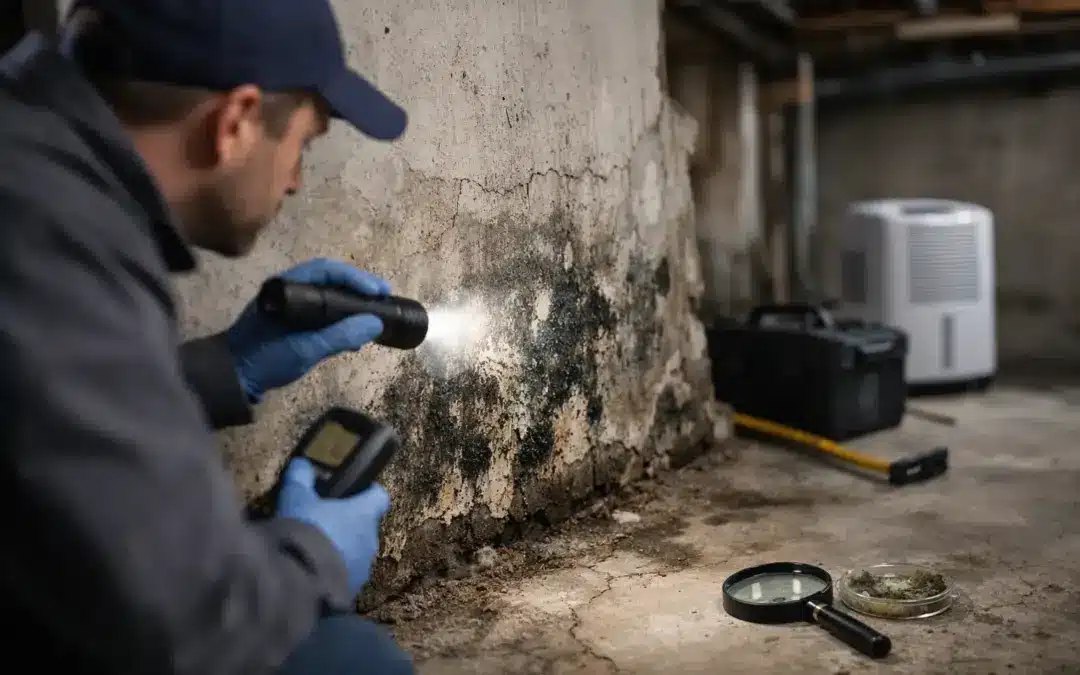
A musty smell after rain, dark staining near a foundation wall, or peeling paint in a finished basement is rarely just a surface problem. A proper basement mold inspection identifies where moisture is entering, how far it has traveled, and whether mold growth is active or left behind from an older issue. The goal is not to sell a one-size-fits-all waterproofing system. It is to find the actual cause and recommend the most economical permanent repair.
For homeowners in Greater Philadelphia, Southeast Pennsylvania, and Southern New Jersey, this matters because many homes have older foundations, clay-heavy soils, high water tables, and drainage conditions that put steady pressure on basement walls. Cleaning visible mold may improve the appearance temporarily, but it will not stop growth if the moisture source remains.
What a Basement Mold Inspection Should Reveal
Mold needs moisture, a food source, and enough time to grow. Basements provide plenty of building materials mold can use, including wood framing, paper-faced drywall, carpeting, dust, and stored cardboard. The inspection must answer the bigger question: why is that area getting damp?
A thorough inspection looks beyond the visible patch on a wall. It evaluates wall and floor conditions, foundation cracks, pipe penetrations, window wells, sump pump performance, drainage patterns, humidity levels, and signs of previous water intrusion. In a finished basement, the most concerning growth may be behind drywall, under flooring, or beneath insulation where homeowners cannot see it.
The type and extent of inspection depend on what is happening in the space. A small area of mildew around a bathroom supply line calls for a different response than widespread staining along a basement perimeter. The right recommendation should match the evidence, not a preset package.
Visible mold is not the whole story
Mold can appear as black, green, gray, white, or brown spotting, but color alone does not identify the species or the level of concern. Musty odors, warped baseboards, bubbling paint, rusted metal fixtures, damp carpet edges, and white mineral deposits on masonry can all point to an ongoing moisture problem.
Efflorescence, the powdery white residue sometimes found on foundation walls, is not mold. It forms when water moves through masonry and leaves minerals behind as it evaporates. Still, it is valuable evidence. It tells us water is moving through the wall, and that same moisture can create conditions for mold on nearby organic materials.
Moisture sources require different repairs
A basement can become damp because of exterior groundwater pressure, surface water collecting near the foundation, a failed gutter discharge, a crack in the foundation wall, a leaking pipe, condensation, or humid outdoor air entering through an open window. These problems can look similar at first.
That is why accurate diagnostics matter. Installing a dehumidifier may help manage air moisture, but it will not repair a wall crack admitting water during storms. Sealing an interior wall may hide stains, but it may also trap moisture where it can continue damaging materials. A permanent solution starts with identifying the path water is taking into the home.
When to Schedule a Basement Mold Inspection
Homeowners should not wait for large visible colonies before asking for help. Early inspection can prevent a limited moisture issue from becoming a major demolition and remediation project.
Schedule an inspection if you notice a persistent basement odor, especially after heavy rain or during humid weather. Other warning signs include recurring wall stains, damp or soft drywall, floor discoloration, condensation on pipes or windows, wet carpet, peeling paint, or water pooling near the foundation.
An inspection is also wise after a sewer backup, appliance leak, burst pipe, or basement flood. Even when standing water is removed quickly, moisture can remain inside wall cavities, beneath flooring, and in framing materials. Drying only the visible surface is not always enough.
If anyone in the household has allergies, asthma, or other respiratory sensitivities, do not assume basement air is unrelated to symptoms elsewhere in the home. Air movement can carry odors and particles upward through stairwells, ductwork, and gaps around utility lines. Mold conditions should be evaluated carefully, but homeowners should avoid making health claims based on appearance alone.
What Happens During the Inspection
A useful basement mold inspection is a diagnostic process, not a quick walk-through followed by a generic estimate. At Basement Waterproofing Scientists, the focus is on finding the source of water intrusion so the recommended repair addresses the problem directly.
The inspection typically begins with the evidence homeowners have already noticed: when the odor started, whether moisture appears after storms, which areas feel damp, and whether the problem has returned after prior repairs. That history often reveals patterns that are easy to miss during a dry day.
Next comes a close visual review of the basement and relevant exterior conditions. Foundation walls, floor joints, cracks, window wells, utility penetrations, downspouts, grading, and drainage features all matter. Diagnostic leak detection equipment can help pinpoint moisture paths that are not obvious to the eye.
Depending on the situation, moisture readings may be taken around suspected materials and wall areas. This helps distinguish a currently damp condition from a stain left by an old event. If mold testing is appropriate, samples may be collected to support a remediation plan or clarify a questionable condition. Testing is useful in some cases, but it should not replace solving a clearly visible moisture problem.
The inspection should lead to a targeted plan
After determining the likely source, the next step is to explain what needs to be corrected and why. That might mean improving exterior drainage, repairing a wall crack, sealing a penetration, installing or repairing a sump system, addressing interior drainage, correcting a plumbing leak, or removing damaged materials after the water source is controlled.
There are trade-offs. Exterior work can be the best approach when surface water and grading are the primary issue, while an interior drainage solution may be more practical for persistent groundwater pressure. The best choice depends on the foundation, the water path, site conditions, and the condition of the finished space.
Be cautious with anyone who recommends extensive waterproofing or mold removal without identifying the source of moisture. A clear diagnosis should come before a major repair decision.
Mold Removal Comes After Moisture Control
Mold remediation and waterproofing are connected, but they are not the same service. Mold removal addresses affected materials and contaminated surfaces. Waterproofing, drainage correction, crack repair, and leak repair stop the conditions that allow mold to return.
For minor surface growth on a nonporous material, cleaning may be enough once the area is dry and the leak is fixed. Porous materials such as wet drywall, insulation, carpet padding, and heavily affected wood may require removal because mold and moisture can extend below the surface.
Attempting to paint over staining, spray fragrance to cover odors, or run a dehumidifier without correcting water entry can delay the real repair. Those steps may make the basement look or smell better for a while, but they do not change the moisture conditions inside the structure.
After remediation, the basement should be dried thoroughly and monitored. A properly selected dehumidifier can be a useful part of long-term humidity control, particularly in naturally damp seasons. It works best as a supporting measure after leaks, drainage failures, and water intrusion have been addressed.
Protecting Your Basement Before Mold Spreads
Homeowners can reduce risk by keeping gutters clear, extending downspouts away from the foundation, maintaining positive grading, checking basement windows and window wells, and avoiding long-term storage of cardboard directly on the floor. These measures help, but they cannot compensate for an active foundation leak or drainage failure.
If you see staining, smell mildew, or find dampness after storms, document when and where it happens. Take photos before cleaning the area, note recent weather conditions, and move valuables away from affected spaces. This information helps make the inspection more precise.
A dry basement is not achieved by covering symptoms. It comes from identifying the water path, repairing it correctly, and making sure the space can stay dry over time. A professional inspection gives you the facts needed to protect your home, your basement investment, and your peace of mind.