

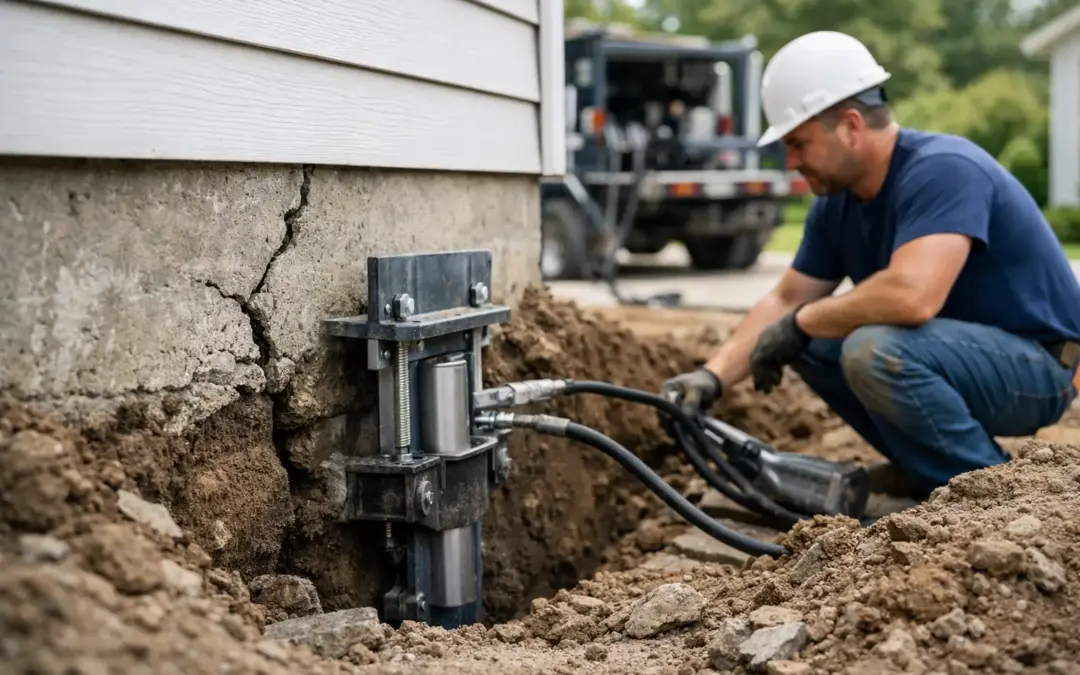
A crack in a basement wall can be unsettling. A door that suddenly sticks, a floor that slopes, or water appearing after a hard Philadelphia-area rain can feel even worse. But effective foundation repair does not begin with filling a crack or installing the biggest possible system. It begins with identifying why the foundation is moving, leaking, or deteriorating in the first place.
That distinction matters. Foundation problems can involve moisture, soil pressure, drainage, settlement, aging materials, or a combination of conditions. A targeted diagnosis helps homeowners solve the actual problem without paying for work their home does not need.
What Foundation Repair Is Designed to Solve
Your foundation carries the weight of your home and transfers that load into the ground below it. Over time, changes in soil moisture, poor surface drainage, hydrostatic pressure, and normal aging can affect how the foundation performs. In older homes throughout Southeast Pennsylvania and Southern New Jersey, original masonry walls and decades-old drainage conditions can add another layer of complexity.
Foundation repair may address structural movement, cracking, bowing walls, deteriorated masonry, water entry, or weak areas around penetrations and joints. The right method depends on the condition of the foundation and the source of the stress.
For example, a vertical hairline crack may be caused by normal concrete shrinkage and may only need monitoring or a focused seal. A widening diagonal crack, repeated water intrusion, or a wall that is visibly leaning deserves a professional inspection. The goal is not to treat every crack as an emergency. The goal is to recognize which signs point to an active issue before it becomes more expensive to correct.
Signs Your Home May Need Foundation Repair
Some symptoms are easy to spot in the basement. Others show up in living areas long before a homeowner connects them to the foundation. Watch for changes that are new, getting worse, or returning after previous repairs.
A crack that expands over time, especially one that runs diagonally or horizontally across a foundation wall, can indicate movement or pressure. Horizontal cracking and inward bowing are particularly common warning signs of outside soil pressure against basement walls.
Water can also be part of the picture. Damp wall surfaces, white mineral deposits, musty odors, peeling paint, or water on the floor after rain may point to drainage issues that are placing unnecessary stress on the foundation. Moisture does not always mean structural damage, but ignoring it can allow both waterproofing and structural concerns to worsen.
Inside the home, look for doors or windows that no longer operate smoothly, new cracks above door frames, separated trim, or floors that feel uneven. These symptoms can have more than one cause, including seasonal material movement. What matters is the pattern. Several changes occurring together are more meaningful than one isolated cosmetic crack.
Why Moisture and Drainage Matter So Much
Water is one of the most common drivers behind foundation trouble in this region. Soil expands when it absorbs water and contracts when it dries. That repeated cycle can create shifting pressure around foundation walls. When rainwater is allowed to collect near the home, the risk increases.
Poorly directed downspouts, clogged gutters, negative grading, and damaged exterior drainage can all send water toward the foundation instead of away from it. In some cases, groundwater builds beneath the basement floor and pushes upward through cracks, joints, or porous concrete. This is known as hydrostatic pressure.
A wall crack repair can stop water at a specific opening, but it may not solve the drainage condition that caused the pressure. Similarly, an interior drainage system can manage groundwater effectively, but it may not be the answer for every wall crack or structural issue. Good recommendations account for the whole moisture path, not just the most visible symptom.
Foundation Repair Starts With Diagnosis
A reliable inspection should distinguish between cosmetic cracking, active water entry, and structural movement. That means looking at the crack pattern, wall condition, exterior grading, drainage routes, basement humidity, and evidence of past or ongoing leaks.
At Basement Waterproofing Scientists, scientific leak detection scanning is used to help locate the actual source of moisture before recommending a repair. This matters because water can travel. The place where it appears inside a basement is not always the place where it entered.
A diagnostic approach can prevent a homeowner from spending thousands on a broad waterproofing package when a more focused repair will solve the problem. It can also prevent the opposite mistake: applying a quick patch to a wall that needs pressure relief, reinforcement, or a more complete drainage solution.
When Crack Repair Is the Right Answer
Not every foundation crack requires major structural work. If a crack is stable and is allowing water through an otherwise sound wall, a professional injection or seal may provide a durable solution. The repair material and method should match the crack type, wall material, and whether water is actively entering.
Crack repair is often economical when the problem is isolated. It is less effective when the crack is part of widespread wall movement, ongoing exterior pressure, or a drainage failure. In those cases, sealing the opening alone may only delay the return of the problem.
When Walls Need Reinforcement or Pressure Relief
Bowing, leaning, or horizontally cracked walls may need stabilization. Depending on the wall and the severity of movement, solutions can include wall anchors, carbon fiber reinforcement, steel support systems, or other engineered methods. The objective is to stop further movement and protect the structural integrity of the home.
The trade-off is straightforward: reinforcement can be a significant investment, but waiting until a wall has moved substantially usually limits repair options and raises costs. Early evaluation provides more choices and can help preserve usable basement space.
When Waterproofing Is Part of the Repair
Waterproofing and foundation repair often overlap, but they are not interchangeable. If water pressure is contributing to wall damage or leaking through the floor-wall joint, an interior drainage system, sump pump, exterior drainage correction, or targeted wall waterproofing may be necessary alongside structural work.
The best solution may combine repairs. A wall can be stabilized while drainage is improved to reduce future pressure. A crack can be sealed while surface water is redirected away from the house. The correct scope depends on what the inspection finds, not on a one-size-fits-all package.
Avoid These Expensive Mistakes
The first mistake is assuming paint, caulk, or a store-bought patch kit will fix an active foundation problem. These materials may improve appearance temporarily, but they do not relieve soil pressure, redirect water, or stabilize a moving wall.
The second is delaying an inspection because the basement only leaks during heavy storms. Occasional water entry still indicates a path for moisture. Over time, that moisture can damage finishes, contribute to mold growth, and create conditions that place more stress on the foundation.
The third is accepting a recommendation without understanding the cause. Ask what evidence supports the proposed repair, whether water is involved, what alternatives were considered, and what the warranty covers. A qualified contractor should be able to explain the recommendation in plain language.
What to Expect From a Professional Inspection
A thorough foundation inspection should be practical, not intimidating. The inspector should examine visible cracks, check for signs of movement and water entry, evaluate likely drainage conditions, and explain whether the issue appears urgent, stable, or cosmetic.
You should leave with a clear picture of the problem, the recommended repair, and why that repair fits your home. If no major work is needed, that should be stated plainly. Honest guidance is part of protecting your investment.
Foundation issues rarely improve by being ignored, but they also do not all require the same large-scale solution. Pay attention to changes, keep water moving away from the home, and have active cracks or recurring moisture evaluated before a manageable repair becomes a larger structural concern.