

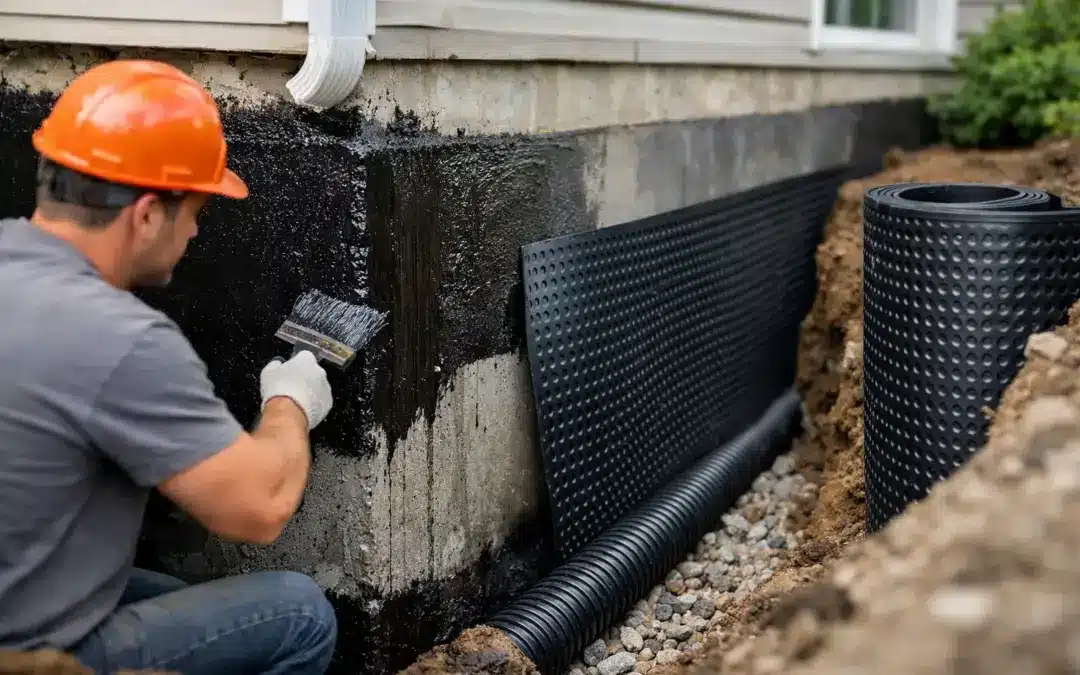
A basement that leaks after every hard rain usually is not asking for another coat of interior paint or a quick patch on the wall. It is telling you water is building up against the outside of the foundation. If you want to know how to waterproof basement from outside, the real answer starts with pressure, drainage, and finding the exact entry point before any digging begins.
Exterior basement waterproofing is the most direct way to stop groundwater before it enters the wall. It can also be one of the most effective long-term solutions, but only when the repair matches the actual problem. Some homes need full excavation and membrane installation. Others need a more targeted fix, such as correcting grading, replacing a failed footing drain, or sealing a localized wall crack from the exterior. The expensive mistake is assuming every wet basement needs the same system.
How to Waterproof Basement From Outside the Right Way
The outside of your foundation is where the water problem usually begins. Rainwater and groundwater move through the soil, collect against foundation walls, and create hydrostatic pressure. Once that pressure builds, water finds the easiest path in. That may be through porous concrete, a cold joint, deteriorated mortar, a wall crack, pipe penetration, or the cove where the wall meets the footing.
That is why exterior waterproofing should start with diagnosis, not excavation for its own sake. On many homes in Greater Philadelphia, Southeast Pennsylvania, and South Jersey, the source is not obvious from the interior symptoms alone. A wet corner in the basement may trace back to a gutter discharge issue twenty feet away. A wall stain may actually be tied to a vertical crack hidden by soil. The repair only works when the source has been accurately identified.
Step 1: Confirm Where the Water Is Coming From
Before any contractor starts digging, the first step is to determine whether the basement is dealing with surface water, groundwater, plumbing leakage, condensation, or a combination of issues. Homeowners often assume all basement moisture comes through the wall, but that is not always true.
A proper inspection looks at the grading around the home, downspout discharge locations, foundation wall condition, crack patterns, window wells, settled exterior hardscaping, and signs of footing drain failure. The goal is simple: pinpoint the entry path and the pressure conditions causing it. This is where a science-driven approach saves money. If the problem is concentrated in one section of the wall, a full perimeter excavation may be unnecessary.
Step 2: Excavate the Soil Along the Foundation
If exterior waterproofing is the right solution, the next step is excavation down to the footing. This exposes the outside face of the foundation wall so the real condition can be evaluated. On older homes, that often reveals what interior inspection could not – deteriorated parging, open cracks, failed damp-proofing, root intrusion, or clogged drain components.
Excavation has to be done carefully. Depth, soil type, access, nearby porches, walkways, decks, HVAC equipment, and utility lines all affect the process. In tighter lots common around Philadelphia row-adjacent properties and established suburban neighborhoods, access can be the deciding factor in whether full exterior waterproofing is practical.
What Happens During Exterior Basement Waterproofing
Once the wall is exposed, the repair work usually involves more than one layer of protection. This matters because no single product solves every water condition.
The wall surface is first cleaned so defects can be seen clearly. Cracks, holes, and deteriorated joints are repaired. If masonry block or stone is present, damaged mortar joints may need repointing. On poured concrete walls, cracks may require structural sealing depending on width, movement, and water volume.
After the wall is repaired, a waterproofing membrane is applied. This is different from simple damp-proofing. Damp-proofing slows moisture transfer, but a true waterproofing system is designed to resist water under pressure. Depending on the home and soil conditions, that may include a liquid-applied membrane, sheet membrane, drainage board, or a combination of materials.
A drainage layer is often installed over the membrane to protect it and help move water downward. Then the footing drain or perimeter drain tile is assessed. If the existing drain is crushed, clogged, missing, or installed improperly, it should be replaced. Without a functioning drain at the base of the wall, water can continue to build pressure even if the wall coating itself is sound.
The Role of Footing Drains and Gravel Backfill
One of the most overlooked parts of exterior basement waterproofing is drainage at the footing level. The membrane on the wall is important, but it is only part of the system. Water has to go somewhere.
A properly installed footing drain collects water before it rises against the foundation wall and directs it away from the house. Clean gravel backfill helps water move efficiently to that drain instead of holding moisture against the wall. Filter fabric may also be used to reduce sediment clogging over time. If a contractor talks only about coating the wall and not about drainage, that is a red flag.
Step 3: Address Surface Water at the Same Time
A basement can still take on water even after quality exterior waterproofing if the roof drainage and grading are ignored. That is why exterior work should include a full look at the water management conditions above grade.
Downspouts should discharge well away from the foundation. The soil should slope away from the home, not back toward it. Window wells may need drains or covers. Patio edges, sidewalks, and driveway sections that pitch toward the house can force large volumes of water directly against the foundation wall. In many cases, these corrections are less invasive and less expensive than foundation excavation, or they make the excavation work far more effective.
When Exterior Waterproofing Makes Sense
Exterior waterproofing is usually the right conversation when you have recurring seepage through foundation walls, visible exterior wall cracks, failed old tar coatings, heavy hydrostatic pressure, or water entering below grade after storms. It is also common when a foundation wall is already being exposed for structural repair, crack repair, or replacement of damaged drainage lines.
That said, it depends on the property. Some basements are better served by a targeted exterior repair combined with interior drainage. Some do well with grading and gutter corrections alone. Others need both interior and exterior measures because the house has more than one water entry mechanism. The best solution is the one that matches the building, not a sales script.
What Homeowners Often Get Wrong
The biggest misunderstanding is thinking waterproof paint or an interior sealant is the same as exterior waterproofing. Those products may hide staining for a while, but they do not remove outside pressure. Water will keep pushing, and eventually it finds another path.
Another common mistake is assuming every wet basement needs full excavation around the entire house. Sometimes that is necessary. Sometimes it is not. A targeted repair on the leaking wall section can be the more economical permanent fix if the diagnosis is accurate.
Homeowners also underestimate the importance of crack repair. Even a narrow exterior crack can admit a surprising amount of water under pressure. If that crack is tied to settlement or wall movement, the waterproofing plan should also account for structural conditions, not just moisture control.
Cost, Disruption, and Long-Term Value
Exterior basement waterproofing is usually more labor-intensive than interior work. It may involve excavation equipment, hand digging in limited-access areas, removal and replacement of landscaping, and restoration of disturbed surfaces. That is the trade-off. It is more invasive up front, but it addresses the problem where it starts.
For many homeowners, the value comes from stopping repeat damage. Ongoing seepage can lead to mold growth, damaged finishes, ruined storage, musty odors, and gradual deterioration of foundation materials. Paying for the right repair once is often less expensive than paying for cleanup and patchwork repairs over and over again.
A contractor should be able to explain exactly what is being fixed, why that method fits your home, and what kind of long-term performance you can expect. At Basement Waterproofing Scientists, that diagnostic mindset is central to how exterior waterproofing decisions should be made. You should never have to guess whether the recommendation is based on evidence or convenience.
Choosing the Right Exterior Waterproofing Approach
If you are deciding how to waterproof basement from outside, focus less on product names and more on whether the plan addresses these three issues: where water is coming from, how pressure is being relieved, and how the wall is being permanently protected. If one of those pieces is missing, the repair may not hold.
A good inspection should leave you with a clear explanation, not confusion. You should understand whether the issue is localized or full-perimeter, whether the footing drainage is working, whether cracks or structural defects are involved, and what above-grade corrections are needed to support the repair.
A dry basement starts outside, but the smartest fix is never just about digging. It is about finding the true source, using the right system for that home, and doing enough work to solve the problem without selling work the house does not need.