

A basement leak rarely shows up at a convenient time. You notice damp walls after a storm, catch a musty smell near the stairs, or find water pooling along one corner, and the first question is usually practical: how long does it take to waterproof a basement?
The honest answer is that it depends on the actual source of the water and the type of repair your home needs. Some basement waterproofing jobs can be completed in a day. Others take several days, especially when drainage systems, foundation crack repairs, exterior excavation, or structural corrections are involved. The biggest mistake homeowners make is assuming every wet basement needs the same solution and the same timeline.
How long does it take to waterproof a basement in most homes?
For many homes, basement waterproofing takes anywhere from one to three days. That is a realistic range for common interior systems, targeted crack injections, sump pump installations, or small-to-moderate drainage work.
Larger or more complex projects can take four to seven days, and some exterior waterproofing jobs can run longer if excavation, heavy rainfall, access issues, or foundation damage slow things down. If mold remediation, wall stabilization, or major concrete replacement is part of the scope, the full project timeline may extend beyond a week.
That range may sound broad, but there is a good reason for it. “Basement waterproofing” is not one repair. It is a category of repairs. A pinhole wall crack, hydrostatic pressure under the slab, clogged footing drains, and water entering around an egress opening are all basement water problems, but they are not fixed the same way.
What determines how long basement waterproofing takes?
The first factor is diagnosis. If the source of moisture is clear and isolated, the repair moves faster. If water is entering in multiple places or only under certain weather conditions, the inspection phase matters more because guessing leads to wasted time and wasted money.
The second factor is repair type. An interior drainage channel and sump system usually moves faster than full exterior excavation. Crack repair can often be completed quickly, while wall reinforcement or structural repair takes longer because materials must be installed carefully and, in some cases, allowed to cure.
The third factor is the condition of the basement itself. Finished basements, tight access, stored belongings, old concrete, hidden mold, and previous failed waterproofing attempts can all add time. In older homes around Greater Philadelphia and South Jersey, it is common to uncover layered problems – not just one leak, but a combination of seepage, cracks, poor grading, and aging masonry.
Weather also plays a role, especially with exterior work. Rain can delay excavation, affect soil stability, and slow backfilling. Interior waterproofing is less vulnerable to weather delays, which is one reason many homeowners prefer it when it is the right long-term fix.
Typical timelines by waterproofing method
A simple crack injection is often one of the fastest repairs. If the leak is coming through a specific wall crack and there are no broader drainage issues, the work may take just a few hours. The area may need additional time to dry before finishing materials go back in place, but the active repair is usually quick.
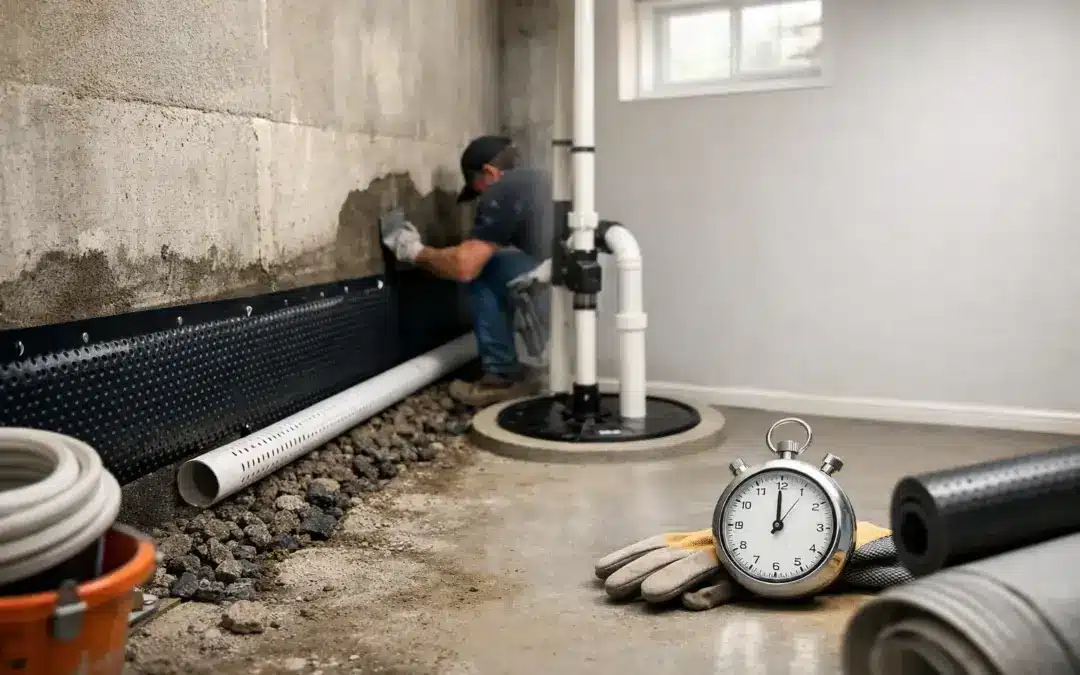
Interior drainage system installation typically takes one to two days in an average basement. This usually includes opening a trench along the perimeter, installing drainage, connecting it to a sump pump, and restoring the concrete. If the basement is large or the layout is complicated, it can stretch into a third day.
A sump pump installation by itself is often completed in less than a day, though adding battery backup, discharge line work, or a drainage tie-in may extend the job. This is one of the more efficient upgrades when the primary issue is groundwater pressure under the slab.
Exterior waterproofing is usually the longest process. Excavating around the foundation, cleaning the wall, applying waterproofing materials, checking drainage, and backfilling can take several days even in good conditions. If access is limited by patios, landscaping, porches, or neighboring structures, the project can take longer.
Crawl-adjacent lower level repairs, wall crack stitching, carbon fiber reinforcement, or structural stabilization can vary widely. These jobs are less about speed and more about precision. If a basement wall is bowing or settlement is contributing to water entry, rushing the repair is not in the homeowner’s best interest.
Why the inspection matters more than the schedule
Many homeowners want a firm answer before anyone has looked at the basement. That is understandable, but the timeline only means something if the proposed fix is actually the correct one.
A contractor who says every basement takes two days is usually selling a system, not diagnosing a problem. That is where homeowners end up paying for broad waterproofing packages they may not need. A science-driven inspection identifies where the water starts, how it moves, and which repair will stop it permanently. In many cases, the right diagnosis shortens the project because it avoids unnecessary work.
At Basement Waterproofing Scientists, that diagnostic approach is central to the process. Instead of treating every leak the same way, the goal is to find the source first and recommend the most economical permanent fix. That protects your schedule as much as your budget.
What can slow a basement waterproofing job down?
The most common delay is discovering a bigger problem once work begins. For example, a homeowner may expect a straightforward waterproofing job, but after opening the slab or exposing the wall, the crew finds failed drain tile, hidden mold damage, or structural cracking that also needs attention.
Another delay comes from basement prep. If the work area is packed with storage, finished walls, shelving, or flooring that needs to be removed, the project can take longer than the repair itself. A clear work zone helps keep things moving.
Permit requirements can also affect timing in some municipalities, especially if structural repairs, exterior excavation, or egress-related work is included. Material availability is less of an issue than it was a few years ago, but specialty pumps, wall systems, or custom components can still add time in certain cases.
Then there is curing and drying time. Even if the installation is done quickly, fresh concrete patches, sealants, and repaired surfaces may need time before the basement is fully returned to normal use.
Can you use the basement during waterproofing?
Usually, yes – with some limits. Homeowners can often remain in the house during interior basement waterproofing, though there will be noise, dust, and restricted access to parts of the basement. If laundry equipment, storage rooms, or finished living space are affected, expect temporary disruption.
For exterior work, daily life inside the house is usually less affected, but outside access around the foundation may be limited. If the job includes structural repair, mold remediation, or major demolition, the inconvenience level goes up.
A good contractor should explain what areas will be off limits, whether utilities will be interrupted, and when the space can be used normally again. Clear expectations make the process much easier.
Fast is good, but correct is better
Homeowners naturally want the job done quickly, especially if water is entering after every storm. But speed only helps if the repair lasts. A one-day fix that does not address the real source of moisture is not efficient – it just postpones the problem.
The better question is not only how long does it take to waterproof a basement, but how long will the solution hold up. In some homes, a fast targeted repair is exactly right. In others, trying to keep the job small leads to repeat leaks, repeat cleanup, and repeat contractor bills.
That is why the best waterproofing companies do not start with a standard package. They start with evidence. They inspect the basement, identify the path of water intrusion, rule out unnecessary work, and build a repair plan around the house in front of them.
If your basement is damp, leaking, or showing signs of foundation trouble, the real time-saver is getting an accurate inspection early. The sooner the cause is identified, the sooner the right repair can be scheduled – and the less chance a minor water problem turns into structural damage, mold growth, or a much larger project.