


Why Moisture Barriers for Crawl Spaces Are Your Home’s First Line of Defense
Moisture barriers for crawl spaces are essential protective liners that prevent ground moisture from evaporating into your home, where it can cause wood rot, mold growth, and structural damage. Here’s what you need to know when shopping for one:
Quick Buyer’s Guide:
- Minimum thickness: 6-mil polyethylene (Class 1 vapor retarder)
- Recommended for durability: 10-15 mil reinforced liner
- Heavy-duty/storage use: 15-20 mil with cord reinforcement
- Cost range: $0.15 to $1.50 per square foot (material only)
- Professional installation: $2,000 to $4,000 depending on space size
- Key feature to check: Permeance rating below 0.1 perms
Moisture is one of those unseen threats that can quietly wreak havoc on your home. Even in seemingly dry climates, the ground beneath your crawl space holds surprising amounts of water that evaporates upward through dirt floors.
This invisible vapor doesn’t just stay put—it rises into your living space through what building scientists call the “stack effect,” where up to 40 percent of the air you breathe on your first floor actually comes from below.
The consequences are serious. Wood rot weakens floor joists and structural supports. Mold and mildew thrive in damp conditions, releasing spores that trigger allergies and respiratory issues. Pests like termites, carpenter ants, and rodents are drawn to moisture-rich environments. And your energy bills climb as damp insulation loses its effectiveness and your HVAC system works overtime.
The good news? A quality vapor barrier is your first line of defense against all these problems.
I’m Darin Garvey, and over 30 years I’ve helped countless Philadelphia-area homeowners protect their foundations by installing effective moisture barriers for crawl spaces. I’ve seen how the right barrier—properly installed—can transform a damp, musty crawl space into a dry, healthy foundation for your home.
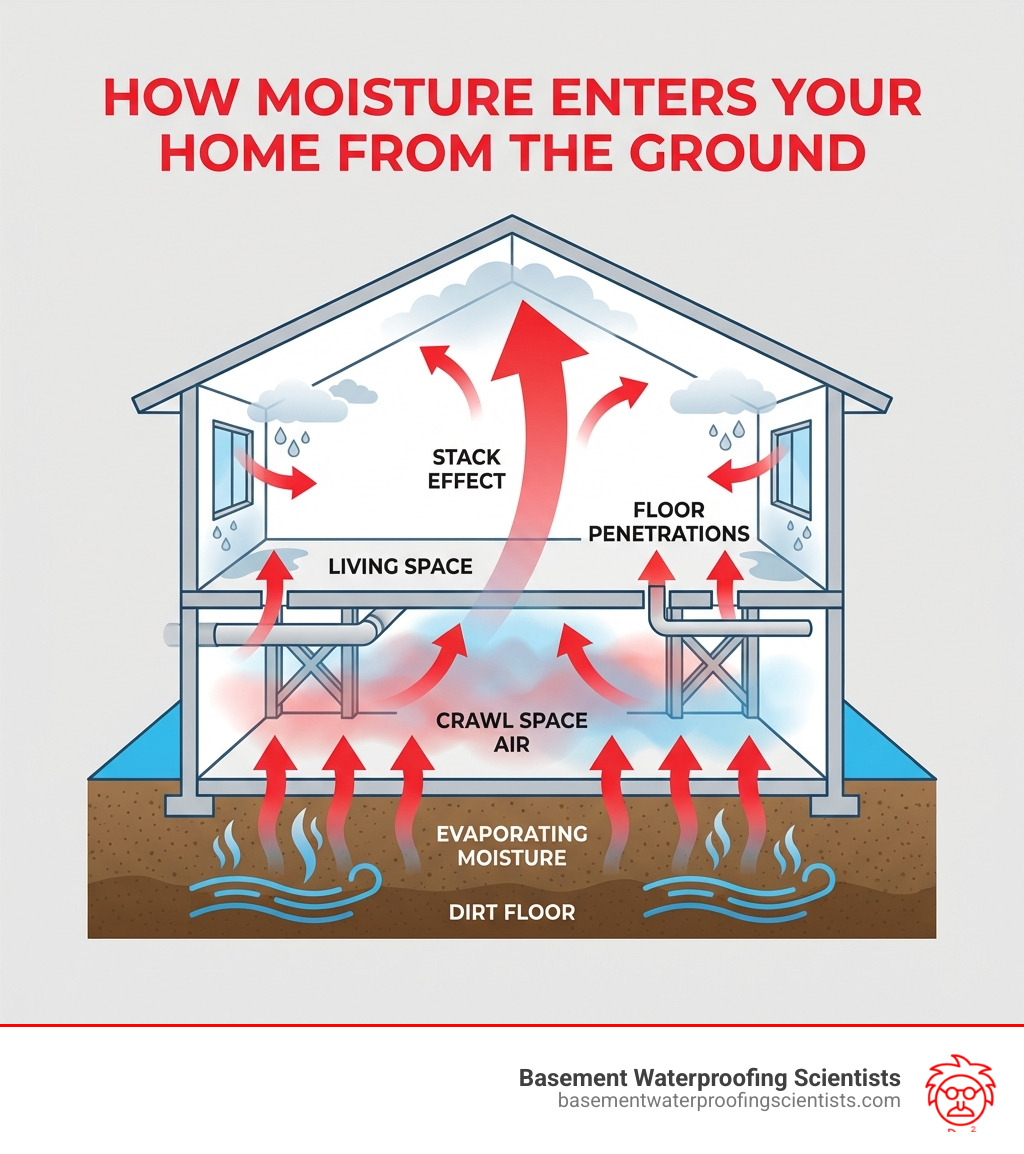
Basic moisture barriers for crawl spaces glossary:
The Hidden Dangers: Why Crawl Space Moisture is a Major Problem
Imagine a tiny, unseen enemy constantly attacking your home’s foundation. That’s what moisture in your crawl space can be. It’s not just about a little dampness; it’s about a relentless assault that can compromise your home’s structural integrity, invite unwelcome guests, and even impact your family’s health.
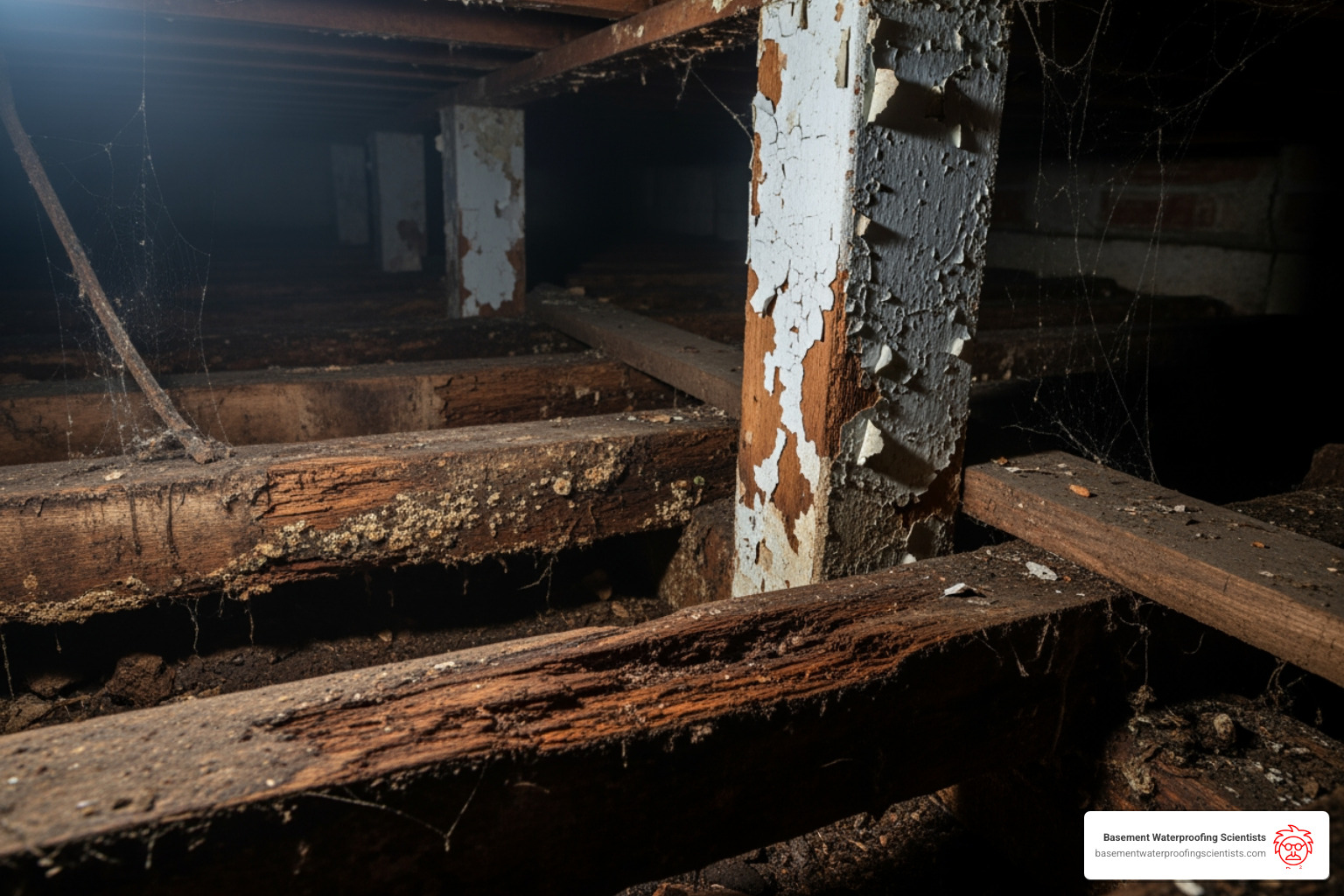
One of the most alarming consequences of unchecked crawl space moisture is structural damage. Wood rot, caused by excessive moisture, can weaken floor joists, sills, posts, and beams, leading to sagging floors and potentially costly repairs. This continuous dampness can also corrode electrical wiring and connections, posing a fire hazard. Our years of experience in Pennsylvania, New Jersey, and Delaware have shown us that delaying action on crawl space moisture only leads to more extensive damage and significantly higher repair bills down the line.
Beyond the structural concerns, a damp crawl space is a magnet for pest infestations. Many pests, including termites, carpenter ants, rats, mice, snakes, and even skunks, are attracted to water and the moist, dark environments it creates. These unwanted tenants can cause further damage to your home and spread diseases. Protecting your home from pests often starts with controlling moisture. For more information on how moisture attracts pests, you can check out the EPA’s guide on preventing pests at home.
Perhaps most concerning are the health risks associated with a damp crawl space. Mold and mildew thrive in high-humidity environments (above 65% relative humidity). These fungi release spores into the air, which, as we mentioned earlier, can rise into your living spaces through the “stack effect.” This can lead to a host of health issues, including allergies, asthma attacks, respiratory problems, and other adverse health effects. Improving indoor air quality is a key benefit of controlling crawl space moisture. The U.S. Environmental Protection Agency (EPA) provides a comprehensive guide on this topic: A Brief Guide to Mold, Moisture and Your Home.
Signs You Need a Crawl Space Vapor Barrier
How do you know if your home is silently suffering from crawl space moisture? Here are some telltale signs we’ve encountered frequently in homes across our service areas:
- Musty Odors: This is often the first clue. A persistent, earthy, or moldy smell, especially noticeable on the first floor or near vents, indicates moisture and potential mold growth.
- Visible Mold or Mildew: Take a peek into your crawl space if you can. If you see fuzzy, discolored patches on wooden joists, subflooring, or walls, you definitely have a moisture problem.
- High Indoor Humidity: If your home feels constantly clammy or sticky, even with air conditioning running, it could be drawing humid air from the crawl space.
- Condensation on Pipes or Ductwork: Moisture condensing on pipes, HVAC ducts, or even windows in your home is a clear sign of high humidity levels.
- Damp or Falling Insulation: Fiberglass insulation, common in many crawl spaces, absorbs moisture like a sponge. When wet, it loses its effectiveness, sags, or even falls from between joists.
- Sagging Floors: This is a serious indicator of structural damage. If your floors feel bouncy or uneven, it could mean wood rot has compromised the floor joists or subflooring.
- Pest Problems: An increase in insects, rodents, or other pests in your home, especially those attracted to moisture, can point to a damp crawl space.
- Higher Energy Bills: Damp insulation and humid air make your HVAC system work harder to maintain comfortable temperatures, leading to increased energy consumption.
- Humidity Level Above 65%: We recommend measuring your crawl space humidity with a digital thermo-hygrometer. If the reading is consistently above 65%, it’s time to take action. This level of humidity is ideal for mold growth and can lead to unhealthy air.
If you notice any of these signs, it’s crucial to address the issue promptly. Delaying action could lead to more significant damage and more expensive repairs for your home in Pennsylvania, New Jersey, or Delaware.
The Solution: What is a Vapor Barrier and How Does It Work?
So, what exactly is this superhero we’re calling a vapor barrier? At its core, a moisture barrier for crawl spaces is a heavy-duty, impermeable material—typically a thick sheet of plastic—that is laid across the dirt floor of a crawl space and often extended up the foundation walls. Its primary purpose is to stop moisture from the ground below from evaporating and entering the crawl space air.
The U.S. Department of Energy, in fact, refers to it as a “vapor diffusion retarder” because it effectively slows down the movement of ground moisture into the house above. This simple yet effective barrier traps the water in the ground, preventing it from turning into harmful water vapor that circulates throughout your home.
Think of it like putting a lid on a pot of boiling water. Without the lid, steam fills the kitchen. With the lid, the steam stays contained. A vapor barrier acts as that lid for your crawl space, keeping ground moisture where it belongs. For more in-depth information, you can refer to the U.S. Department of Energy’s explanation of vapor barriers: The U.S. Department of Energy refers to a vapor barrier as a vapor diffusion retarder.
We’ve dedicated years to understanding the science behind crawl space moisture. You can find even more detailed insights in our Basement Crawl Space Vapor Barrier Guide.
Key Benefits of a Dry Crawl Space
Installing a quality moisture barrier for crawl spaces offers a multitude of benefits that extend throughout your entire home:
- Improved Home Health & Better Air Quality: By blocking mold and mildew growth, a vapor barrier prevents harmful spores and allergens from entering your living spaces. This leads to cleaner, healthier air for you and your family, especially benefiting those with allergies or respiratory sensitivities.
- Structural Preservation: A dry crawl space means dry wood. By preventing wood rot, the structural integrity of your home’s foundation, floor joists, and subflooring is maintained, avoiding costly repairs and ensuring your home remains stable for decades to come.
- Increased Energy Efficiency: Damp insulation is ineffective insulation. When your crawl space is dry, your insulation performs optimally, preventing heat loss in winter and heat gain in summer. This reduces the workload on your HVAC system, leading to noticeable savings on your energy bills. A study by Advanced Energy even found a 15% annual energy savings in buildings with sealed crawl spaces.
- Pest Prevention: Many common household pests thrive in damp, dark environments. By eliminating this attractive habitat, a vapor barrier helps deter insects, rodents, and other unwelcome critters from taking up residence beneath your home.
- Added Storage Space: A clean, dry crawl space can be transformed from a forgotten, unpleasant area into valuable storage space, adding functional utility to your home.
A Buyer’s Guide to Moisture Barriers for Crawl Spaces
Choosing the right moisture barrier for crawl spaces isn’t a one-size-fits-all decision. It involves understanding the materials, their performance metrics, and how they suit your specific needs and climate.
The most common material for vapor barriers is polyethylene sheeting. However, not all polyethylene is created equal. We strongly advocate for products made from prime, virgin resins rather than recycled materials. Virgin resins offer superior durability and resistance to degradation, ensuring a longer-lasting barrier. Some high-quality barriers are also reinforced with a polyester cord or similar material, which significantly improves their tear and puncture resistance—a crucial feature in a crawl space environment where sharp objects or rough surfaces are common.
When evaluating a vapor barrier, look for these key performance metrics:
- Permeance Rating: This measures how much water vapor can pass through the material. For crawl spaces, you want a very low permeance rating. The industry classifies vapor retarders based on permeance: Class I (vapor impermeable) is 0.1 perm or less. Professional-grade barriers often boast permeance ratings well below 0.010 perms, offering exceptional moisture blockage.
- Puncture Resistance: Measured in newtons, this indicates how well the material resists punctures from sharp objects, rocks, or debris in the crawl space. High puncture resistance is vital for longevity, especially if the crawl space will be accessed regularly or used for storage. For example, some premium 15-mil barriers offer over 200 newtons of push-through resistance.
- Tensile Strength: This measures the material’s resistance to tearing or stretching. A high tensile strength ensures the barrier remains intact even under tension or stress.
Comparing Thicknesses of Moisture Barriers for Crawl Spaces
The thickness of a vapor barrier, measured in “mils” (one-thousandth of an inch), is a direct indicator of its durability and performance. While thicker isn’t always strictly necessary for vapor blocking if the permeance rating is low, it significantly impacts the barrier’s lifespan and resistance to physical damage.
Here’s a comparison of common thicknesses:
| Thickness (mil) | Permeance (typical) | Durability | Typical Use | Cost Range (per sq ft) |
|---|---|---|---|---|
| 6-mil | 0.13 perms | Basic | Minimum recommended for Class 1 vapor retarder | $0.15 – $0.50 |
| 10-mil | 0.076 perms | Good | Standard for residential, light traffic | $0.50 – $1.00 |
| 15-mil | 0.057 perms | Very Good | Improved durability, moderate traffic/storage | $0.80 – $1.20 |
| 20-mil | 0.038 perms | Excellent | Heavy-duty, frequent access, storage | $1.00 – $1.50 |
A 6-mil polyethylene sheet is the minimum recommended thickness for a Class 1 vapor retarder and is often cited as the minimum for crawl space floors. However, for true durability and peace of mind, especially in areas like Philadelphia, Reading, or Norristown where crawl spaces can be prone to moisture, we often recommend 10-mil, 15-mil, or even 20-mil reinforced liners. These thicker options offer much greater resistance to tears and punctures, making them suitable for crawl spaces that might see occasional foot traffic or be used for storage.
Climate Considerations for Your Vapor Barrier
You might think that if you’re in a relatively dry period in Pennsylvania or New Jersey, a vapor barrier isn’t necessary. However, ground moisture is a universal phenomenon. Even in areas with seemingly dry soil, significant amounts of moisture can evaporate upward. A moisture barrier for crawl spaces is a valuable investment regardless of your climate.
The concept of “vapor drive” is crucial here. Vapor drive refers to the movement of water vapor from areas of higher temperature and relative humidity to areas of lower temperature and relative humidity. In hot-humid climates, during the cooling season, vapor drive typically pushes moisture from the warmer, more humid crawl space into the cooler, drier indoors. This makes a robust vapor barrier essential to prevent this migration. Conversely, in colder climates, the vapor drive might reverse, but ground moisture remains a constant threat.
Controlling ground moisture is a best practice for any home with a crawl space in our region, ensuring a healthier and more energy-efficient environment year-round.
Professional Installation and Long-Term Care
While the idea of a DIY project might be tempting, installing moisture barriers for crawl spaces is often best left to professionals. Crawl spaces can be hazardous environments, often containing mold, pests, and sharp debris. Professional installation typically costs between $2,000 and $4,000, depending on the size of your crawl space and the materials chosen, but this investment often pays for itself in avoided problems and peace of mind.
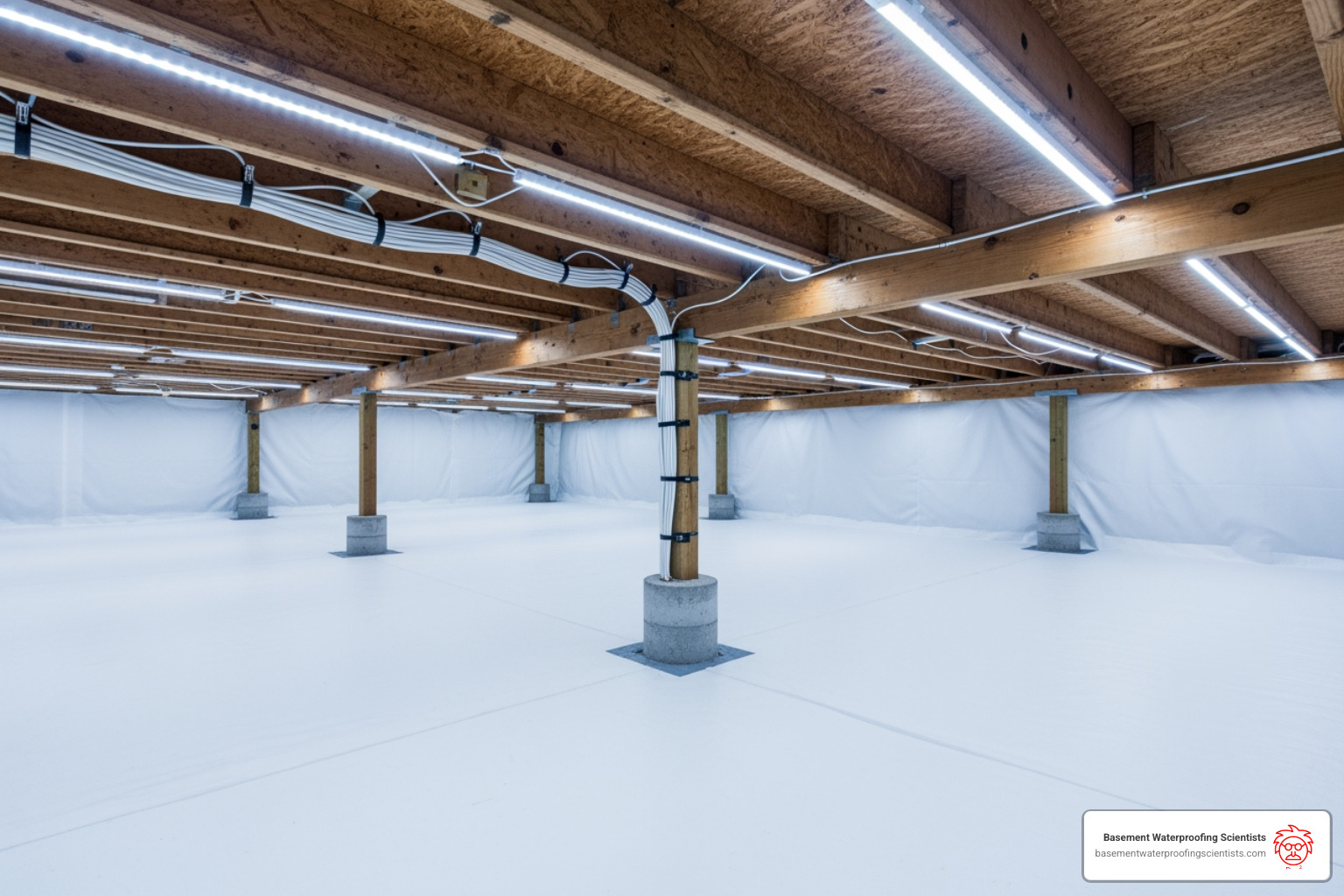
Our team at Basement Waterproofing Scientists has the specialized equipment and expertise to safely and effectively install your vapor barrier, ensuring it’s done right the first time. For more information on our installation process, visit our crawl space liner installation page.
Recommended Installation Steps
A proper vapor barrier installation involves several critical steps to ensure maximum effectiveness:
- Preparation is Key: The crawl space must be thoroughly cleaned and dried. This means removing all debris, leveling the ground as much as possible, and addressing any standing water. If there’s mold, professional remediation is essential before installation.
- Addressing Standing Water First: A vapor barrier is designed to stop vapor, not liquid water. If you have standing water, that issue must be resolved first, often through a crawl space drainage system and a sump pump.
- Laying the Barrier: The chosen polyethylene sheeting is carefully unrolled across the entire crawl space floor. A 6-mil polyethylene capillary break is the minimum recommended thickness for crawl space floors, but we often use thicker, more robust materials.
- Overlapping and Sealing Seams: All seams where sheets meet must be overlapped by no less than 12 inches. These overlaps are then sealed with specialized tape designed for polyethylene, or with a continuous bead of acoustical sealant, butyl rubber, or butyl acrylic caulk. This creates a continuous, impermeable surface.
- Securing to Walls and Piers: The vapor barrier is extended up the foundation walls by at least 6 inches and secured tightly with double-sided butyl tape or mechanical fasteners. It’s also sealed around any piers, pipes, or other penetrations to ensure a complete, continuous seal.
Vapor Barrier vs. Full Crawl Space Encapsulation
It’s important to understand the difference between installing a basic moisture barrier for crawl spaces (often just a ground cover) and a full crawl space encapsulation.
- Vapor Barrier (Ground Cover): This typically involves laying a heavy-duty plastic sheet over the dirt floor of the crawl space. Its primary goal is to block moisture evaporation from the soil. It’s a foundational step but may not address all moisture issues.
- Full Crawl Space Encapsulation: This is a more comprehensive solution. It involves completely sealing the entire crawl space, including the floor, walls, and any vents. Thicker sheeting (often 10-mil or more) is used for both the floor and walls, which are fully sealed. Encapsulation often integrates other solutions like a crawl space dehumidifier, a sump pump for water removal, and sealed vent covers. The goal is to create a conditioned or semi-conditioned space that is completely isolated from the outside environment. While more expensive, encapsulation is the best way to preserve the crawl space and protect the home from moisture, offering superior control over humidity, air quality, and energy efficiency. You can learn more about this advanced solution on our crawl space waterproofing encapsulation page.
Long-Term Maintenance Requirements
Once your moisture barrier for crawl spaces is installed, it requires minimal but important maintenance to ensure its continued effectiveness. We recommend:
- Annual Inspection: Periodically inspect your crawl space (or have a professional do it) to check the condition of the vapor barrier. Look for any tears, holes, or areas where the seals might have come loose.
- Check for Tears or Holes: Even the most durable materials can get damaged over time, especially if the crawl space is used for storage or accessed frequently. Promptly patch any damage with appropriate repair tape.
- Ensure Seals Are Intact: Over time, adhesive tapes or sealants can degrade. Re-seal any loose edges or seams to maintain the barrier’s integrity.
- Monitor Humidity Levels: Continue to use a digital thermo-hygrometer to monitor the humidity in your crawl space. If levels rise above 65%, it might indicate a breach in the barrier, a new moisture source, or a need for supplemental dehumidification. For homes with full encapsulation and a dehumidifier, ensure the unit is running efficiently and its drainage is clear.
Frequently Asked Questions & Expert Solutions
Here are some common questions we receive from homeowners in our service areas about moisture barriers for crawl spaces:
What are the best moisture barriers for crawl spaces?
The “best” barrier depends on your specific needs, but generally, we look for:
- Material Quality: Barriers made from prime, virgin polyethylene are superior to those made from recycled materials, offering better durability and resistance to breakdown.
- Reinforced Options: For added strength and puncture resistance, especially if the crawl space will be used for storage or accessed frequently, reinforced liners are ideal.
- Thickness Based on Use: While 6-mil is the minimum, 10-mil to 20-mil barriers offer significantly more durability. Choose a thickness appropriate for the level of activity in your crawl space.
- Permeance Rating: Always look for a Class I vapor retarder, meaning a permeance rating of 0.1 perms or less. This ensures effective vapor blocking.
- Professional-Grade Materials: Off-the-shelf vapor barriers from big-box stores may not offer the same level of quality, thickness, or durability as professional-grade materials. They might not fit properly or offer adequate protection compared to professionally installed systems.
What causes water in a crawl space besides ground vapor?
While ground vapor is a major culprit, it’s not the only source of moisture. Other common issues we see that cause water seepage in crawl spaces include:
- Bulk Water Seepage: This is liquid water entering the crawl space, often due to improper exterior grading around your foundation. If the ground slopes towards your house instead of away, rainwater will pool and seep through foundation walls.
- Plumbing Leaks: Leaky pipes, especially older copper pipes with pinhole leaks, can slowly or rapidly introduce water into your crawl space. These must be fixed before installing any barrier.
- Poor Exterior Grading & Gutter Issues: If your gutters are clogged, damaged, or not properly channeling water away from your foundation, rainwater will simply dump next to your house and find its way into the crawl space.
- High Water Table: In some areas, particularly after heavy rains, the groundwater table can rise significantly, pushing water directly into your crawl space.
A vapor barrier addresses vapor intrusion, but liquid water intrusion requires a different approach, such as a proper crawl space drainage system and sump pump. Our experts use specialized equipment to identify these leak sources to fix them efficiently.
Can I install a vapor barrier over a damp or dirt floor?
Yes, a moisture barrier for crawl spaces is specifically designed to be installed over dirt floors, even if they are damp. Its purpose is to prevent that moisture from evaporating into the air.
However, there are crucial preparatory steps:
- Address Standing Water: Any standing water must be completely removed and its source identified and fixed before installation. A vapor barrier is not a waterproofing solution for liquid water.
- Dry Out the Space: While the barrier handles vapor, the crawl space itself should be as dry as possible before installation. This might involve using fans or dehumidifiers for several days.
- Clean and Level the Ground: Remove all debris, rocks, and sharp objects that could puncture the barrier. Leveling the ground as much as possible creates a smoother surface for the barrier and helps with drainage if a system is installed underneath.
Our guide on this topic provides more details: Can Vapor Barrier Be Installed Over Damp Sand Crawl Space.
Protect Your Foundation with the Right Solution
Your home is one of your most significant investments, and its foundation is quite literally the bedrock of that investment. Ignoring moisture in your crawl space is like ignoring a slow leak in your roof—it will inevitably lead to bigger, more expensive problems down the road. Installing a high-quality moisture barrier for crawl spaces is not just a repair; it’s a proactive step in protecting your home’s structural integrity, ensuring a healthy living environment, and even improving its energy efficiency.
We believe a dry crawl space is the first step in total waterproofing for your home. For a guaranteed dry crawl space, trust the experts at Basement Waterproofing Scientists. With 30 years of experience serving homeowners in Pennsylvania, New Jersey, and Delaware, we use specialized equipment to identify the true source of moisture, allowing us to fix leaks for less. We offer expert inspections, competitive pricing, and a lifetime guarantee on our solutions.
Don’t let unseen moisture silently damage your home. Take action today.
Get a professional vapor barrier installation