

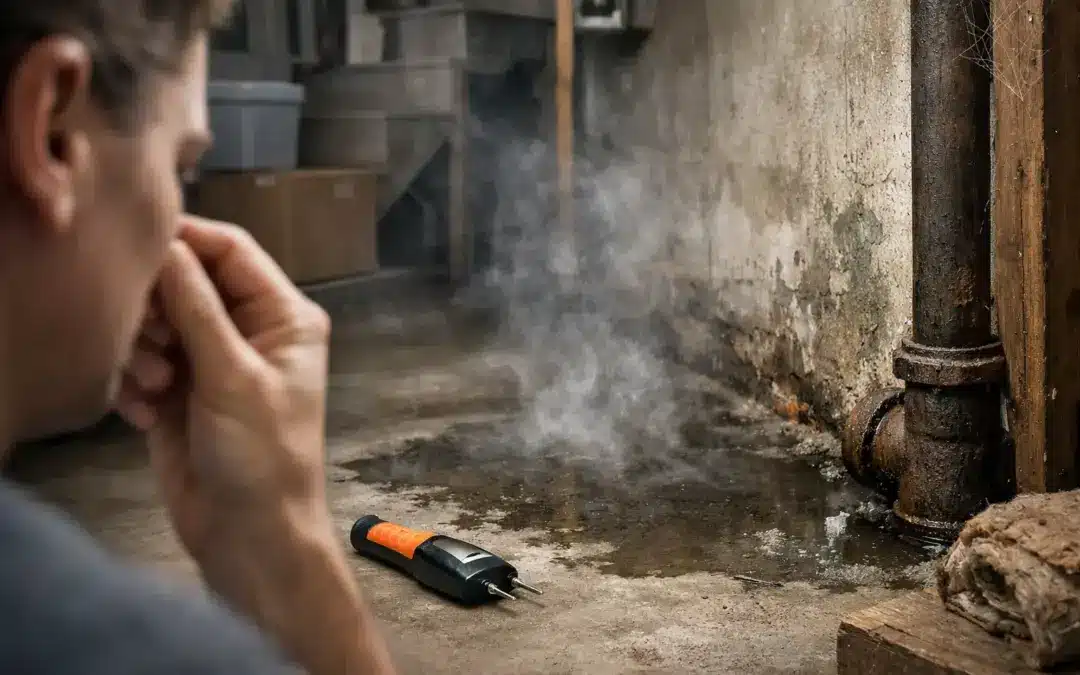
That stale, earthy odor is often the first warning sign homeowners notice – sometimes weeks or months before they see a puddle, a damp wall, or visible mold. If you are asking, “why does basement smell musty,” the short answer is usually moisture. The more useful answer is that moisture is getting in, collecting, or failing to leave your basement somewhere. Finding that specific source is what prevents a recurring problem from becoming a costly repair.
A musty basement does not automatically mean your entire foundation needs a major waterproofing system. It can come from a simple humidity issue, a hidden plumbing leak, poor exterior drainage, or water moving through a crack in the foundation. The right repair depends on accurate diagnosis, not guesswork.
Why Does a Basement Smell Musty?
Musty odors are created when moisture interacts with organic materials. Basement framing, cardboard boxes, carpeting, drywall paper, dust, stored fabrics, and wood shelving can all hold enough moisture to support mildew or mold growth. Even when the growth is hidden behind a finished wall or under flooring, its odor can travel through the room.
Basements are naturally more prone to this because they sit below grade. Soil around the foundation stays damp after rain, snowmelt, and periods of high humidity. Concrete can absorb and release moisture, and cool basement surfaces can cause humid indoor air to condense. Older homes throughout Greater Philadelphia, Southeast Pennsylvania, and Southern New Jersey often add another variable: aging drain systems, settling foundations, and original exterior grading that no longer moves water away effectively.
The smell may become stronger after heavy rain, during humid summer weather, or when the basement has been closed up for several days. Those patterns provide useful clues. They can help identify whether the source is outside water intrusion, indoor humidity, or a plumbing-related problem.
Common Causes of a Musty Basement Smell
Water seeping through foundation walls or floor cracks
Small cracks in poured concrete, masonry joints, or the basement slab can allow groundwater to enter. You may not always see active water. In some cases, water evaporates before it forms a visible puddle, leaving behind a damp odor, mineral deposits, peeling paint, or darkened areas along the wall.
Water pressure in the soil can force moisture through vulnerable points in a foundation. This is especially common after sustained rain, when clogged gutters overflow near the home, or when the grade slopes toward the foundation. A crack should be evaluated for both moisture entry and structural movement. Cosmetic patching may hide it temporarily without stopping the water behind it.
High humidity and condensation
Not every musty smell begins with a leak. A basement can be dry to the touch but still too humid. Warm outdoor air entering a cool basement can condense on pipes, walls, ductwork, and concrete surfaces. Clothes dryers, unvented bathrooms, and inadequate air circulation can make the problem worse.
A hygrometer is an inexpensive way to check relative humidity. For many homes, keeping the basement below about 50 percent relative humidity helps limit conditions that support mold growth. A dehumidifier can be useful, but it is moisture management, not always a permanent cure. If the unit runs constantly, fills quickly, or the odor returns as soon as it is turned off, there may be an underlying water source that needs attention.
Poor exterior drainage
Your basement may be dealing with water that should never have reached the foundation. Gutters clogged with leaves, short downspouts, damaged splash blocks, and low spots near the house all allow roof runoff to saturate the soil beside the basement walls.
This is one of the most economical places to start because correcting drainage can reduce the amount of water pressure against the foundation. Still, exterior improvements alone will not solve every problem. If water has already found a path through cracks, failed seals, or a compromised drainage system, the source and entry point should be addressed directly.
Hidden plumbing leaks
A slow leak from a supply line, drainpipe, water heater, washing machine connection, or HVAC condensate line can create a persistent musty odor. Look for staining around pipes, warped baseboards, soft drywall, rusted appliance connections, or a smell that is strongest near a utility room.
Plumbing leaks can be deceptively small. A drip that never reaches the floor may still wet insulation or framing behind a finished wall. Unlike rain-related intrusion, the odor from a plumbing leak may remain consistent regardless of weather.
Sump pump or drainage system problems
A sump pump protects many basements by moving collected groundwater away from the house. If it fails, has no power, has a stuck float switch, or discharges too close to the foundation, moisture can return quickly. An old interior drainage system can also clog or stop collecting water as intended.
Check whether your sump pump cycles during wet weather and whether its discharge line sends water far enough away from the foundation. If the pit smells foul or the pump appears overwhelmed, the issue may involve drainage, not just the pump itself.
Mold and mildew in hidden materials
Mildew and mold often grow where moisture is trapped: behind finished walls, beneath carpeting, inside insulation, under vinyl flooring, and around wood framing. Surface cleaning may improve the smell briefly, but it will not solve growth in concealed materials or remove the moisture that caused it.
A musty smell alone cannot identify the type or extent of mold. That is why mold testing and a careful moisture inspection can be valuable when an odor persists, occupants have health concerns, or visible staining is present. The first priority is always moisture control. Removing mold without correcting the water source invites the same problem back.
How to Tell Whether the Odor Is a Serious Moisture Problem
Start by paying attention to timing and location. A smell that worsens after rain points toward exterior drainage, groundwater, or foundation seepage. An odor near one wall, window, or corner may indicate a localized leak. A smell concentrated around mechanical equipment may point to plumbing, HVAC condensation, or a sump issue.
Then look for physical evidence. Efflorescence – a white, chalky mineral residue on masonry – suggests moisture is moving through the wall. Rust, flaking paint, warped trim, damp carpet edges, and dark spots on drywall also deserve attention. Do not overlook stored belongings. Moldy cardboard and fabric can hold an odor long after the initial moisture event.
If your basement has finished walls or flooring, visible evidence may be limited. That is where a targeted inspection matters. Moisture meters, leak detection methods, and experienced evaluation can identify the actual path of water instead of treating the entire basement as a mystery.
What You Can Do Before Calling a Professional
Remove wet cardboard, fabric, rugs, or damaged stored items from the basement. Clean only small, visible mildew areas on hard, nonporous surfaces, and dry the area thoroughly. If mold covers a large area, keeps returning, or involves drywall, insulation, carpeting, or wood, professional remediation may be the safer choice.
Run a properly sized dehumidifier and empty it regularly or connect it to a drain if possible. Keep basement doors and windows closed during very humid weather rather than assuming outside air will dry the space. Inspect gutters and downspouts, clear debris, and make sure discharged water runs away from the foundation.
Avoid painting over stains, installing new carpet, or finishing the basement until the moisture source is understood. Those steps can trap moisture, conceal warning signs, and make future repairs more expensive.
When a Basement Inspection Is the Smart Next Step
Call for an inspection when the odor persists despite dehumidifying and cleaning, returns after rain, or is paired with visible water damage, cracks, peeling paint, or mold. A basement that smells musty is not always facing a major repair, but it is giving you useful information. Ignoring it can allow water damage to spread into framing, finished spaces, stored belongings, and foundation materials.
At Basement Waterproofing Scientists, the focus is on identifying where moisture is entering and recommending the most economical permanent fix. That may involve crack repair, drainage correction, targeted waterproofing, sump system work, or mold-related services. A science-driven inspection helps separate a minor humidity issue from a water intrusion problem that needs prompt attention.
Your basement should smell like a clean, dry part of your home – not like damp soil or a closed-up storage room. Acting while the warning is still an odor can protect the space before it becomes a larger, more disruptive repair.