

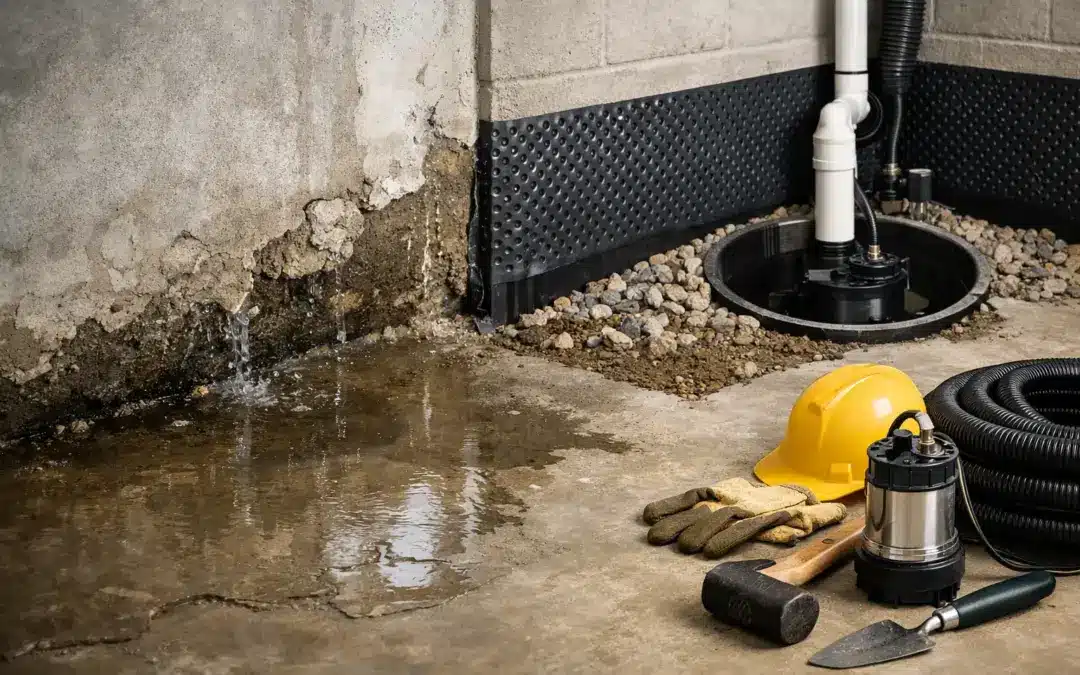
A basement that smells damp after every storm is not just annoying. It is a warning sign. The best wet basement solutions start with one question: where is the water actually coming from? If that answer is wrong, even expensive work can fail, and homeowners end up paying twice.
That is why a one-size-fits-all waterproofing package is rarely the smartest move. In older homes across Greater Philadelphia, Southeast Pennsylvania, and South Jersey, basement moisture can come from wall cracks, floor seepage, hydrostatic pressure, failed exterior drainage, grading problems, window well leaks, plumbing issues, or a mix of several causes. The right fix depends on the source, the structure, and how much water is showing up.
Why some wet basement solutions fail
A lot of basement repairs fail because they treat the symptom instead of the cause. Painting a wall with waterproof coating might hide staining for a while, but it does not stop water pushing through a crack. Running a dehumidifier can reduce musty air, but it will not fix seepage at the cove joint where the wall meets the floor. Even a sump pump system can be the wrong answer if the real issue is a leaking basement window or a broken underground drain.
This is where homeowners get frustrated. They pay for work that sounds impressive, but the basement still gets wet. A proper diagnosis should come before any recommendation. Moisture patterns, crack locations, drainage conditions, grading, and foundation movement all matter. If a contractor recommends a full system without showing clear evidence of why it is needed, that is usually a sign to slow down.
Wet basement solutions should match the source
There is no single best repair for every basement. The best solution is the one that solves your specific water path with the least unnecessary work.
When wall cracks are the problem
Vertical and diagonal cracks in poured concrete walls are common leak points. Water follows the path of least resistance, and a crack gives it one. In many cases, an injection repair is the most economical permanent option. It seals the crack through the wall thickness rather than just covering the surface.
That said, not every crack is just a leak issue. If a crack is widening, bowing is present, or there are signs of structural movement, the repair may also need stabilization. The leak needs to be stopped, but the underlying pressure on the wall has to be addressed too.
When water comes in at the floor edge
If water appears where the wall meets the floor, hydrostatic pressure is often involved. This happens when groundwater builds up around or beneath the foundation and pushes inward. In that case, interior drainage with a sump pump may be the right answer. The system relieves pressure and gives water a controlled path out before it reaches the basement floor.
This type of repair can be highly effective, but only when it fits the actual condition. Installing an interior system in a basement with a simple exterior grading problem can be more work than necessary. It depends on how the water behaves and whether surface water, subsurface water, or both are involved.
When exterior drainage is failing
Sometimes the basement itself is not the original problem. Gutters may be overflowing. Downspouts may be discharging too close to the house. Soil may be pitched toward the foundation instead of away from it. Window wells may fill and leak during heavy rain.
These are often the most overlooked causes of basement water, and sometimes the least expensive to correct. Extending downspouts, adjusting grading, improving window well drainage, or fixing a blocked exterior drain can make a major difference. Homeowners should not be sold major interior work if the main issue is happening outside.
When humidity is mistaken for leakage
Not every damp basement has active water intrusion. Some basements feel wet because of condensation. Cool walls and floors, poor ventilation, and high indoor humidity can create moisture on surfaces, especially in summer. The signs are usually different from a true leak. You may see condensation on pipes, a clammy feel in the air, or moisture on multiple surfaces rather than a specific entry point.
In those cases, wet basement solutions may include sealing air leaks, controlling humidity, and improving drainage outside. A dehumidifier can help, but it should be part of the plan, not the whole plan.
Signs your basement needs more than a quick patch
Homeowners often hope the issue is minor, and sometimes it is. But some signs suggest a deeper problem that should be inspected before damage spreads.
Recurring water after rain is the most obvious one. If the same area gets wet again and again, the problem has not been solved. White mineral staining on walls, peeling paint, musty odors, mold growth, rusting metal, warped trim, and damp carpet all point to ongoing moisture. Cracks, bowing walls, and uneven floors raise a separate concern: structural stress may be part of the issue.
The timing also matters. Water that only appears during heavy storms often points to drainage or surface runoff. Water that shows up even in dry weather can suggest groundwater pressure, plumbing leaks, or hidden moisture trapped behind finished materials. The pattern tells a story, and good diagnostics read that story before recommending a fix.
The most cost-effective approach is accurate diagnosis
Homeowners do not need the biggest system. They need the right one. That is an important difference.
A science-driven inspection looks for evidence instead of assumptions. Moisture detection tools, visual pattern analysis, crack evaluation, and drainage review help pinpoint the entry path. From there, the repair can be targeted. That may mean one crack injection instead of a full perimeter system. It may mean exterior corrections plus a minor interior repair. Or it may confirm that a comprehensive waterproofing system really is necessary.
This approach protects your budget and your basement. It also reduces the chance of doing partial work that has to be redone later. At Basement Waterproofing Scientists, that diagnostic mindset is what helps homeowners avoid overspending on repairs they do not need.
Choosing between interior and exterior repairs
Homeowners often ask whether interior or exterior waterproofing is better. The honest answer is that neither is automatically better. It depends on access, water pressure, foundation type, landscape conditions, and where the water is entering.
Exterior repairs can be excellent when a specific outside defect is accessible and fixable, such as a failed foundation membrane in one area or a window well issue. They stop water before it reaches the wall. But exterior excavation is more disruptive and may not always be practical with decks, patios, close property lines, or mature landscaping.
Interior systems are often less invasive and very effective for managing hydrostatic pressure and recurring seepage. They do not stop water from reaching the outside of the foundation, but they can control and redirect it reliably. In many homes, that is the most practical long-term solution. The right recommendation comes from the conditions on site, not a sales script.
What homeowners should expect from a permanent fix
A real solution should do three things. It should stop the water problem you actually have, hold up over time, and make financial sense for the house.
That means clear explanation matters. You should be told where the water is entering, why that is happening, and why the proposed repair addresses it. You should also understand what is not needed. Honest waterproofing work is not about adding services for the sake of a bigger invoice. It is about solving the problem permanently and efficiently.
A strong warranty is another good sign, but only if the contractor has diagnosed the issue correctly in the first place. Guarantees are meaningful when they stand behind targeted workmanship, not guesswork.
When to stop waiting
Basement moisture rarely stays the same. A small leak can turn into mold, damaged drywall, ruined flooring, or worsening wall deterioration. If the basement is finished, the risk is even higher because water can stay hidden behind materials for weeks before obvious damage appears.
Waiting also limits your options. Early repairs are often more focused and less costly. Once water damage spreads, the job becomes part waterproofing, part restoration. That is not where most homeowners want to be.
If your basement has taken on water more than once, smells musty, shows cracking, or never fully dries out, the next smart step is not guessing. It is getting the space inspected by someone who can identify the true source and recommend only the work that fits. The right fix should leave you with a dry basement and confidence that you will not be dealing with the same problem after the next storm.