

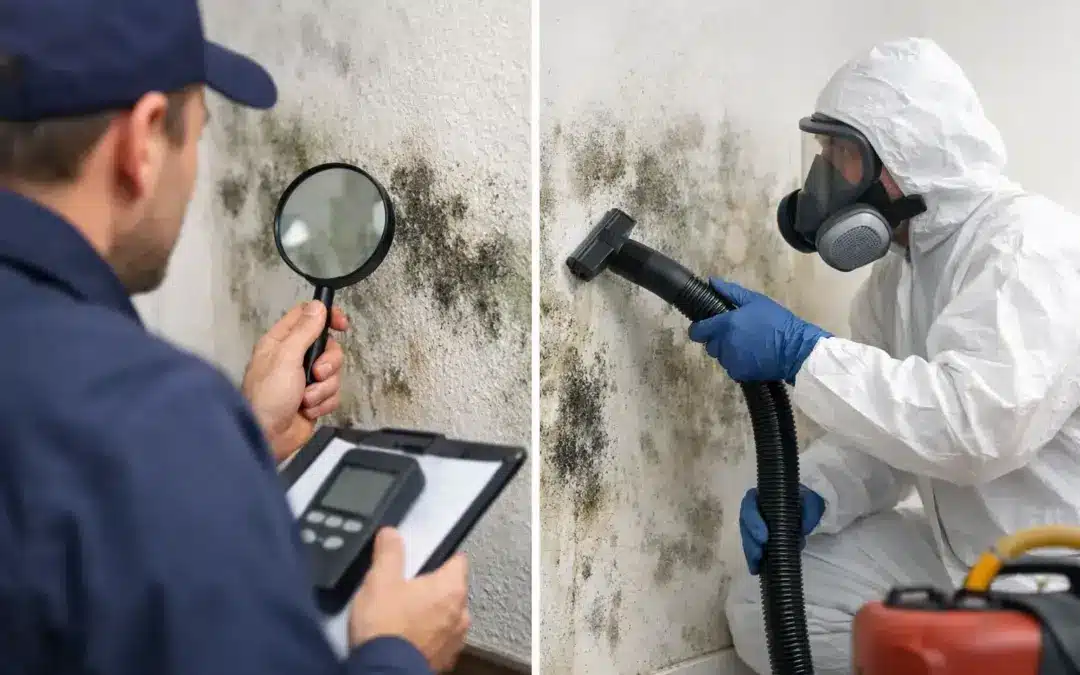
A musty basement, dark spotting on a wall, or recurring dampness can make a homeowner want mold gone immediately. That instinct is understandable, but mold inspection versus mold removal is not an either-or decision. The right first step depends on what you can see, how far the moisture problem has spread, and whether the source of water has been identified.
For homes across Greater Philadelphia, Southeast Pennsylvania, and Southern New Jersey, mold is often a symptom of a basement water problem. Removing visible growth without correcting the leak, humidity issue, or foundation seepage behind it can lead to the same problem returning months later. A proper diagnosis protects your home, your budget, and the long-term condition of the space.
Mold Inspection Versus Mold Removal: The Core Difference
A mold inspection is an evaluation. Its purpose is to determine whether mold is present, where moisture is coming from, how extensive the affected area may be, and what work is actually needed. A thorough inspection may include a visual review of basement walls, floors, joists, insulation, stored items, windows, plumbing lines, and areas around foundation cracks. It should also look for conditions that allow mold to grow, such as elevated humidity, condensation, standing water, exterior drainage problems, or groundwater intrusion.
Mold removal, more accurately called mold remediation, is the corrective work. It involves safely containing the affected area when appropriate, removing or cleaning contaminated materials, treating surfaces, and restoring the area after the moisture source is controlled.
The distinction matters because removal addresses the growth you can see. Inspection identifies why it is there and whether the visible growth is only part of the problem. One service is diagnostic; the other is corrective. In many cases, both are needed, but they should be performed in the right order.
When an Inspection Should Come First
Inspection should usually be the first move when the extent or cause of the problem is unclear. For example, a small patch of discoloration near a basement corner could be surface mold caused by condensation. It could also be evidence of water entering through a wall crack, a failing exterior drainage system, or a hidden plumbing leak. Those situations require different solutions and carry different costs.
An inspection is especially valuable when you notice a persistent odor but cannot locate visible mold. Mold can develop behind finished walls, beneath flooring, inside wall cavities, around rim joists, or behind stored belongings where air circulation is poor. Cleaning the open areas may not solve a concealed moisture condition.
You should also start with an inspection if mold returns after previous cleaning, if the basement has flooded or experienced repeated seepage, or if you are considering finishing the space. Installing drywall, flooring, or insulation over an unresolved moisture issue can turn a manageable repair into a larger remediation project later.
At Basement Waterproofing Scientists, the goal is not to sell a generic waterproofing system or unnecessary mold work. Scientific leak detection and a careful site evaluation help isolate the actual source of moisture so the recommended repair fits the home. That can mean a targeted crack repair, drainage correction, waterproofing repair, humidity control, or a more involved remediation plan when conditions warrant it.
Inspection Is More Than a Mold Test
Homeowners often use the terms “mold inspection” and “mold testing” interchangeably, but they are not the same. A mold test may involve collecting air or surface samples for laboratory analysis. That information can be useful in certain situations, particularly when mold is suspected but not visible, when occupants have health concerns, or when documentation is needed for a transaction or dispute.
However, testing alone does not identify the repair that will keep a basement dry. Mold spores are naturally present indoors and outdoors, and results must be interpreted alongside the building conditions. A skilled inspection focuses first on evidence of moisture, visible growth, material damage, ventilation, and pathways where water may be entering.
If there is obvious mold growth and an obvious water source, lab testing may not change the next step. The priority is to stop the moisture and remediate damaged materials correctly. Paying for testing that does not affect the repair plan is not always an economical use of your money.
When Mold Removal Cannot Wait
There are circumstances where prompt professional remediation is the clear next step. Significant visible growth, water-damaged drywall or insulation, mold following a sewage backup, and contamination after a major flood should not be treated as a simple cleaning project. Porous materials can hold moisture and mold below the surface, which means wiping them down may only improve appearance temporarily.
Professional removal may also be necessary when growth covers a large area, has spread into finished spaces, or is connected to a long-standing leak. Proper containment helps limit the spread of debris during removal, while appropriate cleaning and disposal procedures reduce the chance of recontaminating nearby areas.
Even then, remediation is only half the job if water continues to enter the basement. Before new materials are installed, the underlying condition must be corrected. Otherwise, fresh drywall, carpeting, or insulation can become the next surface for mold growth.
The Moisture Source Determines the Permanent Fix
Mold needs moisture to grow. In basements, that moisture commonly comes from foundation cracks, hydrostatic pressure, poor grading, clogged or ineffective gutters, failed sump components, plumbing leaks, window well issues, and warm humid air condensing on cool surfaces.
Each cause calls for a different solution. A small active wall crack may respond to a targeted repair. Repeated groundwater intrusion may require a drainage or waterproofing solution. Condensation may call for improved dehumidification, air sealing, insulation changes, or ventilation adjustments. A leaking pipe requires plumbing repair before mold cleanup can succeed.
This is why a one-size-fits-all answer is risky. An interior drainage system can be valuable for the right basement, but it is not automatically the answer to every damp wall. Likewise, a bottle of mold cleaner may handle a minor surface issue but cannot repair a structural crack or redirect water away from the foundation.
A good diagnosis separates cosmetic symptoms from the actual water pathway. It also prevents a homeowner from paying for broad, invasive work when a smaller targeted repair can solve the problem permanently.
What Homeowners Can Do Before the Appointment
Do not disturb a large mold-affected area or aggressively scrub it before it can be evaluated. That can spread debris and make it harder to understand the original pattern of moisture. Instead, take clear photos, note when the odor or staining began, and document whether the condition worsens after heavy rain, snowmelt, plumbing use, or humid weather.
Move stored items away from visibly damp walls if it is safe to do so, and avoid running fans directly across significant mold growth. If there has been active water entry, remove standing water promptly and use dehumidification to reduce humidity, but recognize that drying the room does not repair the source.
For a very small amount of surface mold on a nonporous material, careful cleaning may be reasonable. Wear appropriate protective gear and do not assume that a clean-looking surface means the issue is resolved. If staining returns, materials feel soft, or there is a persistent musty odor, schedule an evaluation.
Choosing the Right Order for Your Home
The practical answer to mold inspection versus mold removal is simple: inspect first when the cause, location, or extent is uncertain; proceed quickly to remediation when significant contamination is apparent; and always correct the moisture source before considering the job finished.
Homeowners should be cautious of anyone who recommends extensive removal without investigating water entry, or major waterproofing work without explaining the evidence behind it. You deserve a clear diagnosis, a repair plan that matches the condition of your basement, and an honest explanation of what is necessary now versus what can wait.
A dry basement is the best long-term mold prevention strategy. If dampness, odors, or staining are appearing in your home, a targeted inspection can replace uncertainty with a practical path to a cleaner, healthier, and more usable space.