

A basement wall can look dry for weeks, then develop a wet line after one hard Philadelphia rain. That pattern is exactly why a leak detection inspection guide should focus on finding the source of water, not simply covering the visible symptom. A stained wall, musty odor, or small puddle tells you water is present. It does not tell you whether the cause is surface drainage, a foundation crack, hydrostatic pressure, a failed pipe, or condensation.
The right repair depends on an accurate diagnosis. Installing a broad waterproofing system when one exterior drainage issue is responsible can cost more than necessary. On the other hand, sealing a crack without correcting the water pressure behind it can leave you with the same leak during the next storm.
What a Leak Detection Inspection Should Find
A proper inspection traces the path water takes from outside the home to the point where it becomes visible indoors. The leak may appear at the bottom of a wall, but the entry point can be several feet away, above grade, or below the floor.
In older homes across Southeast Pennsylvania and Southern New Jersey, water intrusion often comes from more than one condition. Settlement cracks can open over time. Clay-heavy soil can hold water against the foundation. Gutters may discharge too close to the house. A finished basement can hide damp insulation, mold growth, or a slow wall leak until damage becomes extensive.
The goal is to separate these common sources:
- Rainwater entering through wall cracks, window wells, or gaps around utility penetrations
- Groundwater rising against or beneath the foundation after prolonged rain
- Surface water caused by poor grading, short downspouts, or overflowing gutters
- Plumbing leaks from supply lines, drains, water heaters, or appliances
- Indoor humidity and condensation forming on cool basement walls or pipes
Each problem calls for a different solution. A drain line repair will not fix hydrostatic pressure. A dehumidifier can control humidity, but it cannot stop groundwater from entering through a foundation joint.
Start With the Timing of the Moisture
Before an inspection, pay attention to when the problem occurs. Timing is one of the most useful clues a homeowner can provide.
Water that appears during or shortly after rain points toward exterior drainage, foundation cracks, window wells, or groundwater pressure. Moisture that continues in dry weather may indicate a plumbing leak, condensation, or water stored in saturated soil around the foundation. A wet area that appears only when a shower, washing machine, or dishwasher runs should be treated as a possible plumbing issue first.
Also note whether the leak is seasonal. Spring thaws and long periods of rain can raise the local water table. Summer humidity can create condensation on uninsulated cold-water pipes. In winter, frozen or blocked downspouts can send melting snow directly toward the foundation.
Photograph wet areas before they dry. Record the weather, the location, and whether the water is clear, muddy, or rusty. Clear water may still be groundwater, but muddy water often suggests exterior soil is moving in with the moisture. These details help make an inspection faster and more precise.
Inspect the Outside Before Assuming the Basement Is the Problem
Most basement water problems begin outside. Start at the roofline and work downward. Look for gutters that overflow, disconnected downspouts, or discharge points that end beside the foundation. Water should be directed away from the house, not allowed to pool beside it.
Next, examine the soil grade. The ground should slope away from the foundation so rainwater drains outward. Mulch, landscaping borders, patios, and settled soil can gradually create a low spot that funnels water back toward the basement wall. This is especially common around additions, walkout doors, and areas where utility work disturbed the soil.
Check window wells for blocked drains, damaged covers, or standing water. Inspect visible foundation walls for cracks, deteriorated mortar, gaps around pipes, and loose exterior caulk. A small opening is not always the whole problem, but it can reveal where water is exploiting pressure against the structure.
Exterior corrections are often the most economical fix when surface water is the cause. Extending downspouts or correcting grading may resolve a localized leak without requiring a larger interior system. The decision should be based on evidence, not a one-size-fits-all recommendation.
A Practical Leak Detection Inspection Guide for the Interior
Inside the basement, begin where water is easiest to see, then expand the inspection area. Use a bright flashlight and inspect walls, floors, corners, windows, mechanical rooms, and areas behind stored items. Do not assume a dry-looking finished wall is dry behind the paneling.
Look for white, chalky mineral deposits known as efflorescence. This residue forms when moisture moves through masonry and leaves salts behind. Peeling paint, bubbling wall coatings, warped baseboards, rusted metal supports, and darkened carpet edges can also indicate recurring moisture.
Pay close attention to the wall-floor joint. Water entering at this joint often points to pressure building outside or beneath the foundation. A narrow vertical crack may be a direct water path, while a horizontal crack or bowing wall can signal soil pressure and a potential structural concern. Structural movement requires professional evaluation, particularly if the crack is widening or the wall is visibly shifting.
Use your senses as well as your eyes. A musty odor can develop before visible mold appears. Cold, damp air in one section of the basement may reveal hidden moisture. If you see fuzzy growth, repeated staining, or damp drywall, avoid simply painting over it. The moisture source must be corrected before mold remediation or cosmetic repairs can last.
Why Moisture Testing and Scanning Matter
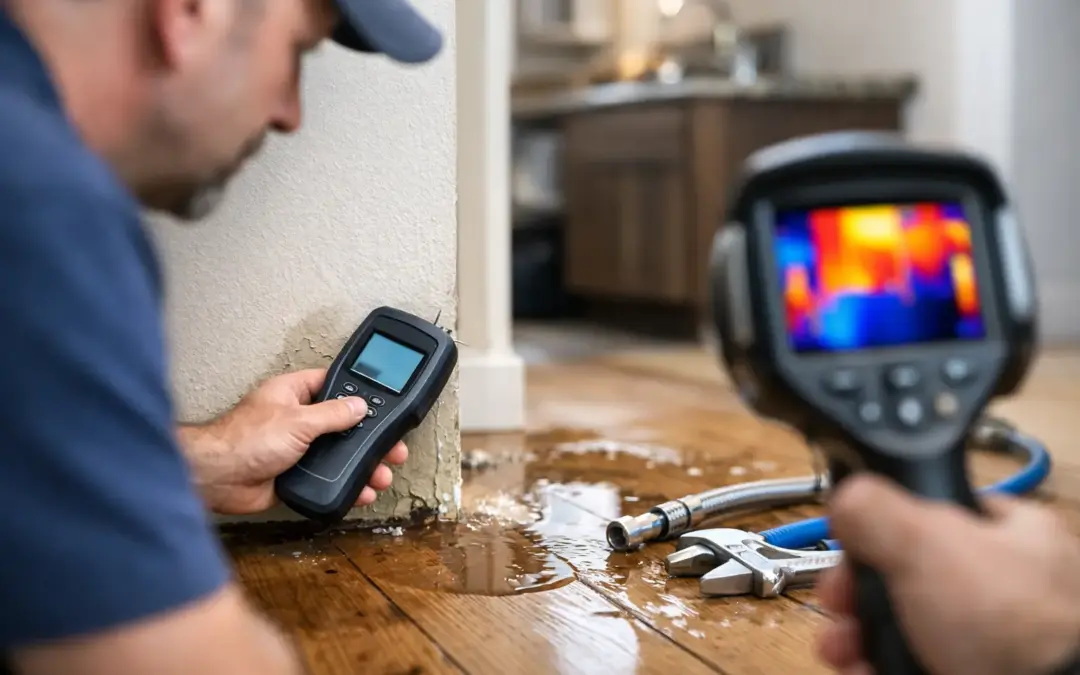
Visible water is only part of the story. Professional leak detection can use moisture meters, thermal imaging, targeted water testing, and other diagnostic methods to identify damp materials and likely water paths without unnecessary demolition.
Thermal imaging does not magically see through walls or prove the source of every leak. It detects temperature differences that may be associated with moisture, air movement, or missing insulation. That is why it should be used alongside a visual inspection, moisture readings, weather history, and a close review of drainage conditions.
This science-driven approach is valuable when a basement has been finished, when leaks are intermittent, or when multiple possible causes exist. Instead of guessing where to excavate or which wall to treat, the inspector can recommend the repair that addresses the actual condition.
At Basement Waterproofing Scientists, the purpose of leak detection scanning is straightforward: identify the source of moisture and recommend the most economical permanent fix. In many cases, targeted repairs can prevent homeowners from paying for work their basement does not need.
Know When a Small Leak Is Not Small
A small wet spot can become a larger repair if it is ignored. Water can weaken drywall, damage flooring, feed mold growth, corrode stored belongings, and make a basement less usable. When moisture is tied to foundation movement, delayed action can also allow cracks and wall pressure to worsen.
Schedule a professional inspection promptly if you notice repeated water after storms, standing water, a widening crack, bowing walls, mold-like growth, a persistent odor, or water near electrical equipment. The same applies if you have already tried caulk, paint, or a dehumidifier and the problem keeps returning.
A dehumidifier is useful for managing normal basement humidity. It is not waterproofing. Likewise, hydraulic cement and crack sealants may help with a specific minor opening, but they are not reliable answers when water pressure, drainage, or structural movement remains unaddressed.
Questions to Ask Before Approving a Repair
A trustworthy inspection should leave you with a clear explanation, not a vague warning that your entire basement needs to be rebuilt. Ask what evidence identifies the source, whether the issue is surface water or groundwater, and what happens if the recommended repair is delayed.
You should also ask whether a targeted exterior correction could solve the problem, whether interior drainage is necessary, and how the proposed work will be warranted. A permanent repair plan should explain the scope of work, the expected result, and any conditions that could affect performance.
The best answer is sometimes a simple correction. Other times, a reliable solution requires drainage, crack repair, wall stabilization, sump work, or mold remediation. What matters is that the recommendation matches the conditions found during the inspection.
If your basement has started showing water stains, damp air, or recurring leaks, document what you see and arrange an inspection before the next heavy storm turns a manageable issue into hidden damage.