

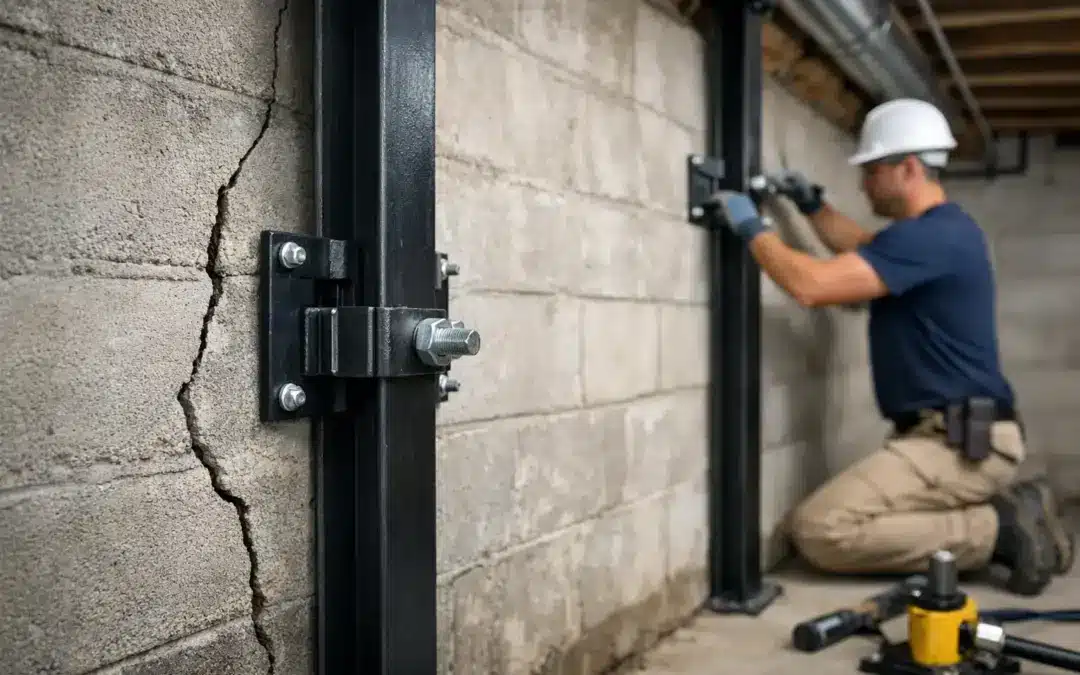
A basement wall that is bowing, cracking, or pushing inward is not a cosmetic problem to cover with paint. Knowing how to stabilize foundation walls starts with identifying what is making them move. In Greater Philadelphia, Southeast Pennsylvania, and Southern New Jersey, heavy clay soils, aging drainage systems, seasonal groundwater, and freeze-thaw cycles often work together to put damaging pressure on basement walls.
The right repair can stop movement, protect your home’s value, and preserve usable basement space. The wrong repair can hide a serious condition while water and soil pressure continue doing damage behind the wall. That is why a targeted inspection should come before any recommendation.
What Causes Foundation Walls to Become Unstable?
Most foundation wall movement is caused by pressure from outside the home, not a defect that begins inside the basement. When soil around the foundation becomes saturated, it expands and presses against the wall. This is called hydrostatic pressure. Over time, that force can create horizontal cracks, inward bowing, stair-step cracks in block walls, and separation near the top of the wall.
Water is often the main driver, but it is not the only one. Poor grading can direct roof runoff toward the foundation. Clogged gutters and short downspouts can dump hundreds of gallons of water beside the house during a storm. A high water table, damaged exterior drain tile, or soil that was not properly compacted during construction can add to the problem.
Older homes throughout this region may also have stone, brick, or concrete block foundations that were built before modern drainage standards. These walls can remain sound for decades, but they become vulnerable when drainage conditions change or mortar begins to deteriorate.
Signs You Need to Stabilize a Foundation Wall
A hairline vertical crack may be minor settling, but no crack should be dismissed without considering its location, size, and whether it is changing. Foundation movement usually leaves evidence that becomes more obvious over time.
Watch for these warning signs:
- Horizontal cracks across poured concrete or block walls
- Walls that bow inward, lean, or appear wavy
- Stair-step cracks along concrete block or brick joints
- Cracks wider than one-quarter inch or cracks that keep growing
- Water entering through cracks, wall-floor joints, or damaged mortar
- Doors, windows, or basement framing that suddenly stick or shift
A horizontal crack is especially concerning because it often indicates lateral soil pressure. If the wall has moved more than a small amount, a professional evaluation is the safest next step. The goal is not simply to fill the visible crack. It is to stop the force that created it and reinforce the wall before movement becomes severe.
How to Stabilize Foundation Walls: Start With Diagnosis
There is no single foundation repair that fits every home. A wall that is lightly cracked but mostly straight needs a different solution than a wall that has bowed two inches or has active water intrusion. Treating both conditions the same can mean paying for work you do not need or receiving a repair that does not address the actual cause.
A proper inspection looks at the condition of the wall, the crack pattern, the amount of inward movement, surrounding soil conditions, drainage, gutters, downspouts, and signs of moisture. It should also determine whether the movement is active or appears to be historic and stable.
At Basement Waterproofing Scientists, scientific leak detection helps identify where water is entering and why. That diagnostic approach matters because controlling groundwater and runoff may be part of the structural solution, not an optional add-on. Stabilization works best when pressure against the wall is reduced at the same time.
Foundation Wall Stabilization Methods
Carbon Fiber Straps for Minor to Moderate Bowing
Carbon fiber reinforcement is often used for poured concrete or block walls with limited inward movement. High-strength carbon fiber straps are bonded vertically to the wall and anchored at the top and bottom. Once installed correctly, they help prevent additional inward movement without taking up meaningful basement space.
This can be an economical option for walls that are cracked or slightly bowed but have not shifted beyond the system’s limits. Carbon fiber does not pull a wall back into place. It stabilizes the wall where it is. If the wall is significantly bowed, another method may be more appropriate.
Steel I-Beams for Stronger Reinforcement
Steel I-beams are a proven choice for walls experiencing more substantial pressure or movement. The beams are installed vertically against the foundation wall and secured to the framing above and the basement floor below. They create a rigid support system that resists further bowing.
Steel reinforcement is highly durable and can be a practical choice for block walls or walls that need more strength than carbon fiber can provide. The trade-off is that beams are visible and extend slightly into the basement. For many homeowners, that is a reasonable compromise for structural protection and peace of mind.
Wall Anchors for Active Pressure and Bowing
Wall anchors connect the damaged basement wall to stable soil farther away from the foundation. An interior anchor plate is mounted against the wall, while an exterior earth anchor is installed in undisturbed soil. A steel rod connects the two components.
This system can stop inward movement and, in many cases, allow for gradual wall straightening. Wall anchors require access to the exterior yard and enough space for proper installation. They may not be suitable where property lines, decks, utilities, or neighboring structures limit access.
Helical Tiebacks for Limited Exterior Access
Helical tiebacks are installed through the foundation wall and into stable soil using specialized equipment. They are useful when a traditional wall-anchor excavation is impractical or when soil conditions call for a deeper support solution.
Like wall anchors, tiebacks can stabilize and sometimes help straighten a bowed wall. The right choice depends on the wall’s condition, the surrounding property, and the soil. This is one reason a visual estimate alone is not enough for a structural repair recommendation.
Rebuilding Severely Damaged Walls
If a wall has failed extensively, shifted beyond safe repair limits, or is deteriorating due to long-term moisture damage, partial or full wall rebuilding may be necessary. This is the most involved option, but it can be the responsible solution when reinforcement alone cannot restore safety.
Rebuilding should include correcting the drainage conditions that contributed to the failure. Replacing damaged block without managing water outside the wall can lead to the same problem again years later.
Water Management Is Part of a Lasting Repair
A stabilized wall still needs protection from water pressure. Surface drainage improvements may include regrading soil so it slopes away from the house, cleaning gutters, extending downspouts, and correcting areas where water pools beside the foundation.
When groundwater is entering the basement or collecting around the footing, an interior drainage system and sump pump may be needed. In other cases, exterior waterproofing or drainage repair is the better fit. The correct approach depends on where water is traveling, not on a standard package offered to every homeowner.
Crack injection can also be useful when a wall crack leaks, but it should not be confused with structural stabilization. Epoxy or polyurethane injection can seal a crack from water, while carbon fiber, steel beams, anchors, or tiebacks address movement. Some homes need both water sealing and structural reinforcement.
What Homeowners Should Not Do
Painting over cracks, applying hydraulic cement, or installing a waterproof wall covering may improve appearance temporarily, but these measures do not stop soil pressure. They can also make it harder to monitor a crack that is expanding.
Avoid excavating around a foundation wall without a plan. Removing soil can affect support conditions, and improper backfilling can create new pressure problems. Likewise, do not attempt to straighten a bowed wall with improvised jacks or bracing. Foundation walls can shift suddenly, especially when they are already weakened by water and cracking.
The most cost-effective repair is usually the one completed before a wall reaches the point of major failure. Addressing early movement can preserve more repair options and prevent water damage, mold concerns, and expensive reconstruction later.
When to Schedule a Professional Inspection
Schedule an inspection promptly if you see a horizontal crack, visible bowing, recurring basement leaks, or a wall that appears to be changing from season to season. Take clear photos and note whether the crack width changes after heavy rain or winter weather. That information can help establish whether the issue is active.
A reliable foundation repair specialist should explain what is causing the movement, show you the evidence, and recommend only the stabilization method your wall requires. Ask how water management will be handled, whether the repair is designed to stop future movement, and what warranty coverage applies.
Foundation walls rarely improve on their own, but a properly diagnosed repair can stop the problem before it takes over your basement. A careful inspection now gives you the facts needed to protect the structure, control moisture, and make a confident decision for your home.