

A flooded basement can change from an inconvenience to a costly structural and mold problem in a matter of hours. Knowing how to dry a flooded basement safely means doing more than running a few fans. You need to remove water, control humidity, protect yourself from electrical and contamination hazards, and determine why the water entered in the first place.
For homeowners in Greater Philadelphia, Southeast Pennsylvania, and Southern New Jersey, heavy rain, aging foundations, failed sump pumps, clogged exterior drainage, and cracked walls are common causes. The right response depends on the water source, the depth of flooding, and whether the home has ongoing water intrusion.
Start With Safety Before Entering the Basement
Do not walk into a flooded basement until you know it is safe. Standing water can hide damaged electrical wiring, sharp debris, unstable belongings, and sewage contamination. If the water has reached outlets, appliances, your furnace, electrical panel, or gas equipment, stay out and call a qualified professional.
If it is safe to access the area, shut off power to the basement from a dry location. Never stand in water to reach a breaker panel. If you smell gas, leave the home immediately and contact your gas utility or emergency services.
The source of water also matters. Clean water from a supply line or rainwater is generally less hazardous at first, though it can become contaminated quickly. Water from a backed-up sewer, overflowing toilet, or drain line is considered contaminated. In that situation, do not attempt a standard DIY cleanup. Porous materials, including carpet, insulation, upholstered furniture, and drywall, may require professional removal and disinfection.
How to Dry a Flooded Basement Step by Step
Once the area is safe, move quickly. Mold can begin growing on wet building materials within 24 to 48 hours, especially in a dark, humid basement.
Stop the water at its source
First, identify whether water is still entering. Shut off the main water supply if a burst pipe, failed appliance line, or plumbing leak is suspected. If the basement flooded during a storm, check whether the sump pump is operating, whether the discharge line is blocked, or whether exterior downspouts are releasing water too close to the foundation.
Do not assume the water came through the most visible wet spot. Water can travel behind finished walls, under flooring, and along foundation surfaces. A puddle near one wall may originate from a crack several feet away, a failed window well, or hydrostatic pressure beneath the slab.
Remove standing water carefully
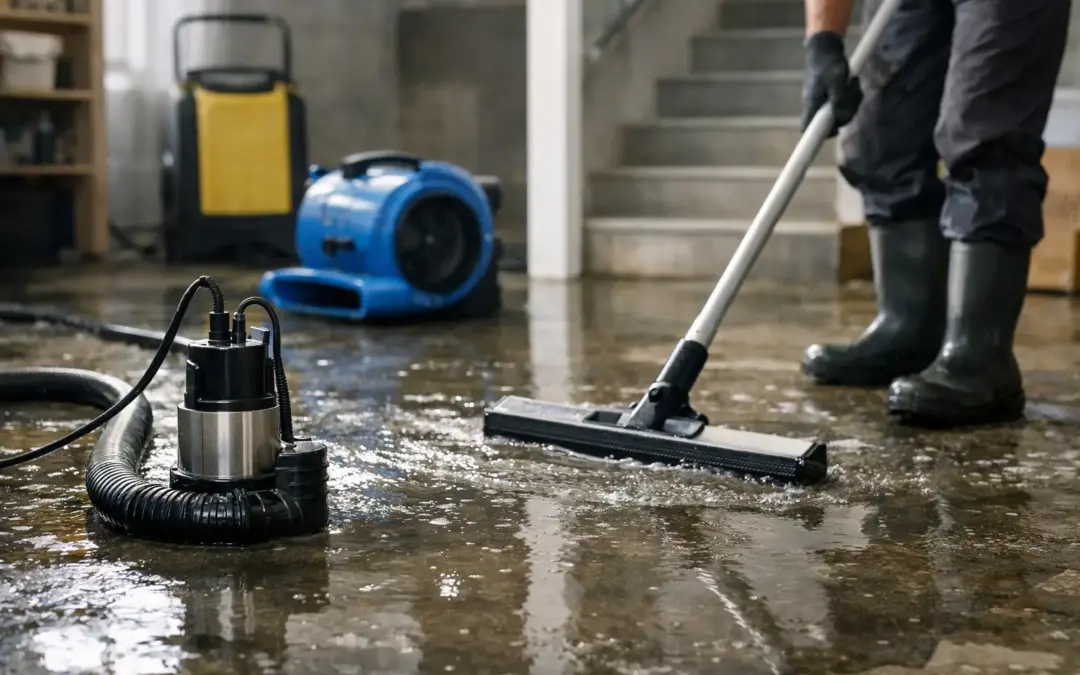
For shallow clean-water flooding, use a wet/dry vacuum, portable pump, or sump pump to remove water. Start with the lowest area and direct the discharge well away from the foundation. Do not pump basement water onto the lawn immediately beside the house, where it can flow back toward the same problem.
If several inches of water have accumulated around the outside of the foundation, avoid draining the basement too rapidly without professional guidance. In rare but serious cases, rapidly removing interior water while exterior soil remains saturated can place additional pressure on foundation walls. This is more of a concern in older homes with masonry or visibly compromised walls.
Remove wet boxes, area rugs, cardboard, furniture, and stored belongings as soon as possible. Cardboard and fabric hold moisture and can create mold-friendly conditions even after the floor looks dry. Photograph damaged items before discarding them if you may file an insurance claim.
Get air moving and lower humidity
After standing water is removed, the drying phase begins. Open basement windows only when the outdoor air is drier than the basement air. On humid summer days, open windows can bring in more moisture and slow drying rather than help it.
Use a dehumidifier sized for the basement, ideally one with a hose draining into a sink, floor drain, or condensate pump. Run it continuously and empty the reservoir as needed. Position fans to move air across wet surfaces, especially along walls, baseboards, and flooring. Fans alone do not remove moisture, but they help evaporation while the dehumidifier captures that moisture from the air.
Keep the basement temperature moderate. Extremely cold air slows evaporation, while excessive heat can create uncomfortable humidity and conceal the true moisture problem. A steady temperature with active dehumidification is more effective than simply turning up the heat.
Remove materials that cannot dry fully
Some materials can be cleaned and dried. Others trap water and should be removed before mold develops. Solid plastic storage bins, metal shelving, concrete floors, and non-porous furniture can often be disinfected and dried. Carpet padding, wet insulation, soaked ceiling tiles, particleboard furniture, and swollen laminate flooring are usually not worth saving.
Drywall is more conditional. If clean water affected only a small lower section and drying begins immediately, a professional may be able to assess whether it can be saved. But drywall that has absorbed contaminated water, remained wet for more than a day or two, or shows swelling and softness should be cut out and removed. Wall cavities can remain wet long after the room appears dry.
Check for Moisture You Cannot See
A dry-looking floor does not prove the basement is dry. Moisture can remain behind finished walls, beneath vinyl flooring, inside fiberglass insulation, and at the bottom of framed walls. Watch for a musty odor, peeling paint, warped baseboards, stains that spread after rainfall, or condensation on foundation walls.
This is where a targeted inspection can prevent repeated damage. The question is not just whether the basement was flooded. It is whether water entered through a wall crack, floor-wall joint, window well, plumbing line, failed drainage system, or another pathway entirely.
Basement Waterproofing Scientists uses diagnostic leak detection methods to locate the actual source of water intrusion before recommending repairs. That distinction matters. Installing a broad, expensive system without confirming the source can leave the original problem unresolved. In many homes, a focused repair to a crack, drainage connection, sump system, or exterior grading issue is the more economical permanent solution.
Do Not Cover Up a Recurring Basement Leak
After a flood, it is tempting to repaint stained walls, replace damaged carpet, and put everything back. That approach may restore the appearance of the space, but it does not address water pressure or an active entry point behind the wall.
Pay close attention to the timing of the flooding. Water that appears only during long, heavy rains may point to saturated soil and foundation pressure. Water concentrated around a window may indicate a failed window well or poor grading. Water that rises through a floor drain can signal a plumbing or sewer issue. If dampness appears regardless of weather, condensation, a plumbing leak, or groundwater may be involved.
A permanent solution should match the diagnosis. Interior drainage can be appropriate for ongoing groundwater pressure. Crack injection may be effective for an isolated foundation crack. Exterior drainage corrections can solve problems created by downspouts or grading. The best repair is not necessarily the largest one. It is the one that stops water at the correct source.
When to Call a Professional Immediately
Professional help is the practical choice when floodwater is contaminated, the basement has more than a minor amount of water, or the water has reached electrical equipment, a furnace, finished walls, or stored valuables. You should also schedule an inspection when flooding has happened more than once, even if you were able to clean up the first event yourself.
Call for help if you see horizontal wall cracks, bowing walls, crumbling masonry, sinkholes near the foundation, or a sump pump that cannot keep up during rain. These signs can indicate more than a simple surface leak and deserve a careful assessment before repairs begin.
A basement should not need repeated emergency drying after every storm. Removing water is the urgent first step, but finding and correcting its path into the home is what protects your belongings, indoor air quality, foundation, and long-term property value. A precise inspection now can spare you from another wet floor, another cleanup, and another round of avoidable damage.