

A basement that leaks only during hard rain usually tells you one thing – water is reaching the outside of the foundation and finding a path in. That is why exterior foundation waterproofing cost matters to homeowners who want a real fix, not another season of wiping up water, repainting walls, or running dehumidifiers nonstop.
For many homes in Greater Philadelphia, Southeast Pennsylvania, and South Jersey, the question is not whether exterior waterproofing works. It does. The real question is whether it is the right solution for your house, your specific leak pattern, and your budget. That is where pricing gets more nuanced than the internet often makes it sound.
What exterior foundation waterproofing cost usually includes
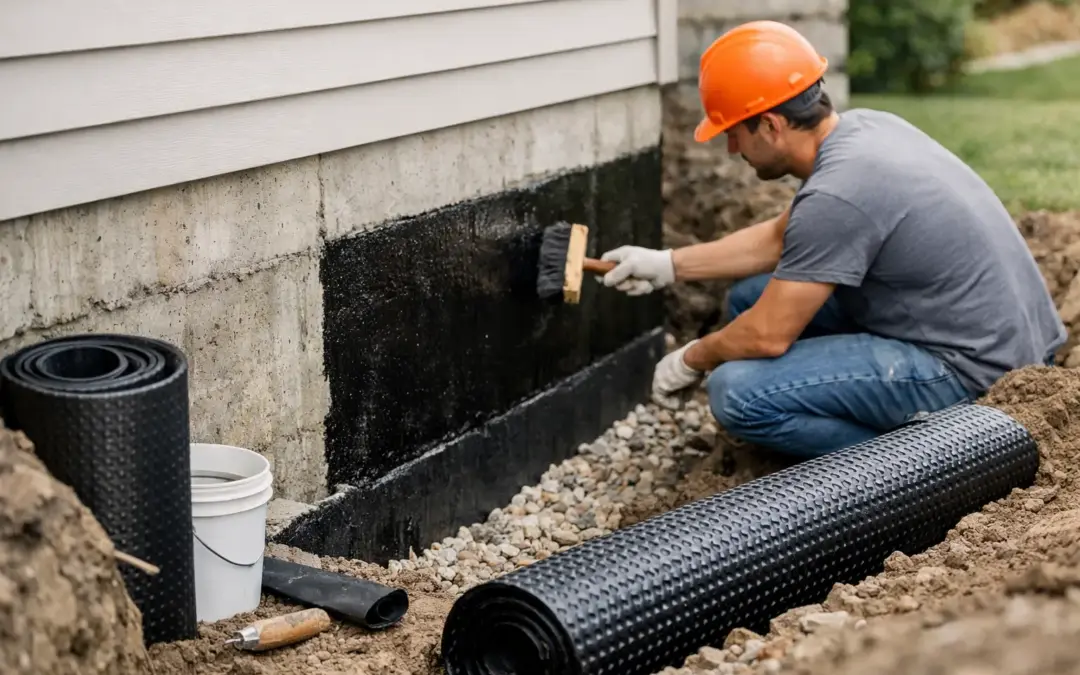
Exterior waterproofing is labor-heavy because the work happens outside the basement wall, below grade, where the water problem starts. In most cases, the contractor excavates down to the footing, exposes the wall, cleans and inspects the surface, repairs cracks or defects, applies a waterproof membrane or coating, installs drainage components if needed, and then backfills the area properly.
On a typical residential job, exterior foundation waterproofing cost often ranges from roughly $100 to $300 per linear foot, or about $5,000 to $20,000 and up depending on scope. That is a wide range because not every project involves the same depth, access, wall damage, drainage conditions, or amount of excavation.
If only one section of wall is leaking, the price may stay on the lower end because the repair is targeted. If the entire perimeter needs excavation, drainage board, membrane, footing drain replacement, and difficult restoration work, the total can rise quickly.
Why one house costs far more than the next
The biggest pricing factor is how much digging is required and how hard that digging will be. A straight, open wall with easy machine access is a very different project from a narrow side yard, a row-adjacent lot line, or a landscaped area packed with patios, shrubs, fencing, HVAC units, and utility lines.
Depth also matters. A shallow crawlspace-adjacent foundation is less expensive to excavate than a full basement wall extending several feet below grade. The deeper the excavation, the more labor, spoil handling, safety planning, and backfill work the project requires.
Then there is the condition of the foundation itself. If the wall only needs cleaning and membrane application, pricing stays more controlled. If the wall has step cracks, honeycombing, deteriorated mortar joints, bowed sections, or prior patch failures, the repair work adds time and material cost before waterproofing can even begin.
Drainage conditions are another major variable. Some homes need more than a coating on the wall. They may also need footing drain replacement, gravel drainage improvements, downspout discharge correction, or grading changes to keep water from building hydrostatic pressure against the foundation.
Exterior foundation waterproofing cost by scope
The most affordable version of exterior work is usually a localized excavation and repair. This is common when leak detection shows that water is entering through one cracked wall section, one pipe penetration, or one poorly sealed area. In those cases, a targeted repair might cost a few thousand dollars instead of a full-perimeter system.
Mid-range projects typically involve one or two full walls. That often happens on homes with a consistent leak pattern along one side or rear wall where runoff, negative grading, or failed damp-proofing has created a repeat problem. These projects can land in the mid to upper four figures or low five figures depending on depth and access.
Full-perimeter exterior waterproofing is the most expensive option because every side of the foundation must be excavated, treated, drained, and restored. On some homes, this is the right answer. On others, it is more work than necessary. A science-based inspection can save homeowners from paying for perimeter work when only one problem area actually needs to be addressed.
What homeowners often miss about pricing
Many online estimates leave out restoration. Excavation is only part of the job. After the waterproofing is complete, the area may need topsoil replacement, grading correction, walkway repair, stoop repair, or landscaping restoration. If there are decks, porches, masonry steps, or air conditioning equipment in the way, those obstacles can affect labor and total price.
Another missed cost is water management beyond the wall. If your gutters overflow, downspouts dump near the house, or the yard pitches toward the foundation, the exterior membrane alone may not solve the whole issue. Correcting those conditions adds cost, but it also protects the long-term performance of the repair.
There is also a difference between damp-proofing and true waterproofing. Some lower-cost proposals include a basic asphalt-style coating that slows moisture but does not perform like a full waterproofing membrane combined with proper drainage. A cheap number can look attractive until you realize it does not include the elements that keep the basement dry for the long haul.
When exterior waterproofing is worth the cost
Exterior work makes the most sense when water is entering through foundation walls below grade, when outside cracks or failed coatings are accessible and repairable, or when hydrostatic pressure is building against the wall and needs to be relieved at the source.
It is also worth serious consideration when you are protecting a finished basement, correcting a recurring leak that interior patching never solved, or preserving the structural integrity of an older foundation. In many Philadelphia-area homes, especially older masonry or block foundations, stopping water before it enters can prevent a much more expensive cycle of hidden deterioration, mold growth, and interior damage.
That said, exterior work is not automatically the best answer for every wet basement. If the true issue is a floor crack, under-slab water pressure, condensation, a plumbing leak, or isolated seepage better handled from inside, paying for excavation may be unnecessary. This is where accurate diagnosis matters more than a standard sales pitch.
Exterior vs. interior waterproofing cost
Homeowners often compare exterior work with interior drainage systems because the price difference can be significant. Interior waterproofing is usually less expensive up front because it avoids excavation. It manages water after it reaches the foundation by directing it to a drain system and sump pump.
Exterior waterproofing, by contrast, attempts to stop water before it enters. That is why the labor and price are often higher. The trade-off is straightforward: interior systems can be highly effective and economical in the right situation, while exterior systems are often the better fit when you need to address wall penetration, exterior cracks, or direct water pressure against the foundation.
Neither approach is universally better. The best choice depends on where the water is coming from, what building materials are involved, and whether the goal is management, prevention, or both.
How to evaluate an estimate without overpaying
A good estimate should explain the source of the water, not just the proposed price. If a contractor cannot show why the leak is happening, the scope may be based on guesswork. That is how homeowners end up paying for full excavation when a targeted repair would have handled the issue.
Look closely at what is included. Ask whether the proposal covers crack repair, membrane type, drainage board, footing drain work, gravel backfill, cleanup, and surface restoration. Also ask what happens if the wall is opened and additional structural defects are found. Clear pricing now prevents surprises later.
Warranty terms matter too. Exterior foundation work is disruptive, so homeowners should expect durable materials and a meaningful guarantee. A lifetime-backed repair carries more value than a lower price attached to minimal protection.
This is also where a diagnostic company stands apart from a one-size-fits-all waterproofing contractor. At Basement Waterproofing Scientists, the focus is on identifying the exact source of intrusion first, then recommending the most economical permanent fix. Sometimes that is exterior waterproofing. Sometimes it is not. Homeowners save money when the solution matches the problem.
What to expect during the inspection process
A proper inspection should look at more than the damp spot on the basement wall. The inspector should evaluate grading, discharge lines, foundation cracks, wall construction, signs of hydrostatic pressure, previous repairs, and the pattern of water entry over time.
That level of inspection is especially important in older homes throughout the Philadelphia region, where stone foundations, block walls, additions, and aging drainage systems can create overlapping issues. Two basements may show similar staining inside but need completely different repairs outside.
A trustworthy contractor will be comfortable telling you when exterior excavation is justified and when a less invasive approach makes more sense. That honesty is often the difference between a repair that holds and a project that costs more than it should.
Exterior foundation waterproofing cost can be substantial, but so is the cost of repeating temporary fixes, replacing damaged finishes, and living with a basement you cannot trust. The smartest money is usually spent on the repair that solves the actual problem the first time.