

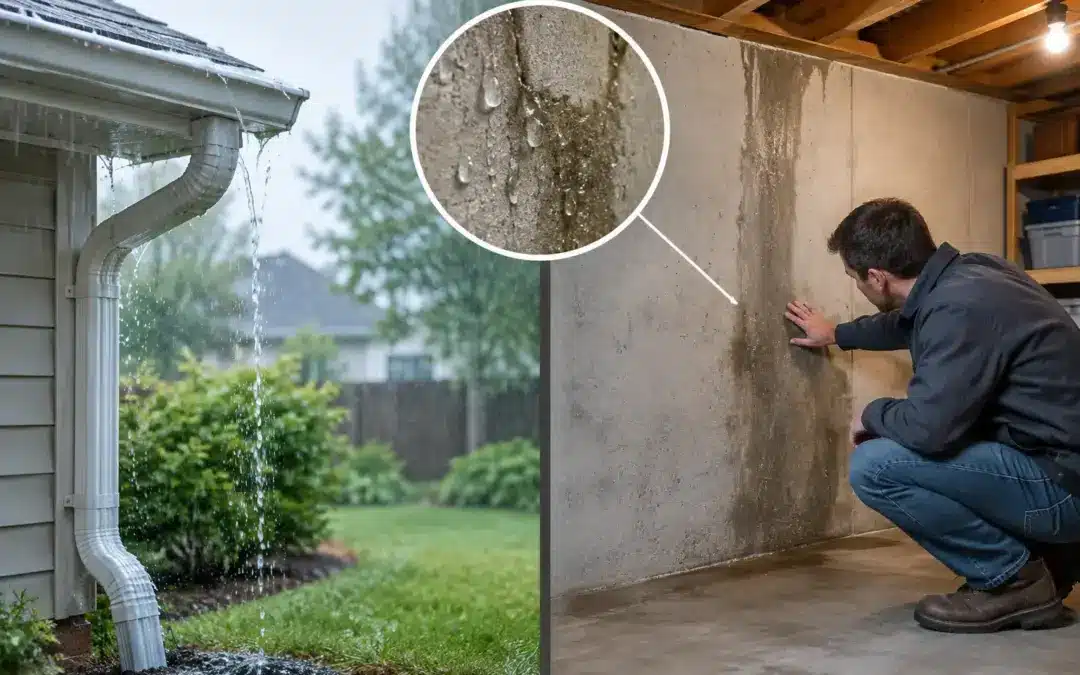
A basement that stays dry for months but leaks during a hard Philadelphia-area rainstorm is sending a useful signal. Can rain cause basement leaks? Absolutely. Rain is often the trigger, but it is rarely the complete cause. The real issue is usually how stormwater collects, travels through soil, and finds a path through or around your foundation.
A wet corner, a damp wall seam, or water near a basement window does not automatically mean you need a full waterproofing system. It may point to a drainage correction, a targeted crack repair, or a failure in an existing waterproofing component. Accurate diagnosis comes first because the most economical permanent repair depends on where the water begins.
Why Rain Creates Pressure Around Your Foundation
Your foundation sits below grade, surrounded by soil. During and after a storm, that soil absorbs water. If it becomes saturated, water can build up against basement walls and the footing. This is called hydrostatic pressure.
Concrete is strong, but it is not a perfect barrier against moisture. Small pores, construction joints, utility penetrations, floor-wall seams, and cracks can all become entry points when enough water pressure is present. Water follows the path of least resistance, so it may emerge several feet from the actual exterior problem.
This is why a homeowner may see water coming through the basement floor edge and assume the slab is failing. In many cases, water is actually collecting outside because roof runoff is dumping too close to the house or the yard slopes toward the foundation.
Rainfall Intensity Matters
A slow, steady rain and a sudden downpour do not affect a property the same way. Heavy storms can overwhelm gutters, saturate compacted clay soil, and expose drainage problems that go unnoticed during lighter rain. In Southeast Pennsylvania and Southern New Jersey, older homes are especially prone to these issues because grading, gutters, and drainage systems may have changed over decades.
A leak that appears only during intense storms usually suggests an exterior water-management issue or a defect that opens under pressure. A leak that continues days after rain may indicate trapped groundwater, poor footing drainage, or a sump system that is not moving water away efficiently.
Common Ways Rain Causes Basement Leaks
Rainwater does not need a large opening to enter a basement. A hairline crack or poorly sealed joint can be enough when outside water pressure rises. The pattern and location of the moisture offer valuable clues.
Foundation Wall Cracks
Vertical cracks are common in poured concrete foundations. Some are minor shrinkage cracks, while others allow rainwater through when the surrounding soil is wet. Water may show up as a narrow stream, a dark wet line, or white mineral deposits called efflorescence.
Horizontal cracks, stair-step cracks in block walls, or cracks that appear to widen deserve more attention. They can indicate soil pressure or movement in addition to a water-entry problem. Sealing the visible crack without understanding why it formed can leave the underlying condition unresolved.
The Floor-Wall Joint
The joint where the basement floor meets the wall is one of the most common leak locations. It is not necessarily a crack in the traditional sense. Water can rise beneath the slab or build outside the footing, then enter at this joint when pressure increases.
If water appears along multiple wall edges after rain, especially with no obvious wall crack, the problem may involve perimeter drainage, groundwater pressure, or a failed interior drainage solution.
Gutters, Downspouts, and Roof Runoff
A single overflowing gutter can send hundreds of gallons of water beside a foundation during a storm. Clogged gutters, short downspout extensions, disconnected underground leaders, and downspouts aimed toward a driveway slope can all concentrate water where it does the most damage.
This is one of the first conditions a qualified inspection should evaluate because it can sometimes be corrected without major foundation work. However, improving gutters alone will not repair an active wall crack, failed drain tile, or chronic high-water-table condition.
Negative Grading and Settled Soil
The ground should generally slope away from the house so rainfall moves outward rather than pooling along the foundation. Over time, soil settles near the home, landscaping changes, patios shift, and mulch beds build up. What once drained properly may now funnel water directly toward the basement wall.
Regrading can be a practical part of the solution, but it needs to be done carefully. Simply piling soil against siding or covering weep areas can create moisture and pest problems above grade. The goal is controlled drainage away from the structure, not hiding the low spot.
Basement Windows and Exterior Openings
Window wells, bulkhead doors, pipe penetrations, and old exterior access points are frequent weak spots. A window well without proper drainage can fill like a bucket. Once water rises above the window frame or reaches a failed seal, the basement can flood quickly.
These problems often look obvious after a storm, but the repair still needs to address the source. Recaulking a window may help, yet it will not solve a window well that repeatedly fills with runoff.
How to Tell Where the Water Is Coming From
Do not wait for the next storm to begin investigating. Photograph the wet area, note the date and rainfall conditions, and look for patterns. Was the sump pump running continuously? Did the leak begin while it was raining or several hours later? Is the water limited to one location?
Inside the basement, check for damp drywall, peeling paint, rusted appliances, musty odors, efflorescence, and darkened carpet edges. Outside, inspect gutter discharge, soil slope, downspout connections, window wells, patio edges, and standing water near the foundation.
Avoid assuming that the closest visible defect is the cause. Water can travel behind finished walls, under flooring, and through soil before it becomes visible. A targeted leak-detection inspection helps distinguish surface runoff from groundwater pressure, plumbing leaks, condensation, and foundation entry points.
Can Rain Cause Basement Leaks Even With a Sump Pump?
Yes. A sump pump is an important tool, but it is only one part of a complete water-control system. It removes water that reaches the sump basin. It does not stop rainwater from entering through a wall crack, a window well, or an exterior drainage failure.
A pump can also fail to protect the basement if the float switch sticks, the discharge line is blocked or frozen, the check valve is defective, or the unit loses power during a storm. If a pump runs but the basement still leaks, the system may be undersized, improperly routed, or dealing with water entering somewhere outside the drainage path.
For homes with recurring storm-related water, a backup pump and battery system may be worthwhile. That decision depends on the home’s drainage conditions, the consequences of a flood, and whether power outages are common in the area.
The Right Repair Depends on the Actual Cause
Permanent basement waterproofing is not a one-size-fits-all package. A localized crack can often be repaired with a targeted injection or structural repair method. Poor roof drainage may require gutter and downspout corrections. Water entering at the floor-wall joint may call for an interior drainage system and sump solution. Severe exterior drainage issues can require grading or exterior waterproofing work.
The trade-off is cost versus scope, but cheap surface fixes are rarely economical if they merely delay the next leak. Paint-on waterproof coatings, quick caulk repairs, and repeated dehumidifier use can make symptoms less visible while moisture continues behind walls or beneath finished flooring.
At the same time, homeowners should be cautious of recommendations for extensive work before the leak source has been identified. Basement Waterproofing Scientists uses diagnostic leak detection to locate the water path and recommend the repair that fits the specific condition, rather than selling a generic system for every wet basement.
When to Schedule a Professional Inspection
A one-time small leak may still deserve attention, particularly if it occurs after every major rain. Schedule an inspection promptly if water is recurring, mold or musty odors are developing, wall cracks are changing, finished basement materials are wet, or water is reaching electrical equipment, furnaces, or stored belongings.
Take active flooding seriously. Move valuables away from the area, avoid standing water near electrical sources, and document conditions before cleanup when it is safe to do so. Drying the basement quickly limits damage, but finding the source is what protects the space through the next storm.
Rain should not dictate whether your basement is usable. A careful inspection can turn a frustrating wet-basement mystery into a clear repair plan, so the next hard rain becomes a weather event rather than a threat to your home.