

Why Moisture Control Matters for Your Basement Health
Basement vapor barriers are materials installed on basement walls and floors to stop water vapor from passing through porous concrete and entering your living space. They are essential for preventing mold, protecting your home’s structure, and improving air quality and energy efficiency.
Quick Answer: What You Need to Know About Basement Vapor Barriers
- What they are: Durable sheets or coatings (polyethylene, foam board, spray foam) that block water vapor.
- Where they go: On the interior side of basement walls and floors.
- Why you need one: To prevent mold, protect structural wood, reduce humidity, and lower energy bills.
- Perm ratings: Class I (≤0.1 perms) offers maximum protection, which is ideal for most basements.
- Cost: Part of a full waterproofing system, typically ranging from $4,000 to $8,000.
A damp, musty basement doesn’t have to be your reality. Basements can account for about 25 percent of a home’s total heat loss, much of which is due to moisture issues a vapor barrier can solve.
Concrete is porous, allowing water vapor from the soil to seep into your basement. This leads to high humidity, mold, wood rot, and structural damage. A properly installed vapor barrier blocks this moisture at the source. However, incorrect installation can trap moisture and worsen the problem, making professional expertise crucial.
I’m Darin Garvey, and for over 30 years, I’ve helped Philadelphia-area homeowners transform their basements with state-of-the-art basement vapor barriers and waterproofing systems. I know how the right moisture control strategy can create a dry, healthy, and valuable living space.
What is a Basement Vapor Barrier and Why is it Essential?
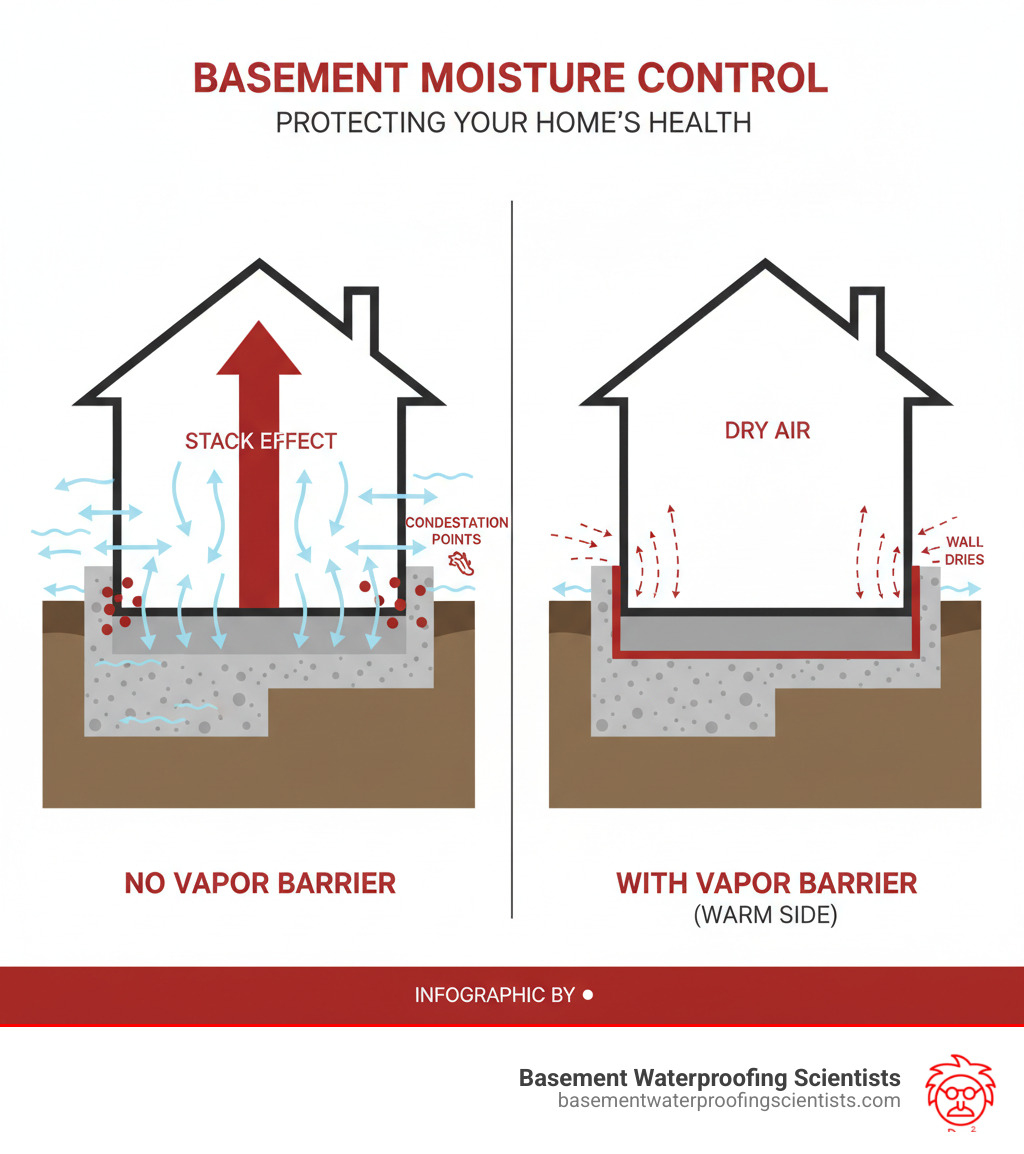
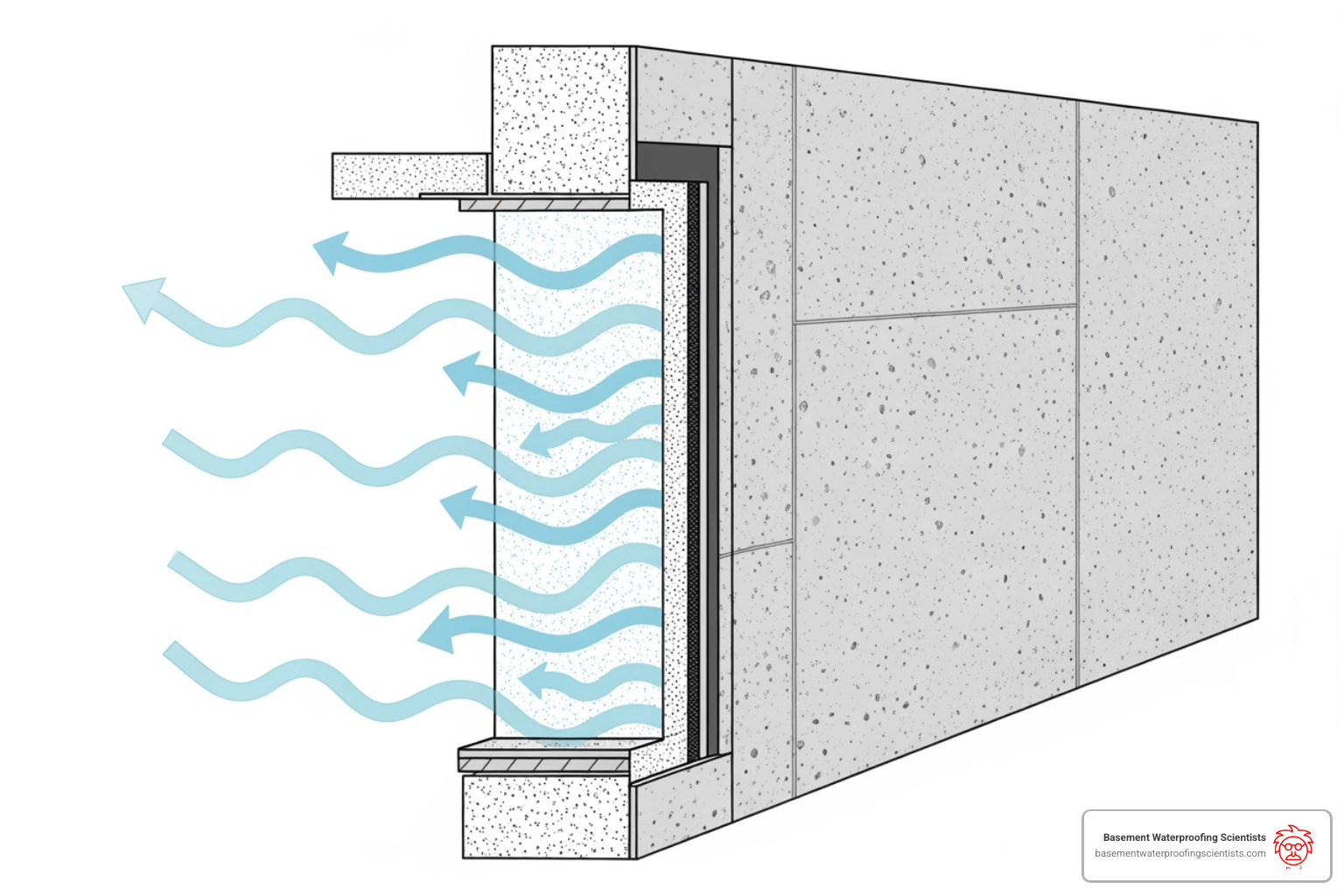
Your concrete basement walls and floor may look solid, but they are full of microscopic pores. Water vapor from damp soil migrates through these pores, causing common basement problems. A basement vapor barrier acts as a protective shield, stopping this moisture invasion before it starts.
When installed correctly, a vapor barrier prevents warm, moist indoor air from condensing on cold concrete. This is a primary cause of basement dampness.
Key benefits include:
- Protecting Structural Integrity: It keeps moisture away from wood framing, subfloors, and support beams, preventing rot that can lead to costly repairs.
- Preventing Rot: Beyond the structure, it protects stored items like furniture, boxes, and fabrics from moisture damage.
- Safeguarding Health: By blocking moisture, basement vapor barriers eliminate the key ingredient for mold growth. This is vital, as mold can cause respiratory issues and other health issues.
Vapor barriers specifically address water vapor (humidity), which differs from damp proofing that handles liquid water. Learn more in our guide on Damp Proofing vs Waterproofing.
Signs You Need a Vapor Barrier
Your basement will show clear signs of a moisture problem. Look for these warnings before they lead to expensive repairs:
- Musty Odors: A classic “basement smell” indicates mold or mildew is growing, even if it’s not visible.
- Visible Mold or Mildew: Black, green, or white patches on walls, floors, or stored items are a definite red flag.
- High Humidity: The air feels heavy, clammy, and uncomfortable.
- Peeling Paint: Bubbling or flaking paint on concrete walls is caused by moisture pushing it off the surface.
- Efflorescence: White, chalky stains on concrete or masonry are mineral deposits left behind by evaporating water.
- Wet Spots: Damp areas or water stains on walls or floors, especially after rain, point to moisture intrusion.
- Condensation: Water droplets on pipes, windows, or concrete walls signal excessive humidity.
- Warped Wood: Swollen or distorted wooden doors, window frames, or beams are absorbing moisture from the air.
If you notice these signs in your Reading, Pottstown, or Ardmore home, it’s time for a professional assessment. Our guide on 8 Signs Your Basement Needs Waterproofing offers more detail.
Choosing and Installing Your Basement Vapor Barrier System
Choosing the right basement vapor barriers is critical, especially in the varied climate of Pennsylvania and New Jersey. A one-size-fits-all approach doesn’t work; your home needs a custom solution.
Key considerations include:
- Climate Zone: In our cold climate, the vapor barrier must go on the warm (interior) side of the insulation. This prevents warm, moist indoor air from condensing on the cold concrete foundation.
- Finished vs. Unfinished: A vapor barrier is essential for a finished basement to protect drywall and flooring from moisture damage. For unfinished basements, it improves air quality and protects stored items.
- Walls and Floors: Both walls and floors need protection. Walls face moisture from surrounding soil, while floors deal with moisture wicking up from the ground. Treating only the walls is an incomplete solution.
At Basement Waterproofing Scientists, we design custom solutions for homes in Philadelphia, Norristown, and beyond. Learn about our process on our Basement Moisture Barrier Installation page.
Types of Vapor Barrier Materials Available
Several materials can function as basement vapor barriers:
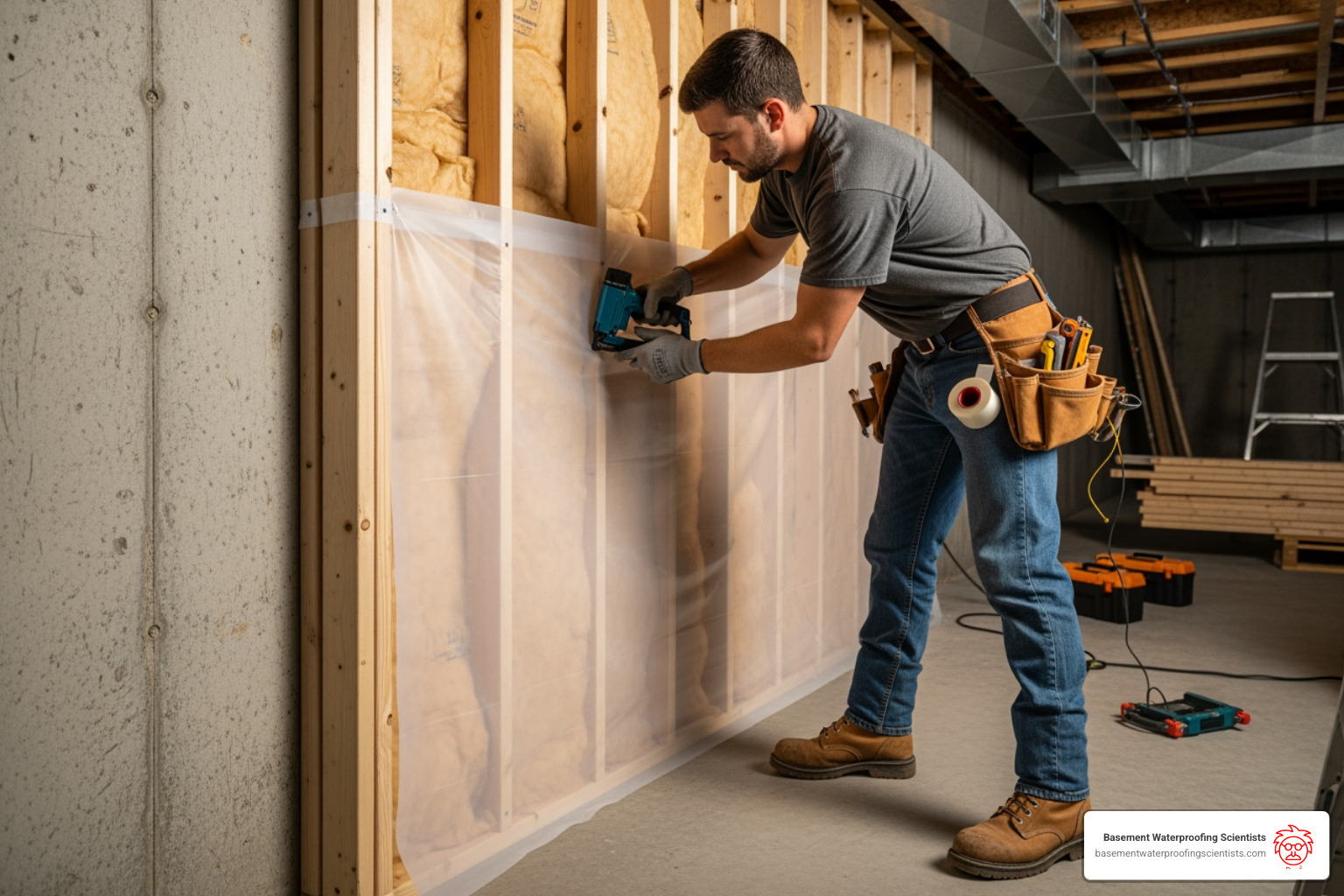
- Polyethylene Plastic Sheeting: The most common choice, available in thicknesses (mils). A 6-mil or 10-mil sheet is typical for walls, while a thicker 10-mil or 20-mil sheet is better for floors to resist punctures.
- Rigid Foam Board Insulation: Materials like XPS or polyisocyanurate insulate and act as a vapor retarder simultaneously. They are installed directly on basement walls.
- Closed-Cell Spray Foam Insulation: This option insulates, air-seals, and blocks vapor in one application. It’s ideal for uneven walls as it expands to fill every gap, creating a seamless barrier.
- Insulated Concrete Forms (ICFs): Used in new construction, these foam forms are filled with concrete to create an inherently insulated and vapor-resistant wall.
- Specialty Membranes: These are reinforced liners, often with antimicrobial treatments, designed for high-performance basement applications.
Vapor Barrier vs. Vapor Retarder: The Perm Rating Explained
The terms are often confused, but the difference is permeability, measured in “perms.” A lower perm rating means less water vapor can pass through.
- Class I Vapor Barriers (≤ 0.1 perms): These offer the highest level of protection and are ideal for basement walls and slabs in our region. Examples include polyethylene sheeting (6-mil+), sheet metal, and rubber membranes.
- Class II Vapor Retarders (> 0.1 to 1.0 perms): These are semi-permeable and include materials like asphalt-coated paper and some specialty paints. They are generally not sufficient for direct-to-earth basement walls.
- Class III Vapor Retarders (> 1.0 to 10.0 perms): These are permeable materials like latex paint and gypsum board. They are not suitable as a primary basement vapor barrier.
For a deeper dive, see this resource on What’s the Difference?
Common Installation Mistakes to Avoid
Proper installation is key. Avoid these costly errors:
- The Double Vapor Barrier: Installing barriers on both the interior and exterior of a wall traps moisture, leading to mold and rot.
- Wrong Placement: In our climate, the barrier must be on the warm (interior) side of the insulation. Placing it on the cold side causes condensation within the wall.
- Poor Sealing: All seams must be overlapped and sealed with specialized vapor barrier tape. Gaps will let moisture through.
- Punctures and Tears: Any holes from staples, nails, or accidental tears create a path for moisture and must be sealed immediately.
- Ignoring the Floor: Walls and floors must both be treated. Moisture will still wick up through an unsealed concrete slab, making the basement damp.
Fixing these mistakes is expensive. Professional installation ensures it’s done right the first time. For more on what to avoid, check out Vapor Barrier 101: What Not To Do.
The Comprehensive Benefits of a Dry Basement
Installing a basement vapor barrier transforms an underused space into a valuable asset. Homeowners in communities like King of Prussia and Willow Grove find their basement’s true potential once it’s free from dampness.

A dry basement offers whole-home benefits:
- Improved Air Quality: Air from the basement circulates throughout your home. A dry basement means less mold, dust, and musty odors, creating a healthier environment for your family.
- More Usable Space: A damp, unwelcoming room can become a comfortable family room, home office, or gym, adding valuable square footage to your home.
- Protection for Belongings: Keep stored items like furniture, tools, and sentimental keepsakes safe from mold, mildew, and rust.
- Pest Prevention: Damp environments attract insects, spiders, and rodents. A dry basement makes your home far less appealing to pests.
- Increased Property Value: A dry, professionally protected basement is a major selling point that adds significant value to your home.
How a Vapor Barrier Protects Against Mold and Mildew
Mold is more than an eyesore; it can trigger allergies and other health problems. A basement vapor barrier is your best defense, as it eliminates the moisture mold needs to grow. By blocking water vapor from the soil and preventing condensation on cool surfaces, the barrier creates an environment where mold spores cannot thrive. Learn more about how How Wet Basements Create Mold The Perfect Environment for Growth.
How a Vapor Barrier Contributes to Energy Efficiency
Did you know basements can account for about 25 percent of a home’s total heat loss? Moisture is a major culprit. Humid air is harder and more expensive to heat and cool. A basement vapor barrier reduces the humidity load, allowing your HVAC system to run more efficiently and less often. This lowers your utility bills and reduces wear and tear on your equipment. Furthermore, by keeping insulation dry, a vapor barrier ensures it performs at its maximum R-value, preventing heat transfer. This leads to better Basement Air Quality Improvement and whole-home efficiency.
Advanced Considerations for Basement Vapor Barriers
A basement vapor barrier is a crucial part of a whole-system approach to waterproofing. For maximum effectiveness, it must work in concert with other moisture control methods and comply with local building codes.
The Role of Ground Water Control
Even a perfect vapor barrier can fail if groundwater isn’t managed. Proactive water control is essential. This includes:
- Exterior Grading: Ensuring the soil around your foundation slopes away from the house.
- Gutters and Downspouts: Directing roof runoff far away from the foundation.
- Interior Drain Tile System: A perimeter drain (or French drain) collects water that seeps in and directs it to a sump pump, which then expels it from the home. The vapor barrier often integrates directly with this system.
Learn more about these solutions in our guide to Basement Drainage System.
Specialized Solutions: ICFs and Spray Foam
In some cases, advanced materials offer a combined solution:
- Insulated Concrete Forms (ICFs): Used in new construction, ICFs create a wall that is inherently insulated and vapor-resistant.
- Closed-Cell Spray Foam: This is an excellent option for existing basements, especially those with uneven walls. It acts as an all-in-one insulator, air barrier, and vapor barrier, creating a seamless seal. Unlike open-cell foam, it is impermeable to water vapor.
For more on foundation solutions, visit our Waterproofing Foundations page.
DIY vs. Hiring a Professional for Your Basement Vapor Barriers
While DIY can be tempting, installing basement vapor barriers is a complex job where mistakes are costly. Common DIY errors like creating a double vapor barrier or improper sealing can trap moisture and cause hidden mold growth.
A professional understands the complexities of integrating the barrier with drainage systems, sealing it perfectly, and complying with local building codes in Pennsylvania, New Jersey, and Delaware. At Basement Waterproofing Scientists, we use specialized equipment to diagnose moisture issues and provide a guaranteed solution. A comprehensive project typically costs between $4,000 and $8,000 and comes with a lifetime guarantee, saving you from expensive repairs down the line.
For a cost breakdown, see our guide on the Cost to have Vapor Barrier Installed.
Frequently Asked Questions about Basement Vapor Barriers
How long does a basement vapor barrier last?
A professionally installed, high-quality basement vapor barrier can last for 20 years or more, and often for the life of the home. The lifespan depends on the quality of the material (e.g., 10-mil or 20-mil sheeting), the precision of the installation, and protection from physical damage. Professional installation, like the kind we provide with a lifetime guarantee in areas from Norristown to Willow Grove, ensures maximum longevity.
Can spray foam insulation act as a vapor barrier?
Yes, but only closed-cell spray foam. It is impermeable to water vapor and acts as an all-in-one insulator, air barrier, and vapor barrier. This makes it an excellent solution, especially for older, irregular foundation walls. Open-cell spray foam, in contrast, is permeable to moisture and is not a vapor barrier. If you’re considering spray foam in Reading or Pottstown, ensure it’s the closed-cell type for moisture control.
What are the building code requirements for basement vapor barriers?
Building codes for basement vapor barriers vary by location but typically specify the material’s perm rating (e.g., Class I) and its placement. In our climate zone (including Pennsylvania, New Jersey, and Delaware), codes require the barrier to be on the warm side of the insulation. Requirements can differ between municipalities like Allentown and Quakertown, so consulting a professional who knows local codes is essential to ensure compliance.
Conclusion
You deserve a basement that adds value to your home, not one that causes worry. As we’ve covered, basement vapor barriers are the key to achieving this. They protect your family’s health by preventing mold, safeguard your home’s structure from rot, and save you money on energy bills.
However, proper installation is everything. Common DIY mistakes can trap moisture and make problems worse. With three decades of experience across Pennsylvania, New Jersey, and Delaware, Basement Waterproofing Scientists ensures the job is done right. We use specialized equipment to find the source of moisture, allowing us to provide effective, customized solutions for less than you might expect.
Whether you’re in Philadelphia or Reading, we create a plan for your unique challenges and back our work with a lifetime guarantee. A dry, healthy basement is achievable.
Don’t wait for minor moisture to become a major issue. Schedule your expert basement moisture barrier installation with us today and start the journey to a permanently dry basement.