

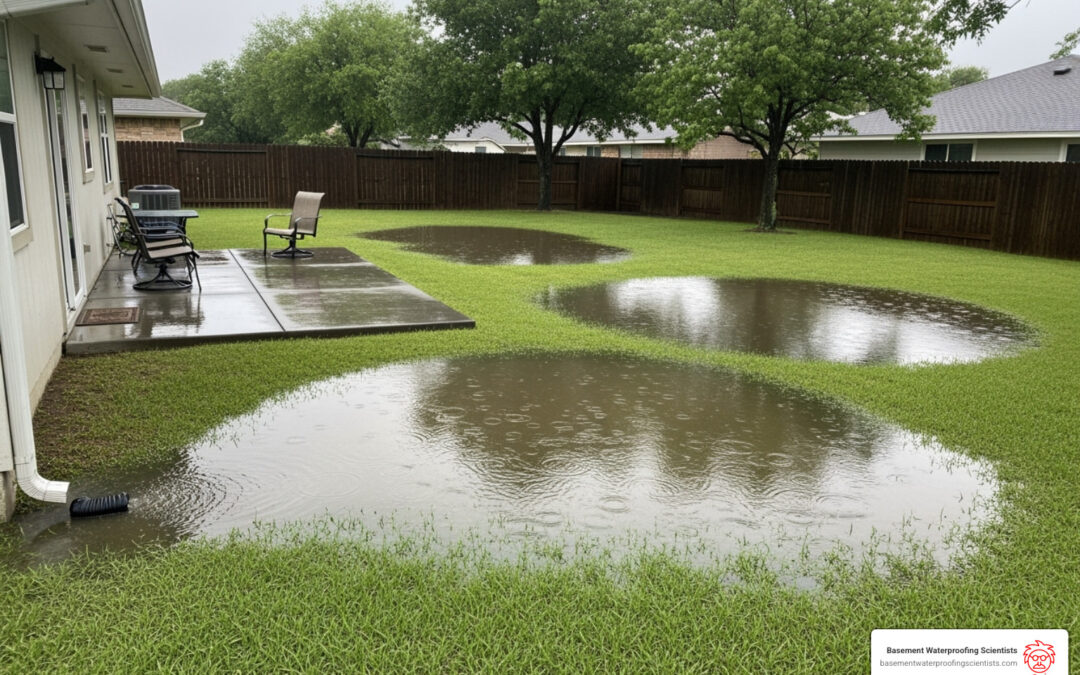
Why Backyard Drain Tile Installation Can Transform Your Soggy Yard
Backyard drain tile installation is a drainage solution that uses perforated pipes buried in gravel-filled trenches to collect and redirect excess groundwater away from your home’s foundation and yard.
Quick Answer: What is Backyard Drain Tile Installation?
- What it is: A system of 4-inch perforated pipes, gravel, and landscape fabric.
- How it works: Collects and channels groundwater away from problem areas.
- Typical trench: 12 inches wide, 8-24 inches deep, sloped at 1/4 inch per foot.
- Where water goes: To a dry well, daylight exit, or storm drain.
- DIY cost: $200-$400 in materials.
- Professional cost: $3,000-$15,000.
- Installation time: 1-2 days.
If standing water makes your yard a muddy mess and threatens your foundation, a drain tile system (or French drain) offers a permanent solution. It works by giving water an easy path to follow. Water flows into perforated pipes buried in gravel trenches and is carried away to a safe discharge point.
The installation involves digging sloped trenches, laying pipe correctly (holes down), and using the right gravel. While some homeowners tackle this as a DIY project for $200-$400, others hire professionals for $3,000-$15,000. The right choice depends on your budget, time, and the project’s complexity.
With over 30 years in the basement waterproofing industry, I’ll walk you through everything you need to know to make an informed decision.
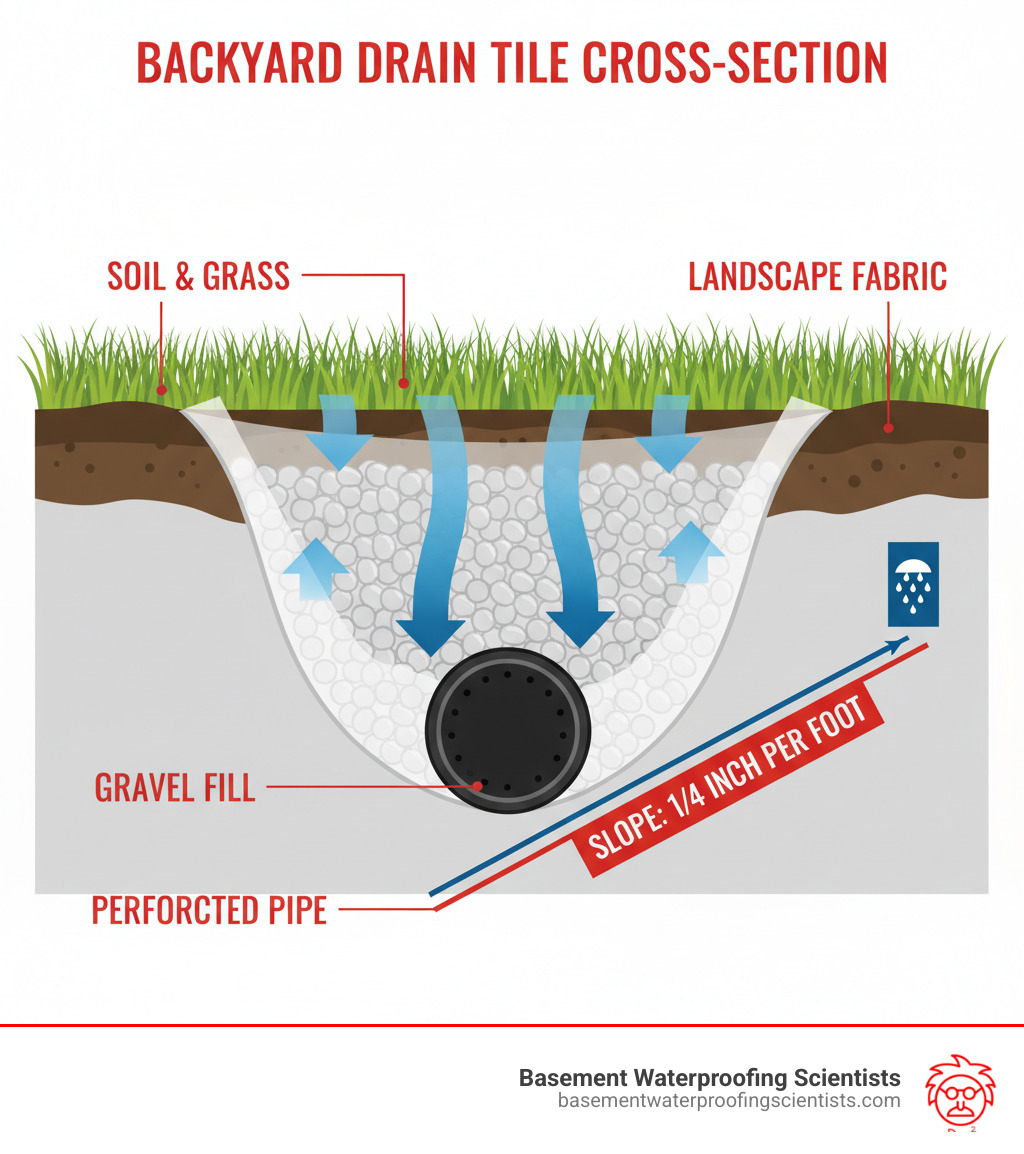
What is a Drain Tile System and Why You Might Need One
Contrary to the name, drain tiles aren’t tiles but perforated plastic pipes, usually 4 inches in diameter. Buried in gravel-filled trenches, these pipes collect water through small holes and channel it away from your yard. This underground system gives water a clear path to follow, preventing it from pooling on your lawn or pushing against your foundation. You can learn more about how these systems work on our Drainage Tile page.
The benefits go beyond a drier lawn:
- Protect Your Foundation: Saturated soil creates hydrostatic pressure against basement walls, leading to cracks and leaks. A drain tile system redirects this water, preventing damage.
- Reduce Soil Erosion: Standing water washes away topsoil and creates ruts. Proper drainage keeps your landscape intact.
- Eliminate Standing Water: A dry yard means no more mud, fewer mosquitos, and a usable outdoor space after rain.
- Healthier Lawn and Garden: Most plants suffer in overly wet soil. Good drainage prevents root rot and disease, helping your lawn and garden thrive.
Signs You Need a Backyard Drain Tile System
Your yard will often show signs of poor drainage. Look for:
- Persistent puddles hours or days after rain.
- A soggy, squishy lawn that feels like a wet sponge.
- Basement moisture or leaks, including dampness, musty smells, or white powder on walls (efflorescence). This is a critical sign that water is building up around your foundation. Our Wet Basement Repair page has more on this.
- Foundation cracks, which are often caused by water pressure from saturated soil.
- A naturally high water table in your area.
Interior vs. Exterior Systems
Drain tile systems can be installed inside or outside your home.
Exterior drain tile, the focus of this guide, is installed in your yard to intercept water before it reaches the foundation. This approach deals with water at its source. The downside is the significant excavation required, which disrupts landscaping and is generally more expensive ($50-$100 per linear foot). If installed incorrectly, exterior systems can clog over time.
Interior drain tile is installed inside your basement along the floor’s perimeter. It collects water that has already entered under or through the foundation and directs it to a sump pump. Interior systems are less expensive ($40-$85 per linear foot), faster to install, and don’t disturb your yard. However, they require breaking up your basement floor and only manage water after it has already reached your foundation. Our Basement Drainage Systems guide covers this topic in detail.
Sometimes, a combination of both systems offers the best protection, depending on your situation and budget.
Planning Your Backyard Drain Tile Installation
Careful planning is crucial for a successful backyard drain tile installation. An hour of planning can save days of frustration and costly repairs.
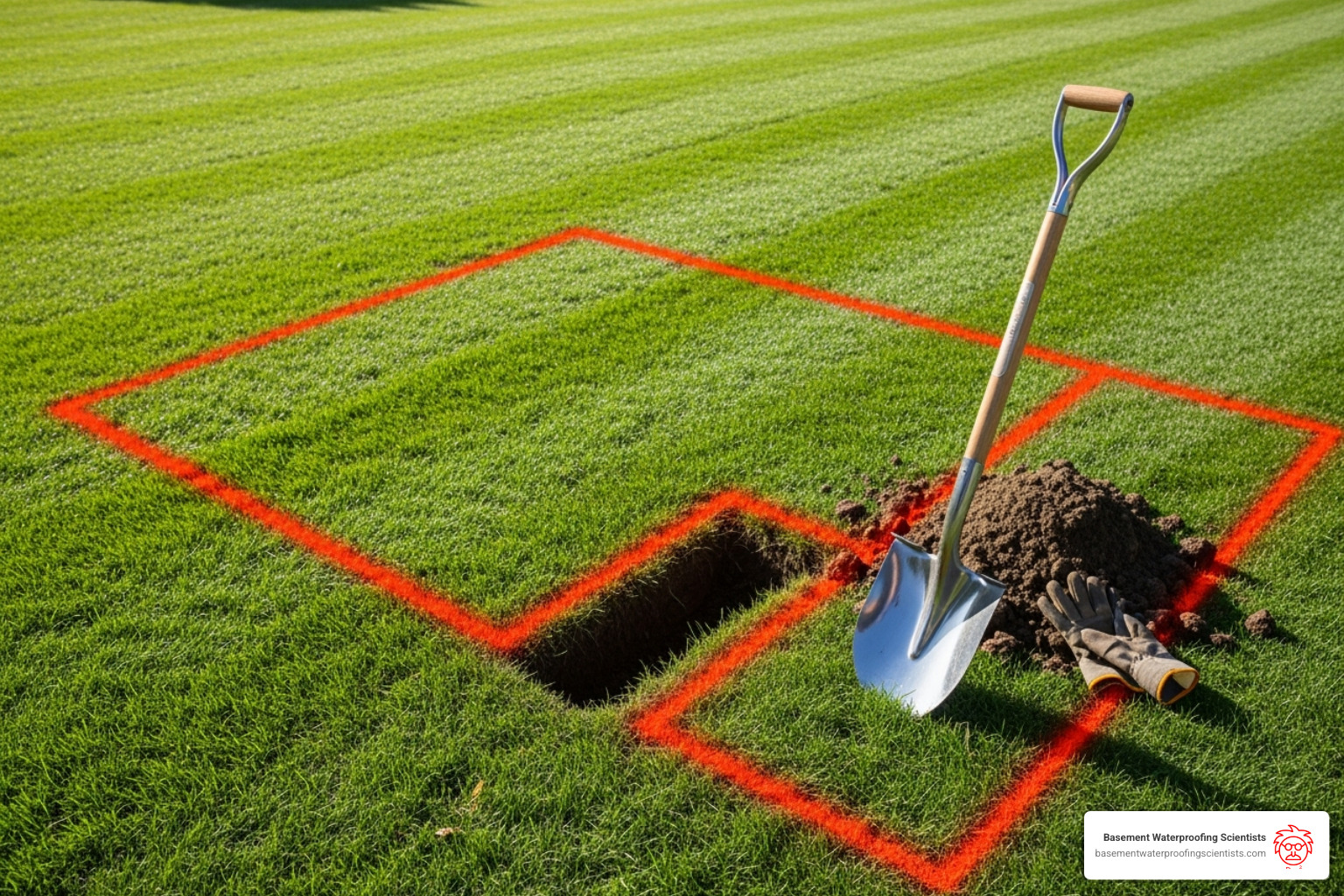
First, always call 811 a few days before you dig. This free service marks underground utility lines (gas, water, electric), preventing dangerous and expensive accidents. It’s the law in most places. While waiting, review your property survey to understand boundary lines and easements.
Check with your local building department to see if you need a permit, especially if connecting to a storm drain. Permits typically cost $50-$300.
Next, determine your discharge point—where the collected water will go.
- A daylight exit is ideal if your yard slopes downward, allowing gravity to carry water away. Ensure it doesn’t flow onto a neighbor’s property.
- A dry well, a large gravel-filled pit, allows water to slowly seep into the ground. It works best in loamy or sandy soils.
- Connecting to a storm drain is an option in some urban areas but requires permits and carries the risk of sewer backups during heavy rain. Consult a professional if considering this.
Determining Placement and Slope
The success of your system depends on proper placement and slope. Your trench must start at the highest point of the problem area and descend toward the discharge point. The industry standard slope is a 1/4 inch drop for every foot of length (a 1/8 inch slope is the minimum). A steeper grade moves water faster and reduces the risk of clogs.
Use wooden stakes, string, and a line level to mark your trench path and ensure a consistent downward pitch. This string line will be your guide for digging. For technical guidance, the Installation Guidelines from Baughman Tile Co. offer comprehensive specifications.
How Soil Type Affects Your Installation
Soil type impacts drainage and installation difficulty.
- Clay soil drains slowly and is heavy to dig. A drain tile system is highly effective here as it creates a necessary path for water.
- Sandy soil drains quickly but may indicate a high water table. It’s much easier to dig.
- Loam is a balanced mix that offers good drainage.
Regardless of soil type, filter fabric is essential. This landscape fabric wraps around the gravel and pipe, preventing soil particles from clogging the system. Skipping this step is a primary cause of system failure. The fabric ensures your drain tile will function for decades.
Your Step-by-Step Guide to Installing Drain Tile
This is where your plan becomes a reality. Whether you’re doing it yourself or overseeing a professional, here’s how the backyard drain tile installation process works.
Materials and Tools Needed
Gather your supplies before you start:
- Materials: 4-inch perforated drain pipe (flexible or rigid PVC), 3/4-inch drain rock/gravel (approx. 2 cubic yards for a 70-foot trench), non-woven landscape/filter fabric, pipe fittings (Y-fittings, couplings), and cleanouts.
- Tools: Digging shovel, trenching shovel, wheelbarrow, 4-foot level, line level, stakes, string, tape measure, utility knife, gloves, and safety glasses.
- Optional Rental: For trenches over 30 feet, a trencher ($150-$200/day) is highly recommended to save time and labor.
Step 1: Digging the Trench
This is the most physically demanding part.
- Mark your trench path with stakes and string, ensuring it follows your planned slope.
- If digging in a lawn, carefully remove the sod and set it aside on a tarp to be replaced later.
- Dig the trench to be 12 inches wide and 8-24 inches deep. Deeper trenches are more effective, especially in clay soil, but require more work. A trencher is ideal for long runs, though you’ll still need a shovel to refine the bottom. More on trencher use can be found in this trencher guide.
- Continuously check the trench floor with a level to maintain a consistent downhill slope. This is critical for proper water flow.
Step 2: Preparing the Trench and Laying the Pipe
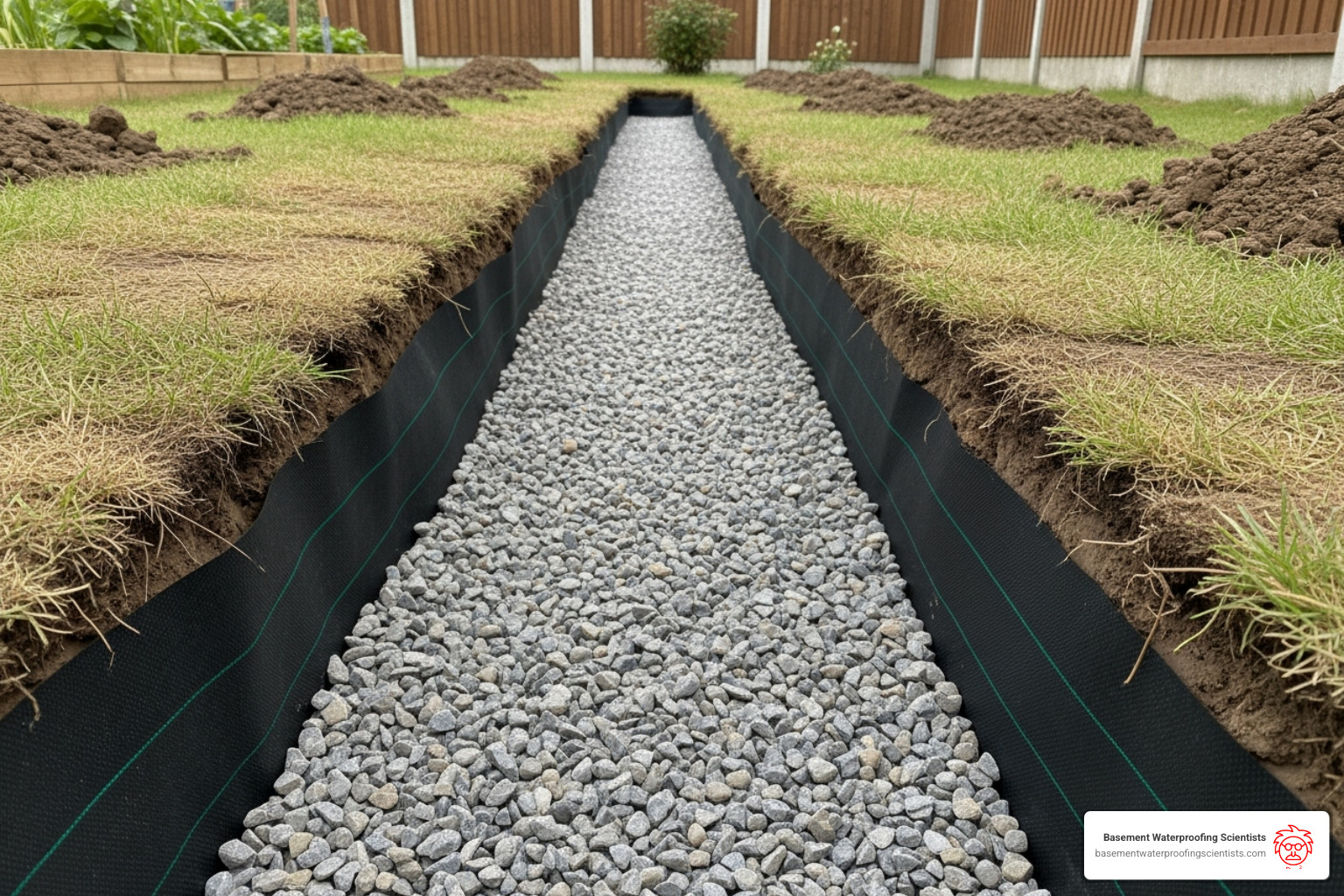
- Add a 2-3 inch base layer of 3/4-inch drain rock to the bottom of the trench, maintaining the slope.
- Line the trench with landscape fabric, leaving enough excess on both sides to wrap over the top later.
- Place the perforated drain pipe on the gravel base. Crucially, the perforation holes must face downward to allow groundwater to enter from below.
- Connect pipe sections and fittings securely.
Step 3: Backfilling and Finishing Your backyard drain tile installation
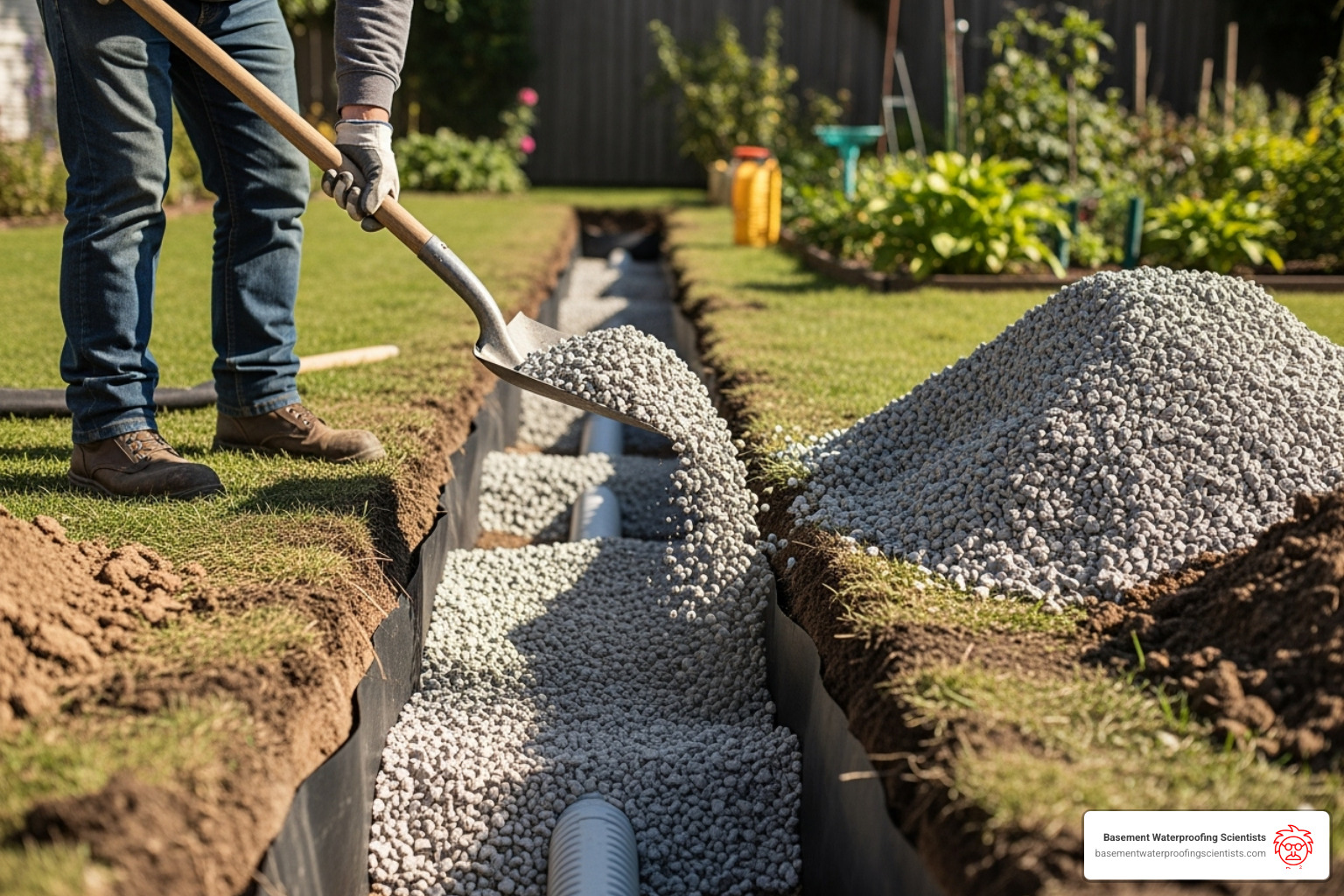
- Cover the pipe with 3-4 more inches of drain rock.
- Fold the excess landscape fabric over the top of the gravel, creating a complete envelope that protects the system from silt and debris.
- Install cleanouts (vertical pipes with caps) at key points. These provide access for future maintenance without digging.
- Backfill the rest of the trench with the excavated topsoil, tamping it gently.
- Replace the sod you saved earlier and water it thoroughly to help it re-establish.
Costs, Professional Help, and System Integration
Understanding the costs of a backyard drain tile installation helps you budget and make smart decisions.
A professional installation typically costs $3,000 to $15,000, or about $50-$100 per linear foot. A DIY approach costs much less in materials, usually $200-$400 for a basic system, plus any tool rental fees. For a detailed cost analysis, see our Drain Tile Installation Cost page.
Key cost factors include:
- Linear footage of the trench.
- Excavation difficulty (rocky soil, tight access).
- Discharge method (a sump pump or dry well adds to the cost).
- Landscaping restoration, which can add $500 to $2,000.
DIY vs. Professional Backyard Drain Tile Installation
Choosing between DIY and hiring a pro involves a trade-off between cost and effort.
The DIY route saves significant money on labor but requires serious physical work, time (several days to a week), and the risk of costly mistakes. You are responsible for renting equipment, getting permits, and have no warranty if the system fails.
Professional installation costs more but provides expertise, efficiency, and peace of mind. A professional crew has the right tools, understands local soil conditions, ensures proper grading, and typically completes the job in 1-2 days. Most importantly, the work is backed by a warranty. For complex projects, professional installation often proves more valuable in the long run.
Integrating Sump Pumps and Dry Wells
If your yard is flat or has a high water table, gravity alone may not be enough.
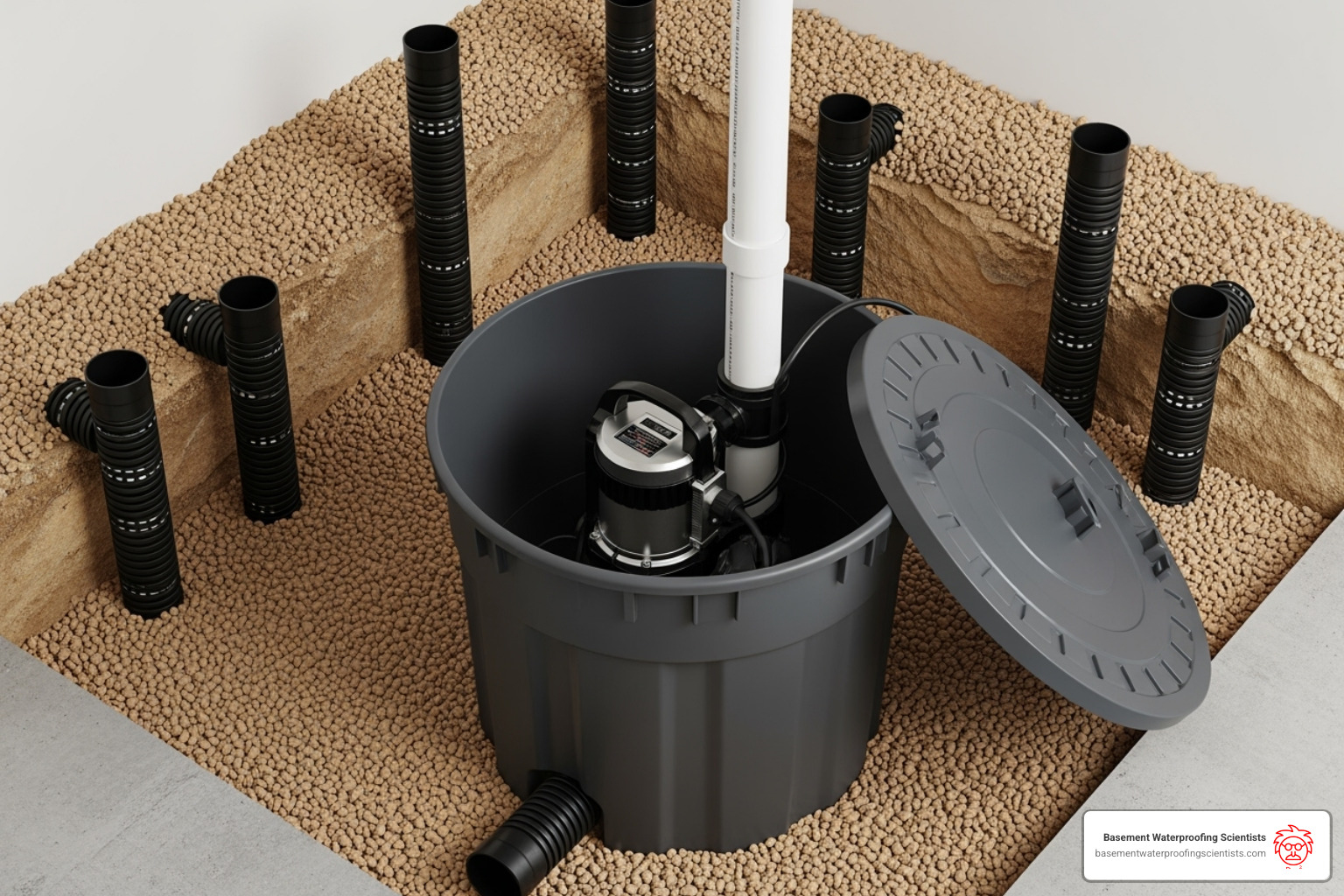
A sump pump is used when a natural daylight exit isn’t possible. The drain tile directs water to a sump pit, where the pump automatically discharges it away from the foundation. This adds $500 to $1,500 to the project, and a battery backup is highly recommended. Learn more in our Sump Pump Installation Guide 2025.
A dry well is an underground holding tank filled with gravel that collects water and allows it to slowly absorb into the surrounding soil. It’s a great solution when you lack a good discharge point.
Whether from a pump or dry well, ensure water is released at least 10-20 feet from your foundation.
Maintaining Your System and Avoiding Common Pitfalls
A backyard drain tile installation requires minimal maintenance to ensure it functions for years to come. A little attention can prevent major headaches.
- Annual Flushing: Use a garden hose to flush the system through the cleanout ports once a year. This removes any silt or debris that may have accumulated.
- Gutter Cleaning: Clogged gutters can overwhelm your drainage system by dumping water directly against your foundation. Keep them clean and ensure downspouts direct water away from the house.
- Inspect the Discharge Point: Regularly check your daylight exit, dry well, or sump pump outlet to ensure it’s clear of leaves, roots, or other blockages. Test your sump pump every few months.
Now, let’s talk about what can go wrong with an improper installation. Over 30 years, we’ve seen common failures that are easily avoidable.
- Incorrect Slope: This is the number one cause of failure. If the trench isn’t graded properly (at least 1/8 to 1/4 inch per foot), water will stagnate in the pipe, leading to clogs.
- Clogging from Missing Fabric: If landscape fabric isn’t used or is installed incorrectly, soil and silt will eventually fill the pipe, rendering the system useless.
- Crushed Pipes: Using flexible pipe in high-traffic areas or not having enough backfill depth can cause pipes to collapse, creating a blockage that requires re-excavation.
- Improper Backfill: Using heavy clay instead of gravel around the pipe prevents water from entering the system. Poorly compacted topsoil can also settle, creating new low spots.
- Discharge Issues: Directing water onto a neighbor’s property or toward a septic system can create new problems and potential legal issues.
For more on proper techniques, see our French Drain Installation guide. A well-installed system is a long-term investment; cutting corners is not.
Conclusion
A properly installed backyard drain tile installation is more than just a fix for puddles—it’s a crucial step in protecting your home’s foundation and reclaiming your outdoor space. A dry yard protects your foundation from damaging hydrostatic pressure, prevents leaks, and increases your property value.
The DIY route is feasible for small projects if you have the time and physical ability, but mistakes can be costly. Professional installation offers peace of mind and a guaranteed result.
At Basement Waterproofing Scientists, we have spent 30 years perfecting drainage solutions across Pennsylvania, New Jersey, and Delaware. We use specialized equipment to design a system that works for your specific property. Our experience ensures correct slope, materials, and discharge, and we restore your yard when we’re done. Most importantly, we back our work with a lifetime guarantee.
Don’t wait for standing water to become a foundation nightmare. Take action to protect your home. Protect your home with expert drainage solutions from Basement Waterproofing Scientists. We serve homeowners throughout the region, including Philadelphia, Reading, Norristown, and surrounding communities. Your backyard should be an oasis, not a swamp.