

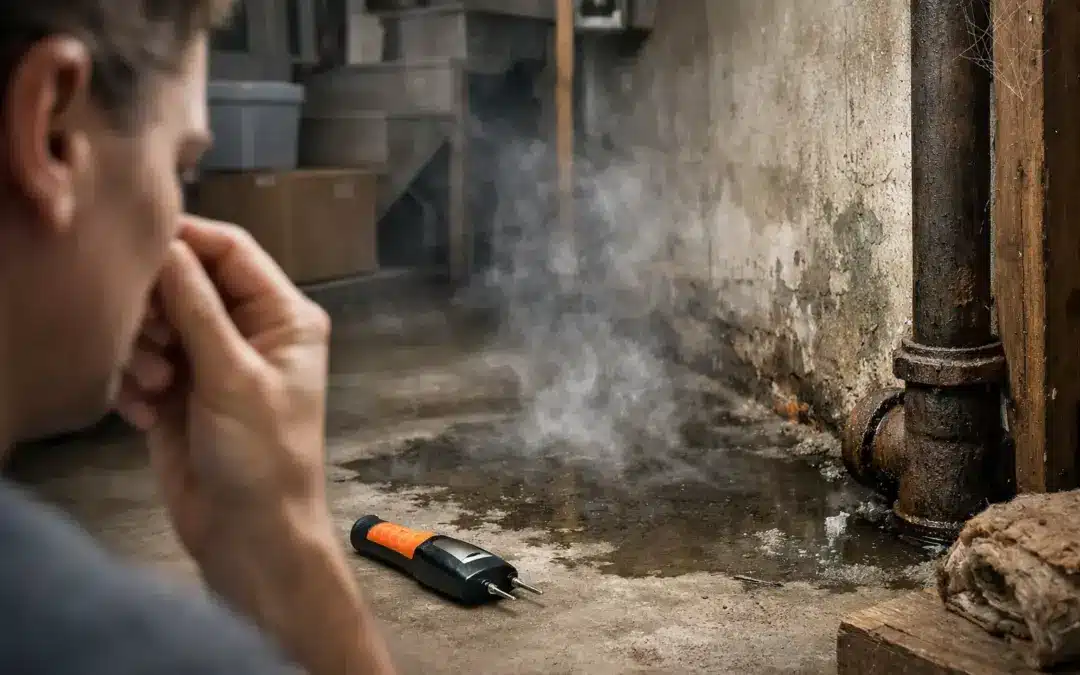
A musty basement smell often warrants investigation of moisture and damp materials, but odor alone does not identify a leak, mold species or health risk. Check stored items, humidity, plumbing and water-entry patterns before choosing a waterproofing system. Masking the smell does not establish that the source is resolved.
What should you record about the odor?
Note when it is strongest, which areas are affected and whether it changes after rain or during humid weather. Look at accessible cardboard, fabrics, wood, finishes and other materials for dampness or damage. Share previous leaks, flooding and repairs.
A smell can spread beyond its origin. Do not assume the nearest wall is the source or that a dry-looking floor rules out moisture behind finishes.
Which moisture sources should be considered?
- Condensation on cool surfaces and persistently humid air.
- Small or concealed plumbing leaks.
- Water through a wall defect, floor joint or opening.
- Ground moisture in an adjoining crawl space.
- Materials remaining wet after an earlier event.
Inspect accessible gutters, downspouts and runoff routes as part of the investigation. A sump or drain may be relevant if water entry is documented, but odor alone does not prove the need for one.
Does a musty smell mean testing is required?
Not automatically. EPA’s mold guide explains that visible growth often makes sampling unnecessary. Ask an assessor what question a sample would answer and how it changes the next step.
The CDC/NIOSH guidance emphasizes dampness and condition assessment. A laboratory result or odor is not a medical diagnosis; discuss symptoms and individual concerns with a qualified healthcare professional.
What should you avoid?
Do not rely on fragrance, fresh paint or a liner to cover an unresolved moisture problem. Avoid disturbing suspect materials or opening cavities without a suitable plan. A dehumidifier may help airborne moisture but does not repair active leakage or remove mold from affected materials.
Opening windows can introduce humid outdoor air, so ventilation should fit the conditions rather than a universal airing-out rule. Sewer or fuel-like odors require a different safety response; do not assume every basement odor is ordinary mustiness.
When should you arrange help?
Seek assessment for persistent odors, recurring water, damaged materials or concealed conditions. Structural changes, plumbing problems and cleanup may require separate providers. See our odor response guide and moisture diagnosis guide.
Basement Waterproofing Scientists offers free inspections for basement water concerns in southeastern PA, southern NJ and Delaware. Call 610-615-7111 or contact us and confirm the appropriate scope.