

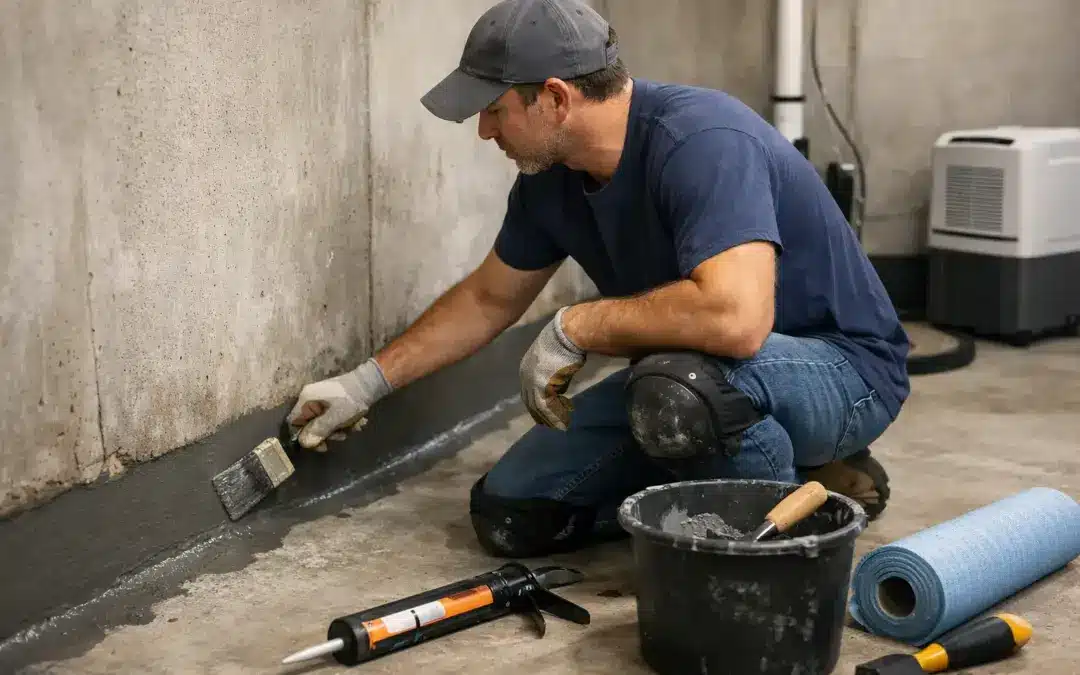
A wet basement usually does not start with a dramatic flood. More often, it starts with a dark line along a wall, peeling paint, a musty smell after rain, or a puddle that shows up in the same spot every few weeks. If you are researching how to do basement waterproofing yourself, the first thing to know is this: some basement moisture problems are very manageable for a careful homeowner, and some are not. The key is diagnosing the source correctly before you spend time and money on the wrong fix.
That matters even more in older homes across Philadelphia, Southeast Pennsylvania, and South Jersey, where basements often deal with a mix of aging masonry, changing soil conditions, hydrostatic pressure, and exterior drainage issues. A good DIY approach is not about throwing waterproof paint on every wall. It is about matching the repair to the actual cause.
When DIY basement waterproofing makes sense
Do-it-yourself basement waterproofing is usually a reasonable option when the water issue is minor, visible, and clearly tied to a maintenance problem. That includes small hairline cracks with no movement, damp walls caused by condensation, minor seepage at one isolated area, or water entering because gutters and grading are directing runoff toward the foundation.
If your basement gets standing water after storms, multiple wall cracks, bowing walls, floor heaving, mold growth across large areas, or repeated leaks that keep returning after patching, DIY is less likely to solve it permanently. In those cases, the waterproofing problem may actually be a drainage design issue, a foundation problem, or water pressure building outside the wall. Surface products alone will not stop that.
Start with diagnosis, not products
Before buying sealers or crack fillers, inspect the basement during or immediately after rain if possible. Look for where water first appears. Check wall-floor joints, pipe penetrations, window wells, mortar joints, and visible cracks. A moisture meter can help, but even a flashlight and careful notes go a long way.
You should also rule out indoor humidity. Condensation often gets mistaken for seepage. Tape a square of aluminum foil to a suspicious wall and leave it for 24 hours. If moisture forms on the room side, the problem is likely humidity. If it forms behind the foil, moisture is moving through the wall.
Outside, walk the perimeter of the home. Look for overflowing gutters, downspouts dumping water too close to the house, low soil near the foundation, clogged window wells, or hard surfaces sloped toward the basement wall. Many basement leaks begin outside, even when the symptoms show up inside.
How to do basement waterproofing yourself step by step
The best DIY waterproofing plan usually combines exterior water control with selective interior repairs. Doing only one side of that equation often leads to disappointing results.
Control roof runoff first
Start with the easiest and most cost-effective fix. Clean the gutters, repair any sagging sections, and make sure downspouts discharge well away from the foundation. A short downspout dumping next to the house can overload the soil around the basement wall in a single storm.
In many homes, extending downspouts several feet away from the foundation reduces basement seepage more than any interior coating will. It is not a flashy repair, but it is often the right one.
Correct the grading around the house
Soil should slope away from the foundation, not toward it. If the ground has settled over time, water can collect against the basement wall and increase pressure on cracks and joints. Add compacted fill dirt as needed to create positive slope away from the home.
Do not use mulch alone for grading correction. It washes away and does not create a stable water-shedding surface. Also, keep soil and mulch below siding and wood trim.
Seal small non-structural cracks
If you find a narrow crack in poured concrete and there is no sign of wall movement, you may be able to seal it yourself with an epoxy or polyurethane injection kit designed for basement wall cracks. Polyurethane is often better where active moisture is present because it expands and can follow irregular paths. Epoxy creates a very strong bond but is less forgiving when water is still moving.
Surface patching over a crack without filling its depth usually does not last. Follow the product instructions carefully, and do not attempt DIY crack repair on large, stair-step, widening, or displaced cracks. Those deserve a structural assessment.
Waterproof masonry walls carefully
If your basement walls are bare masonry and you have ruled out major exterior pressure, a waterproof masonry coating can help reduce minor moisture transmission. Preparation is everything. Scrape loose paint, clean efflorescence, repair holes and joints, and let the surface dry as directed.
This kind of coating is not a cure for significant leakage. If water is pushing through with force, the coating may blister or fail. Think of it as a supplementary barrier, not a substitute for drainage correction.
Address wall-floor joint seepage
Water appearing where the wall meets the floor often points to hydrostatic pressure under or beside the slab. DIY options are limited here. You can improve the situation by reducing exterior water loading, but caulking that joint rarely creates a lasting solution.
If seepage at the cove joint is recurring, that is one of the clearest signs the problem may need an interior drainage system, sump solution, or a more advanced waterproofing approach.
Reduce basement humidity
Not every damp basement has a leak. In summer, cool basement walls can collect moisture from humid air. Run a dehumidifier sized for the space, insulate cold pipes, and avoid drying laundry in the basement without ventilation. If the smell improves and wall moisture decreases, humidity may have been the main issue.
This is one reason accurate diagnosis saves money. Homeowners sometimes spend heavily on waterproofing products when the real fix is moisture control and ventilation.
Materials that help and mistakes that waste money
For true DIY work, the most useful materials are often simple: gutter extensions, compacted fill dirt, crack injection kits for appropriate cracks, hydraulic cement for small holes, masonry waterproof coatings, and a reliable dehumidifier. These can all play a role when used in the right situation.
The most common mistake is relying on waterproof paint as the main solution. Paint does not relieve pressure outside the wall. Another mistake is sealing everything from the inside while ignoring the fact that water is still pooling against the foundation outdoors. A third is treating every crack as cosmetic when some cracks are signs of movement.
There is also a trade-off between cost and certainty. DIY methods can be economical for minor issues, but repeated trial-and-error repairs often cost more than one accurate inspection. If you fix the symptom and not the entry point, the basement may stay damp no matter how many products you apply.
When not to do basement waterproofing yourself
Some conditions call for professional help immediately. If you see bowing walls, horizontal cracking, crumbling block, a shifting foundation, repeated flooding, mold affecting large areas, or water coming up through the floor, do not assume this is a basic sealing job.
The same is true if your basement has been patched before and still leaks. Persistent water problems usually mean the original cause was never fully identified. A science-driven inspection can pinpoint whether the issue is exterior grading, hidden entry points, wall cracks, footing drainage failure, or foundation movement. That is the difference between a targeted repair and paying for a generic system you may not need.
For homeowners who want to protect home value and avoid oversized recommendations, that distinction matters. Basement Waterproofing Scientists built its approach around finding the source first and prescribing the most economical permanent fix, because basement waterproofing is not one-size-fits-all.
How to decide your next move
If the issue is limited to humidity, runoff control, minor grading, or a small stable crack, DIY may be the right starting point. Take care of the exterior water management first, then move to interior sealing only where it makes sense. Monitor the basement through several rain events before assuming the problem is solved.
If moisture keeps returning, expands to new areas, or shows up at the wall-floor joint or through multiple cracks, stop guessing. At that point, the smartest move is not more product. It is a precise diagnosis.
A dry basement is rarely the result of doing more. It usually comes from doing the right repair in the right place. That is the standard to hold whether you do the work yourself or decide it is time to bring in a specialist.