

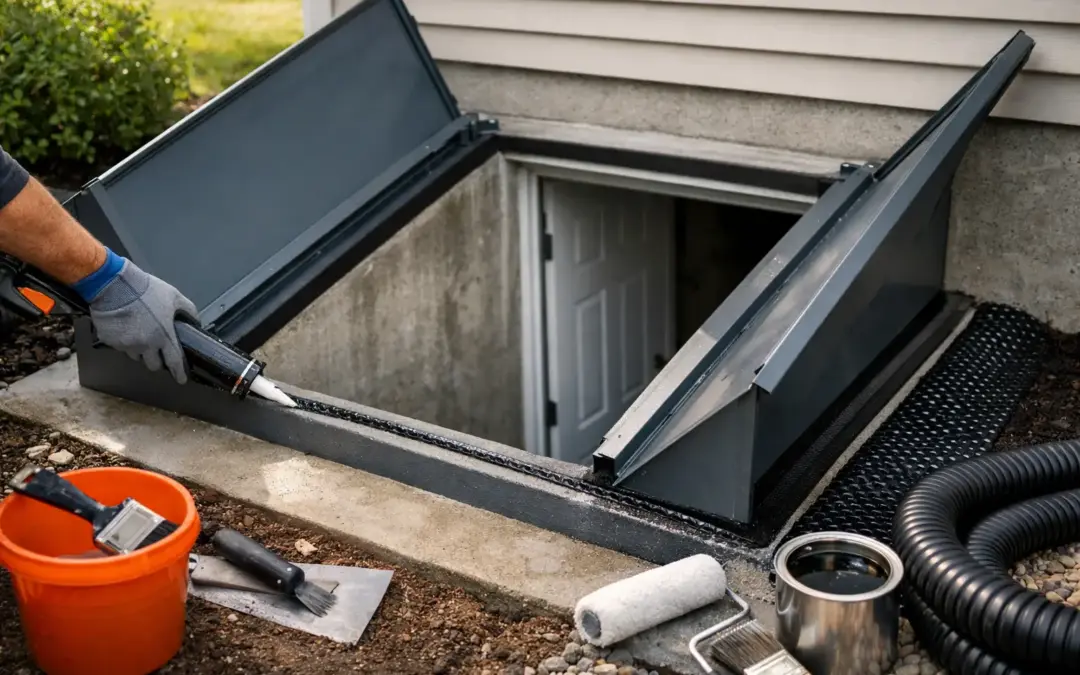
A basement door that leaks rarely fails for just one reason. Water at the threshold may look like a simple caulk problem, but in many homes the real issue is a mix of poor grading, hydrostatic pressure, worn weatherstripping, and an entry system that was never designed to handle heavy runoff. If you are looking for how to waterproof basement door openings the right way, the goal is not to smear on more sealant. The goal is to find exactly where the water starts and stop it before it reaches the interior.
In older Philadelphia-area homes, that distinction matters. Many basement entries were built decades ago, often with concrete areaways, aging stairwells, and exterior doors that sit lower than the surrounding grade. Those conditions make the doorway a natural collection point for rainwater, melting snow, and saturation from the surrounding soil. That is why permanent results usually come from diagnosis first, then repair.
Why basement doors leak in the first place
Most leaking basement doors are part door problem and part drainage problem. Homeowners often focus on the slab, the threshold, or the visible gap under the door. Sometimes that is correct. But just as often, the water is being pushed toward the opening from above or around the foundation.
A few conditions show up again and again. The patio or stairwell may slope toward the door. Downspouts may empty too close to the foundation. The concrete landing may have settled and now pitches inward. The door sweep may be worn out, or the frame may be out of square enough to leave gaps during wind-driven rain. In some homes, water is not entering through the door assembly at all. It is coming through the wall joint next to the opening and simply appearing at the doorway.
That is why a real waterproofing plan should never start with a guess. A low basement door opening is one of the most vulnerable points on the home, and the right fix depends on whether the source is surface water, seepage through masonry, or direct failure of the entry system.
How to waterproof basement door by diagnosing the source
Before choosing materials, test the conditions around the doorway. This part saves money because it prevents a cosmetic repair from being used where a drainage correction is actually needed.
Start outside. Look at the grade above the basement entry and the concrete stairwell if there is one. Water should flow away from the opening, not toward it. If you see standing water after rain, dark staining on concrete, erosion channels, or mulch and soil washing toward the door, surface drainage is likely part of the problem.
Next, inspect the door itself. Check the weatherstripping on both sides, the sweep at the bottom, the threshold seal, and the corners of the frame. Close the door from inside during daylight and look for light penetration. Even small gaps can admit a surprising amount of water under wind pressure.
Then look at the surrounding structure. Cracks in the areaway walls, separation where the stairwell meets the home, and deterioration in the mortar joints can all let water travel behind or beside the frame. If the leak occurs after long periods of rain rather than during the storm itself, pressure through the wall or slab may be involved.
A hose test can help, but it needs to be done methodically. Wet one area at a time, starting low and working up, so you can isolate whether the leak starts at the threshold, side jambs, upper trim, or adjacent masonry. If water appears without directly spraying the door, drainage or foundation seepage becomes more likely.
Seal the door only after the fit is corrected
If the door assembly is the actual weak point, sealing can work well. But sealants only perform when the surfaces are sound and the door closes tightly.
Replace compressed or brittle weatherstripping first. A fresh compression seal along the jambs creates a much better barrier than extra caulk spread around failing material. The bottom sweep is equally important. On many basement doors, the sweep is torn, hardened, or no longer contacts the threshold evenly.
The threshold should also be checked for movement or gaps underneath. If it has separated from the slab, water can pass under it and emerge inside even when the door face looks sealed. In that case, the threshold may need to be removed, the substrate cleaned and leveled, and then reset with the correct sealant.
Use exterior-grade polyurethane or another high-performance sealant made for masonry-to-metal or masonry-to-wood transitions. Cheap caulk tends to fail quickly in a wet, freeze-thaw environment. That matters in Pennsylvania and New Jersey, where winter expansion and seasonal movement are tough on low-entry doors.
Still, sealing has limits. If the area floods during heavy storms, no bead of caulk will hold back pooled water for long. That is when drainage improvements become the real solution.
Fix the water around the basement door opening
If you want a permanent answer to how to waterproof basement door areas, control the water load first. The less water that reaches the entry, the less the door system has to resist.
The surrounding grade should slope away from the house. If landscaping or hardscaping pitches toward the basement stairs, regrading may be necessary. Downspouts should discharge well away from the foundation. A surprising number of wet basement door calls trace back to roof water being dumped right next to the entry wall.
Concrete stairwells and areaways deserve special attention. These spaces act like collection boxes. If they do not have a working drain, or if the drain is clogged, water can rise quickly during a storm and overtake the threshold. In some homes, installing or restoring an areaway drain is the most economical permanent fix.
If the landing has settled toward the house, resurfacing or replacement may be needed to restore positive pitch. This is not cosmetic work. The slope determines whether rain leaves the area or sits against the door.
For homes with repeated high water around a below-grade entrance, adding a cover over the stairwell or areaway can also help. It reduces direct rainfall into the space and lowers the burden on drains and seals. It is not right for every property, but in the right setup it can dramatically reduce risk.
When the leak is actually in the wall or slab
Some basement door leaks are misdiagnosed because the water shows up at the entrance. The true path may be through the foundation wall, at the cove joint, or through cracks near the door opening.
This is common in older homes with masonry walls, deteriorated mortar, or long-term settlement. During wet periods, water can migrate along the path of least resistance and appear at the doorway because that is where floor elevation changes or framing interruptions exist.
In those cases, exterior sealing of the frame will not solve the problem. The repair may involve crack injection, masonry repair, joint sealing, or a drainage system designed for the specific point of intrusion. This is where a science-driven inspection matters. A targeted repair is almost always better than installing a broad system that does not address the real source.
At Basement Waterproofing Scientists, that diagnostic approach is the difference between a smaller, economical repair and spending money on work you did not need.
DIY fixes versus professional waterproofing
There is a place for do-it-yourself work. Replacing a sweep, installing new weatherstripping, and clearing blocked drains are reasonable first steps for a handy homeowner. These repairs are practical when the leak is minor, visible, and clearly tied to worn door components.
But if the door leaks during every major storm, if water is entering from more than one point, or if the issue involves standing water, wall seepage, or recurring moldy odors, it is time for a professional inspection. Basement door leaks are often symptoms of a bigger moisture problem. Waiting too long can lead to rotted framing, damaged flooring, peeling finishes, and air quality concerns from chronic dampness.
A good contractor should be able to explain where the water is coming from, show you what supports that conclusion, and recommend the least invasive permanent repair that fits the condition of your home. If the proposed solution sounds like the same package given to every basement, keep asking questions.
What permanent protection usually looks like
The best long-term results usually combine a few corrections rather than one dramatic fix. The door may need new seals and threshold work. The landing may need to be re-pitched. The downspouts may need extensions. The areaway drain may need repair. A nearby wall crack may need sealing.
That layered approach is how basement waterproofing should work. Water intrusion is a system problem, so the repair often needs to address the system around the door, not just the door itself.
If your basement entrance has leaked more than once, treat it as a warning sign rather than a nuisance. The sooner the source is identified, the easier it is to stop the damage and protect the space below grade. A dry basement door starts with an accurate diagnosis, and that is what turns a temporary patch into a permanent fix.