


Understanding Drain Tile: Your First Line of Defense Against a Wet Basement
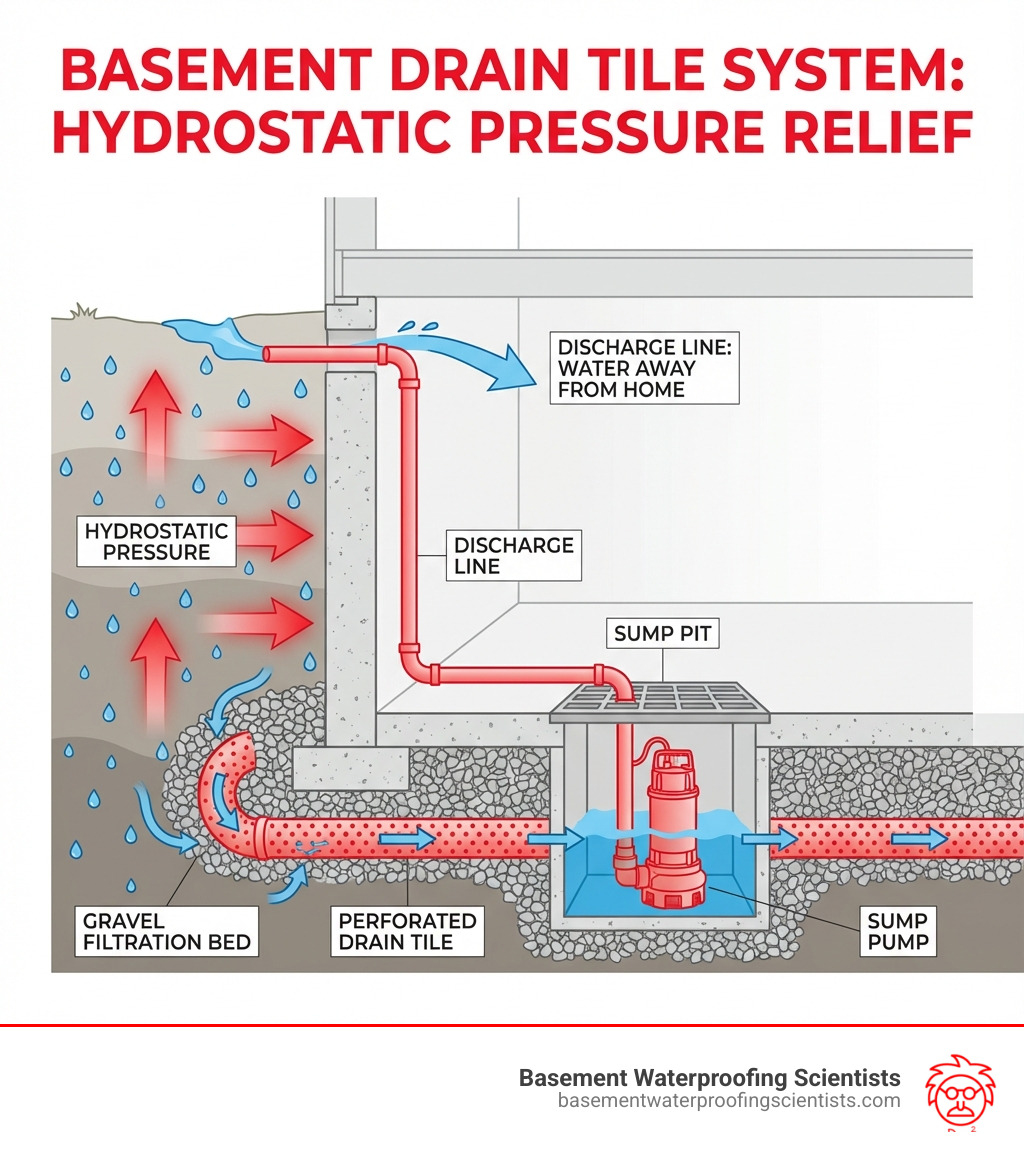
A basement tile system is not decorative flooring—it’s a critical underground network of perforated pipes that collects and redirects groundwater away from your foundation. This system is designed to prevent flooding, structural damage, and mold growth by managing hydrostatic pressure, which is the force of water-saturated soil pushing against your foundation.
Quick Answer: What is a Basement Tile System?
- What it is: A perforated pipe drainage system installed around your foundation.
- Where it goes: Inside, beneath the basement floor, or outside, along the foundation wall.
- What it does: Collects groundwater and channels it to a sump pump or away from your home.
- Also called: Drain tile, French drain, weeping tile, foundation drain, perimeter drain.
- Average cost: $4,000-$8,000 for most projects.
- Why you need it: Prevents water intrusion, relieves hydrostatic pressure, and protects your foundation.
If you see water stains, smell musty odors, or find puddles after rain, you likely have a hydrostatic pressure problem. The term “tile” is a holdover from the clay tiles used historically; modern systems use durable PVC pipes. When soil becomes saturated, it exerts immense pressure, and water seeks the path of least resistance—often through your foundation. A drain tile system provides an engineered path for that water to travel away from your home.
Learn more about basement tile system:
Signs of water damage, like chalky white residue (efflorescence) on walls or persistent dampness, are clear indicators that water is getting into your home. A well-installed basement tile system is the most effective defense, proactively managing groundwater at its source to protect your foundation’s integrity and keep your basement dry.
For more information on comprehensive drainage solutions, explore our resources on Basement Drainage Systems.

What is Drain Tile and What Are Its Different Names?
The term “drain tile” is a historical name for what is now a modern system of perforated pipes installed around a home’s foundation. Its purpose is to collect and redirect groundwater to prevent it from seeping into your basement. You may also hear it called:
- Drainage tile
- French drain
- Weeping tile
- Perimeter drain
- Foundation drain
Regardless of the name, the function is the same: to manage groundwater and keep your basement dry. For a deeper dive, see our guide on Drainage Tile.
How Drain Tile Alleviates Hydrostatic Pressure
Hydrostatic pressure occurs when water-saturated soil exerts force against your foundation walls and floor. This constant pressure can cause cracks, bowing, and leaks. A basement tile system creates a path of least resistance for this water. Instead of pushing against your foundation, the water flows into the perforated pipes and is safely channeled away, relieving the pressure and protecting your home from structural damage.
Key Signs That Indicate a Need for Drain Tile
Your home will show clear signs when a drainage system is needed. Look for:
- Water seepage after rain or snowmelt.
- Damp spots on walls or floors.
- Puddles or standing water.
- High humidity and musty odors.
- Mold or mildew growth.
- Peeling paint or wallpaper.
- Chalky white residue (efflorescence) on concrete.
- Cracks in basement walls, especially horizontal or zig-zag patterns.
If you’re dealing with standing water, we have more resources that can help on our Basement Drain Has Standing Water page. Addressing these signs promptly can prevent more extensive and costly repairs.
Interior vs. Exterior Drain Tile: Which System is Right for You?
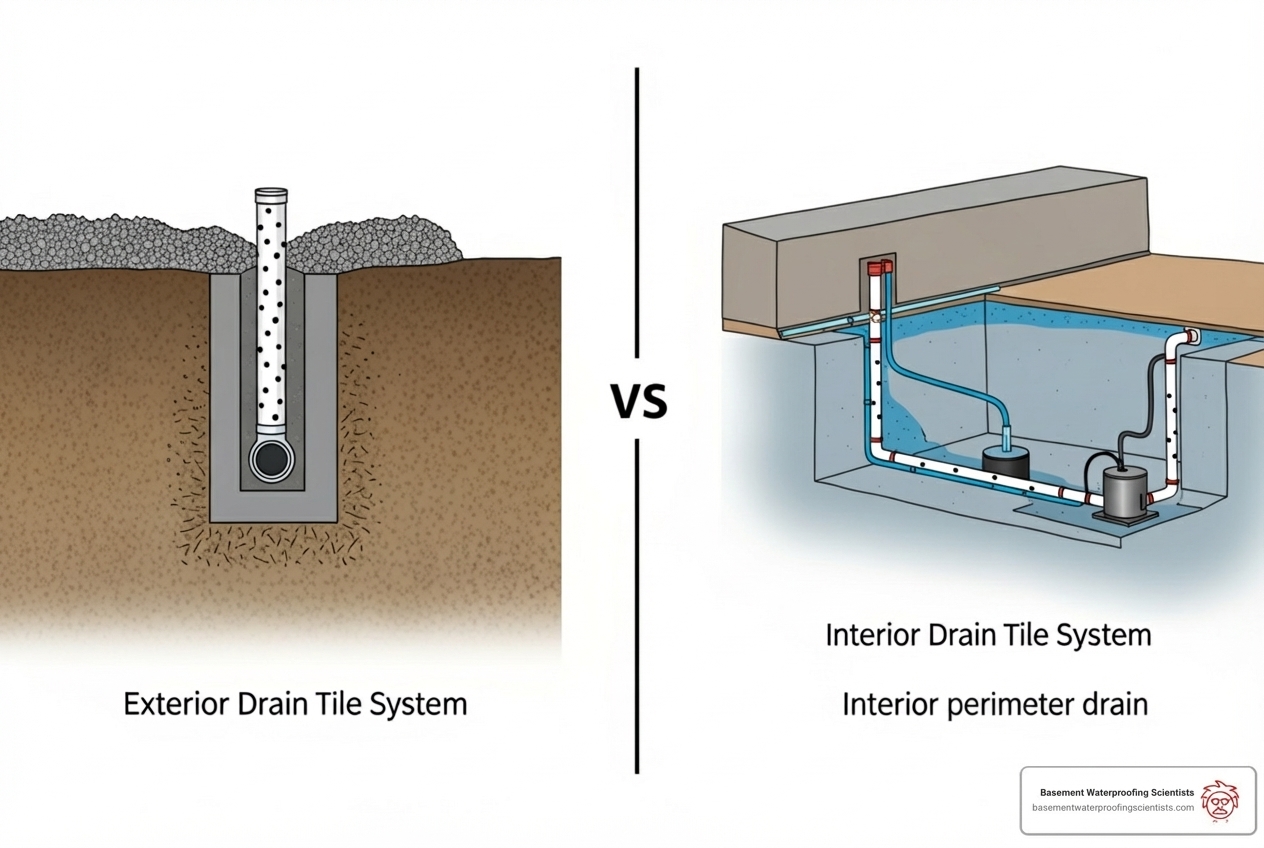
When choosing a basement tile system, you have two primary options: interior or exterior. Both are designed to keep your basement dry, but they differ in installation, cost, and application. Interior systems are typically less invasive and ideal for existing homes, while exterior systems are often used in new construction.
For further insights into interior drainage, visit our page on Interior Drainage System.
How Interior Drain Tile is Installed
An interior basement tile system is a highly effective way to waterproof an existing home. The process involves:
- Preparation: We protect your belongings and control dust in the work area.
- Floor Removal: A narrow trench is cut and removed from the concrete floor along the interior perimeter.
- Trenching: The trench is dug alongside the foundation footing and sloped towards a sump pit.
- Pipe Installation: A 4-inch rigid, perforated PVC pipe is laid in the trench.
- Gravel & Fabric: The pipe is surrounded by washed gravel and often a filter fabric to prevent clogs.
- Sump Pump Connection: The system is connected to a sump pit, where a pump will eject the collected water.
- Concrete Restoration: The trench is filled with new concrete, restoring the floor to a clean finish.
- Wall Drainage (if needed): Weep holes may be drilled in block walls to release trapped water into the system.
This method effectively relieves hydrostatic pressure from under the floor and within foundation walls. For more details, see our guide on Installing Interior Drain Tile System.
How Exterior Drain Tile is Installed
Exterior drain tile is best suited for new construction or major renovations that already require excavation. The process includes:
- Excavation: The soil around the entire foundation is dug out down to the footing.
- Wall Preparation: The foundation wall is cleaned, repaired, and often sealed with a waterproofing membrane.
- Pipe Installation: Perforated pipe is laid next to the footing, surrounded by gravel and filter fabric.
- Backfilling: The trench is refilled with soil, graded to direct surface water away from the house.
While effective, this method is highly disruptive and expensive for existing homes. It also makes future access for maintenance very difficult.
For more comprehensive guidance on exterior drainage, refer to our Install Drain Tile Around House Guide.
Pros and Cons of Each System
Choosing the right basement tile system depends on your home, budget, and specific water problem. Here’s a quick comparison:
| Feature | Interior Drain Tile System | Exterior Drain Tile System |
|---|---|---|
| Installation | Less disruptive; installed from inside. Not weather-dependent. | Highly disruptive; requires full excavation. Weather-dependent. |
| Cost | Generally more cost-effective for existing homes. | Very expensive to retrofit due to excavation and landscape restoration. |
| Effectiveness | Excellent at relieving hydrostatic pressure from under the floor and walls. | Stops water before it touches the foundation wall but may not address pressure under the slab. |
| Maintenance | Sump pump and system are easily accessible for service. | Extremely difficult and expensive to access for repairs or maintenance. |
| Best For | Existing homes with any type of water problem. | New construction or homes already undergoing major excavation. |
The Complete Guide to Your basement tile system Installation
A modern basement tile system is a combination of carefully selected materials and precise installation techniques that work together to keep your home dry. From the pipe to the pump, every component plays a vital role.
For those interested in the broader scope of drainage solutions, our French Drain Installation guide offers additional insights.
Types of Drain Tile Materials: PVC vs. Corrugated
The choice of drainage pipe is critical for a long-lasting system. The two main types are rigid PVC and corrugated plastic pipe.
-
Rigid PVC Pipe: We strongly recommend rigid PVC for its durability and performance. Its smooth interior allows water to flow freely, preventing clogs from sediment and mineral buildup. The rigid structure resists crushing under the weight of concrete and soil, ensuring long-term reliability. We typically use 4-inch diameter pipes for residential foundation drainage.
-
Corrugated Plastic Pipe: While cheaper, this flexible pipe’s ribbed design traps sediment, leading to clogs. Its thin walls are also prone to crushing under pressure, which can cause the system to fail. We often replace failed systems that used corrugated pipe.
For a reliable, long-lasting basement tile system, rigid PVC is the superior choice, ensuring efficient water management for decades.
Key Components of a Modern basement tile system
A modern system includes several essential parts:
- Perforated Pipe: The core of the system, this pipe (ideally rigid PVC) collects water through small holes.
- Washed Gravel or Crushed Stone: Surrounds the pipe, allowing water to flow freely while filtering out large debris.
- Filter Fabric: A geotextile cloth that wraps the pipe and gravel to prevent silt and sand from causing clogs.
- Sump Pit/Basin: A durable liner installed in the basement floor that collects water from the drain tile.
- Sump Pump: An automatic pump inside the pit that ejects water out of the basement.
- Discharge Line: A pipe that carries water from the sump pump safely away from the foundation.
Unlike a simple floor drain that only catches surface water, a drain tile system is a proactive solution that stops groundwater before it enters your basement. Learn more about the combined power of these systems on our Sump Pump & French Drain page.
Where Does the Collected Water Go?
Once collected, the water must be moved away from your home. For most interior basement tile systems, the water flows into a sump pit. A sump pump inside the pit then automatically pumps the water through a discharge line to a safe distance from your foundation.
In some cases, such as on sloped properties, a gravity-fed “daylight” drain can be used, allowing water to flow downhill and away from the house without a pump. Other options include dry wells or, where permitted by local codes in areas like Quakertown or Collegeville, connecting to a storm sewer system. We always ensure our solutions are compliant with local regulations.
Costs, Maintenance, and Finding the Right Professional
Investing in a basement tile system is a crucial step in protecting your home’s value and structural integrity. It turns a damp, unusable space into a dry, healthy area, preventing more costly repairs in the future.
To understand the financial aspect in more detail, our Drain Tile Installation Cost guide provides valuable information.
Drain Tile Installation Costs: What to Expect
The cost of installing a basement tile system varies based on your home’s size, the system type, and project complexity. Here’s a general breakdown:
-
Cost per Linear Foot:
- Interior Drain Tile Systems: Typically range from $60 to $100 per linear foot, reflecting the labor of cutting and re-pouring concrete.
- Exterior Drain Tile Systems: Can be $20 to $60 per linear foot for new construction, but retrofitting is significantly more expensive due to excavation and landscape restoration.
-
Average Project Total: Most homeowners in areas like Lansdale or Hatboro can expect to invest between $4,000 and $8,000 for a complete interior system with a sump pump. Larger or more complex projects may cost more.
-
Factors Affecting Price: Key factors include the perimeter length of your basement, whether the system is interior or exterior, and any site-specific challenges like thick concrete or utility lines.
While this is a significant investment, it prevents far more expensive problems like foundation damage and mold remediation. For a detailed breakdown, please consult our Drain Tile Installation Cost Guide.
Common Problems and How to Maintain Your basement tile system
Even a well-installed system requires some maintenance to ensure its longevity. Common issues include:
- Clogging: Silt, debris, or tree roots can block the pipes, especially in older or poorly installed systems.
- Sump Pump Failure: Power outages or mechanical failure can cause water to back up.
- Crushed Pipes: Inferior corrugated pipes can collapse under pressure.
- Frozen Discharge Lines: In cold climates, an uninsulated or improperly sloped discharge line can freeze solid.
Maintenance Tips:
- Test Your Sump Pump: Annually, pour water into the pit to ensure the pump activates and empties the basin.
- Clean the Sump Pit: Remove any debris that could clog the pump.
- Inspect the Discharge Line: Make sure it’s clear of obstructions and directs water away from the foundation.
- Schedule Professional Inspections: Every few years, have a professional check the system for hidden issues.
A properly installed and maintained basement tile system, particularly one using rigid PVC, can last for decades. For more information on dealing with issues in older systems, visit our page on Cleaning Out Weeping Tiles.
How to Choose the Right Contractor
Selecting the right contractor is as important as the system itself. A poor installation can lead to recurring problems and wasted money. Here’s what to look for:
- Experience and Specialization: Choose a company with extensive experience specifically in basement waterproofing.
- Insurance and Licensing: Ensure the contractor is fully licensed and insured to protect you from liability.
- Reviews and References: Check online reviews and ask for testimonials from previous clients.
- Get Multiple Quotes: Compare not just the price, but the proposed solutions, materials, and warranties.
- Understand the Proposed Solution: A good contractor will clearly explain the problem and their recommended solution.
- Accreditation: Verify that the company is accredited by organizations like the Better Business Bureau.
- Warranty and Guarantees: A trustworthy contractor will offer a strong warranty on their work. We stand by our work with a lifetime guarantee.
Beyond the Basement: Other Applications and Considerations
The principles behind a basement tile system are so effective at managing water that they can be applied to other areas of your property, from crawl spaces to soggy lawns. This technology has its roots in agriculture, where it was first used to drain fields for farming.
For broader applications of drainage, explore our Yard Drain resources.
Can Drain Tile Be Used in Crawl Spaces or for Yard Drainage?
Absolutely. The same technology can solve other moisture problems:
-
Crawl Space Application: A perimeter drain tile system in a crawl space collects water that seeps in, preventing mold, wood rot, and pests. When combined with encapsulation, it creates a clean, dry space under your home. For more detailed information, visit our Crawl Space Drainage System page.
-
Yard Drainage: For soggy lawns or areas where water pools, a French drain (a type of drain tile system) can be installed in trenches to collect and redirect surface and groundwater. This protects your home’s foundation and makes your yard more usable.
The Environmental Impact of Agricultural Drainage
While modern drain tile systems protect homes, their agricultural predecessors have had environmental consequences, such as nutrient runoff into waterways and the loss of wetlands. Today, agricultural practices are evolving with techniques like controlled drainage to mitigate these effects, balancing farm productivity with environmental health. For more information on these practices, you can explore Controlled Drainage research.
A Dry Basement is a Healthy and Valuable Home
The goal of installing a basement tile system is to transform your home’s lowest level from a source of worry into a valuable asset. The benefits extend far beyond simply preventing water damage, touching upon aspects of health, structural integrity, and property value.
A professionally installed system provides:
- Prevention of Water Damage: No more puddles, damp spots, or ruined belongings.
- Protection of Structural Integrity: Alleviating hydrostatic pressure safeguards your foundation from cracking and bowing.
- Improvement of Indoor Air Quality: Eliminating dampness prevents the growth of mold and mildew, leading to a healthier home.
- Creation of Usable Living Space: A dry basement can become a family room, home office, or extra bedroom, adding valuable square footage.
- Increase in Property Value: A dry, functional basement is a major selling point and a wise investment.
At Basement Waterproofing Scientists, we have over 30 years of experience providing customized waterproofing and structural repair solutions across Pennsylvania, New Jersey, and Delaware. We use specialized equipment to accurately diagnose the source of leaks, allowing us to provide effective, competitively priced solutions backed by a lifetime guarantee.
Don’t let a wet basement diminish your home’s potential. Contact us for a permanent solution to your basement water problems.