

Don’t Let Water Win: Understanding Basement Wall Leaks
Repair leak in concrete basement wall issues quickly to prevent water damage, mold, and foundation problems. Here’s a quick guide:
Quick Fix Guide:
- Identify the leak source: Look for cracks or damp spots.
- Choose a repair method: Use hydraulic cement for active leaks or an injection kit for smaller cracks.
- Prepare the area: Widen and clean the crack, removing all loose debris.
- Apply the repair: Pack the material firmly into the crack.
- Address the root cause: Improve exterior drainage, gutters, and grading.
A leaking basement is more than an inconvenience; it can damage belongings, foster mold, and compromise your home’s structural integrity. The good news is that most leaks can be repaired from the inside without costly excavation.
Water in the soil creates pressure against your foundation, exploiting weak points like shrinkage cracks or gaps around pipes. Poor exterior drainage makes this pressure worse. Understanding the cause is key to the right fix.
I’m Darin Garvey, and with over 30 years of experience in basement waterproofing in the Philadelphia area, I’ve helped countless homeowners repair leak in concrete basement wall problems. Let me guide you through the process.
Why Your Concrete Wall is Leaking: Common Causes and Telltale Signs
Before you can repair leak in concrete basement wall problems, you must understand the cause. Most leaks happen when water in the soil pushes its way inside your foundation.
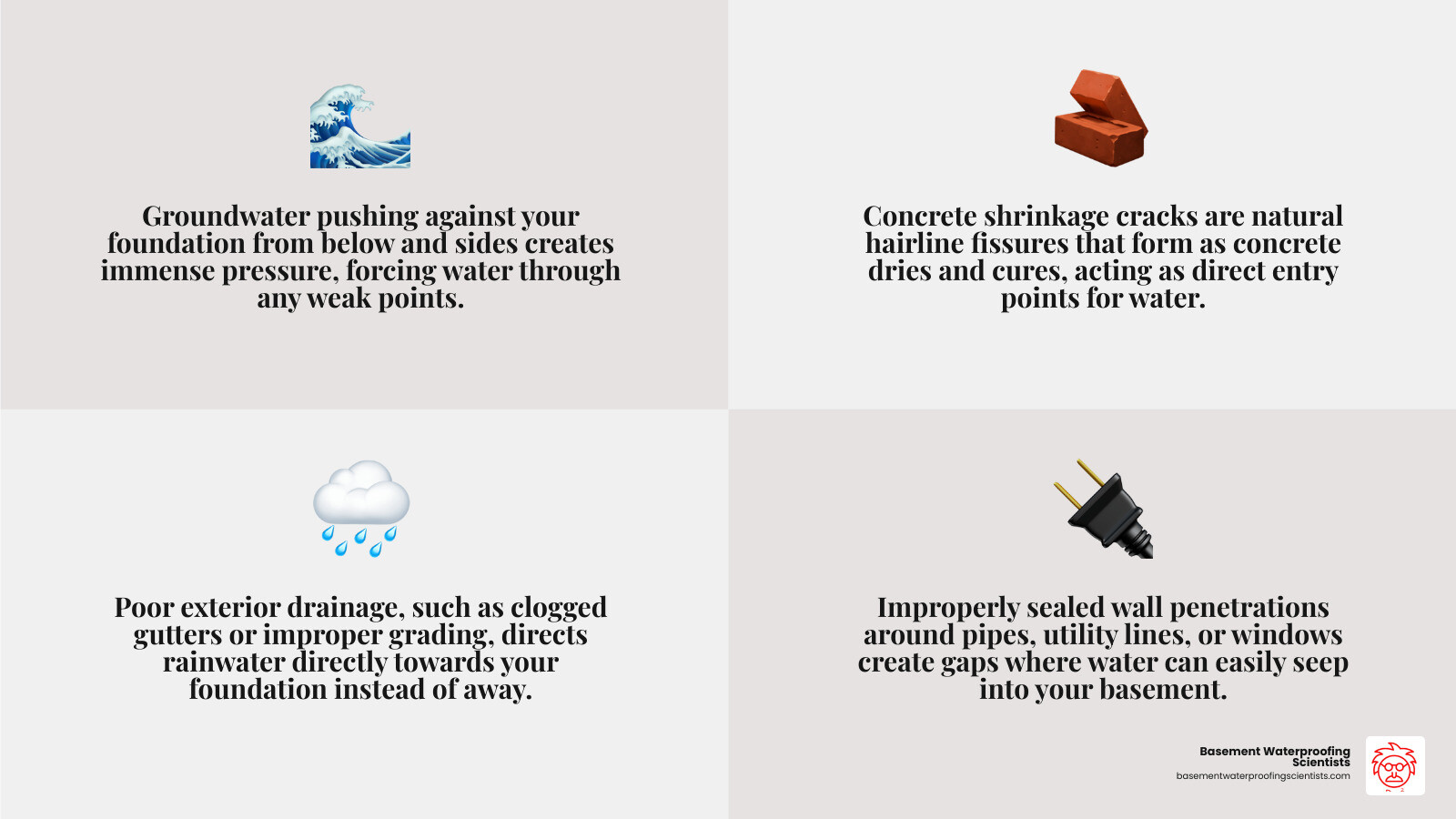
When soil becomes waterlogged after heavy rain, it creates immense pressure. Hydrostatic pressure is the force of groundwater pushing up and in on your basement walls and floor. Lateral pressure is the sideways force from saturated soil, which is especially strong in the clay soil common in Pennsylvania and New Jersey. This pressure can create or widen cracks.
Other common causes include:
- Foundation Settling: Normal movement as a home ages can create cracks.
- Concrete Shrinkage Cracks: Hairline cracks form naturally as concrete cures and provide a path for water.
- Cove Joint Seepage: The seam where the wall meets the floor is a common weak point.
- Wall Penetrations: Gaps around pipes or conduits allow water direct entry.
- Poor Exterior Drainage: This is a major culprit. Clogged gutters, short downspouts, and improper ground slope all direct water toward your foundation, increasing water pressure.
Signs of a Leak in Your Concrete Basement Wall
Leaks aren’t always obvious puddles. Look for these sneaky signs to catch problems early:
- Visible water stains or damp spots on walls, especially after storms.
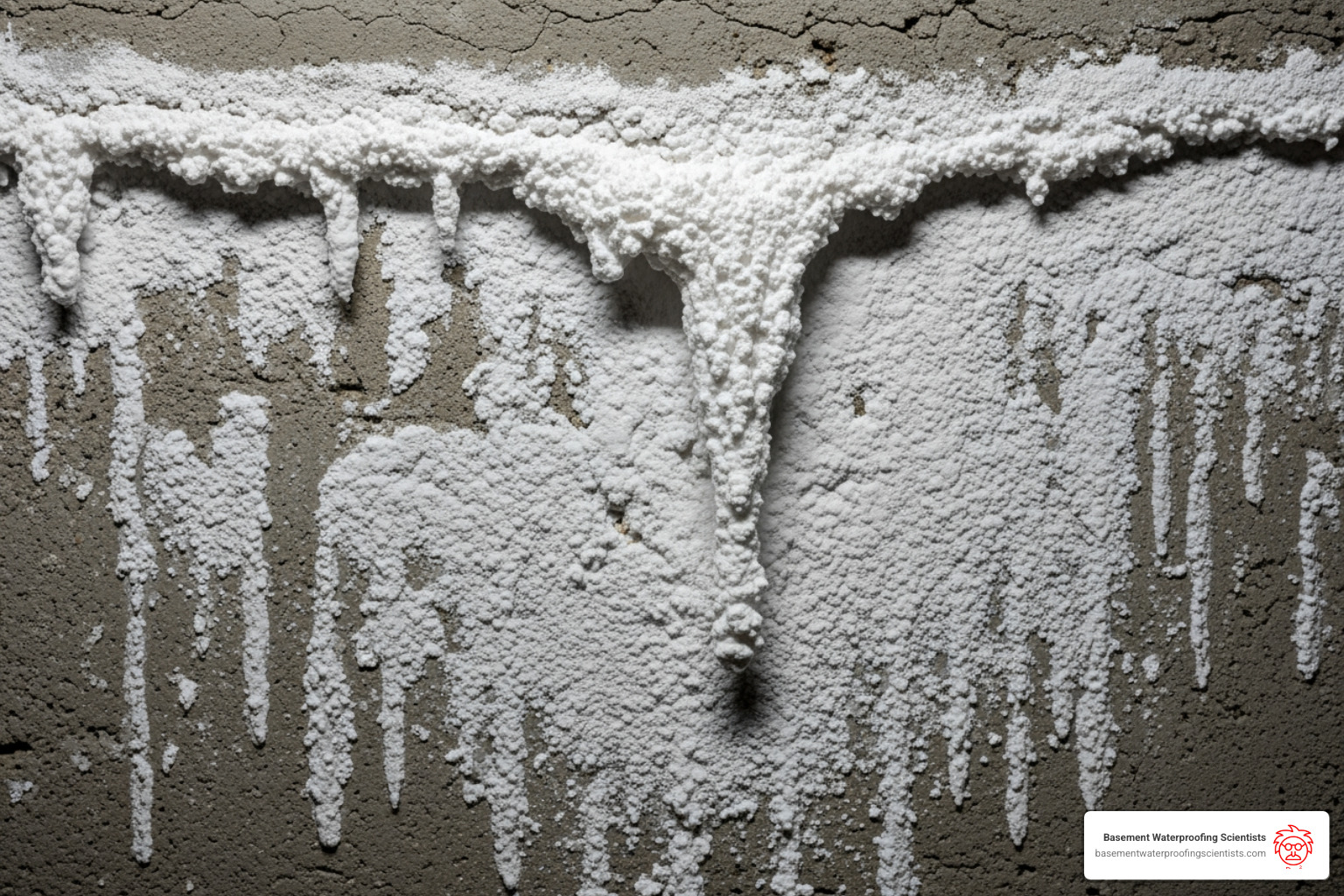
- White, powdery efflorescence on the concrete. These are mineral salts left behind as water evaporates, proving moisture is getting through.
- Peeling paint or wallpaper on finished basement walls.
- Mold or mildew growth, which appears as black, green, or fuzzy patches.
- A persistent musty odor, which is the smell of mold and mildew.
- Puddles on the floor, the most obvious sign you need to repair leak in concrete basement wall issues.
Differentiating Between Minor and Structural Cracks
Knowing the difference between a simple leak and a structural problem is crucial.
Shrinkage cracks are typically vertical, hairline (less than 1/8 inch wide), and non-structural. They form as concrete cures and are common DIY repairs. While not a structural threat, they are a primary source of water entry.
Structural cracks signal a more serious issue with foundation movement. Be concerned if you see:
- Horizontal cracks running across the wall.
- Stair-step cracks in concrete block walls.
- Cracks wider than 1/8 inch, especially if they are growing.
- Bowing or bulging walls.
A DIY patch on a structural crack only hides the problem. If you see these signs, it’s time to call a professional. For more information, read our guide on understanding structural basement repair. Most leaks, however, come from non-structural cracks you can fix yourself.
How to Repair a Leak in a Concrete Basement Wall from the Inside
Once you’ve identified a non-structural leak, you can often fix it from inside your home. This saves the cost and mess of exterior excavation. These interior repairs are practical, cost-effective solutions for homeowners in Pennsylvania, New Jersey, and Delaware.
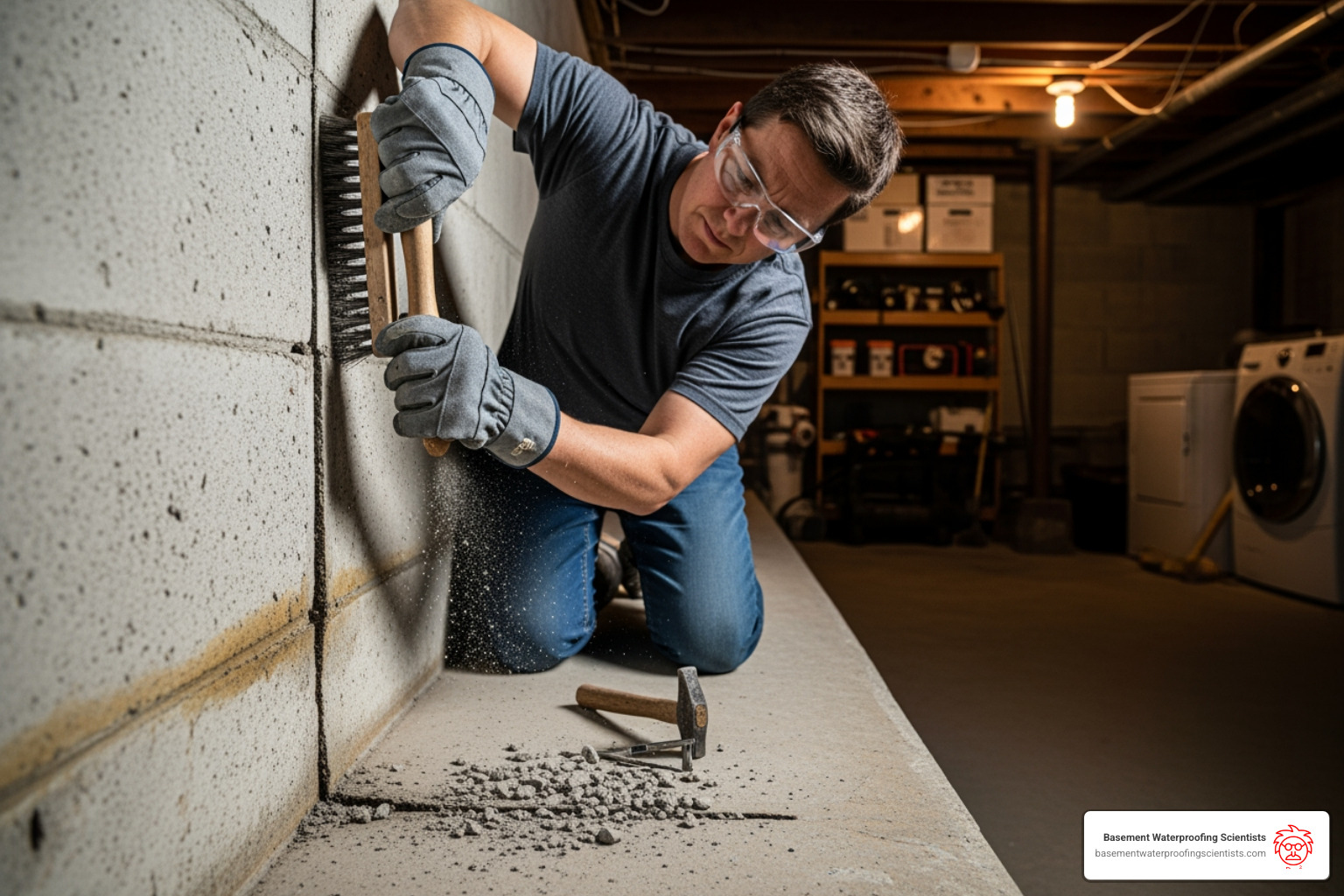
Before starting, always wear safety glasses and protective gloves. When using hydraulic cement, also wear a protective dust mask.
The right method depends on the leak. Use hydraulic cement for active leaks and an injection kit for hairline cracks. For more details, see our Basement Wall Crack Repair Guide.
Method 1: How to repair a leak in a concrete basement wall with Hydraulic Cement
Hydraulic cement is ideal for actively seeping cracks because it sets in 3-5 minutes and expands as it cures, creating a watertight seal. You’ll need a chisel, hammer, wire brush, bucket, trowel, and high-quality hydraulic cement.
Step 1: Widen and Clean the Crack. Using a chisel and hammer, enlarge the crack to at least 3/4 inch wide and deep. Create an inverted “V” shape (wider at the base) to lock the patch in. Scrub the crack with a wire brush to remove all loose debris.
Step 2: Mix the Cement. Hydraulic cement sets extremely fast, so only mix small, usable batches. Follow the package directions to create a thick, putty-like consistency.
Step 3: Apply and Hold. Quickly form the cement into a ball and press it firmly into the crack. Hold it with pressure for several seconds until it begins to harden.
Step 4: Smooth and Cure. Once the patch is firm, smooth the surface with a trowel. Allow it to cure completely as directed.
Method 2: Using Epoxy or Polyurethane Injection Kits for Smaller Cracks
For hairline or non-gushing cracks, injection kits provide a flexible, durable seal from within the wall. Polyurethane is best for damp cracks, while epoxy adds structural strength to dry ones.
You’ll need an injection kit, drill with a masonry bit, hammer, wire brush, and a caulking gun.
Step 1: Clean the Surface. Use a wire brush to clean the crack of any loose material, paint, or efflorescence. Blow the dust away with compressed air for the best bond.
Step 2: Place Injection Ports. Drill holes at a 45-degree angle to intersect the crack about halfway through the wall. Space the ports 8-12 inches apart and gently tap them into place.
Step 3: Seal the Surface. Apply the kit’s surface paste over the crack and around the base of each port. This creates a temporary seal to hold the injection material inside. Let it cure as instructed.
Step 4: Inject the Material. Starting at the lowest port, slowly inject the polyurethane or epoxy with a caulking gun. When you see material ooze from the port above, cap the lower one and move up. Repeat until the entire crack is filled. Once cured, you can snap off the ports. For more on this technique, see our page on Basement Foundation Wall Repairing Crack Injection.
Matching the method to the leak and preparing the area properly are the keys to a long-lasting repair.
Preventing Future Leaks for a Permanently Dry Basement
Fixing the current leak is only half the battle. To ensure a permanently dry basement, you must also address the underlying causes of water intrusion. A lasting solution involves managing water on the outside and controlling moisture on the inside. Our Waterproofing Your Basement a Homeowners Guide offers more in-depth strategies.
Improve Exterior Water Management
Controlling water before it reaches your foundation is the most effective prevention strategy. Focus on these key areas:
- Proper Grading: Ensure the ground slopes away from your house at least 6 inches over the first 10 feet to direct rainwater away.
- Clean Gutters: Clogged gutters dump water directly against your foundation. Clean them at least twice a year.
- Downspout Extensions: Extend downspouts to discharge water at least 5-10 feet away from your home.
- Window Well Covers: Install covers on basement window wells to keep out rain and debris.
- French Drains: For persistent groundwater problems, especially in areas with clay soil, a French Drain Installation can intercept water before it reaches your foundation.
Apply Interior Waterproofing Sealants
After repairing cracks and addressing exterior issues, an interior sealant provides an additional layer of protection.
- Waterproofing Coatings: After you repair leak in concrete basement wall cracks, apply a masonry waterproofing paint like UGL Drylock. These products create a moisture barrier against general dampness but are not a fix for active leaks.
- Penetrating Sealers: Silicate-based sealers soak into the concrete and react chemically to form an internal waterproof barrier. They are very effective on porous concrete. Learn more on our Foundation Sealant page.
- Control Humidity: Use a dehumidifier to keep basement humidity below 60%. This prevents musty odors and mold growth, even in a waterproofed space.
Taking these preventive steps is a smart investment that costs far less than major water damage repairs and adds value to your home.
Knowing When to Call a Professional
While DIY methods are effective for minor, non-structural cracks, some problems require professional expertise to protect your home’s safety and structural integrity. Knowing when to call a pro is key.
Contact a professional like us at Foundation Repair if you notice:
- Bowing or bulging walls: This is a structural emergency caused by extreme lateral pressure.
- Horizontal or stair-step cracks: These indicate serious foundation movement, unlike vertical shrinkage cracks.
- Widespread or large cracks: Multiple cracks or any crack wider than 1/8 inch suggest a larger problem.
- Repeat leaks: If a patched crack leaks again, it means the underlying cause hasn’t been addressed. Our diagnostic tools can pinpoint the true source of water intrusion, allowing for a permanent fix.
How to repair a leak in a concrete basement wall when it’s a structural issue
Structural problems require advanced solutions that go beyond patching a crack. The goal is to stabilize your home’s foundation.
| Feature | DIY Repair (Non-Structural) | Professional Repair (Structural) |
|---|---|---|
| Problem Type | Hairline cracks, minor seepage, non-active drips | Wide cracks, horizontal/stair-step cracks, bowing walls, foundation settlement |
| Methods | Hydraulic cement, epoxy/polyurethane injection | Carbon fiber straps, steel I-beams, helical piers, underpinning |
| Cost | Low (materials only, typically under $100) | Significant investment (average basement waterproofing runs $4K-$8K, structural repairs often more) |
| Longevity | Good for non-moving cracks, may need reapplication | Permanent solution that addresses root cause of movement |
| Peace of Mind | Temporary for structural issues, short-term for minor leaks | Long-term stability, structural integrity restored, backed by lifetime warranty |
Professional solutions include:
- Carbon Fiber Foundation Repair: Strong, lightweight straps are applied to bowing walls to stabilize them without excavation.
- Steel I-beams: For more severe bowing, steel beams are installed vertically to brace the wall.
- Helical Piers or Underpinning: These are used to address foundation settling by driving steel piers to stable soil to support the foundation.
These repairs are a significant investment, but ignoring structural issues leads to far costlier damage. We offer free, honest inspections in Pennsylvania, New Jersey, and Delaware to assess your situation. With 30 years of experience and a lifetime guarantee, we provide permanent solutions, not temporary patches. For more on advanced methods, see our guide to 7 Top Rated Foundation Repair Techniques.
Frequently Asked Questions about Basement Wall Leaks
Here are answers to the most common questions we hear from homeowners in Pennsylvania, New Jersey, and Delaware looking to repair leak in concrete basement wall issues.
How much does it cost to fix a leaking basement wall?
The cost varies widely depending on the cause and repair method.
- DIY Repair: Materials for a single crack can cost $20-$200.
- Professional Crack Injection: Typically costs $100-$200 per linear foot.
- Full Waterproofing Systems: An interior drainage system with a sump pump usually runs from $5,000 to $13,000. The average project is between $4,000 and $8,000.
- Structural Repairs: Costs for carbon fiber straps or steel I-beams require a custom quote based on an on-site inspection.
The cheapest fix isn’t always the best long-term solution. For a detailed breakdown, see our Leaking Basement Wall Repair Cost guide.
How long does a concrete crack repair last?
The longevity of a repair depends on the material used and whether the root cause was addressed.
- Hydraulic Cement: This rigid patch is durable for stable, non-moving cracks but can fail if the crack shifts with temperature changes.
- Polyurethane/Epoxy Injection: Flexible polyurethane moves with the concrete, making it a very long-lasting repair for non-structural cracks. Epoxy offers permanent structural strength once the underlying stress is resolved.
The most crucial factor for longevity is addressing the root cause. If you don’t fix the exterior drainage issues creating water pressure, water will eventually find a new way in. Professional repairs that address the whole problem often come with lifetime warranties.
Can I just paint over a basement leak?
No. Painting over an active leak is a bad idea. Waterproof paint is for damp-proofing, not stopping flowing water. Painting over a leak will:
- Trap moisture: This causes the paint to bubble and peel, while water continues to damage the concrete behind it.
- Hide the problem: The leak will worsen unseen, potentially leading to more severe structural damage.
- Promote mold: Trapped moisture creates a perfect breeding ground for mold behind the paint.
Waterproof paint should only be used as a finishing touch after a leak has been properly repaired and drainage issues are fixed.
Secure Your Foundation and Reclaim Your Basement
You now understand how to repair leak in concrete basement wall issues, from identifying causes like hydrostatic pressure to applying fixes like hydraulic cement or injection kits. The path is clear: identify the cause, choose the right repair, and implement preventive measures like improving exterior drainage.
A DIY approach is great for minor, non-structural cracks. However, if you’re facing complex issues like bowing walls, horizontal cracks, or recurring leaks, professional help is essential. These are signs of deeper problems that a simple patch won’t solve.
At Basement Waterproofing Scientists, we use specialized equipment to find the true source of water intrusion. This allows us to provide a precise, permanent fix that addresses the root cause, often for less than you’d expect. Our 30 years of experience and lifetime guarantee provide peace of mind that the job is done right.
Don’t let water damage worsen. A leaking wall can compromise your foundation, belongings, and air quality. Take action to reclaim your basement. Contact us for an expert basement wall crack repair assessment and let our team provide a lasting solution for your home in Pennsylvania, New Jersey, or Delaware.